



In a discussion on price rise, they expressed concern over rising prices of essential commodities and asked the government to act against hoarders to contain inflation.
Initiating a discussion in Lok Sabha, Congress leader Amarinder Singh also demanded a complete ban on onion export to control its soaring prices.
The discussion under a rule that does not entail voting was taken up after Speaker Sumitra Mahajan rejected the opposition notices on an adjournment motion on the issue and said she was ready to have a general discussion.
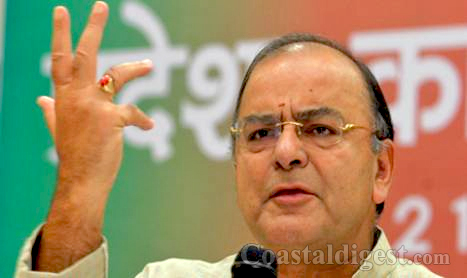
He asked “where is the achche din” promised by BJP during election campaign and slammed Finance Minister Arun Jaitley’s statement that food prices are under control and there is no need to panic.
Mr. Singh said the farmers who produce vegetables including potatoes, onion and tomatoes were selling their produce at low price and hoarders and middlemen were responsible for shooting up of prices such essential commodities.
“There has been a 250 per cent increase in the prices of onion, tomatoes and potatoes. Have you taken any step against middlemen? ...Tackle hoarding to control prices in the short run. I hope the government will take action against hoarders,” he said.
BJP hit back, with its member Anurag Thakur saying the price rise being witnessed currently was a result of policies of the previous Congress-led government.
He said prices of essential commodities were being kept under check by Narendra Modi government in total contrast to Manmohan Singh government when prices of food items rose manifold.
The CPI(M) member P. Karunakaran, interestingly, criticised Congress for raising the issue of price rise, saying its government did not take any “concrete” action to control inflation during its 10-year rule.
“Why did not you take steps in 10 years. You were not ready to take any concrete step to control price rise. You were not ready to listen,” he told Congress members who were attacking the Narendra Modi government over the issue.
The MP from Kerala reminded the government that it had come to power raising the issue of price rise and said Modi should show sincerity in fulfilling election promises and look after the interests of the poor.
He referred to 6.5 per cent recent hike in freight rates, saying such steps have a cascading effect and finally lead to increase in the prices of essential commodities.
“I want to know whether you have political will to reduce excise duty, reduce VAT and change tax structure as promised during the last Lok Sabha elections,” he said, a day ahead of the presentation of the General Budget.
Drawing attention towards the rising prices of onion, Amarinder Singh, Congress Deputy Leader in the Lok Sabha, said government was still exporting the vegetable and demanded its complete ban.
The former Punjab Chief Minister said the prices have been going up since the Modi government took over.
Citing the continuous rise in prices of petrol and diesel, Singh said this was also one of the main reasons for the rising prices of food articles.
”...Anything that is transported...the prices will automatically go up...What about the promises you have made to the people (during election campaign),” he asked.
He said that it was not only vegetables, prices of wheat and rice were also going up.
Amarinder Singh said the government should come up with a price support mechanism for the benefit of farming community.
He termed as “ridiculous” Finance Minister Arun Jaitley’s recent statement that there is no need to panic, contending that all sections including daily wage earners, salaried class and 400 million people living Below Poverty Line were worried over price rise.
Mr. Singh also expressed concern over reports of NDA government planning to do away with pro-poor measures brought by the previous UPA government including MNREGA and Food Security Act.
Mr. Thakur said Congress should not talk about price rise as it did nothing to control inflation during the 10 years when it was in power.
“When they (Congress) talk about price, it is a self-goal. It is really painful to hear you talking on price rise. If someone is responsible for price rise, it is you (Congress),” the BJP leader said.
“What did we get as a legacy of the UPA government? We got empty coffers,” he said.
Thakur said during the 10 years rule of UPA, Parliament had discussed the issue of price rise 17 times, while during the six years rule of Atal Bihar Vajpayee led NDA, there was just one discussion on price rise.
“Despite having an economist Prime Minister, you could not change the economic situation of the country. You have changed the Finance Minister several times, but you could not change the economy,” he said.
Apparently taking a dig at Amarinder Singh without taking his name, Mr. Thakur said it was heartening to hear “maharajas” talk about “daal, roti”. Mr. Singh is the erstwhile maharaja of Patiala in Punjab.
This invited strong protest by Leader of Congress Mallikarjun Kharge, who said Mr. Thakur was making personal attack on Singh while he should be talking on policies.

Comments
Add new comment