Pakistan, US on Back Foot as Putin Visits India Today to Seal Arms Deal worth Billions

Agencies
October 4, 2018

New Delhi, Oct 4: Russian President Vladimir Putin headed for India on Thursday, looking to tie up billions of dollars in arms deals with Prime Minister Narendra Modi, likely irking the US, China and Pakistan in one fell swoop.

The Kremlin said before the two-day visit by Putin and top Russian ministers that the "key feature" would be the signing of a $5-billion deal for the S-400 air defence system, despite the risk of US sanctions against countries buying Russian defence kit.

On the eve of Putin's arrival later on Thursday, the United States poured cold water on India's efforts to obtain a waiver to avoid sanctions under legislation called Countering America's Adversaries Through Sanctions Act (CAATSA). Upgrades in arms systems "including the S-400 air and missile defense system" would be a particular focus for CAATSA, a US State Department spokesperson was quoted as saying.

Last month Washington slapped financial sanctions on the Chinese military for buying Russian Sukhoi Su-35 fighter jets — and the S-400.

However, the US is in a difficult position when it comes to India. It wants to bolster ties with New Delhi to counter China's growing assertiveness, something that has also rattled India.

Washington and New Delhi announced plans last month for joint military drills in 2019, and agreed on the exchange of sensitive military information. The US is now India's second biggest arms supplier. But Russia remains number one, and a string of new deals with the Asian giant would be a major win for Moscow -- and a big snub to the US.

Putin and Modi, who appear to enjoy a personal rapport, are also likely to discuss a deal for four Krivak-class frigates worth $2 billion and 200 light utility Ka-226 helicopters pegged at $1 billion. "It's about time we showed that we are not going to be pushed around by Washington," R.R. Subramanian, a Delhi-based strategic affairs analyst, said.

Experts say India needs the sophisticated S-400 to fill critical gaps in its defence capabilities, in view of China's rise and perceived threats from Pakistan, against whom India has fought three wars.

Indian Air Force Chief Birender Singh Dhanoa said on Wednesday that the S-400, and the 36 Rafale fighter jets purchased from France — a 2016 deal mired in political controversy — represent a "booster dose" for the country.

Last year, India and China had a military standoff over a Himalayan plateau claimed by Beijing and Bhutan, a close ally of India. China has also perturbed India by loaning vast amounts of money to countries such as Sri Lanka where it has long held sway.

Putin, 65, and Modi, 68, are also set to discuss a possible second Russian-built nuclear power plant. Moscow is currently expanding India's biggest nuclear power plant in Kudankulam. Also on the agenda is Russian training for Indian astronauts as New Delhi aims to launch its first crewed space mission in 2022.

Rakesh Sharma, the only Indian to travel in space, did so on a Soviet spacecraft in 1984. But military kit is the main focus.

India is the world's biggest arms importer and is undergoing a $100-billion upgrade of its ageing hardware, much of it of Soviet vintage including MiG jets that have frequently crashed in the Indian countryside.

Russia and India have had warm ties since Stalin died in 1953. But annual Russia-India trade has slipped below $10 billion since 2014, as Modi cultivated closer diplomatic and economic ties with Washington, while Russia has courted Pakistan and China.

Ties received a boost last year when Modi and Putin held a fruitful annual bilateral summit, followed by meetings in Astana and at the G20 in Germany. They also met in Sochi this year. On the strategic front, Russia helped India become a full member of the Shanghai Cooperation Organisation this year and has backed New Delhi's long-held demand for a permanent UN Security Council seat.

Moscow is also pushing for India's entry into the Nuclear Suppliers Group of countries controlling access to nuclear technology.

Afghanistan though has been a sticking point, experts say, where Moscow wants to engage Taliban in the peace process — a prospect unacceptable to India.


Comments

Add new comment

  • Coastaldigest.com reserves the right to delete or block any comments.
  • Coastaldigset.com is not responsible for its readers’ comments.
  • Comments that are abusive, incendiary or irrelevant are strictly prohibited.
  • Please use a genuine email ID and provide your name to avoid reject.
News Network
December 16,2025

jordan.jpg

Prime Minister Narendra Modi on Monday held talks with Jordan’s King Abdullah II in Amman, during which the two leaders discussed ways to further strengthen bilateral relations, with the Prime Minister outlining an eight-point vision covering key areas of cooperation.

Describing the meeting as “productive”, PM Modi said he shared a roadmap focused on trade and economy, fertilisers and agriculture, information technology, healthcare, infrastructure, critical and strategic minerals, civil nuclear cooperation, and people-to-people ties.

In a post on social media platform X, the Prime Minister praised King Abdullah II’s personal commitment to advancing India–Jordan relations, particularly as both countries mark the 75th anniversary of the establishment of diplomatic ties this year.

“Held productive discussions with His Majesty King Abdullah II in Amman. His personal commitment towards vibrant India-Jordan relations is noteworthy. This year, we are celebrating the 75th anniversary of our bilateral diplomatic relations,” PM Modi said.

The meeting took place at the Al Husseiniya Palace, where the two leaders also exchanged views on regional and global issues of mutual interest. According to the Ministry of External Affairs (MEA), both sides agreed to further deepen cooperation in areas including trade and investment, defence and security, counter-terrorism and de-radicalisation, fertilisers and agriculture, infrastructure, renewable energy, tourism, and heritage.

The MEA said both leaders reaffirmed their united stand against terrorism.

PM Modi arrived in Amman earlier on Monday and was received by Jordanian Prime Minister Jafar Hassan, who accorded him a formal welcome. Following the talks, King Abdullah II hosted a banquet dinner in honour of the Prime Minister, reflecting the warmth of bilateral ties.

Jordan is the first leg of PM Modi’s three-nation tour. From Amman, the Prime Minister will travel to Ethiopia at the invitation of Prime Minister Abiy Ahmed Ali, marking his first official visit to the African nation. The tour will conclude with a visit to Oman.

Comments

Add new comment

  • Coastaldigest.com reserves the right to delete or block any comments.
  • Coastaldigset.com is not responsible for its readers’ comments.
  • Comments that are abusive, incendiary or irrelevant are strictly prohibited.
  • Please use a genuine email ID and provide your name to avoid reject.
News Network
December 7,2025

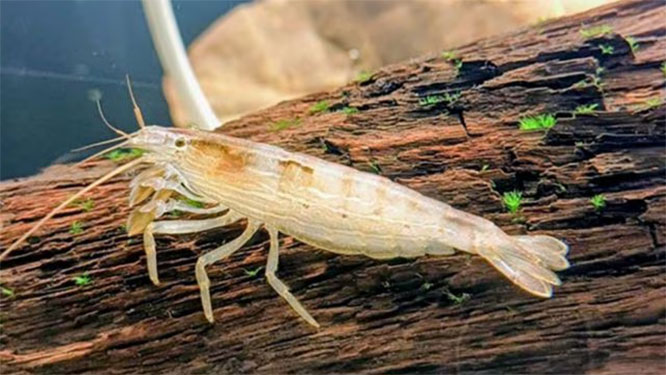
SHRIMP.jpg

Mangaluru, Dec 7: A rare bamboo shrimp has been rediscovered on mainland India more than 70 years after it was last reported, confirming for the first time the presence of Atyopsis spinipes in the country. The find was made by researchers from the Centre for Climate Change Studies at Sathyabama Institute of Science and Technology, Chennai, during surveys in Karnataka and Odisha.

The team — shrimp expert Dr S Prakash, PhD scholar K Kunjulakshmi, and Mangaluru-based researcher Maclean Antony Santos — combined field surveys, ecological assessments and DNA analysis to identify the elusive species. Their findings, published in Zootaxa, resolve decades of taxonomic confusion stemming from a 1951 report that misidentified the species as Atyopsis moluccensis without strong evidence.

The shrimp has now been confirmed at two locations: the Mulki–Pavanje estuary near Mangaluru and the Kuakhai River in Bhubaneswar. Historical specimens from the Andaman Islands, previously labelled as A. moluccensis, were also found to be misidentified and actually belong to A. spinipes.

The rediscovery began after an aquarium hobbyist in Odisha spotted a shrimp in 2022, prompting systematic surveys across Udupi, Karwar and Mangaluru. Four female specimens were collected in Mulki and one in Odisha, all genetically matching.

Researchers warn the species may exist in very small, vulnerable populations as freshwater habitats face increasing pressure from pollution, sand mining and infrastructure development. All verified specimens have been deposited with the Zoological Survey of India for future reference.

Comments

Add new comment

  • Coastaldigest.com reserves the right to delete or block any comments.
  • Coastaldigset.com is not responsible for its readers’ comments.
  • Comments that are abusive, incendiary or irrelevant are strictly prohibited.
  • Please use a genuine email ID and provide your name to avoid reject.
News Network
December 19,2025

Saudi Arabia has abolished fees on expatriate workers employed in licensed industrial establishments, signaling a strong push to empower national factories and enhance the Kingdom’s global industrial competitiveness. The move reflects the leadership’s commitment to building a sustainable and resilient industrial economy under Saudi Vision 2030.

The decision was approved by the Council of Ministers, chaired by Crown Prince and Prime Minister Mohammed bin Salman, following a recommendation from the Council of Economic and Development Affairs (CEDA). It forms part of a broader strategy to support, modernize, and strengthen the industrial sector.

By removing fees on foreign workers, industrial establishments gain greater operational flexibility and relief from financial pressures. This is expected to help factories expand production, improve efficiency, and compete more effectively in international markets, while reinforcing long-term sustainability.

The initiative aligns closely with Saudi Vision 2030, which identifies industry as a key pillar of economic diversification. A competitive and resilient industrial base is viewed as essential for driving innovation, attracting investment, and sustaining long-term economic growth.

Overall, the fee exemption underscores the Kingdom’s commitment to creating a supportive environment for industrial development and ensuring that Saudi factories remain globally competitive and capable of leading the nation’s economic transformation.

Comments

Add new comment

  • Coastaldigest.com reserves the right to delete or block any comments.
  • Coastaldigset.com is not responsible for its readers’ comments.
  • Comments that are abusive, incendiary or irrelevant are strictly prohibited.
  • Please use a genuine email ID and provide your name to avoid reject.