



Petrol price cut: Jaitley questions commitment of Rahul Gandhi, his allies

Agencies
October 6, 2018

New Delhi, Oct 6: With non-BJP ruled states refusing to cut taxes on fuel, Finance Minister Arun Jaitley Saturday questioned Congress President Rahul Gandhi and his "reluctant allies" if they are only committed to tweets and television bytes when it comes to giving relief to the common man.
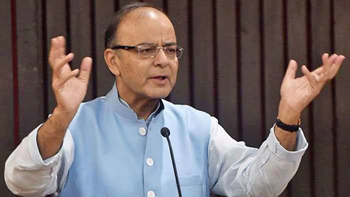
In a Facebook post titled 'The oil prices and the hypocrisy of the opposition', Jaitley accused the government critics of doing a 'volte face' by terming the cut in petrol and diesel prices by Rs 2.5 per litre by the Centre as 'bad economics'.

He said states collect extra taxes when oil prices go up since their taxes are ad valorem.

"Yet we have a situation where a number of non-BJP non-NDA States have refused to pass on any benefit to the consumer. What are the people supposed to conclude?

"Are Rahul Gandhi and his reluctant allies only committed to tweets and television bytes when it comes to give relief to the common man?" Jaitley said.

He said the challenges thrown up by the increase in the international price of crude oil is serious and cannot be resolved by either the tweets or television bytes of some opposition leaders.

"Must not the non-BJP States be candid with the people and tell them that both in 2017 and 2018 they refused to give any relief to the people even from their higher revenues. They sent out tweets and gave television bytes but when it came to performance, they looked the other way, Jaitley said.

The government had on Thursday announced a Rs 2.5 per litre cut in petrol and diesel prices, of which Rs 1.5 per litre is on account of reduction in excise duty and the remaining Rs 1 per litre would be absorbed by oil marketing companies.

It also appealed to the state governments to cut VAT rates. BJP-ruled states like Gujarat, Maharashtra, Uttar Pradesh, Tripura, Assam, Jharkhand, Haryana, Himachal Pradesh and Madhya Pradesh followed suit.

Non-BJP ruled states like Kerala, Karnataka and West Bengal have refused to cut taxes.

Jaitley said the political crisis in Venezuela and Libya has adversely impacted oil producing countries and the US sanctions on Iran also have increased uncertainties over supplies.

He said the high cost of crude oil has also impacted the currency situation.

"India's macroeconomic fundamentals with regard to its fiscal deficit, inflation, foreign exchange reserves etc. are fairly stable. Tax collections are encouraging," Jaitley said.

However, a high cost of crude oil adversely impacts the current account deficit. That, in turn, impacts the currency. Additionally, the hardening of the dollar has further impacted most global currencies.

"Both the factors have an impact on the cost of fuel available to a citizen," he said, adding the cost of crude oil has reached its highest level in the past four years.

Stating that the government critics rejoiced the political consequences of the increase of the crude prices, Jaitley said when the price was reduced, the critics did a "volte face and argued that this is bad economics".

"Even Rahul Gandhi, whose party had inflicted a double digit inflation on India during the past five years of UPA-II, gave television bytes and released tweets advocating a price reduction," Jaitley said.

"Let me categorically assure all that there is no going back on deregulation of oil prices," he added.

He said the NDA government has an "exemplary record" of fiscal prudence and has maintained the gradual glide path since 2014 to bring down fiscal deficit. "We will continue to do so".

"No Government can be insensitive towards its people," Jaitley added.

Last year in October, when the oil prices were rising, the Centre cut excise duty by Rs 2.

"We have requested the States to make a similar cut. Most of the BJP-NDA States did so. The others refused to do so," Jaitley said, adding in an extraordinary situation, the capacity of an economy to give relief will depend on its fiscal strength.

Comments

Add new comment

  • Coastaldigest.com reserves the right to delete or block any comments.
  • Coastaldigset.com is not responsible for its readers’ comments.
  • Comments that are abusive, incendiary or irrelevant are strictly prohibited.
  • Please use a genuine email ID and provide your name to avoid reject.
News Network
December 16,2025

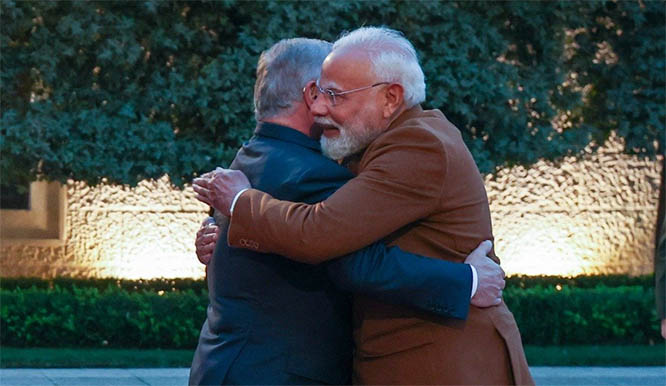
jordan.jpg

Prime Minister Narendra Modi on Monday held talks with Jordan’s King Abdullah II in Amman, during which the two leaders discussed ways to further strengthen bilateral relations, with the Prime Minister outlining an eight-point vision covering key areas of cooperation.

Describing the meeting as “productive”, PM Modi said he shared a roadmap focused on trade and economy, fertilisers and agriculture, information technology, healthcare, infrastructure, critical and strategic minerals, civil nuclear cooperation, and people-to-people ties.

In a post on social media platform X, the Prime Minister praised King Abdullah II’s personal commitment to advancing India–Jordan relations, particularly as both countries mark the 75th anniversary of the establishment of diplomatic ties this year.

“Held productive discussions with His Majesty King Abdullah II in Amman. His personal commitment towards vibrant India-Jordan relations is noteworthy. This year, we are celebrating the 75th anniversary of our bilateral diplomatic relations,” PM Modi said.

The meeting took place at the Al Husseiniya Palace, where the two leaders also exchanged views on regional and global issues of mutual interest. According to the Ministry of External Affairs (MEA), both sides agreed to further deepen cooperation in areas including trade and investment, defence and security, counter-terrorism and de-radicalisation, fertilisers and agriculture, infrastructure, renewable energy, tourism, and heritage.

The MEA said both leaders reaffirmed their united stand against terrorism.

PM Modi arrived in Amman earlier on Monday and was received by Jordanian Prime Minister Jafar Hassan, who accorded him a formal welcome. Following the talks, King Abdullah II hosted a banquet dinner in honour of the Prime Minister, reflecting the warmth of bilateral ties.

Jordan is the first leg of PM Modi’s three-nation tour. From Amman, the Prime Minister will travel to Ethiopia at the invitation of Prime Minister Abiy Ahmed Ali, marking his first official visit to the African nation. The tour will conclude with a visit to Oman.

Comments

Add new comment

  • Coastaldigest.com reserves the right to delete or block any comments.
  • Coastaldigset.com is not responsible for its readers’ comments.
  • Comments that are abusive, incendiary or irrelevant are strictly prohibited.
  • Please use a genuine email ID and provide your name to avoid reject.
News Network
December 20,2025

Mangaluru, Dec 20: The Mangaluru City Police have issued a detailed traffic advisory ahead of the inaugural ceremony of Karavali Utsava, which will be held at the Karavali Utsava Ground on Saturday.

The festival will be inaugurated at 6:00 pm by Dakshina Kannada District Minister Dinesh Gundu Rao. Cultural and public programmes will be held at the venue every evening and will continue until January 2.

According to City Police Commissioner Sudheer Kumar Reddy, parking of vehicles is strictly prohibited on both sides of the road from Lalbagh to Karavali Utsava Ground. Visitors are requested to park their vehicles only at designated parking areas.

To help the public, traffic signboards and parking guidance flex boards have been installed along the routes leading to the venue. The police have urged commuters and visitors to follow these instructions to ensure smooth traffic movement.

Designated Parking Locations

•    Urwa Market Ground – Cars
•    Gandhinagar Government School (near Press Club) – Two-wheelers and cars
•    Ladyhill Church parking area – Two-wheelers and cars
•    Canara School Ground, Mannagudda – Two-wheelers and cars
•    Thimmappa Hotel premises – Two-wheelers and cars
•    Scout and Guide Bhavana premises (behind Karavali Utsava Grounds) – Two-wheelers
•    Urwa Market Road – Two-wheelers
•    Hat Hill Road – Two-wheelers

The police have appealed to the public to cooperate by following traffic rules and parking guidelines to avoid inconvenience during the festival.

Comments

Add new comment

  • Coastaldigest.com reserves the right to delete or block any comments.
  • Coastaldigset.com is not responsible for its readers’ comments.
  • Comments that are abusive, incendiary or irrelevant are strictly prohibited.
  • Please use a genuine email ID and provide your name to avoid reject.
News Network
December 13,2025

New Delhi: School-going children are picking up drug and smoking habits and engaging in consumption of alcohol, with the average age of introduction to such harmful substances found to be around 13 years, suggesting a need for earlier interventions as early as primary school, a multi-city survey by AIIMS-Delhi said.

The findings also showed substance use increased in higher grades, with grade XI/XII students two times more likely to report use of substances when compared with grade VIII students. This emphasised the importance of continued prevention and intervention through middle and high school.

The study led by Dr Anju Dhawan of AIIMS's National Drug Dependence Treatment Centre, published in the National Medical Journal of India this month, looks at adolescent substance use across diverse regions.

The survey included 5,920 students from classes 8, 9, 11 and 12 in urban government, private and rural schools across 10 cities -- Bengaluru, Chandigarh, Delhi, Dibrugarh, Hyderabad, Imphal, Jammu, Lucknow, Mumbai, and Ranchi. The data were collected between May 2018 and June 2019.

The average age of initiation for any substance was 12.9 (2.8) years. It was lowest for inhalants (11.3 years) followed by heroin (12.3 years) and opioid pharmaceuticals (without prescription; 12.5 years).

Overall, 15.1 per cent of participants reported lifetime use, 10.3 per cent reported past year use, and 7.2 per cent reported use in the past month of any substance, the study found.

The most common substances used in the past year, after tobacco (4 per cent) and alcohol (3.8 per cent), were opioids (2.8 per cent), followed by cannabis (2 per cent) and inhalants (1.9 per cent). Use of non-prescribed pharmaceutical opioids was most common among opioid users (90.2 per cent).

On being asked, 'Do you think this substance is easily available for a person of your age' separately for each substance category, nearly half the students (46.3 per cent) endorsed that tobacco products and more than one-third of the students (36.5 per cent) agreed that a person of their age can easily procure alcohol products.

Similarly, for Bhang (21.9 per cent), ganja/charas (16.1 per cent), inhalants (15.2 per cent), sedatives (13.7 per cent), opium and heroin (10 per cent each), the students endorsed that these can be easily procured.

About 95 per cent of the children, irrespective of their grade, agreed with the statement that 'drug use is harmful'.

The rates of substance use (any) among boys were significantly higher than those of girls for substance use (ever), use in the past year and use in the past 30 days. Compared to grade VIII students, grade IX students were more likely, and grade XI/XII students were twice as likely to have used any substance (ever).

The likelihood of past-year use of any substance was also higher for grade IX students and for grade XI/XII students as compared to grade VIII students.

About 40 per cent of students mentioned that they had a family member who used tobacco or alcohol each. The use of cannabis (any product) and opioid (any product) by a family member was reported by 8.2 per cent and 3.9 per cent of students, respectively, while the use of other substances, such as inhalants/sedatives by family was 2-3 per cent, the study found.

A relatively smaller percentage of students reported use of tobacco or alcohol among peers as compared to among family members, while a higher percentage reported inhalants, sedatives, cannabis or opioid use among peers.

Children using substances (past year) compared to non-users reported significantly higher any substance use by their family members and peers.

There were 25.7 per cent students who replied 'yes' to the question 'conflicts/fights often occur in your family'. Most students also replied affirmatively to 'family members are aware of how their time is being spent' and 'damily members are aware of with whom they spend their time'.

Comments

Add new comment

  • Coastaldigest.com reserves the right to delete or block any comments.
  • Coastaldigset.com is not responsible for its readers’ comments.
  • Comments that are abusive, incendiary or irrelevant are strictly prohibited.
  • Please use a genuine email ID and provide your name to avoid reject.