



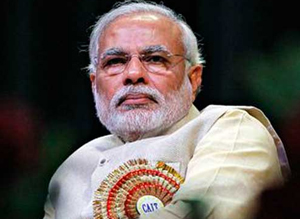
Over the past week, the government has twice sought to introduce legislation in the upper house of parliament permitting 49 percent foreign participation in an insurance venture, up from 26 percent, but it has been blocked by the opposition.
Finance Minister Arun Jaitley has called the heads of political parties to a meeting on Wednesday in a bid to form a consensus behind the legislation so billions of dollars can flow into a sector starved of funds and held back by over-regulation.
Modi's government expects that if the sector is opened further, insurers such as Canada's Sun Life Financial Inc, Prudential PLC Nippon Life Insurance Co, Italy's Generali and Dutch insurer Aegon NV will inject more funds into what is the world's 10th biggest life insurance market - even though currently fewer than 4 percent of Indians have insurance.
Jaitley needs the support of the opposition in the 250-member upper house of parliament where his Bharatiya Janata Party (BJP) and its allies have about 60 members.
The ruling group faces no problem winning approval from the lower house, where it has a comfortable majority after an election in May.
But the upper house is the stumbling block. Its next elections - when one-third of its members retire - are not due until 2016.
ANOTHER OPTION AVAILABLE
If the government continues to be stymied it has an option - rarely used - to hold a joint session of parliament and deploy its huge majority in the lower house to push through the insruance bill. A previous BJP government used a joint session once to get through a tough anti-terrrorism law, citing national security.
But the BJP would rather get the upper house on board.
"We are going to bring the bill for discussion in this session," Commerce and Industry Minister Nirmala Sitharaman told Reuters, suggesting the government was prepared for a showdown over its first, modest stab at reform since Modi took office in May.
In 2000, when the BJP led the government, India opened its insurance sector to private and foreign ownership. Since then, most top international insurers have entered.
In 2008, the government - then led by Congress party - proposed changing ownership laws to allow 49 percent foreign participation in insurance ventures, but it could not win parliament approval.
Liberalising investment rules "will bring a lot of capital into an investment-starved sector whose growth is good for the economy," Jaitley told CNBC TV18 Monday night.
'INTERNAL CONSULTATIONS'
The Congress, thrashed by the BJP in this year's lower house elections, hasn't declared opposition to the insurance bill.
"There is no final yes or no on this," said Randeep Singh Surjewala, a senior member of Congress, which has 69 members in the upper house. "We are in the midst of internal consultations. We are pro-investment, but we want the interests of all stake-holders to be protected."
Jaitley said he could not understand why the Congress was not backing the liberalisation as the party had repeatedly sought to push it through earlier, and the bill he brought was essentially the same as Congress proposed in 2008.
"Only 10 days ago, Congress got up during the budget discussion and said this 49 percent in insurance is our idea," the finance minister said. "I don't mind they wanted to take the credit. Suddenly I find they want to go to a select committee now."
India's two main parties - the BJP and the Congress - remain bitter opponents even after the electoral battle, seeking to deny the other any political advantage.
When in opposition, both parties have sought to whip up resistance to liberalising sectors of the economy such as insurance and defence, and to labour reforms. Such steps are considered vital to reviving growth that last year fell to 4.7 percent, the slowest pace in a decade.
Tens of thousands of employees at India's state-controlled insurance companies and their communist party backers are strongly opposed to foreign involvement in the insurance sector, saying it would give them control over domestic savings and was against the national interest.
Even a trade union affiliated to the ruling BJP criticised the measure to open up the insurance sector.
"Trade unions are strongly opposed to the hike in the foreign investment limit as it would lead to outflow of people's savings," said Vrijesh Upadhyay, general secretary at Bharatiya Mazdoor Sangh, India's biggest trade union.

Comments
Add new comment