PM Modi's cashflow woes just got more bearable thanks to RBI switch

Agencies
December 18, 2018

Dec 18: Facing cash flow problems just months before a national election, India’s Prime Minister Narendra Modi could have a savior in the country’s new central bank chief.

India’s spending is exceeding its revenue, leaving the government looking for funds to help an ailing banking sector -- key to boosting loans and investment and creating jobs. Finance ministry officials estimate the Reserve Bank of India has at least 3.6 trillion rupees ($50 billion) more capital than it needs, which they say can be used to help bolster the banks.

“It will be difficult for the government to meet its targets absent substantial new revenue from asset sales or as a transfer from the RBI,” said Sasha Riser-Kositsky, an analyst with Eurasia Group. “The government could also seek to defer some payments into the next fiscal year in order to paper over the deficit.”

Keeping the economic engines firing ahead of a general election next year is crucial for Modi, whose party was rocked by defeats in key regional elections last week. While using the RBI’s surplus capital to support the banks was a point of contention with former governor Urjit Patel, it may not be the case now.

Shaktikanta Das, a former bureaucrat picked by Modi to steer the RBI after Patel’s exit, is open to hearing the government out on its concerns about the economy -- whose growth slowed in the three months through September. Getting the RBI to share its capital will help the government boost growth without missing its budget deficit goal of 3.3 percent of gross domestic product.

While the government has denied having asked for any specific amount from the RBI, the central bank has agreed to form an expert panel to decide on the appropriate level of reserves it should hold.

The government plans to infuse about 420 billion rupees ($5.9 billion) to recapitalize some state-run banks this month. It also has to pay for a health care program and purchase crops from farmers at guaranteed prices.

Everyone agrees that more needs to be done to recapitalize state-run banks, but not all approve of how the administration is going about it. The government’s increasing involvement in the central bank’s affairs could undermine gains in the country’s banking system, S&P Global Ratings said.

Still, with the fiscal deficit having touched 104 percent of budget estimate in October and revenue from tax and asset sales trailing estimates, the RBI may be Modi’s best hope of swaying voters. Here’s why:

Revenue

With total revenue in April to October accounting for 45.7 percent of the full-year target and lower than last year’s 48.1 percent, pressure is mounting on tax authorities and the asset sales department to make good on goals.

Monthly collections of the new goods and services tax have trailed the 1.1 trillion rupees target, and the finance ministry is banking on direct tax to make up for the shortfall. Sales of stakes in state-run companies have also lagged, with only 42 percent of the targeted revenue realized so far.

Expenditure

Spending in April to October was 59.6 percent of the budget estimate. A program to provide guaranteed prices to farmers for crops is expected to add to the food subsidy bill, while fuel subsidy has risen on higher oil prices.

The cost of a 120 billion-rupee health care program, which kicked off in September, is expected to be reflected in the fiscal second half.

Meeting budget goals may require cutting expenditure, but that may be easier said than done in an election year.

"With an election on the horizon, I suspect sparking a bit more growth will take precedence over meeting fiscal obligations," said Richard Rossow, an Indian policy expert at the Washington-based Center for Strategic and International Studies. "Modi thinks he has a very real chance at serving a second term, so he may moderate any inclination to break the bank too severely."


Comments

Add new comment

  • Coastaldigest.com reserves the right to delete or block any comments.
  • Coastaldigset.com is not responsible for its readers’ comments.
  • Comments that are abusive, incendiary or irrelevant are strictly prohibited.
  • Please use a genuine email ID and provide your name to avoid reject.
News Network
December 7,2025

SHRIMP.jpg

Mangaluru, Dec 7: A rare bamboo shrimp has been rediscovered on mainland India more than 70 years after it was last reported, confirming for the first time the presence of Atyopsis spinipes in the country. The find was made by researchers from the Centre for Climate Change Studies at Sathyabama Institute of Science and Technology, Chennai, during surveys in Karnataka and Odisha.

The team — shrimp expert Dr S Prakash, PhD scholar K Kunjulakshmi, and Mangaluru-based researcher Maclean Antony Santos — combined field surveys, ecological assessments and DNA analysis to identify the elusive species. Their findings, published in Zootaxa, resolve decades of taxonomic confusion stemming from a 1951 report that misidentified the species as Atyopsis moluccensis without strong evidence.

The shrimp has now been confirmed at two locations: the Mulki–Pavanje estuary near Mangaluru and the Kuakhai River in Bhubaneswar. Historical specimens from the Andaman Islands, previously labelled as A. moluccensis, were also found to be misidentified and actually belong to A. spinipes.

The rediscovery began after an aquarium hobbyist in Odisha spotted a shrimp in 2022, prompting systematic surveys across Udupi, Karwar and Mangaluru. Four female specimens were collected in Mulki and one in Odisha, all genetically matching.

Researchers warn the species may exist in very small, vulnerable populations as freshwater habitats face increasing pressure from pollution, sand mining and infrastructure development. All verified specimens have been deposited with the Zoological Survey of India for future reference.

Comments

Add new comment

  • Coastaldigest.com reserves the right to delete or block any comments.
  • Coastaldigset.com is not responsible for its readers’ comments.
  • Comments that are abusive, incendiary or irrelevant are strictly prohibited.
  • Please use a genuine email ID and provide your name to avoid reject.
News Network
December 16,2025

bengal.jpg

The deletion of over 58 lakh names from West Bengal’s draft electoral rolls following a Special Intensive Revision (SIR) has sparked widespread concern and is likely to deepen political tensions in the poll-bound state.

According to the Election Commission, the revision exercise has identified 24 lakh voters as deceased, 19 lakh as relocated, 12 lakh as missing, and 1.3 lakh as duplicate entries. The draft list, published after the completion of the first phase of SIR, aims to remove errors and duplication from the electoral rolls.

However, the scale of deletions has raised fears that a large number of eligible voters may have been wrongly excluded. The Election Commission has said that individuals whose names are missing can file objections and seek corrections. The final voter list is scheduled to be published in February next year, after which the Assembly election announcement is expected. Notably, the last Special Intensive Revision in Bengal was conducted in 2002.

The development has intensified the political row over the SIR process. Chief Minister Mamata Banerjee and her Trinamool Congress have strongly opposed the exercise, accusing the Centre and the Election Commission of attempting to disenfranchise lakhs of voters ahead of the elections.

Addressing a rally in Krishnanagar earlier this month, Banerjee urged people to protest if their names were removed from the voter list, alleging intimidation during elections and warning of serious consequences if voting rights were taken away.

The BJP, meanwhile, has defended the revision and accused the Trinamool Congress of politicising the issue to protect what it claims is an illegal voter base. Leader of the Opposition Suvendu Adhikari alleged that the ruling party fears losing power due to the removal of deceased, fake, and illegal voters.

The controversy comes amid earlier allegations by the Trinamool Congress that excessive work pressure during the SIR led to the deaths by suicide of some Booth Level Officers (BLOs), for which the party blamed the Election Commission. With the draft list now out, another round of political confrontation appears imminent.

As objections begin to be filed, the focus will be on whether the correction mechanism is accessible, transparent, and timely—critical factors in ensuring that no eligible voter is denied their democratic right ahead of a crucial election.

Comments

Add new comment

  • Coastaldigest.com reserves the right to delete or block any comments.
  • Coastaldigset.com is not responsible for its readers’ comments.
  • Comments that are abusive, incendiary or irrelevant are strictly prohibited.
  • Please use a genuine email ID and provide your name to avoid reject.
News Network
December 17,2025

melkar1.jpg

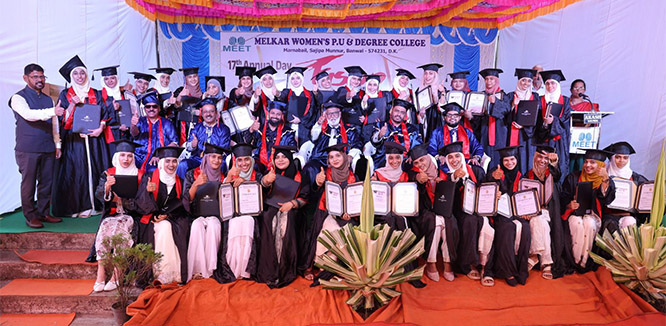
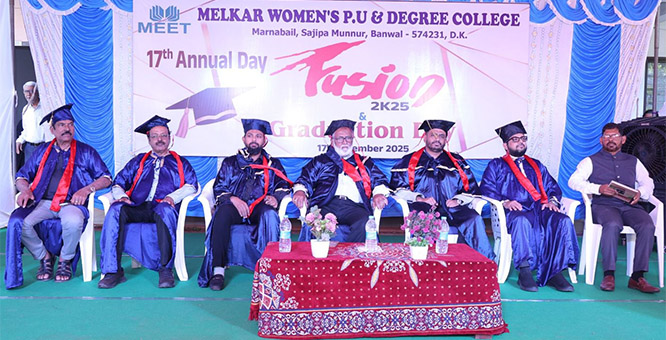
Melkar, Dec 17: The 17th Annual Day and Graduation Ceremony of Melkar Women’s PU and Degree College, themed “Fusion-2K25,” was celebrated with dignity and enthusiasm, marking a significant milestone in the institution’s academic journey. The programme reflected the college’s steadfast commitment to academic excellence, character building, and the holistic development of students.

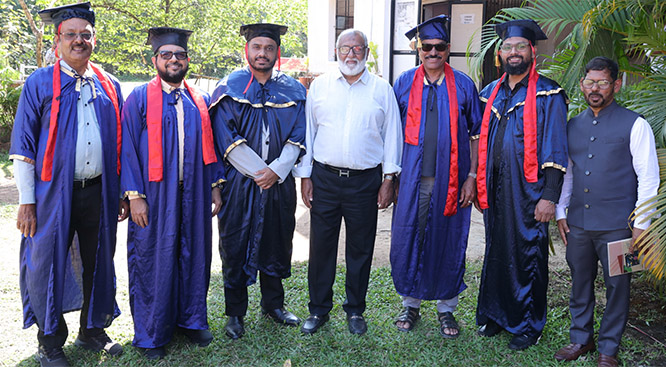
The event was inaugurated by Mr. Asif Mohammed, whose presence greatly enriched the occasion. The celebration was further graced by the chief guests Mr. P. B. Ahmed Mudassir and Mr. Nissar Fakeer Mohammed, along with the distinguished guests of honour Mr. B. A. Nazeer and Mr. Ibrahim Gadiyar. In their inspiring addresses, the guests encouraged the graduating students and appreciated the dedicated efforts of the management, faculty, and students.

The annual report was presented by the Principal, Mr. Abdul Majeed S, highlighting the institution’s academic progress, notable achievements, and extracurricular accomplishments during the academic year.

The presidential address was delivered by the esteemed Chairman of Melkar Women’s PU and Degree College, Dr. Haji S. M. Rasheed, who emphasized the vital role of education in empowering women and shaping responsible citizens. He also stressed the importance of discipline, dedication, and perseverance in achieving success.

Cultural programmes and academic recognitions formed an integral part of the celebration, showcasing the talents and achievements of the students. The graduation ceremony was a proud moment for the outgoing students as they were formally conferred degrees and wished success in their future endeavours.

Ms. Mashmooma Fathima served as the Master of Ceremonies. The welcome address was delivered by Ms. Fathima Nida, and the programme concluded with a vote of thanks proposed by Ms. Ayisha Suhana.

The event successfully achieved its objectives and was highly appreciated by the guests and attendees.

melkar3.jpg

melkar2.jpg

Comments

Add new comment

  • Coastaldigest.com reserves the right to delete or block any comments.
  • Coastaldigset.com is not responsible for its readers’ comments.
  • Comments that are abusive, incendiary or irrelevant are strictly prohibited.
  • Please use a genuine email ID and provide your name to avoid reject.