



PM Narendra Modi is losing his political mojo

News Network
January 13, 2020

Jan 13: For the first time in years, the government of India’s Prime Minister Narendra Modi is playing defense. Protests have sprung up across the country against an amendment to India’s laws — which came into effect on Friday — that makes it easier for members of some religions to become citizens of India. The government claims this is simply an attempt to protect religious minorities in the Muslim-majority countries that border India; but protesters see it as the first step toward a formal repudiation of India’s constitutionally guaranteed secularism — and one that must be resisted.
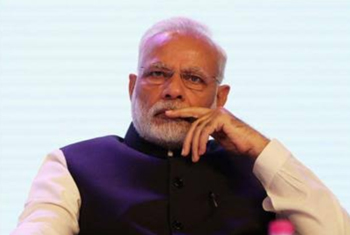
Modi was re-elected prime minister last year with an enhanced majority; his hold over the country’s politics is absolute. The formal opposition is weak, discredited and disorganized. Yet, somehow, the anti-Citizenship Act protests have taken hold. No political party is behind them; they are generally arranged by student unions, neighborhood associations and the like.

Yet this aspect of their character is precisely what will worry Modi and his right-hand man, Home Minister Amit Shah. They know how to mock and delegitimize opposition parties with ruthless efficiency. Yet creating a narrative that paints large, flag-waving crowds as traitors is not quite that easy.

For that is how these protests look: large groups of young people, many carrying witty signs and the national flag. They meet and read the preamble to India’s Constitution, into which the promise of secularism was written in the 1970’s.

They carry photographs of the Constitution’s drafter, the Columbia University-trained economist and lawyer B. R. Ambedkar. These are not the mobs the government wanted. They hoped for angry Muslims rampaging through the streets of India’s cities, whom they could point to and say: “See? We must protect you from them.” But, in spite of sometimes brutal repression, the protests have largely been nonviolent.

One, in Shaheen Bagh in a Muslim-dominated sector of New Delhi, began simply as a set of local women in a square, armed with hot tea and blankets against the chill Delhi winter. It has now become the focal point of a very different sort of resistance than what the government expected. Nothing could cure the delusions of India’s Hindu middle class, trained to see India’s Muslims as dangerous threats, as effectively as a group of otherwise clearly apolitical women sipping sweet tea and sharing their fears and food with anyone who will listen.

Modi was re-elected less than a year ago; what could have changed in India since then? Not much, I suspect, in most places that voted for him and his party — particularly the vast rural hinterland of northern India. But urban India was also possibly never quite as content as electoral results suggested. India’s growth dipped below 5% in recent quarters; demand has crashed, and uncertainty about the future is widespread. Worse, the government’s response to the protests was clearly ill-judged. University campuses were attacked, in one case by the police and later by masked men almost certainly connected to the ruling party.

Protesters were harassed and detained with little cause. The courts seemed uninterested. And, slowly, anger began to grow on social media — not just on Twitter, but also on Instagram, previously the preserve of pretty bowls of salad. Instagram is the one social medium over which Modi’s party does not have a stranglehold; and it is where these protests, with their photogenic signs and flags, have found a natural home. As a result, people across urban India who would never previously have gone to a demonstration or a political rally have been slowly politicized.

India is, in fact, becoming more like a normal democracy. “Normal,” that is, for the 2020’s. Liberal democracies across the world are politically divided, often between more liberal urban centers and coasts, and angrier, “left-behind” hinterlands. Modi’s political secret was that he was that rare populist who could unite both the hopeful cities and the resentful countryside. Yet this once magic formula seems to have become ineffective. Five of India’s six largest cities are not ruled by Modi’s Bharatiya Janata Party in any case — the financial hub of Mumbai changed hands recently. The BJP has set its sights on winning state elections in Delhi in a few weeks. Which way the capital’s voters will go is uncertain. But that itself is revealing — last year, Modi swept all seven parliamentary seats in Delhi.

In the end, the Citizenship Amendment Act is now law, the BJP might manage to win Delhi, and the protests might die down as the days get unmanageably hot and state repression increases. But urban India has put Modi on notice. His days of being India’s unifier are over: From now on, like all the other populists, he will have to keep one eye on the streets of his country’s cities.


Comments

Add new comment

  • Coastaldigest.com reserves the right to delete or block any comments.
  • Coastaldigset.com is not responsible for its readers’ comments.
  • Comments that are abusive, incendiary or irrelevant are strictly prohibited.
  • Please use a genuine email ID and provide your name to avoid reject.
coastaldigest.com news network
December 20,2025

Mangaluru, Dec 20: City Police Commissioner Sudheer Kumar Reddy has issued a high-alert warning to vehicle owners regarding a surge in cyber fraud targeting those looking to pay traffic violation fines. Fraudsters are reportedly exploiting recent government discount schemes on traffic penalties to deceive citizens.

The Scam: How Fraudsters Strike

Criminals are using SMS, WhatsApp, and social media to circulate suspicious links and APK files (Android application packages). They claim these apps allow users to pay e-challans at a discount.

•    Device Hacking: Downloading these unauthorized apps gives hackers full access to the victim's smartphone.

•    Financial Theft: Once the phone is compromised, fraudsters intercept OTPs and personal data to drain bank accounts.

•    Phishing Sites: Fake websites mimicking official portals are also being used to harvest banking credentials.

Already, two residents within Mangaluru city limits have reported significant financial losses after falling victim to these fraudulent apps.

Comments

Add new comment

  • Coastaldigest.com reserves the right to delete or block any comments.
  • Coastaldigset.com is not responsible for its readers’ comments.
  • Comments that are abusive, incendiary or irrelevant are strictly prohibited.
  • Please use a genuine email ID and provide your name to avoid reject.
News Network
December 20,2025

train.jpg

At least seven elephants were killed and one calf injured after a herd collided with the Sairang-New Delhi Rajdhani Express in Assam's Hojai on Saturday morning, leading to disruption of rail services. 

The Sairang-New Delhi Rajdhani Express struck a herd of elephants, resulting in the derailment of the locomotive and five coaches. No passenger casualties or injuries were reported, officials said.

The New Delhi-bound train met with the accident around 2.17 am, PTI reported. The Sairang-New Delhi Rajdhani Express connects Mizoram's Sairang (near Aizawl) to Anand Vihar Terminal (Delhi). 

Railway has issued helpline numbers at the Guwahati Railway Station:-

•    0361-2731621
•    0361-2731622
•    0361-2731623

The accident site is located about 126 km from Guwahati. Following the incident, accident relief trains and railway officials rushed to the spot to initiate rescue operations.

Train Services Disrupted

Sources said that due to the derailment and elephant body parts scattered on the tracks, train services to Upper Assam and other parts of the Northeast were affected.

Passengers from the affected coaches were temporarily accommodated in vacant berths available in other coaches of the train. Once the train reaches Guwahati, additional coaches will be attached to accommodate all passengers, after which the train will resume its onward journey.

The incident occurred at a location that is not a designated elephant corridor. The loco pilot, upon spotting the herd on the tracks, applied emergency brakes. Despite this, the elephants dashed into the train, leading to the collision and derailment.

Last month, an elephant was killed after being hit by a train in Dhupguri in West Bengal's Jalpaiguri district. The incident took place on November 30. 

The adult elephant was killed on the spot, and a calf was discovered lying injured beside the tracks. 

Over 70 Elephants Killed In Train Collisions Over Last 5 Years

At least 79 elephants have died in train collisions across the country in the last five years, the Environment Ministry had informed Parliament in August.

In a written reply in the Lok Sabha, Minister of State for Environment Kirti Vardhan Singh had said the figure is based on reports from state governments and Union Territory administrations for the period 2020-21 to 2024-25.

He said that the ministry does not maintain consolidated data on the deaths of other wild animals on railway tracks, including in designated elephant corridors.

Singh confirmed that three elephants, including a mother and her calf, were killed on July 18 this year after being hit by a speeding express train on the Kharagpur-Tatanagar section in West Bengal's Paschim Midnapore district. The incident took place near Banstala between Jhargram and Banstala stations.

The minister said several measures have been taken jointly by the Environment Ministry and the Railways to prevent such accidents.

These include imposing speed restrictions in elephant habitats, pilot projects such as seismic sensor-based detection of elephants near tracks and construction of underpasses, ramps and fencing at vulnerable points.

The Wildlife Institute of India, in consultation with the ministry and other stakeholders, has also issued guidelines titled 'Eco-friendly Measures to Mitigate Impacts of Linear Infrastructure' to help agencies design railways and other projects in ways that reduce human-animal conflicts.

Singh added that capacity-building workshops were conducted for railway officials at the Wildlife Institute of India in 2023 and 2024 to raise awareness on elephant conservation and protection.

A detailed report titled 'Suggested Measures to Mitigate Elephant & Other Wildlife Train Collisions on Vulnerable Railway Stretches in India' had also been prepared after surveys across 127 railway stretches covering 3,452 km.

Of these, 77 stretches spanning 1,965 km in 14 states were prioritised for mitigation, with site-specific interventions suggested. 

Comments

Add new comment

  • Coastaldigest.com reserves the right to delete or block any comments.
  • Coastaldigset.com is not responsible for its readers’ comments.
  • Comments that are abusive, incendiary or irrelevant are strictly prohibited.
  • Please use a genuine email ID and provide your name to avoid reject.
News Network
December 16,2025

jordan.jpg

Prime Minister Narendra Modi on Monday held talks with Jordan’s King Abdullah II in Amman, during which the two leaders discussed ways to further strengthen bilateral relations, with the Prime Minister outlining an eight-point vision covering key areas of cooperation.

Describing the meeting as “productive”, PM Modi said he shared a roadmap focused on trade and economy, fertilisers and agriculture, information technology, healthcare, infrastructure, critical and strategic minerals, civil nuclear cooperation, and people-to-people ties.

In a post on social media platform X, the Prime Minister praised King Abdullah II’s personal commitment to advancing India–Jordan relations, particularly as both countries mark the 75th anniversary of the establishment of diplomatic ties this year.

“Held productive discussions with His Majesty King Abdullah II in Amman. His personal commitment towards vibrant India-Jordan relations is noteworthy. This year, we are celebrating the 75th anniversary of our bilateral diplomatic relations,” PM Modi said.

The meeting took place at the Al Husseiniya Palace, where the two leaders also exchanged views on regional and global issues of mutual interest. According to the Ministry of External Affairs (MEA), both sides agreed to further deepen cooperation in areas including trade and investment, defence and security, counter-terrorism and de-radicalisation, fertilisers and agriculture, infrastructure, renewable energy, tourism, and heritage.

The MEA said both leaders reaffirmed their united stand against terrorism.

PM Modi arrived in Amman earlier on Monday and was received by Jordanian Prime Minister Jafar Hassan, who accorded him a formal welcome. Following the talks, King Abdullah II hosted a banquet dinner in honour of the Prime Minister, reflecting the warmth of bilateral ties.

Jordan is the first leg of PM Modi’s three-nation tour. From Amman, the Prime Minister will travel to Ethiopia at the invitation of Prime Minister Abiy Ahmed Ali, marking his first official visit to the African nation. The tour will conclude with a visit to Oman.

Comments

Add new comment

  • Coastaldigest.com reserves the right to delete or block any comments.
  • Coastaldigset.com is not responsible for its readers’ comments.
  • Comments that are abusive, incendiary or irrelevant are strictly prohibited.
  • Please use a genuine email ID and provide your name to avoid reject.
