Political advertising breaking new grounds and a few norms

April 2, 2017

New Delhi, Apr 2: Front pages of newspapers seldom break news these days. Very often, the reader wakes up to a politician's beaming smile, not news.
modi-kejriwal

Want to listen to some music while driving? Switch the stereo on and it's quite likely you have to make do with a political party's jingle. And watching television before elections essentially means staring at competing visions of political parties, on an endless loop. Gone are the days of bland government ads. Welcome to the age of sleek political advertising-- creative and engaging.

The recent CAG indictment of the AAP government for "violating" Supreme Court guidelines by conflating the party with the government in its ads or by promoting Arvind Kejriwal has put the spotlight on this rapidly evolving area.

But advertising professionals and public policy analysts believe the issue has layers and cannot be treated in black and white.

"If you are a party in government, lines get blurred between the communications being put out by the government and the party. It is very easy to point fingers that the government has used public funds to take credit for the party.

"Whereas the intention is of spreading awareness among citizens about government projects. Citizens will decide too if it's not what they wanted eventually," says Dilip Cherian, a top communications consultant and political campaign advisor.

Nitin Pai, who spearheads the Bengaluru-based Takshashila Institution, an independent think tank, thinks it would be unfair to single out the AAP for doing "what all parties do".

"Once they get into government, they use government resources and machinery to promote themselves and their leaders. It only shows that AAP is no different than the others in terms of its fiscal rectitude," he says.

Contemporary politics is all about larger-than-life individuals, who loom large over the landscape of the nation, as messiahs or saviours, often relegating pertinent issues to the back burner. Does it also reflect in political advertising? Analysts believe it does. Ad campaigns, even the political ones, are driven by a "protagonist or a brand ambassador".
"In India today, every political party seems to be thriving on personality-driven advertising and communication," Cherian says. While photographs of political leaders are "unnecessary" when the government announces new projects and schemes, Pai says, it is also obvious that a rule that "bans" such photographs is too broad and indiscriminate.
"I do not think more rules are a solution, if our top political leaders lack a sense of decorum and propriety," he says.

In 2015, the Supreme Court had barred the use of photographs of politicians in ads except that of the Prime Minister. The President the Chief Justice of India were alos exempt.

It had later modified the order and allowed the pictures of Union Ministers, Chief Ministers, Governors and State Ministers in government advertisements. But can newspaper ads or radio jingles actually sway or shape public opinion and if yes to what extent?

Cherian says ads and jingles are meant to create awareness and thereafter, it is up to the consumer or the public to decide whether to "buy" what is being communicated.

"Unlike Fast-moving consumer goods (FMCG) products, where large volumes of advertisements are meant to promote sales, a social or government advertising is primarily meant to disseminate information. If it persuades it's great advertising. If it does not then money is wasted," he says.

Pai believes that it depends on what is being conveyed, who is persuading and under what circumstances. "No amount of newspaper advertisements or radio jingles will create Swachch Bharat, at least in the short term. But an advertisement or radio spot promoting free vaccination by a certain due date is likely to change behaviour," he says.


Front pages of newspapers seldom break news these days. Very often, the reader wakes up to a politician's beaming smile, not news.

Want to listen to some music while driving? Switch the stereo on and it's quite likely you have to make do with a political party's jingle. And watching television before elections essentially means staring at competing visions of political parties, on an endless loop. Gone are the days of bland government ads. Welcome to the age of sleek political advertising-- creative and engaging.

The recent CAG indictment of the AAP government for "violating" Supreme Court guidelines by conflating the party with the government in its ads or by promoting Arvind Kejriwal has put the spotlight on this rapidly evolving area.

But advertising professionals and public policy analysts believe the issue has layers and cannot be treated in black and white.

"If you are a party in government, lines get blurred between the communications being put out by the government and the party. It is very easy to point fingers that the government has used public funds to take credit for the party.

"Whereas the intention is of spreading awareness among citizens about government projects. Citizens will decide too if it's not what they wanted eventually," says Dilip Cherian, a top communications consultant and political campaign advisor.

Nitin Pai, who spearheads the Bengaluru-based Takshashila Institution, an independent think tank, thinks it would be unfair to single out the AAP for doing "what all parties do".

"Once they get into government, they use government resources and machinery to promote themselves and their leaders. It only shows that AAP is no different than the others in terms of its fiscal rectitude," he says.

Contemporary politics is all about larger-than-life individuals, who loom large over the landscape of the nation, as messiahs or saviours, often relegating pertinent issues to the back burner. Does it also reflect in political advertising? Analysts believe it does. Ad campaigns, even the political ones, are driven by a "protagonist or a brand ambassador".
"In India today, every political party seems to be thriving on personality-driven advertising and communication," Cherian says. While photographs of political leaders are "unnecessary" when the government announces new projects and schemes, Pai says, it is also obvious that a rule that "bans" such photographs is too broad and indiscriminate.
"I do not think more rules are a solution, if our top political leaders lack a sense of decorum and propriety," he says.

In 2015, the Supreme Court had barred the use of photographs of politicians in ads except that of the Prime Minister. The President the Chief Justice of India were alos exempt.

It had later modified the order and allowed the pictures of Union Ministers, Chief Ministers, Governors and State Ministers in government advertisements. But can newspaper ads or radio jingles actually sway or shape public opinion and if yes to what extent?

Cherian says ads and jingles are meant to create awareness and thereafter, it is up to the consumer or the public to decide whether to "buy" what is being communicated.

"Unlike Fast-moving consumer goods (FMCG) products, where large volumes of advertisements are meant to promote sales, a social or government advertising is primarily meant to disseminate information. If it persuades it's great advertising. If it does not then money is wasted," he says.

Pai believes that it depends on what is being conveyed, who is persuading and under what circumstances. "No amount of newspaper advertisements or radio jingles will create Swachch Bharat, at least in the short term. But an advertisement or radio spot promoting free vaccination by a certain due date is likely to change behaviour," he says.
Comments

Add new comment

  • Coastaldigest.com reserves the right to delete or block any comments.
  • Coastaldigset.com is not responsible for its readers’ comments.
  • Comments that are abusive, incendiary or irrelevant are strictly prohibited.
  • Please use a genuine email ID and provide your name to avoid reject.
News Network
December 20,2025

train.jpg

At least seven elephants were killed and one calf injured after a herd collided with the Sairang-New Delhi Rajdhani Express in Assam's Hojai on Saturday morning, leading to disruption of rail services. 

The Sairang-New Delhi Rajdhani Express struck a herd of elephants, resulting in the derailment of the locomotive and five coaches. No passenger casualties or injuries were reported, officials said.

The New Delhi-bound train met with the accident around 2.17 am, PTI reported. The Sairang-New Delhi Rajdhani Express connects Mizoram's Sairang (near Aizawl) to Anand Vihar Terminal (Delhi). 

Railway has issued helpline numbers at the Guwahati Railway Station:-

•    0361-2731621
•    0361-2731622
•    0361-2731623

The accident site is located about 126 km from Guwahati. Following the incident, accident relief trains and railway officials rushed to the spot to initiate rescue operations.

Train Services Disrupted

Sources said that due to the derailment and elephant body parts scattered on the tracks, train services to Upper Assam and other parts of the Northeast were affected.

Passengers from the affected coaches were temporarily accommodated in vacant berths available in other coaches of the train. Once the train reaches Guwahati, additional coaches will be attached to accommodate all passengers, after which the train will resume its onward journey.

The incident occurred at a location that is not a designated elephant corridor. The loco pilot, upon spotting the herd on the tracks, applied emergency brakes. Despite this, the elephants dashed into the train, leading to the collision and derailment.

Last month, an elephant was killed after being hit by a train in Dhupguri in West Bengal's Jalpaiguri district. The incident took place on November 30. 

The adult elephant was killed on the spot, and a calf was discovered lying injured beside the tracks. 

Over 70 Elephants Killed In Train Collisions Over Last 5 Years

At least 79 elephants have died in train collisions across the country in the last five years, the Environment Ministry had informed Parliament in August.

In a written reply in the Lok Sabha, Minister of State for Environment Kirti Vardhan Singh had said the figure is based on reports from state governments and Union Territory administrations for the period 2020-21 to 2024-25.

He said that the ministry does not maintain consolidated data on the deaths of other wild animals on railway tracks, including in designated elephant corridors.

Singh confirmed that three elephants, including a mother and her calf, were killed on July 18 this year after being hit by a speeding express train on the Kharagpur-Tatanagar section in West Bengal's Paschim Midnapore district. The incident took place near Banstala between Jhargram and Banstala stations.

The minister said several measures have been taken jointly by the Environment Ministry and the Railways to prevent such accidents.

These include imposing speed restrictions in elephant habitats, pilot projects such as seismic sensor-based detection of elephants near tracks and construction of underpasses, ramps and fencing at vulnerable points.

The Wildlife Institute of India, in consultation with the ministry and other stakeholders, has also issued guidelines titled 'Eco-friendly Measures to Mitigate Impacts of Linear Infrastructure' to help agencies design railways and other projects in ways that reduce human-animal conflicts.

Singh added that capacity-building workshops were conducted for railway officials at the Wildlife Institute of India in 2023 and 2024 to raise awareness on elephant conservation and protection.

A detailed report titled 'Suggested Measures to Mitigate Elephant & Other Wildlife Train Collisions on Vulnerable Railway Stretches in India' had also been prepared after surveys across 127 railway stretches covering 3,452 km.

Of these, 77 stretches spanning 1,965 km in 14 states were prioritised for mitigation, with site-specific interventions suggested. 

Comments

Add new comment

  • Coastaldigest.com reserves the right to delete or block any comments.
  • Coastaldigset.com is not responsible for its readers’ comments.
  • Comments that are abusive, incendiary or irrelevant are strictly prohibited.
  • Please use a genuine email ID and provide your name to avoid reject.
News Network
December 16,2025

jordan.jpg

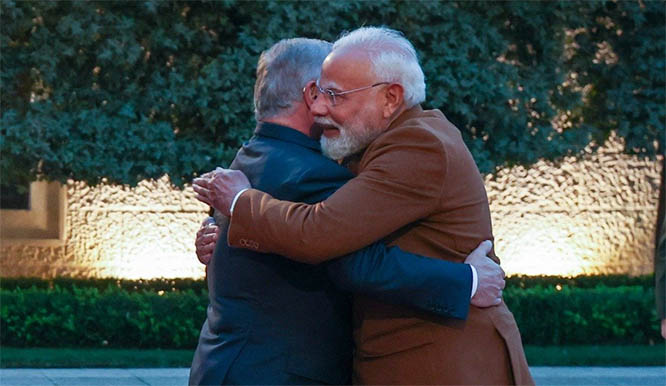
Prime Minister Narendra Modi on Monday held talks with Jordan’s King Abdullah II in Amman, during which the two leaders discussed ways to further strengthen bilateral relations, with the Prime Minister outlining an eight-point vision covering key areas of cooperation.

Describing the meeting as “productive”, PM Modi said he shared a roadmap focused on trade and economy, fertilisers and agriculture, information technology, healthcare, infrastructure, critical and strategic minerals, civil nuclear cooperation, and people-to-people ties.

In a post on social media platform X, the Prime Minister praised King Abdullah II’s personal commitment to advancing India–Jordan relations, particularly as both countries mark the 75th anniversary of the establishment of diplomatic ties this year.

“Held productive discussions with His Majesty King Abdullah II in Amman. His personal commitment towards vibrant India-Jordan relations is noteworthy. This year, we are celebrating the 75th anniversary of our bilateral diplomatic relations,” PM Modi said.

The meeting took place at the Al Husseiniya Palace, where the two leaders also exchanged views on regional and global issues of mutual interest. According to the Ministry of External Affairs (MEA), both sides agreed to further deepen cooperation in areas including trade and investment, defence and security, counter-terrorism and de-radicalisation, fertilisers and agriculture, infrastructure, renewable energy, tourism, and heritage.

The MEA said both leaders reaffirmed their united stand against terrorism.

PM Modi arrived in Amman earlier on Monday and was received by Jordanian Prime Minister Jafar Hassan, who accorded him a formal welcome. Following the talks, King Abdullah II hosted a banquet dinner in honour of the Prime Minister, reflecting the warmth of bilateral ties.

Jordan is the first leg of PM Modi’s three-nation tour. From Amman, the Prime Minister will travel to Ethiopia at the invitation of Prime Minister Abiy Ahmed Ali, marking his first official visit to the African nation. The tour will conclude with a visit to Oman.

Comments

Add new comment

  • Coastaldigest.com reserves the right to delete or block any comments.
  • Coastaldigset.com is not responsible for its readers’ comments.
  • Comments that are abusive, incendiary or irrelevant are strictly prohibited.
  • Please use a genuine email ID and provide your name to avoid reject.
News Network
December 6,2025

indigoticket.jpg

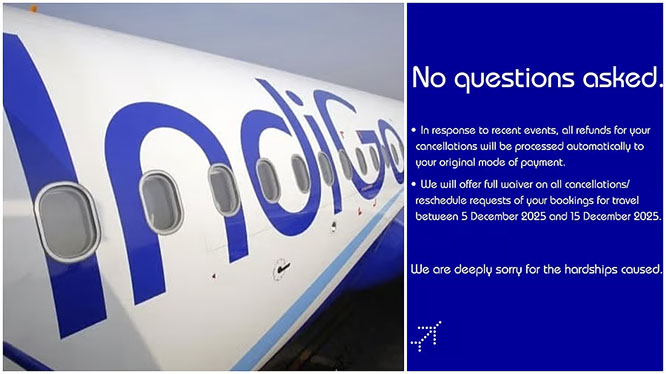
With IndiGo flight disruptions impacting thousands of passengers, the airline on Saturday said that it will offer full waiver on all cancellations/reschedule requests for travel bookings between December 5, 2025 and December 15, 2025.

Earlier in the day, the civil aviation ministry had directed the airline to complete the ticket refund process for the cancelled flights by Sunday evening, as well as ensure baggage separated from the travellers are delivered in the next two days.

In a post on X, titled 'No questions asked', IndiGo wrote, "In response to recent events, all refunds for your cancellations will be processed automatically to your original mode of payment."

"We are deeply sorry for the hardships caused," it further added.

Several passengers, however, complained of not getting full refund as promised by the airline.

Netizens have shared screenchots of getting charged for airline cancellation fee and convenience fee.

"Please tell me why u have did this airline cancellation charges when u say full amount will be refunded (sic)," a user wrote sharing a screenshot of the refund page.

"Well, but you have still debited the convenience charges," wrote another.

Passengers have also raised concerns about the "cancel" option being disabled on the IndiGo app. "First enable the 'Cancel' button on your App & offer full refund on tickets cancelled by customers between the said dates," wrote a user.

A day after the country's largest airline, IndiGo, cancelled more than 1,000 flights and caused disruptions for the fifth day on Saturday, the ministry said that any delay or non-compliance in refund processing will invite immediate regulatory action.

The refund process for all cancelled or disrupted flights must be completed by 8 pm on Sunday, the ministry said in a statement.

"Airlines have also been instructed not to levy any rescheduling charges for passengers whose travel plans were affected by cancellations," it said.

On Saturday, more than 400 flights were cancelled at various airports.

IndiGo has also been instructed to set up dedicated passenger support and refund facilitation cells.

Comments

Add new comment

  • Coastaldigest.com reserves the right to delete or block any comments.
  • Coastaldigset.com is not responsible for its readers’ comments.
  • Comments that are abusive, incendiary or irrelevant are strictly prohibited.
  • Please use a genuine email ID and provide your name to avoid reject.