Popular Tamil poet Abdul Rahman passes away

[email protected] (News Network)
June 2, 2017

Chennai, Jun 2: Tamil poet S. Abdul Rahman, popularly known as 'Kavikko,' passed away here in the early hours of Friday after a brief illness. He was 79. He is survived by his son and daughter. The funeral will take place tomorrow, according a family member.
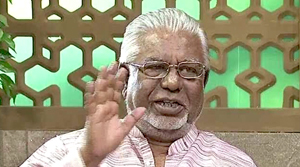
Kaviko

Born in Madurai on November 9, 1937, Abdul Rahman did post-graduation in Tamil before joining the Islamiah College in Vaniyambadi, Vellore district as a teacher. He had subsequently become Head of Tamil Department in the college and held the post nearly for 20 years. Later, he took to writing on a full time basis.

When he got the Sahitya Akademi award in 1999 for his collection of poems, Aalapanai, it was a “poetic irony.” He was, till then, known as a bitter critic of the Akademi for not giving Tamil poets their due.

His criticism was not unjustified then as it took over 30 years for the Akademi to identify a work of Tamil poetry for its award. The last piece of Tamil poetry bagging the award was Vellai Paravai, authored by A. Srinivasa Raghavan, and that was in 1968.

After Abdul Rahman's, three more works of Tamil poetry received the national institution's recognition and one of them was Akayathukku Aduthaveedu, written by Mu. Metha, for 2006.

Vairamuthu, another prominent Tamil poet, was, however, given the Akademi award for his novel, Kallikattu Ithikasam, in 2003.

In an hour-long meeting with this writer some years ago, Abdul Rahman had blamed his literary fraternity for having failed in projecting to the outside world "the unique aspects of Tamil poetry." He had strongly felt that it was due to "our deficiency" that Tamil poetry had not been accorded the importance that it deserved at the national level.

As one who had demonstrated his skill in using the complexities of imagery and symbolism in poetry, Abdul Rahman called himself a neo-classicist. In his later part of life, he devoted time to read the Vedas and Upanishads, “whose literary value,” he said, “is immense.” He acknowledged that many of his expressions and symbols were taken from them.

He was not the one who would ignore lyrics used in Tamil feature films which were also, according to him, one form of poetry. He was of the view of that Kannadasan's best pieces were his film songs.

He received several awards and honours such as the State Government's 'Kalaimamani' title (1989), and 'Agni Akshara' Award (1992).

Abdul Rahman closely identified himself with Dravida Munnetra Kazhagam's president and former Chief Minister M. Karunanidhi, who, he once said, was a “pioneer in adopting the form of poetic prose.”

D. Ravikumar, Tamil poet-writer and Viduthalai Chiruthaigal Katchi general secretary, said "Kavikko" had successfully experimented new forms in Tamil poetry.

Here is a poem of Abdul Rahman in his work, Pyramids in the Desert:'

The leaders also die like all of us

But, the leaders' death alone becomes irreparable loss

Still, the thrones are not kept vacant.

Comments

Add new comment

  • Coastaldigest.com reserves the right to delete or block any comments.
  • Coastaldigset.com is not responsible for its readers’ comments.
  • Comments that are abusive, incendiary or irrelevant are strictly prohibited.
  • Please use a genuine email ID and provide your name to avoid reject.
News Network
December 20,2025

train.jpg

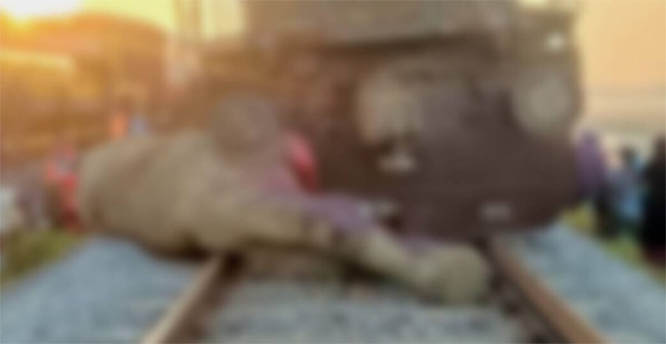
At least seven elephants were killed and one calf injured after a herd collided with the Sairang-New Delhi Rajdhani Express in Assam's Hojai on Saturday morning, leading to disruption of rail services. 

The Sairang-New Delhi Rajdhani Express struck a herd of elephants, resulting in the derailment of the locomotive and five coaches. No passenger casualties or injuries were reported, officials said.

The New Delhi-bound train met with the accident around 2.17 am, PTI reported. The Sairang-New Delhi Rajdhani Express connects Mizoram's Sairang (near Aizawl) to Anand Vihar Terminal (Delhi). 

Railway has issued helpline numbers at the Guwahati Railway Station:-

•    0361-2731621
•    0361-2731622
•    0361-2731623

The accident site is located about 126 km from Guwahati. Following the incident, accident relief trains and railway officials rushed to the spot to initiate rescue operations.

Train Services Disrupted

Sources said that due to the derailment and elephant body parts scattered on the tracks, train services to Upper Assam and other parts of the Northeast were affected.

Passengers from the affected coaches were temporarily accommodated in vacant berths available in other coaches of the train. Once the train reaches Guwahati, additional coaches will be attached to accommodate all passengers, after which the train will resume its onward journey.

The incident occurred at a location that is not a designated elephant corridor. The loco pilot, upon spotting the herd on the tracks, applied emergency brakes. Despite this, the elephants dashed into the train, leading to the collision and derailment.

Last month, an elephant was killed after being hit by a train in Dhupguri in West Bengal's Jalpaiguri district. The incident took place on November 30. 

The adult elephant was killed on the spot, and a calf was discovered lying injured beside the tracks. 

Over 70 Elephants Killed In Train Collisions Over Last 5 Years

At least 79 elephants have died in train collisions across the country in the last five years, the Environment Ministry had informed Parliament in August.

In a written reply in the Lok Sabha, Minister of State for Environment Kirti Vardhan Singh had said the figure is based on reports from state governments and Union Territory administrations for the period 2020-21 to 2024-25.

He said that the ministry does not maintain consolidated data on the deaths of other wild animals on railway tracks, including in designated elephant corridors.

Singh confirmed that three elephants, including a mother and her calf, were killed on July 18 this year after being hit by a speeding express train on the Kharagpur-Tatanagar section in West Bengal's Paschim Midnapore district. The incident took place near Banstala between Jhargram and Banstala stations.

The minister said several measures have been taken jointly by the Environment Ministry and the Railways to prevent such accidents.

These include imposing speed restrictions in elephant habitats, pilot projects such as seismic sensor-based detection of elephants near tracks and construction of underpasses, ramps and fencing at vulnerable points.

The Wildlife Institute of India, in consultation with the ministry and other stakeholders, has also issued guidelines titled 'Eco-friendly Measures to Mitigate Impacts of Linear Infrastructure' to help agencies design railways and other projects in ways that reduce human-animal conflicts.

Singh added that capacity-building workshops were conducted for railway officials at the Wildlife Institute of India in 2023 and 2024 to raise awareness on elephant conservation and protection.

A detailed report titled 'Suggested Measures to Mitigate Elephant & Other Wildlife Train Collisions on Vulnerable Railway Stretches in India' had also been prepared after surveys across 127 railway stretches covering 3,452 km.

Of these, 77 stretches spanning 1,965 km in 14 states were prioritised for mitigation, with site-specific interventions suggested. 

Comments

Add new comment

  • Coastaldigest.com reserves the right to delete or block any comments.
  • Coastaldigset.com is not responsible for its readers’ comments.
  • Comments that are abusive, incendiary or irrelevant are strictly prohibited.
  • Please use a genuine email ID and provide your name to avoid reject.