



Private schools to have self-regulatory body

DHNS
June 16, 2018

Bengaluru, Jun 16: Private schools' associations have decided to form a self-regulatory body, in association with the state government, to keep a tab on the functioning of private schools across the state.

This comes following several protests that were staged in Bengaluru recently against private schools. The protesting parents had claimed that schools were fleecing them in the name of school fee.

Addressing reporters here on Friday, Shashi Kumar D, general secretary, Associated Managements of Primary and Secondary Schools in Karnataka said that the body would be constituted to look into the implementation of the Right to Education Act and its provisions as well.

The proposed body will look into regulation of fee, implementation of Kannada as second language, sort confusions over RTE students and the amenities that are to be provided to them and issues pertaining to text books and uniforms.

He said that around 7,000 schools were under the umbrella of four private school associations in the state.

“Like in the past, we will continue to lodge complaints against errant private schools. Having a board would channelise our efforts,” Kumar said. He also sought that a ‘parents charter’ be introduced, which lays down rules for parents and lists their responsibilities.

The association also urged the state government to constitute a committee with a nodal officer from the government to look into the issues that bother private schools.

Kumar said that among the other issues that the private schools were battling this academic year were parents keeping fee payments overdue. He said he would seek that all member schools display their fee chart as mandated by the Education department.

V R N Reddy, president, Karnataka Unaided Schools’ Management Association (KUSMA) said that a nodal officer has to be appointed to address the grievances of private school managements.

Speaking about a report that pointed that the state government would withdraw

permission granted to private schools located within one kilometer vicinity of the government schools, Kumar said, “the Education department must go to the root of the problem. It must understand that it is their own Block Education Officers who grant permission for the functioning of such schools. How can it be withdrawn later?”

Comments

Add new comment

  • Coastaldigest.com reserves the right to delete or block any comments.
  • Coastaldigset.com is not responsible for its readers’ comments.
  • Comments that are abusive, incendiary or irrelevant are strictly prohibited.
  • Please use a genuine email ID and provide your name to avoid reject.
News Network
December 7,2025

SHRIMP.jpg

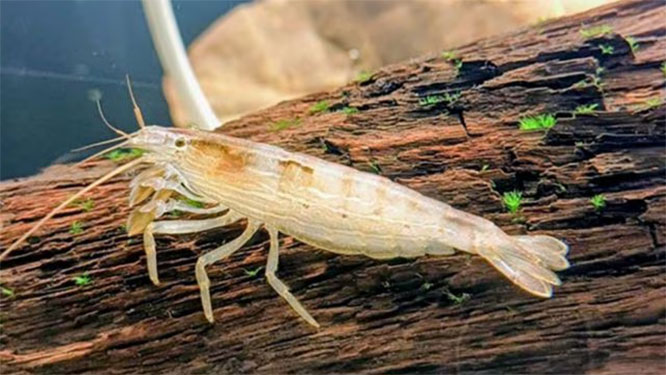
Mangaluru, Dec 7: A rare bamboo shrimp has been rediscovered on mainland India more than 70 years after it was last reported, confirming for the first time the presence of Atyopsis spinipes in the country. The find was made by researchers from the Centre for Climate Change Studies at Sathyabama Institute of Science and Technology, Chennai, during surveys in Karnataka and Odisha.

The team — shrimp expert Dr S Prakash, PhD scholar K Kunjulakshmi, and Mangaluru-based researcher Maclean Antony Santos — combined field surveys, ecological assessments and DNA analysis to identify the elusive species. Their findings, published in Zootaxa, resolve decades of taxonomic confusion stemming from a 1951 report that misidentified the species as Atyopsis moluccensis without strong evidence.

The shrimp has now been confirmed at two locations: the Mulki–Pavanje estuary near Mangaluru and the Kuakhai River in Bhubaneswar. Historical specimens from the Andaman Islands, previously labelled as A. moluccensis, were also found to be misidentified and actually belong to A. spinipes.

The rediscovery began after an aquarium hobbyist in Odisha spotted a shrimp in 2022, prompting systematic surveys across Udupi, Karwar and Mangaluru. Four female specimens were collected in Mulki and one in Odisha, all genetically matching.

Researchers warn the species may exist in very small, vulnerable populations as freshwater habitats face increasing pressure from pollution, sand mining and infrastructure development. All verified specimens have been deposited with the Zoological Survey of India for future reference.

Comments

Add new comment

  • Coastaldigest.com reserves the right to delete or block any comments.
  • Coastaldigset.com is not responsible for its readers’ comments.
  • Comments that are abusive, incendiary or irrelevant are strictly prohibited.
  • Please use a genuine email ID and provide your name to avoid reject.