To protest is our democratic right, but keep emotions under control: Shahi Imam

News Network
December 18, 2019

New Delhi, Dec 18: Shahi Imam of Jama Masjid Syed Ahmed Bukhari has called on the people of the country to exercise restraint and keep their emotions under control while demonstrating.
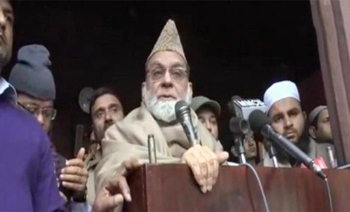
"To protest is the democratic right of the people of India. No one can stop us from doing so. However, it is important that it is controlled. Keeping our emotions in control is the most important part," he said while addressing a gathering here on Tuesday.

Bukhari urged the people, including the youth, to not be provoked by nefarious elements.

He also explained the difference between the Citizenship Amendment Act (CAA) and the National Register of Citizens (NRC), saying they are two different things.

"The CAA is for those people who came to India from Pakistan, Afghanistan and Bangladesh before December 31, 2014. They will be granted citizenship and it will not affect the Muslims living in India. The Muslim refugees who came to India from Pakistan, Afghanistan and Bangladesh will not get Indian citizenship. It has nothing to do with the Muslims living in India," Bukhari said.

"While the CAA has become a law, NRC has been only announced. It has not become a law yet," he further said.

His comments came in the backdrop of an anti-CAA protest which turned violent in northeast Delhi's Seelampur area, forcing police to use tear gas shells to disperse the protesters, who torched two buses on Tuesday.

The police also stopped vehicular movement on the road, which connects Seelampur with Jafrabad, due to the demonstration.

The protest in Seelampur came days after the clashes between police and protesters in Jamia Millia Islamia over the citizenship law.

The CAA grants citizenship to non-Muslims of Pakistan, Afghanistan and Bangladesh who fled religious persecution and arrived in India until December 31, 2014.

Delhi Chief Minister Arvind Kejriwal and Prime Minister Narendra Modi have appealed to the people to maintain peace and tranquillity.

Comments

zakir
 - 
Wednesday, 18 Dec 2019

Shahi Imam sahab if you can not motivate Muslims then do not demotivate them..... please keep quite as usual you guys did,

abdullah
 - 
Wednesday, 18 Dec 2019

Shahi Iman should know that itention of bjp + sangh parivar behind CAA is not yet disclosed.   They are trying to dig the basement of muslims keeping the buiding in tight for the time being.   None should be optimistic that nothing will happen.    Their next target is to implement NRC and harass muslims.    CAA is just a start up.  Shahi Iman should support the agitators who are fighting agaisnt CAA + NRC.    Its strange that he did not condemn brutuality of delhi police on jamia students.   I dont know why the so called muslim leaders are not showing any interest in the agitation and instead of supporting they students they are asking them to refrain.   I think they are watching for water cross our head.    Shahi Iman sahab, din me khwab dekhna bhool jawo.   BJP hamari qabr khod rahe hain aur aap leaders kah rahe hain ke musalmanon ko ghabrane ki zaroorat nahin.    Sharm aati hai musalmano ke leaders par jo ab bhi so rahe hain.  

Add new comment

  • Coastaldigest.com reserves the right to delete or block any comments.
  • Coastaldigset.com is not responsible for its readers’ comments.
  • Comments that are abusive, incendiary or irrelevant are strictly prohibited.
  • Please use a genuine email ID and provide your name to avoid reject.
News Network
December 16,2025

SMR1.jpg

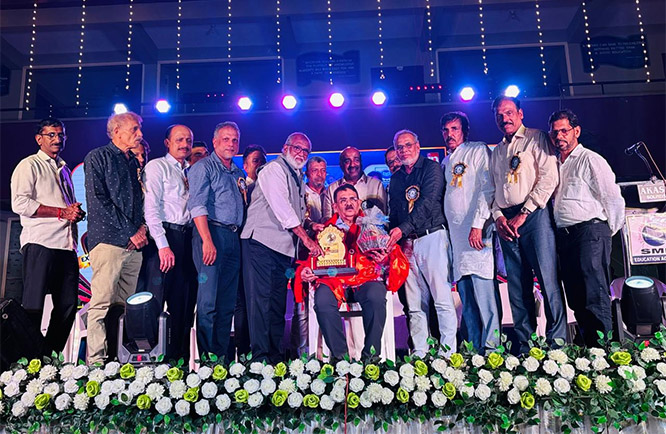
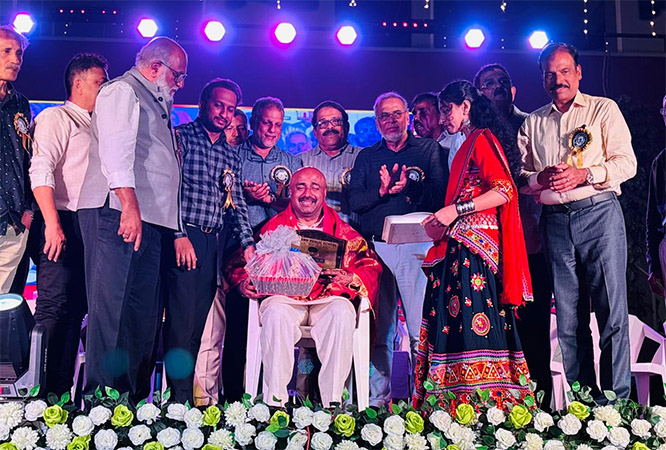
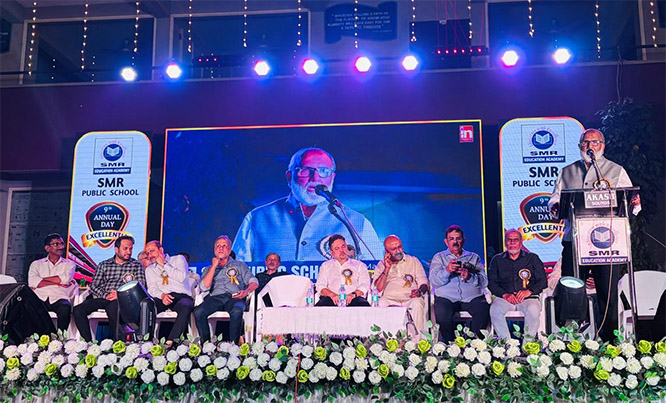
Melkar (Bantwal): The 9th Annual Day celebration of SMR Public School, titled “EXCELLENTIA”, was held on December 15 with great enthusiasm and dignity, marking a significant milestone in the institution’s journey towards academic excellence and holistic development.

The programme was inaugurated by Dr. U. T. Iftikar Ali. The chief guests were Dr. Akhtar Hussain, Mr. P. Moosabba Beary, Mr. Zakaria Jokattre, and Dr. T. M. Abdul Rahuf—whose inspiring addresses motivated the students and appreciated the school’s contributions to education.

Mr. Abdul Nasir, Mr. Ibrahim Gadiyar, Mr. Razak Golthamajal, Mr. Sali Koya, Mr. Arshad Hussain, Mr. Ismail Balanoor, Mr. Feroz Bawa, Mr. Sahul Hameed, Mr. Abubakkar, Mr. Hameed K. Mani, Mr. Abdul Majeed (Principal, Melkar Women’s College), and Mr. Abdul Lathief (Former Principal, Melkar Women’s College) were the guests of honour.

The Annual Report was presented by the Headmistress, Ms. Fathimathul Zaheera, highlighting the school’s achievements and progress during the academic year. The Presidential Address was delivered by the Chairman of SMR Public School, Dr. Haji S. M. Rasheed, who emphasised the vital role of education in shaping students’ futures and stressed the importance of discipline, dedication, and consistent effort in achieving 100 per cent academic results.

Secretary of SMR Public School, Mr. Rifath Ahmed, and PTA President, Mr. Sandeep Kumar, were also present on the occasion.

The Annual Day celebration showcased the collective efforts of students and teachers and reaffirmed the school’s commitment to quality education and all-round development. The programme concluded with a vote of thanks, expressing gratitude to all dignitaries, parents, and well-wishers for their support. The 9th Annual Day—EXCELLENTIA—was a memorable and successful event, leaving a lasting impression on everyone present. 

SMR3.jpg

SMR2.jpg

Comments

Add new comment

  • Coastaldigest.com reserves the right to delete or block any comments.
  • Coastaldigset.com is not responsible for its readers’ comments.
  • Comments that are abusive, incendiary or irrelevant are strictly prohibited.
  • Please use a genuine email ID and provide your name to avoid reject.
News Network
December 16,2025

bengal.jpg

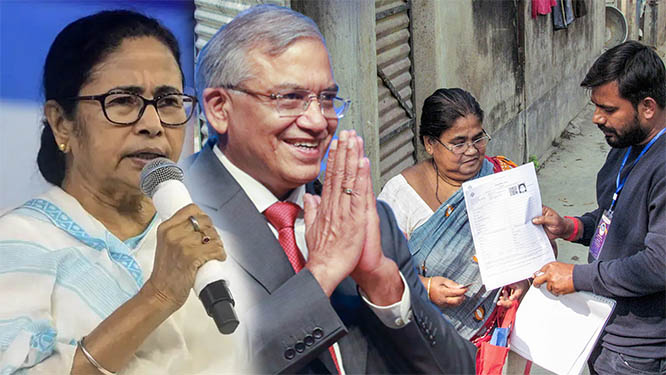
The deletion of over 58 lakh names from West Bengal’s draft electoral rolls following a Special Intensive Revision (SIR) has sparked widespread concern and is likely to deepen political tensions in the poll-bound state.

According to the Election Commission, the revision exercise has identified 24 lakh voters as deceased, 19 lakh as relocated, 12 lakh as missing, and 1.3 lakh as duplicate entries. The draft list, published after the completion of the first phase of SIR, aims to remove errors and duplication from the electoral rolls.

However, the scale of deletions has raised fears that a large number of eligible voters may have been wrongly excluded. The Election Commission has said that individuals whose names are missing can file objections and seek corrections. The final voter list is scheduled to be published in February next year, after which the Assembly election announcement is expected. Notably, the last Special Intensive Revision in Bengal was conducted in 2002.

The development has intensified the political row over the SIR process. Chief Minister Mamata Banerjee and her Trinamool Congress have strongly opposed the exercise, accusing the Centre and the Election Commission of attempting to disenfranchise lakhs of voters ahead of the elections.

Addressing a rally in Krishnanagar earlier this month, Banerjee urged people to protest if their names were removed from the voter list, alleging intimidation during elections and warning of serious consequences if voting rights were taken away.

The BJP, meanwhile, has defended the revision and accused the Trinamool Congress of politicising the issue to protect what it claims is an illegal voter base. Leader of the Opposition Suvendu Adhikari alleged that the ruling party fears losing power due to the removal of deceased, fake, and illegal voters.

The controversy comes amid earlier allegations by the Trinamool Congress that excessive work pressure during the SIR led to the deaths by suicide of some Booth Level Officers (BLOs), for which the party blamed the Election Commission. With the draft list now out, another round of political confrontation appears imminent.

As objections begin to be filed, the focus will be on whether the correction mechanism is accessible, transparent, and timely—critical factors in ensuring that no eligible voter is denied their democratic right ahead of a crucial election.

Comments

Add new comment

  • Coastaldigest.com reserves the right to delete or block any comments.
  • Coastaldigset.com is not responsible for its readers’ comments.
  • Comments that are abusive, incendiary or irrelevant are strictly prohibited.
  • Please use a genuine email ID and provide your name to avoid reject.
News Network
December 6,2025

pilot.jpg

New Delhi: IndiGo, India’s largest airline, faced major operational turbulence this week after failing to prepare for new pilot-fatigue regulations issued by the Directorate General of Civil Aviation (DGCA). The stricter rules—designed to improve flight safety—took effect in phases through 2024, with the latest implementation on November 1. IndiGo has acknowledged that inadequate roster planning led to widespread cancellations and delays.

Below are the key DGCA rules that affected IndiGo’s operations:

1. Longer Mandatory Weekly Rest

Weekly rest for pilots has been increased from 36 hours to 48 hours.

The government says the extended break is essential to curb cumulative fatigue. This rule remains in force despite the current crisis.

2. Cap on Night Landings

Pilots can now perform only two night landings per week—a steep reduction from the earlier limit of six.

Night hours, defined as midnight to early morning, are considered the least alert period for pilots.

Given the disruptions, this rule has been temporarily relaxed for IndiGo until February 10.

3. Reduced Maximum Night Flight Duty

Flight duty that stretches into the night is now capped at 10 hours.

This measure has also been kept on hold for IndiGo until February 10 to stabilize operations.

4. Weekly Rest Cannot Be Replaced With Personal Leave

Airlines can no longer count a pilot’s personal leave as part of the mandatory 48-hour rest.

Pilots say this closes a loophole that previously reduced actual rest time.

Currently, all airlines are exempt from this rule to normalise travel.

5. Mandatory Fatigue Monitoring

Airlines must submit quarterly fatigue reports along with corrective actions to DGCA.

This system aims to create a transparent fatigue-tracking framework across the industry.

The DGCA has stressed that these rules were crafted to strengthen flight safety and align India with global fatigue-management standards. The temporary relaxations are expected to remain until February 2025, giving IndiGo time to stabilise its schedules and restore normal air travel.

Comments

Add new comment

  • Coastaldigest.com reserves the right to delete or block any comments.
  • Coastaldigset.com is not responsible for its readers’ comments.
  • Comments that are abusive, incendiary or irrelevant are strictly prohibited.
  • Please use a genuine email ID and provide your name to avoid reject.