Rajan says no to second term; to return to academia

June 18, 2016

Mumbai, Jun 18: Badgered by political attacks on him, RBI Governor Raghuram Rajan today said no to a second term in the post, in a surprise announcement putting at rest all speculation over his continuance.
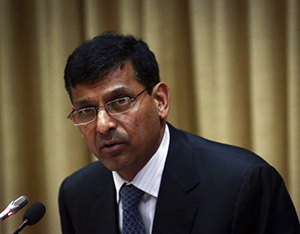
rajan

"... on due reflection, and after consultation with the government, I want to share with you that I will be returning to academia when my term as Governor ends on September 4, 2016," Rajan said in a message to the RBI staff.

Speculation has been rife over whether Rajan, an acclaimed IMF economist known to have predicted the 2008 global financial crisis, would get a second term after BJP leader Subramanian Swamy launched a no-holds barred attack on him recently accusing him of destroying economy with his hawkish stance on interest rates.

Swamy had also questioned whether Rajan was "mentally, fully Indian" as he holds a US Green Card, among other allegations.

While Finance Minister Arun Jaitley called for restraint in public criticism in the wake of Swamy's attacks, BJP President Amit Shah said the newly-nominated MP's remarks were his personal opinion.

In his letter to colleagues, 53-year-old Rajan, appointed by the previous UPA Government in September 2013, said he "will, of course, always be available to serve my country when needed".

Rajan also rued that his work was "yet to be completed" on two significant matters -- containing inflation and cleaning up the books of banks -- and he "was open to seeing these developments through".

But, he decided to return to academia after the end of his current term "on due reflection, and after consultation with the government", the on-leave Professor of Finance at Chicago University said, without giving any specific reason.

There have been concerns that Rajan's exit, which has been termed as 'Rexit' to give it a play like Brexit and Grexit, could lead to adverse impact on the country's financial markets.

While the Governor did not specifically refer to this, but said in his letter that the RBI would be able to "ride out imminent sources of market volatility like the threat of Brexit."

He also said that RBI has "made adequate preparations for the repayment of Foreign Currency Non-Resident (B) deposits and their outflow, managed properly, should largely be a non-event", referring to the concerns that the maturity of these bonds in September-October could impact the markets in terms of sudden pressure on the country's forex reserves.

Rajan has been generally hailed by the industry and experts, but has been under attack from some, including Swamy and a few other leaders for what they call his failure to contain inflation and lower interest rates to boost economy.

The Governor said he is confident that his successor would take the RBI to new heights.

"I am an academic and I have always made it clear that my ultimate home is in the realm of ideas. The approaching end of my three year term, and of my leave at the University of Chicago, was therefore a good time to reflect on how much we had accomplished.

"While all of what we laid out on that first day is done, two subsequent developments are yet to be completed. Inflation is in the target zone, but the monetary policy committee that will set policy has yet to be formed.

"Moreover, the bank clean up initiated under the Asset Quality Review, having already brought more credibility to bank balance sheets, is still ongoing. International developments also pose some risks in the short term.

"While I was open to seeing these developments through, on due reflection, and after consultation with the government, I want to share with you that I will be returning to academia when my term as Governor ends on September 4, 2016. I will, of course, always be available to serve my country when needed.

"Colleagues, we have worked with the government over the last three years to create a platform of macroeconomic and institutional stability," he said.

An outspoken Rajan has ruffled many feathers with his candid views on various issues including the tolerance debate and his 'one eyed is king among blinds' remark.

In his message, Rajan reflected on his three years at the helm of the central bank, tracing the journey from taking over the governorship in 2013 under difficult circumstances when the country was in "Fragile Five" with high inflation and intense pressure on the rupee.

"At that time, the currency was plunging daily, inflation was high, and growth was weak. India was then deemed one of the 'Fragile Five'," he said and quoted from his opening statement which spoke of opening a special deposit window from the diaspora to tide over the crisis.

But the Governor was quick to note that the country is no longer weak, saying "today, we are the fastest growing large economy in the world, having long exited the ranks of the Fragile Five."

Rajan also mentioned the other measures he had spoken about, including inflation-targeting, introducing new kind of banks and taking universal ones on-tap and addressing the asset quality stress through a data base.

"Today, I feel proud that we at the Reserve Bank have delivered on all these proposals," said Rajan, who had also served as the Chief Economic Advisor under the UPA regime under the then Finance Minister P Chidambaram before taking over as the RBI chief. Besides, he also headed a committee on financial sector reforms.


Comments

Add new comment

  • Coastaldigest.com reserves the right to delete or block any comments.
  • Coastaldigset.com is not responsible for its readers’ comments.
  • Comments that are abusive, incendiary or irrelevant are strictly prohibited.
  • Please use a genuine email ID and provide your name to avoid reject.
News Network
December 16,2025

jordan.jpg

Prime Minister Narendra Modi on Monday held talks with Jordan’s King Abdullah II in Amman, during which the two leaders discussed ways to further strengthen bilateral relations, with the Prime Minister outlining an eight-point vision covering key areas of cooperation.

Describing the meeting as “productive”, PM Modi said he shared a roadmap focused on trade and economy, fertilisers and agriculture, information technology, healthcare, infrastructure, critical and strategic minerals, civil nuclear cooperation, and people-to-people ties.

In a post on social media platform X, the Prime Minister praised King Abdullah II’s personal commitment to advancing India–Jordan relations, particularly as both countries mark the 75th anniversary of the establishment of diplomatic ties this year.

“Held productive discussions with His Majesty King Abdullah II in Amman. His personal commitment towards vibrant India-Jordan relations is noteworthy. This year, we are celebrating the 75th anniversary of our bilateral diplomatic relations,” PM Modi said.

The meeting took place at the Al Husseiniya Palace, where the two leaders also exchanged views on regional and global issues of mutual interest. According to the Ministry of External Affairs (MEA), both sides agreed to further deepen cooperation in areas including trade and investment, defence and security, counter-terrorism and de-radicalisation, fertilisers and agriculture, infrastructure, renewable energy, tourism, and heritage.

The MEA said both leaders reaffirmed their united stand against terrorism.

PM Modi arrived in Amman earlier on Monday and was received by Jordanian Prime Minister Jafar Hassan, who accorded him a formal welcome. Following the talks, King Abdullah II hosted a banquet dinner in honour of the Prime Minister, reflecting the warmth of bilateral ties.

Jordan is the first leg of PM Modi’s three-nation tour. From Amman, the Prime Minister will travel to Ethiopia at the invitation of Prime Minister Abiy Ahmed Ali, marking his first official visit to the African nation. The tour will conclude with a visit to Oman.

Comments

Add new comment

  • Coastaldigest.com reserves the right to delete or block any comments.
  • Coastaldigset.com is not responsible for its readers’ comments.
  • Comments that are abusive, incendiary or irrelevant are strictly prohibited.
  • Please use a genuine email ID and provide your name to avoid reject.
News Network
December 22,2025

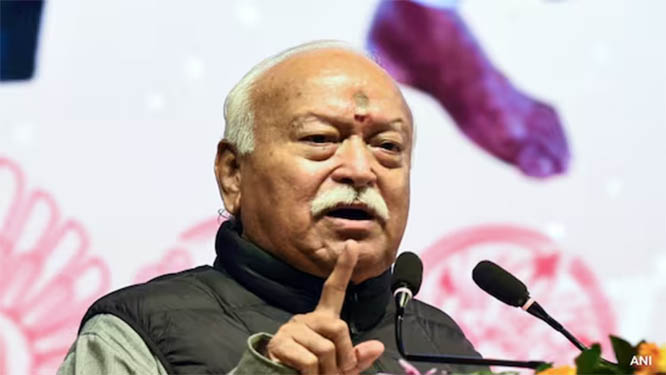
bhagavat.jpg

Kolkata: Stressing that India is a "Hindu nation," Rashtriya Swayamsevak Sangh (RSS) Chief Mohan Bhagwat on Sunday said that no constitutional approval is needed as it is the "truth".

Addressing an event marking 100 years of the RSS, Bhagwat said that India is, and will remain, a Hindu nation until Indian culture is appreciated in the country.

"The Sun rises in the east; we don't know since when this has been happening. So, do we need constitutional approval for that, too? Hindustan is a Hindu nation. Whoever considers India their motherland appreciates Indian culture, as long as there is even one person alive on the land of Hindustan who believes in and cherishes the glory of Indian ancestors, India is a Hindu nation. This is the ideology of the Sangh," he said at the '100 Vyakhyan Mala' program of RSS in Kolkata.

"If Parliament ever decides to amend the Constitution and add that word, whether they do it or not, it's fine. We don't care about that word because we are Hindus, and our nation is a Hindu nation. That is the truth. The caste system based on birth is not the hallmark of Hindutva," he added.

RSS has always argued that India is a "Hindu Nation," given the culture and majority's affiliations to Hinduism. However, 'secular' was not originally part of the Preamble of the Constitution, but it was added along with the word 'socialist' by the Constitution (42nd Amendment) Act, 1976, during the Emergency imposed by then Prime Minister Indira Gandhi.

Bhagwat also urged people to visit the organisation's offices and 'shakhas' to understand its work, so that what he dubbed as the “false perception” of the organisation as anti-Muslim can be dispelled!

Bhagwat said that people have understood that the organisation advocates for the protection of Hindus, and are "staunch nationalists," but not anti-muslim.

"If there is a perception that we are anti-Muslim, then, as I said, the RSS work is transparent. You can come anytime and see for yourself, and if you see anything like that happening, then you keep your views, and if you don't see it, then you change your views. There is a lot to understand (about RSS), but if you don't want to understand, then no one can change your mind," Bhagwat said.

He said, but anyone unwilling to learn cannot be helped.

"After seeing, people have said that you are staunch nationalists. You organise Hindus, and you advocate for the protection of Hindus. But you are not anti-Muslim. Many people have accepted this, and those who want to know more should come and see the RSS for themselves," he said.

Comments

Add new comment

  • Coastaldigest.com reserves the right to delete or block any comments.
  • Coastaldigset.com is not responsible for its readers’ comments.
  • Comments that are abusive, incendiary or irrelevant are strictly prohibited.
  • Please use a genuine email ID and provide your name to avoid reject.
News Network
December 21,2025

hadith.jpg

Invoking the teachings of Prophet Muhammad—“pay the worker before his sweat dries”—the Madras High Court has directed a municipal corporation to settle long-pending legal dues owed to a former counsel. The court observed that this principle reflects basic fairness and applies equally to labour and service-related disputes.

Justice G. R. Swaminathan made the observation while hearing a petition filed by advocate P. Thirumalai, who claimed that the Madurai City Municipal Corporation failed to pay him legal fees amounting to ₹13.05 lakh. Earlier, the High Court had asked the corporation to consider his representation. However, a later order rejected a major portion of his claim, prompting the present petition.

The court allowed Thirumalai to approach the District Legal Services Authority (DLSA) and submit a list of cases in which he had appeared. It also directed the corporation to settle the verified fee bills within two months, without interest. The court noted that the petitioner had waited nearly 18 years before challenging the non-payment and that the corporation could not be fully blamed, as the fee bills were not submitted properly.

‘A Matter of Embarrassment’

Justice Swaminathan described it as a “matter of embarrassment” that the State has nearly a dozen Additional Advocate Generals. He observed that appointing too many law officers often leads to unnecessary allocation of work and frequent adjournments, as government counsel claim that senior officers are engaged elsewhere.

He expressed hope that such practices would end at least in the Madurai Bench of the High Court and added that Additional Advocate Generals should “turn a new leaf” from 2026 onwards.

‘Scandalously High Amounts’

While stating that the court cannot examine the exact fees paid to senior counsel or law officers, Justice Swaminathan stressed that good governance requires public funds to be used prudently. He expressed concern over the “scandalously high amounts” paid by government and quasi-government bodies to a few favoured law officers.

In contrast, the court noted that Thirumalai’s total claim was “a pittance” considering the large number of cases he had handled.

Background

Thirumalai served as the standing counsel for the Madurai City Municipal Corporation for more than 14 years, from 1992 to 2006. During this period, he represented the corporation in about 818 cases before the Madurai District Courts.

As the former counsel was unable to hire a clerk to obtain certified copies of judgments in all 818 cases, the court directed the District Legal Services Authority to collect the certified copies within two months. The court further ordered the corporation to bear the cost incurred by the DLSA and deduct that amount from the final settlement payable to the petitioner.

Comments

Add new comment

  • Coastaldigest.com reserves the right to delete or block any comments.
  • Coastaldigset.com is not responsible for its readers’ comments.
  • Comments that are abusive, incendiary or irrelevant are strictly prohibited.
  • Please use a genuine email ID and provide your name to avoid reject.