



RBI board should play like Dravid, not Sidhu: Rajan

Agencies
November 6, 2018

New Delhi, Nov 6: Amid mounting tension between the Reserve Bank and the finance ministry, former RBI governor Raghuram Rajan on Tuesday said the central bank is like a seat belt in a car, without which accidents can happen.

Pitching for respecting the institutional autonomy of the RBI, he said the central bank has the liberty to say no if the government pushes it to be lenient.

Ahead of the November 19 meeting of RBI Board, he said the objective of the board is to protect the institution and not serve others' interests.

"The RBI is something like a seat belt. As a driver, the driver being the government, it has the possibility of not putting on a seat belt but of course if you do not put on your seat belt you get into an accident and the accident can be quite severe," he told CNBC TV18.

Historically, the relationship between the RBI and the government has been precisely this – the government wants to focus on improving growth and it does all it can within the limits set by the RBI which are based on financial stability.

"So, the government will push, will try and get the RBI to be more lenient," he said, adding the central bank would examine them in close details and in reference to risks to financial stability. "We (RBI) have responsibility for financial stability and therefore we have an authority to say no," he said.

The RBI led by Governor Urjit Patel and the government have not been on the same page on different issues for some months now. The disagreements came out in open when RBI Deputy Governor Viral Acharya in a hard-hitting speech said failure to defence central bank's independence would "incur the wrath of the financial markets".

It later emerged that the government had used a never-before-used provision of the law to seek resolution of issues, including the easing of NPA norms, so that banks can kick-start lending and support growth, and transferring more dividend to boost liquidity -- issues which the central bank thinks cannot be relented.

"Of course the RBI doesn't say no out of petulance. It says it because it has examined the situation and believes that this take implies too much financial instability," Rajan said. "I think that relationship has gone on for a long and the fact that the RBI says no is not new. The government can keep asking and say please consider this, please consider that but at some point, it says okay I respect your decision, you are the financial stability regulator and I back off".

"Once you have appointed these Deputy Governors and Governor, you have to listen to them because that is what you have appointment them for, they are your safety belt," he said.

On the issue of the government citing Section 7 of the RBI Act that gives it powers to issue directions to RBI Governor on issues of public interest, Rajan said it would be best if each side respected each other's motivation and thoughts.

"And ultimately the RBI after listening to the government and hearing what the government's issues were provided the best professional answer it could and historically it has done that. I have no doubt it is doing that today. It has a responsibility to fulfill to the nation. It has to listen of course but at the end of it, after listening it has to make a decision because ultimately it has that responsibility," he said.

On the role of the RBI board, he said its role historically has not been to take operational decisions but to focus on broader strategy as well as ensure good governance. "So, they are there to ensure that the government's money is well spent in the RBI, for example, the RBI doesn't pay itself inordinate salaries and so on but also to serve as a sounding board which is why we have people from different walks of society, very eminent people," he said.

"So, my sense is the objective of the board is to protect the institution, not to serve others' interest; it is to protect the health of the institution but also to provide wide, sensible advice. The aim of the board is to be Rahul Dravid -- sensible, thoughtful and not, with due respect, Navjot Sidhu," he said.

On the state of the economy, Rajan said the situation is "much better" on the inflation front, for which both the government and the RBI deserve credit.

Also, India is growing faster than most other countries but there is a need to create jobs and there is "probably need (to do) somewhat more than where we are today.

"Where there is more worry is on the fiscal deficit front and here I am not talking just about the central government fiscal deficit which has been coming down but the aggregate fiscal deficit. Even as the central government is bringing it down, the states are taking it up. When you look at the total you find that over the last 3 or 4 years the aggregate fiscal deficit has actually gotten slightly worse and not better," he said.

Besides, the current account deficit (CAD) is blowing out partly because of the relatively weak exports and partly because of the price of oil has gone up. "It has come down recently but it is a risk that we cannot ignore at this point," Rajan said.

On the problems facing non-banking finance companies (NBFCs), he said the central bank needs to examine the liquidity problem much closer and solve the issue by putting liquidity in the market.

"I think the markets are somewhat nervous but I don't think given that NBFCs account for 17 to 18 per cent of assets, that this is an unmanageable problem. I think we can manage it, we have to look carefully at it, see what is really a solvency issue, what is a liquidity issue.

"Certainly on the solvency front, it is up to these privately managed entities to raise equity at this point when they still have the capacity and shore up their balance sheets. There is a tendency sometimes to run to the government and say please bail me out. I think first they have to exhibit everything they can do on their own before the government even contemplates anything on that sort," Rajan added.

In general, central banks, he said, avoid lending to direct entities. Lending to direct entities involves credit evaluation and central banks are not in fiscal function of bailing out entities.

Comments

Add new comment

  • Coastaldigest.com reserves the right to delete or block any comments.
  • Coastaldigset.com is not responsible for its readers’ comments.
  • Comments that are abusive, incendiary or irrelevant are strictly prohibited.
  • Please use a genuine email ID and provide your name to avoid reject.
News Network
December 16,2025

IPL.jpg

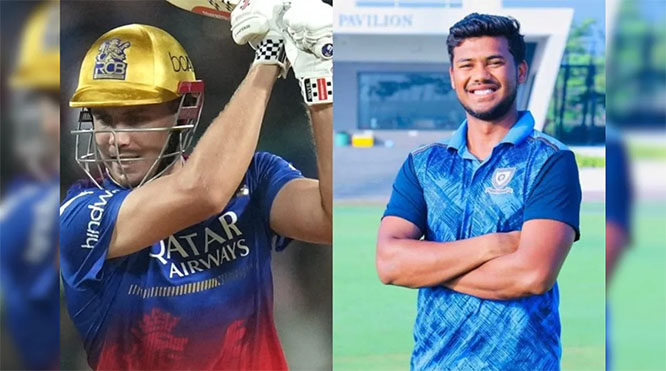
The IPL 2026 auction has seen uncapped Indian stars laugh their way to the bank. While Cameron Green set a world record as he was roped in by Kolkata Knight Riders for Rs 25.20 crore, making him the costliest overseas player ever in any franchise competition across the world, CSK roped in Prashant Veer and Kartik Sharma for a record bid of Rs 14.20 crore each. Sri Lanka's Matheesha Pathirana was picked up for Rs 18 crore by KKR. 

However, top names like Liam Livingstone, Prithvi Shaw, and Sarfaraz Khan have gone unsold. The mini-auction for IPL 2026 is being held in Abu Dhabi, with three-time winners Kolkata Knight Riders coming in with the biggest purse (Rs 64.30 crore). Chennai Super Kings entered the auction with the second-biggest purse (Rs 43.40 crore). The upcoming edition of the Indian Premier League will be held between March 26 and May 31.

Here is the full list of sold and unsold players:

Jake Fraser-McGurk - Base Price Rs 2 crore - Unsold
David Miller - Base Price Rs 2 crore - Delhi Capitals - Rs 2 crore
Prithvi Shaw - Base Price Rs 75 lakh - Unsold
Devon Conway - Base Price Rs 2 crore - Unsold
Cameron Green - Base Price Rs 2 crore - Kolkata Knight Riders - Rs 25.20 crore
Sarfaraz Khan - Base Price Rs 75 lakh - Unsold
Gus Atkinson - Base Price Rs 2 crore - Unsold
Rachin Ravindra - Base Price Rs 2 crore - Unsold
Liam Livingtone - Base Price Rs 2 crore - Unsold
Wiaan Mulder - Base Price Rs 1 crore - Unsold
Wanindu Hasaranga - Base Price Rs 2 crore - LSG - Rs 2 crore
Venkatesh Iyer - Base Price Rs 2 crore - RCB - Rs 7 crore
Deepak Hooda - Base Price Rs 75 lakh - Unsold
KS Bharat - Base Price Rs 75 lakh - Unsold
Quinton De Kock - Base Price Rs 1 crore - Mumbai Indians - Rs 1 crore
Rahmanullah Gurbaz - Base Price Rs 1.50 crore - Unsold
Jonny Bairstow - Base Price Rs 1 crore - Unsold
Jamie Smith - Base Price Rs 2 crore - Unsold
Ben Duckett - Base Price Rs 2 crore - Delhi Capitals - Rs 2 crore
Finn Allen - Base Price Rs 2 crore - KKR - Rs 2 crore
Matt Henry - Base Price Rs 2 crore - Unsold
Akash Deep - Base Price Rs 1 crore - Unsold
Jacob Duffy - Base Price Rs 2 crore - RCB - Rs 2 crore
Shivam Mavi - Base Price Rs 75 lakh - Unsold
Gerald Coetze - Base Price Rs 2 crore - Unsold
Matheesha Pathirana - Base Price Rs 2 crore - KKR - Rs 18 crore
Spencer Johnson - Base Price Rs 1.50 crore - Unsold
Anrich Nortje - Base Price Rs 2.00 crore - LSG Rs 2 crore
Fazalhaq Farooqui - Base Price Rs 1.00 crore - Unsold
Rahul Chahar - Base Price Rs 1.00 crore - Unsold
Ravi Bishnoi - Base Price Rs 2.00 crore - RR - Rs 7.20 crore
Maheesh Theekshana - Base Price Rs 2.00 crore - Unsold
Mujeeb Ur Rahman - Base Price Rs 2.00 crore - Unsold
Akeal Hosein - Base Price Rs 2.00 crore - CSK - Rs 2 crore
Atharva Taide - Base Price Rs 30 lakh - Unsold
Anmolprteet SIngh - Base Price Rs 30 lakh - Unsold
Abhinav Tejrana - Base Price Rs 30 lakh - Unsold
Abhinav Manohar - Base Price Rs 30 lakh - Unsold
Yash Dhull - Base Price Rs 30 lakh - Unsold
Aarya Desai - Base Price Rs 30 lakh - Unsold
Auqib Dar - Base Price Rs 30 lakh - DC - Rs 8.40 crore
Vijay Shankar - Base Price Rs 30 lakh - Unsold
Rajvardhan Hangargekar - Base Price Rs 40 lakh - Unsold
Mahipal Lomror - Base Price Rs 50 lakh - Unsold
Eden Apple Tom - Base Price Rs 30 lakh - Unsold
Prashant Veer - Base Price Rs 30 lakh - CSK Rs 14.20 crore
Shivang Kumar - Base Price Rs 30 lakh - SRH - Rs 30 lakh
Tanush Kotian - Base Price Rs 30 lakh - Unsold
Kamlesh Nagarkoti - Base Price Rs 30 lakh - Unsold
Sanvir Singh - Base Price Rs 30 lakh - Unsold
Rouchit Ahir - Base Price Rs 30 lakh - Unsold
Kartik Sharma - Base Price Rs 30 lakh - CSK Rs 14.20 crore
Mukul Choudhary - Base Price Rs 30 lakh - LSG Rs 2.60 crore
Tejasvi Singh - Base Price Rs 30 lakh - KKR - Rs 3 crore
Vansh Bedi - Base Price Rs 30 lakh - Unsold
Tushar Raheja - Base Price Rs 30 lakh - Unsold
Ashok Sharma - Base Price Rs 30 lakh - GT - Rs 90 lakh
Raj Limbani - Base Price Rs 30 lakh - Unsold
Kartik Tyagi - Base Price Rs 30 lakh - KKR - Rs 30 Lakh
Simarjeet Singh - Base Price Rs 30 lakh - Unsold
Aarya Desai - Base Price Rs 30 lakh - Unsold
Naman Tiwari - Base Price Rs 30 lakh - LSG - Rs 1 crore
Aakash Madhwal - Base Price Rs 30 lakh - Unsold
Sushant Mishra - Base Price Rs 30 lakh - RR - Rs 90 lakh
Wahidullah Zadran - Base Price Rs 30 lakh - Unsold
Shivam Shukla - Base Price Rs 30 lakh - Unsold
Yash Raj Punja - Base Price Rs 30 lakh - RR - Rs 30 Lakh
Prashant Solanki - Base Price Rs 30 lakh - KKR - Rs 30 Lakh
Vignesh Puthur - Base Price Rs 30 lakh - RR - Rs 30 lakh
Karn Sharma - Base Price Rs 50 lakh - Unsold
Kumar Kartikeya Singh - Base Price Rs 30 lakh - Unsold
Sediqullah Atal - Base Price Rs 75 lakh - Unsold
Pathum NIssanka - Base Price Rs 75 lakh - DC - Rs 4 Crore
Rahul Tripathi - Base Price Rs 75 lakh - KKR - Rs 75 lakh
Sean Abbott - Base Price Rs 2 crore - Unsold
Michael Bracewell - Base Price Rs 2 crore - Unsold
Ben Dwarshuis - Base Price Rs 1 crore - Unsold
Jason Holder - Base Price Rs 2 crore - GT Rs 7 crore
Dashun Shanaka - Base Price Rs 75 lakh - Unsold
Daryll Mitchell - Base Price Rs 2 crore - Unsold
Matthew Short - Base Price Rs 1.50 crore - CSK - Rs 1.50 crore
Tom Banton - Base Price Rs 2 crore - Unsold
Jordan Cox - Base Price Rs 75 lakh - Unsold
Josh Inglis - Base Price Rs 2 crore - Unsold
Tim Seifert - Base Price Rs 1.50 crore - KKR - Rs 1.50 Crore
Kyle Jamieson - Base Price Rs 2 crore - Unsold
Adam Milne - Base Price Rs 2 crore - Unsold
Lungi Ngidi - Base Price Rs 2 crore - Unsold
Mustafizur Rahman - Base Price Rs 2 crore - KKR - Rs 9.2 crore
Chetan Sakariya - Base Price Rs 75 lakh - Unsold
Kuldeep Sen - Base Price Rs 75 lakh - Unsold
Waqar Salamkheil - Base Price Rs 1 crore - Unsold
Danish Malewar - Base Price Rs 30 lakh - MI - Rs 30 lakh
Salman Nizar - Base Price Rs 30 lakh - Unsold
Akshat Raghuwanshi - Base Price Rs 30 lakh - LSG - Rs 2.2 crore 
Satvik Deswak - Base Price Rs 30 lakh - RCB - Rs 30 lakh
Aman Khan - Base Price Rs 30 lakh - CSK - Rs 40 lakh
Vicky Ostwal - Base Price Rs 30 lakh - Unsold
Mayank Rawat - Base Price Rs 30 lakh - Unsold
Mangesh Yadav - Base Price Rs 30 lakh - RCB - Rs 5.20 crore
Salil Arora - Base Price Rs 30 lakh - SRH - Rs 1.40 crore
Ravi Singh - Base Price Rs 30 lakh - RR - Rs 95 lakh
KM Asif - Base Price Rs 40 lakh - Unsold
Sakib Hussain - Base Price Rs 30 lakh - SRH - Rs 30 lakh 
Mohammad Izhar - Base Price Rs 30 lakh - MI - Rs 30 lakh 
Onkar Tarmale - Base Price Rs 30 lakh - SRH - Rs 30 Lakh
Murugan Ashwin - Base Price Rs 30 lakh - Unsold
Tejas Baroke - Base Price Rs 30 lakh - Unsold
KC Cariappa - Base Price Rs 30 lakh - Unsold
Mohit Rathee - Base Price Rs 30 lakh - Unsold
Cooper Connolly - Base Price Rs 2 Crore - PBKS - Rs 3 crore
Dan Lawrence - Base Price Rs 2 crore - Unsold
Taskin Ahmed - Base Price Rs 75 lakh - Unsold
Richard Gleeson - Base Price Rs 75 lakh - Unsold
Alzarri Joseph - Base Price Rs 2 crore - Unsold
Riley Meredith - Base Price Rs 1.50 crore - Unsold
Jhye Richardson - Base Price Rs 1.50 crore - Unsold
Dheeraj Kumar - Base Price Rs 30 lakh - Unsold
Tanay Thyagarajan - Base Price Rs 30 lakh - Unsold
Connor E. - Base Price Rs 30 lakh - Unsold
Irfan Umair - Base Price Rs 30 lakh - Unsold
Chintal Gandhi - Base Price Rs 30 lakh - Unsold
Amit Kumar - Base Price Rs 30 lakh - SRH - Rs 30 lakh 
Vishal Nishad - Base Price Rs 30 lakh - Unsold 
Nathan Smith - Base Price Rs 75 lakh - Unsold 
Daniel Lategan - Base Price Rs 30 lakh - Unsold 
Atharva Ankolekar - Base Price Rs 30 lakh - MI - Rs 30 Lakh
Karan Lal - Base Price Rs 30 lakh - Unsold 
Utkarsh Singh - Base Price Rs 30 lakh - Unsold 
Ayush Vartak - Base Price Rs 30 lakh - Unsold
Ayush Hinge - Base Price Rs 30 lakh - SRH - Rs 30 Lakh
Jikku Bright - Base Price Rs 30 lakh - Unsold
Izaz Sawariya - Base Price Rs 30 lakh - Unsold
Krains Fuletra - Base Price Rs 30 lakh - SRH - Rs 30 lakh
Sarthak Ranjan - Base Price Rs 30 lakh - KKR - Rs 30 lakh
Daksh Kamra - Base Price Rs 30 lakh - KKR - Rs 30 lakh
Manishankar Murasingh - Base Price Rs 30 lakh - Unsold

Comments

Add new comment

  • Coastaldigest.com reserves the right to delete or block any comments.
  • Coastaldigset.com is not responsible for its readers’ comments.
  • Comments that are abusive, incendiary or irrelevant are strictly prohibited.
  • Please use a genuine email ID and provide your name to avoid reject.
News Network
December 20,2025

Mangaluru, Dec 20: The Mangaluru City Police have issued a detailed traffic advisory ahead of the inaugural ceremony of Karavali Utsava, which will be held at the Karavali Utsava Ground on Saturday.

The festival will be inaugurated at 6:00 pm by Dakshina Kannada District Minister Dinesh Gundu Rao. Cultural and public programmes will be held at the venue every evening and will continue until January 2.

According to City Police Commissioner Sudheer Kumar Reddy, parking of vehicles is strictly prohibited on both sides of the road from Lalbagh to Karavali Utsava Ground. Visitors are requested to park their vehicles only at designated parking areas.

To help the public, traffic signboards and parking guidance flex boards have been installed along the routes leading to the venue. The police have urged commuters and visitors to follow these instructions to ensure smooth traffic movement.

Designated Parking Locations

•    Urwa Market Ground – Cars
•    Gandhinagar Government School (near Press Club) – Two-wheelers and cars
•    Ladyhill Church parking area – Two-wheelers and cars
•    Canara School Ground, Mannagudda – Two-wheelers and cars
•    Thimmappa Hotel premises – Two-wheelers and cars
•    Scout and Guide Bhavana premises (behind Karavali Utsava Grounds) – Two-wheelers
•    Urwa Market Road – Two-wheelers
•    Hat Hill Road – Two-wheelers

The police have appealed to the public to cooperate by following traffic rules and parking guidelines to avoid inconvenience during the festival.

Comments

Add new comment

  • Coastaldigest.com reserves the right to delete or block any comments.
  • Coastaldigset.com is not responsible for its readers’ comments.
  • Comments that are abusive, incendiary or irrelevant are strictly prohibited.
  • Please use a genuine email ID and provide your name to avoid reject.
News Network
December 13,2025

New Delhi: School-going children are picking up drug and smoking habits and engaging in consumption of alcohol, with the average age of introduction to such harmful substances found to be around 13 years, suggesting a need for earlier interventions as early as primary school, a multi-city survey by AIIMS-Delhi said.

The findings also showed substance use increased in higher grades, with grade XI/XII students two times more likely to report use of substances when compared with grade VIII students. This emphasised the importance of continued prevention and intervention through middle and high school.

The study led by Dr Anju Dhawan of AIIMS's National Drug Dependence Treatment Centre, published in the National Medical Journal of India this month, looks at adolescent substance use across diverse regions.

The survey included 5,920 students from classes 8, 9, 11 and 12 in urban government, private and rural schools across 10 cities -- Bengaluru, Chandigarh, Delhi, Dibrugarh, Hyderabad, Imphal, Jammu, Lucknow, Mumbai, and Ranchi. The data were collected between May 2018 and June 2019.

The average age of initiation for any substance was 12.9 (2.8) years. It was lowest for inhalants (11.3 years) followed by heroin (12.3 years) and opioid pharmaceuticals (without prescription; 12.5 years).

Overall, 15.1 per cent of participants reported lifetime use, 10.3 per cent reported past year use, and 7.2 per cent reported use in the past month of any substance, the study found.

The most common substances used in the past year, after tobacco (4 per cent) and alcohol (3.8 per cent), were opioids (2.8 per cent), followed by cannabis (2 per cent) and inhalants (1.9 per cent). Use of non-prescribed pharmaceutical opioids was most common among opioid users (90.2 per cent).

On being asked, 'Do you think this substance is easily available for a person of your age' separately for each substance category, nearly half the students (46.3 per cent) endorsed that tobacco products and more than one-third of the students (36.5 per cent) agreed that a person of their age can easily procure alcohol products.

Similarly, for Bhang (21.9 per cent), ganja/charas (16.1 per cent), inhalants (15.2 per cent), sedatives (13.7 per cent), opium and heroin (10 per cent each), the students endorsed that these can be easily procured.

About 95 per cent of the children, irrespective of their grade, agreed with the statement that 'drug use is harmful'.

The rates of substance use (any) among boys were significantly higher than those of girls for substance use (ever), use in the past year and use in the past 30 days. Compared to grade VIII students, grade IX students were more likely, and grade XI/XII students were twice as likely to have used any substance (ever).

The likelihood of past-year use of any substance was also higher for grade IX students and for grade XI/XII students as compared to grade VIII students.

About 40 per cent of students mentioned that they had a family member who used tobacco or alcohol each. The use of cannabis (any product) and opioid (any product) by a family member was reported by 8.2 per cent and 3.9 per cent of students, respectively, while the use of other substances, such as inhalants/sedatives by family was 2-3 per cent, the study found.

A relatively smaller percentage of students reported use of tobacco or alcohol among peers as compared to among family members, while a higher percentage reported inhalants, sedatives, cannabis or opioid use among peers.

Children using substances (past year) compared to non-users reported significantly higher any substance use by their family members and peers.

There were 25.7 per cent students who replied 'yes' to the question 'conflicts/fights often occur in your family'. Most students also replied affirmatively to 'family members are aware of how their time is being spent' and 'damily members are aware of with whom they spend their time'.

Comments

Add new comment

  • Coastaldigest.com reserves the right to delete or block any comments.
  • Coastaldigset.com is not responsible for its readers’ comments.
  • Comments that are abusive, incendiary or irrelevant are strictly prohibited.
  • Please use a genuine email ID and provide your name to avoid reject.