



RBI, govt are set for a Monday face off

Agencies
November 18, 2018

New Delhi, Nov 18: India’s monetary policy makers and government officials will meet Monday in a board meeting that promises to be anything but its usual dull affair.
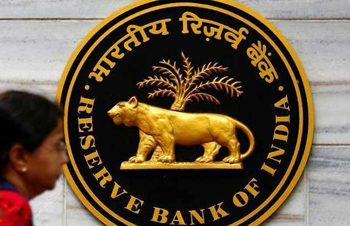
Locked in a power struggle over how much capital the central bank needs and how tough its lending rules should be, a trained accountant parachuted into the Reserve Bank of India’s board by the government in August may be key to whether a compromise can be found or whether the already public spat turns even uglier.

Swaminathan Gurumurthy, a chartered accountant turned newspaper columnist, has set the tempo by chiding the monetary authority for being too tough in its efforts to rid banks of bad debts and arguing the case for lower reserves -- a step that would give the government more cash ahead of an election year.

The central bank -- led by Governor Urjit Patel -- has pushed back against the moves, keen to burnish its inflation-targeting credentials and clean up one of the world’s worst bad-debt piles. Patel’s deputy took the spat public in late October in a fiery speech in defense of central bank independence.

For a nation that relies on imported capital to fund investment, failure to reach middle ground threatens to erode investor confidence in the world’s fastest-growing major economy. Those elevated stakes are making Monday’s meeting in Mumbai a must watch affair for India market watchers.

Gurumurthy, who is associated with the economic wing of Rashtriya Swayamsevak Sangh-- the ideological parent of Modi’s Bharatiya Janata Party -- and is a champion of small-traders who are BJP’s key voting bloc, was chosen by the government to push easier access to credit for micro and medium-sized enterprises. Lending to the sector has suffered after the RBI tightened norms for state-run banks saddled with bad debts.

The central bank, which is also the banking regulator, may be open to easing tight money conditions in the banking sector by injecting cash through open market purchases of bonds. But it’s unlikely to part with its reserves as some of these are notional, and may resist relaxing capital buffers for banks. The government can still have its way with the RBI by invoking a rule that hasn’t been used in the central bank’s 83-year history. The finance ministry last month sought Patel’s views on the issues of contention by citing Section 7 (1) of the Reserve Bank of India Act.

The RBI’s board is only meant to advice and guide and not decide on policy issues, people familiar with the matter said. But Gurumurthy and the government nominees Subhash Chandra Garg and Rajiv Kumar have been vocal about bank supervision, flow of credit to industry and easier financial conditions for India to overcome a crisis in its shadow banking sector.

An activist board has not been taken too kindly by the RBI. While the first clause of Section 7 confers powers to the government to give directions, the third part indicates that the governor shares power with the board, the people said, adding that the powers of the governor are reiterated in another section of the RBI Act.

The government is separately seeking more powers to supervise the central bank, a departure from the board’s current role as an advisory body, people with knowledge of the matter said.

“Having Gurumurthy on RBI board has complicated the situation,” said Mohan Guruswamy, a former finance ministry official and chairman of the Centre for Policy Alternatives in New Delhi, who has know Gurumurthy for years. “He wants banks to give money to non-bank finance companies, which are already in a mess. He’s an RBI director. It’s not his grandfather’s money.”


Comments

Add new comment

  • Coastaldigest.com reserves the right to delete or block any comments.
  • Coastaldigset.com is not responsible for its readers’ comments.
  • Comments that are abusive, incendiary or irrelevant are strictly prohibited.
  • Please use a genuine email ID and provide your name to avoid reject.
News Network
December 19,2025

Mangaluru: The Mangaluru CEN police have arrested a 23-year-old man for allegedly posting provocative and misleading content on an Instagram page named “mr_a_titude”, targeting the Bajpe police.

Mangaluru Commissioner of Police Sudheer Kumar Reddy C H identified the arrested as Abhishek M, a resident of Katipalla in Mangaluru.

A case has been registered at the Bajpe Police Station under Sections 353(1)(c), 353(2), 56, and 57 read with Section 189 of the Bharatiya Nyaya Sanhita (BNS) in connection with the post.

According to police, the accused uploaded a photograph of a hotel on the Instagram page and alleged that accused persons in a murder case under the Bajpe police jurisdiction were being given “royal treatment” by the police, including being served beef meals daily from the hotel.

The post further accused the police of supporting criminals, misusing their authority, and betraying public trust. Police said the content was provocative in nature and aimed at inciting public outrage against the police.

Following the post, a case was registered at the Bajpe police station, and further investigation was transferred to the CEN police station.

Police records indicate that the accused has a criminal history, with multiple cases registered against him, including murder, attempt to murder, assault, and robbery at the Surathkal Police Station, and one case at the Kaup Police Station.

The Commissioner said the accused was traced and arrested using technical evidence.

Comments

Add new comment

  • Coastaldigest.com reserves the right to delete or block any comments.
  • Coastaldigset.com is not responsible for its readers’ comments.
  • Comments that are abusive, incendiary or irrelevant are strictly prohibited.
  • Please use a genuine email ID and provide your name to avoid reject.
News Network
December 16,2025

bengal.jpg

The deletion of over 58 lakh names from West Bengal’s draft electoral rolls following a Special Intensive Revision (SIR) has sparked widespread concern and is likely to deepen political tensions in the poll-bound state.

According to the Election Commission, the revision exercise has identified 24 lakh voters as deceased, 19 lakh as relocated, 12 lakh as missing, and 1.3 lakh as duplicate entries. The draft list, published after the completion of the first phase of SIR, aims to remove errors and duplication from the electoral rolls.

However, the scale of deletions has raised fears that a large number of eligible voters may have been wrongly excluded. The Election Commission has said that individuals whose names are missing can file objections and seek corrections. The final voter list is scheduled to be published in February next year, after which the Assembly election announcement is expected. Notably, the last Special Intensive Revision in Bengal was conducted in 2002.

The development has intensified the political row over the SIR process. Chief Minister Mamata Banerjee and her Trinamool Congress have strongly opposed the exercise, accusing the Centre and the Election Commission of attempting to disenfranchise lakhs of voters ahead of the elections.

Addressing a rally in Krishnanagar earlier this month, Banerjee urged people to protest if their names were removed from the voter list, alleging intimidation during elections and warning of serious consequences if voting rights were taken away.

The BJP, meanwhile, has defended the revision and accused the Trinamool Congress of politicising the issue to protect what it claims is an illegal voter base. Leader of the Opposition Suvendu Adhikari alleged that the ruling party fears losing power due to the removal of deceased, fake, and illegal voters.

The controversy comes amid earlier allegations by the Trinamool Congress that excessive work pressure during the SIR led to the deaths by suicide of some Booth Level Officers (BLOs), for which the party blamed the Election Commission. With the draft list now out, another round of political confrontation appears imminent.

As objections begin to be filed, the focus will be on whether the correction mechanism is accessible, transparent, and timely—critical factors in ensuring that no eligible voter is denied their democratic right ahead of a crucial election.

Comments

Add new comment

  • Coastaldigest.com reserves the right to delete or block any comments.
  • Coastaldigset.com is not responsible for its readers’ comments.
  • Comments that are abusive, incendiary or irrelevant are strictly prohibited.
  • Please use a genuine email ID and provide your name to avoid reject.
News Network
December 16,2025

Mangaluru, Dec 16: The Mangaluru City police have significantly escalated their campaign against drug trafficking, arresting 25 individuals and booking 12 cases under the Narcotic Drugs and Psychotropic Substances (NDPS) Act between November 30 and December 13. The crackdown resulted in the seizure of a substantial quantity of illicit substances, including 685.6 grams of MDMA and 1.5 kg of ganja.

The success of this recent drive has been significantly boosted by the city’s innovative, QR code-based anonymous reporting system.

"The anonymous reporting system has received an encouraging response. Several recent arrests were made based on inputs received through this system, helping police tighten the noose around drug peddlers," said the City Police Commissioner.

The latest arrests contribute to a robust year-to-date record, underscoring the police's relentless commitment to combating the drug menace.

Up to December 14 this year, the police have registered a total of 107 cases of drug peddling, leading to the arrest of 219 peddlers. Furthermore, they have booked 562 cases of drug consumption, resulting in the arrest of 671 individuals.

The scale of the seizure for the year reflects the magnitude of the problem being tackled: police have seized 320.6 kg of ganja worth ₹88.7 lakh and 1.4 kg of MDMA valued at ₹1.2 crore. Other significant seizures include hydro-weed ganja worth ₹94.7 lakh and cocaine worth ₹1.9 lakh, among others.

The Commissioner emphasized a policy of rigorous enforcement: "We ensure that peddlers are caught red-handed so that they cannot later dispute the case or claim innocence."

To counter the rising trend of substance abuse among youth, the Mangaluru City police have rolled out uniform guidelines for random drug testing across educational institutions.

As part of the drive, tests were conducted in approximately 100 institutions, screening an estimated 5,500 to 6,000 students in the first phase. 20 students tested positive for drug consumption during the initial screening.

Students who tested positive have been provided counselling and are scheduled for re-testing in the second quarter. The testing will also be expanded to students not covered in the first phase. In a move to ensure strict implementation, police personnel were deployed in mufti in some institutions. Reiterating a zero-tolerance stance, the Commissioner confirmed that random testing will continue, and colleges have also been instructed to conduct drug tests at the time of admission to deter substance abuse from an early stage.

Comments

Add new comment

  • Coastaldigest.com reserves the right to delete or block any comments.
  • Coastaldigset.com is not responsible for its readers’ comments.
  • Comments that are abusive, incendiary or irrelevant are strictly prohibited.
  • Please use a genuine email ID and provide your name to avoid reject.