



RBI, govt are set for a Monday face off

Agencies
November 18, 2018

New Delhi, Nov 18: India’s monetary policy makers and government officials will meet Monday in a board meeting that promises to be anything but its usual dull affair.
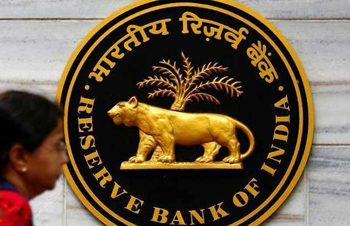
Locked in a power struggle over how much capital the central bank needs and how tough its lending rules should be, a trained accountant parachuted into the Reserve Bank of India’s board by the government in August may be key to whether a compromise can be found or whether the already public spat turns even uglier.

Swaminathan Gurumurthy, a chartered accountant turned newspaper columnist, has set the tempo by chiding the monetary authority for being too tough in its efforts to rid banks of bad debts and arguing the case for lower reserves -- a step that would give the government more cash ahead of an election year.

The central bank -- led by Governor Urjit Patel -- has pushed back against the moves, keen to burnish its inflation-targeting credentials and clean up one of the world’s worst bad-debt piles. Patel’s deputy took the spat public in late October in a fiery speech in defense of central bank independence.

For a nation that relies on imported capital to fund investment, failure to reach middle ground threatens to erode investor confidence in the world’s fastest-growing major economy. Those elevated stakes are making Monday’s meeting in Mumbai a must watch affair for India market watchers.

Gurumurthy, who is associated with the economic wing of Rashtriya Swayamsevak Sangh-- the ideological parent of Modi’s Bharatiya Janata Party -- and is a champion of small-traders who are BJP’s key voting bloc, was chosen by the government to push easier access to credit for micro and medium-sized enterprises. Lending to the sector has suffered after the RBI tightened norms for state-run banks saddled with bad debts.

The central bank, which is also the banking regulator, may be open to easing tight money conditions in the banking sector by injecting cash through open market purchases of bonds. But it’s unlikely to part with its reserves as some of these are notional, and may resist relaxing capital buffers for banks. The government can still have its way with the RBI by invoking a rule that hasn’t been used in the central bank’s 83-year history. The finance ministry last month sought Patel’s views on the issues of contention by citing Section 7 (1) of the Reserve Bank of India Act.

The RBI’s board is only meant to advice and guide and not decide on policy issues, people familiar with the matter said. But Gurumurthy and the government nominees Subhash Chandra Garg and Rajiv Kumar have been vocal about bank supervision, flow of credit to industry and easier financial conditions for India to overcome a crisis in its shadow banking sector.

An activist board has not been taken too kindly by the RBI. While the first clause of Section 7 confers powers to the government to give directions, the third part indicates that the governor shares power with the board, the people said, adding that the powers of the governor are reiterated in another section of the RBI Act.

The government is separately seeking more powers to supervise the central bank, a departure from the board’s current role as an advisory body, people with knowledge of the matter said.

“Having Gurumurthy on RBI board has complicated the situation,” said Mohan Guruswamy, a former finance ministry official and chairman of the Centre for Policy Alternatives in New Delhi, who has know Gurumurthy for years. “He wants banks to give money to non-bank finance companies, which are already in a mess. He’s an RBI director. It’s not his grandfather’s money.”


Comments

Add new comment

  • Coastaldigest.com reserves the right to delete or block any comments.
  • Coastaldigset.com is not responsible for its readers’ comments.
  • Comments that are abusive, incendiary or irrelevant are strictly prohibited.
  • Please use a genuine email ID and provide your name to avoid reject.
coastaldigest.com news network
December 20,2025

Mangaluru, Dec 20: City Police Commissioner Sudheer Kumar Reddy has issued a high-alert warning to vehicle owners regarding a surge in cyber fraud targeting those looking to pay traffic violation fines. Fraudsters are reportedly exploiting recent government discount schemes on traffic penalties to deceive citizens.

The Scam: How Fraudsters Strike

Criminals are using SMS, WhatsApp, and social media to circulate suspicious links and APK files (Android application packages). They claim these apps allow users to pay e-challans at a discount.

•    Device Hacking: Downloading these unauthorized apps gives hackers full access to the victim's smartphone.

•    Financial Theft: Once the phone is compromised, fraudsters intercept OTPs and personal data to drain bank accounts.

•    Phishing Sites: Fake websites mimicking official portals are also being used to harvest banking credentials.

Already, two residents within Mangaluru city limits have reported significant financial losses after falling victim to these fraudulent apps.

Comments

Add new comment

  • Coastaldigest.com reserves the right to delete or block any comments.
  • Coastaldigset.com is not responsible for its readers’ comments.
  • Comments that are abusive, incendiary or irrelevant are strictly prohibited.
  • Please use a genuine email ID and provide your name to avoid reject.
News Network
December 6,2025

pilot.jpg

New Delhi: IndiGo, India’s largest airline, faced major operational turbulence this week after failing to prepare for new pilot-fatigue regulations issued by the Directorate General of Civil Aviation (DGCA). The stricter rules—designed to improve flight safety—took effect in phases through 2024, with the latest implementation on November 1. IndiGo has acknowledged that inadequate roster planning led to widespread cancellations and delays.

Below are the key DGCA rules that affected IndiGo’s operations:

1. Longer Mandatory Weekly Rest

Weekly rest for pilots has been increased from 36 hours to 48 hours.

The government says the extended break is essential to curb cumulative fatigue. This rule remains in force despite the current crisis.

2. Cap on Night Landings

Pilots can now perform only two night landings per week—a steep reduction from the earlier limit of six.

Night hours, defined as midnight to early morning, are considered the least alert period for pilots.

Given the disruptions, this rule has been temporarily relaxed for IndiGo until February 10.

3. Reduced Maximum Night Flight Duty

Flight duty that stretches into the night is now capped at 10 hours.

This measure has also been kept on hold for IndiGo until February 10 to stabilize operations.

4. Weekly Rest Cannot Be Replaced With Personal Leave

Airlines can no longer count a pilot’s personal leave as part of the mandatory 48-hour rest.

Pilots say this closes a loophole that previously reduced actual rest time.

Currently, all airlines are exempt from this rule to normalise travel.

5. Mandatory Fatigue Monitoring

Airlines must submit quarterly fatigue reports along with corrective actions to DGCA.

This system aims to create a transparent fatigue-tracking framework across the industry.

The DGCA has stressed that these rules were crafted to strengthen flight safety and align India with global fatigue-management standards. The temporary relaxations are expected to remain until February 2025, giving IndiGo time to stabilise its schedules and restore normal air travel.

Comments

Add new comment

  • Coastaldigest.com reserves the right to delete or block any comments.
  • Coastaldigset.com is not responsible for its readers’ comments.
  • Comments that are abusive, incendiary or irrelevant are strictly prohibited.
  • Please use a genuine email ID and provide your name to avoid reject.
News Network
December 7,2025

Mangaluru, Dec 7: A 34-year-old fruit and vegetable trader in Mangaluru has reportedly lost ₹33.1 lakh after falling victim to an online investment scam run through a fake mobile app.

Police said the scam began in September, when the victim received a link on Facebook. Clicking it connected him to a WhatsApp number, where an unidentified person introduced a high-return investment scheme and instructed him to download an app.

To build trust, the fraudster asked him to invest ₹30,000 on September 24. The trader soon received ₹34,000 as “profit,” convincing him the scheme was genuine. Over the next two months, he transferred money in multiple instalments via Google Pay and IMPS to different scanner codes and bank accounts shared by the scammers. Between September 24 and December 3, he ended up sending a total of ₹33.1 lakh.

When he later requested a refund of his investment and promised returns, the scammers demanded additional payments, claiming he needed to pay a “service tax” first. Even after he paid a small amount, no money was returned, and the scammers continued pressuring him for more.

A case has been registered at the CEN Crime Police Station.

Comments

Add new comment

  • Coastaldigest.com reserves the right to delete or block any comments.
  • Coastaldigset.com is not responsible for its readers’ comments.
  • Comments that are abusive, incendiary or irrelevant are strictly prohibited.
  • Please use a genuine email ID and provide your name to avoid reject.