



RBI keeps rate unchanged; links further cuts to inflation

December 1, 2015

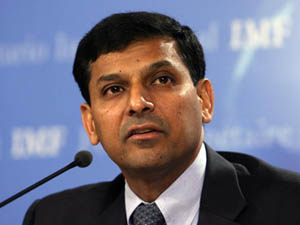
Mumbai, Dec 1: RBI Governor Raghuram Rajan today kept the key policy rate unchanged but affirmed the central bank's commitment to ease it as and when room is available, saying inflation is likely to perform better than expected.
rr
Accordingly, the repo rate at which the Reserve Bank lends to the system will continue at 6.75 per cent. The cash reserve ratio (CRR) or the amount of deposits banks park with RBI has also been unchanged at 4 per cent. The status quo was widely expected.

RBI, which is set to achieve its target of getting inflation down at 6 per cent by January and is aiming to reduce the number further to 5 per cent by March 2017, will monitor developments on theCOMMODITY PRICES , including food and oil and external developments in its future policy formulations, Rajan said.

In his fifth bi-monthly policy review of this fiscal, he said: "Inflation is expected to broadly follow the path set out in the September review with risks slightly on the downside.

"The RBI will use the space for further accommodation, when available, while keeping the economy anchored to the projected disinflation path that should take inflation down to 5 per cent by March 2017."

Though the RBI Governor noted that second-quarter GDP numbers indicate early signs of recovery, he chose to stick to the earlier projection of 7.4 per cent for the fiscal with a marginal downward bias.

Rajan also expressed anguish at the banks' reluctance to pass on the benefits of the earlier rate cut actions to the borrowers, saying the median decrease in the base rates over the course of the year has only been 0.60 per cent as against the RBI’s 1.25 per cent cut in the repo rate since January.

"Less than half of the cumulative policy repo rate reduction of 1.25 per cent has been transmitted by banks" and the median base lending rate has declined only by 0.60 per cent, Rajan said.

He also announced that RBI will shortly finalise the methodology for base rate calculation as per the marginal cost of funds which will be mandatory for banks.

Additionally, Rajan said the government is also mulling to link the small savings rate - a factor deterring rate cuts by banks - toMARKET rates.

With the seventh pay panel’s recommendations of a 23.55 per cent hike in salaries leading to concerns on the impact on inflation in future, RBI said the government will have to do "appropriate budgetary tightening" to reduce the impact and it will be watching the space.

"...its direct effect on aggregate demand is likely to be offset by appropriate budgetary tightening as the government stays on the fiscal consolidation path," Rajan said.

The recommendations will cost the exchequer 0.65 per cent of GDP or Rs 1.02 trillion (Rs 1.02 lakh crore) per annum is also another factor which the central bank will be keeping an eye on.

The Governor expressed hope that the clean-up of bank balance-sheets by way of containing bad loans will make more funds available for productive sectors.

Rajan has cut the key rates four times by a cumulative 1.25 per cent since January, including the surprise 0.50 per cent cut at the last policy review on September 29.

He was widely expected to hold rates at this review due to emerging worries on inflation and impact of a possible rate hike by the US Fed.

"Unease in investor sentiment is likely to increase ahead of the imminent divergence in advanced economy monetary policy stances," Rajan said referring to the US Fed meet later this month.

The US Fed is widely expected to formally shift its stance to rate tightening at its December 16 meeting on positive data on employment coming in. This will be its first hike in rates by the Fed, which has kept it's key rates under 0.25 per cent since the 2008 financial crisis.

The GDP data released yesterday, pointing to a healthy 7.4 per cent uptick in the second quarter, backed by a strong manufacturing growth of 9.3 per cent only reduced hopes of a rate cut by the central bank.

After remaining low for many months, the headline consumer price inflation moved up to 5 per cent in October due to surge in food prices and is expected to rise further as the base effect wears-off.


Comments

Add new comment

  • Coastaldigest.com reserves the right to delete or block any comments.
  • Coastaldigset.com is not responsible for its readers’ comments.
  • Comments that are abusive, incendiary or irrelevant are strictly prohibited.
  • Please use a genuine email ID and provide your name to avoid reject.
News Network
December 13,2025

New Delhi: School-going children are picking up drug and smoking habits and engaging in consumption of alcohol, with the average age of introduction to such harmful substances found to be around 13 years, suggesting a need for earlier interventions as early as primary school, a multi-city survey by AIIMS-Delhi said.

The findings also showed substance use increased in higher grades, with grade XI/XII students two times more likely to report use of substances when compared with grade VIII students. This emphasised the importance of continued prevention and intervention through middle and high school.

The study led by Dr Anju Dhawan of AIIMS's National Drug Dependence Treatment Centre, published in the National Medical Journal of India this month, looks at adolescent substance use across diverse regions.

The survey included 5,920 students from classes 8, 9, 11 and 12 in urban government, private and rural schools across 10 cities -- Bengaluru, Chandigarh, Delhi, Dibrugarh, Hyderabad, Imphal, Jammu, Lucknow, Mumbai, and Ranchi. The data were collected between May 2018 and June 2019.

The average age of initiation for any substance was 12.9 (2.8) years. It was lowest for inhalants (11.3 years) followed by heroin (12.3 years) and opioid pharmaceuticals (without prescription; 12.5 years).

Overall, 15.1 per cent of participants reported lifetime use, 10.3 per cent reported past year use, and 7.2 per cent reported use in the past month of any substance, the study found.

The most common substances used in the past year, after tobacco (4 per cent) and alcohol (3.8 per cent), were opioids (2.8 per cent), followed by cannabis (2 per cent) and inhalants (1.9 per cent). Use of non-prescribed pharmaceutical opioids was most common among opioid users (90.2 per cent).

On being asked, 'Do you think this substance is easily available for a person of your age' separately for each substance category, nearly half the students (46.3 per cent) endorsed that tobacco products and more than one-third of the students (36.5 per cent) agreed that a person of their age can easily procure alcohol products.

Similarly, for Bhang (21.9 per cent), ganja/charas (16.1 per cent), inhalants (15.2 per cent), sedatives (13.7 per cent), opium and heroin (10 per cent each), the students endorsed that these can be easily procured.

About 95 per cent of the children, irrespective of their grade, agreed with the statement that 'drug use is harmful'.

The rates of substance use (any) among boys were significantly higher than those of girls for substance use (ever), use in the past year and use in the past 30 days. Compared to grade VIII students, grade IX students were more likely, and grade XI/XII students were twice as likely to have used any substance (ever).

The likelihood of past-year use of any substance was also higher for grade IX students and for grade XI/XII students as compared to grade VIII students.

About 40 per cent of students mentioned that they had a family member who used tobacco or alcohol each. The use of cannabis (any product) and opioid (any product) by a family member was reported by 8.2 per cent and 3.9 per cent of students, respectively, while the use of other substances, such as inhalants/sedatives by family was 2-3 per cent, the study found.

A relatively smaller percentage of students reported use of tobacco or alcohol among peers as compared to among family members, while a higher percentage reported inhalants, sedatives, cannabis or opioid use among peers.

Children using substances (past year) compared to non-users reported significantly higher any substance use by their family members and peers.

There were 25.7 per cent students who replied 'yes' to the question 'conflicts/fights often occur in your family'. Most students also replied affirmatively to 'family members are aware of how their time is being spent' and 'damily members are aware of with whom they spend their time'.

Comments

Add new comment

  • Coastaldigest.com reserves the right to delete or block any comments.
  • Coastaldigset.com is not responsible for its readers’ comments.
  • Comments that are abusive, incendiary or irrelevant are strictly prohibited.
  • Please use a genuine email ID and provide your name to avoid reject.
News Network
December 16,2025

jordan.jpg

Prime Minister Narendra Modi on Monday held talks with Jordan’s King Abdullah II in Amman, during which the two leaders discussed ways to further strengthen bilateral relations, with the Prime Minister outlining an eight-point vision covering key areas of cooperation.

Describing the meeting as “productive”, PM Modi said he shared a roadmap focused on trade and economy, fertilisers and agriculture, information technology, healthcare, infrastructure, critical and strategic minerals, civil nuclear cooperation, and people-to-people ties.

In a post on social media platform X, the Prime Minister praised King Abdullah II’s personal commitment to advancing India–Jordan relations, particularly as both countries mark the 75th anniversary of the establishment of diplomatic ties this year.

“Held productive discussions with His Majesty King Abdullah II in Amman. His personal commitment towards vibrant India-Jordan relations is noteworthy. This year, we are celebrating the 75th anniversary of our bilateral diplomatic relations,” PM Modi said.

The meeting took place at the Al Husseiniya Palace, where the two leaders also exchanged views on regional and global issues of mutual interest. According to the Ministry of External Affairs (MEA), both sides agreed to further deepen cooperation in areas including trade and investment, defence and security, counter-terrorism and de-radicalisation, fertilisers and agriculture, infrastructure, renewable energy, tourism, and heritage.

The MEA said both leaders reaffirmed their united stand against terrorism.

PM Modi arrived in Amman earlier on Monday and was received by Jordanian Prime Minister Jafar Hassan, who accorded him a formal welcome. Following the talks, King Abdullah II hosted a banquet dinner in honour of the Prime Minister, reflecting the warmth of bilateral ties.

Jordan is the first leg of PM Modi’s three-nation tour. From Amman, the Prime Minister will travel to Ethiopia at the invitation of Prime Minister Abiy Ahmed Ali, marking his first official visit to the African nation. The tour will conclude with a visit to Oman.

Comments

Add new comment

  • Coastaldigest.com reserves the right to delete or block any comments.
  • Coastaldigset.com is not responsible for its readers’ comments.
  • Comments that are abusive, incendiary or irrelevant are strictly prohibited.
  • Please use a genuine email ID and provide your name to avoid reject.