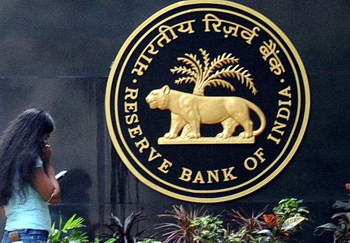
RBI new bad loan rules may improve prospects of loan recovery

News Network
February 14, 2018

Mumbai, Feb 14: The Reserve Bank of India’s (RBI) decision to tighten norms for resolution of stressed loans, currently estimated at over Rs10 trillion, will improve recovery prospects from bad loans but keep banks’ provisioning requirement at an elevated level, analysts said.
Late on Monday, the central bank withdrew a host of norms such as strategic debt restructuring (SDR) and scheme for sustainable structuring of stressed assets (S4A) among others, and made the process time-bound. The new rules stipulate that starting 1 March, lenders must implement a resolution plan within 180 days for accounts of at least Rs2,000 crore.

“To begin with, lenders will have to start finalizing and implementing resolution plans for cases where restructuring has been done. The fact that most cases remain in stress despite restructuring under various RBI schemes means that there is a high probability that most of these could be referred for (insolvency) proceedings,” said Udit Kariwala, senior analyst, financial institutions at India Ratings. “To that extent, provisioning cost will increase.”

He added that as per the rating agency’s analysis, at the end of September, large banks—six each from private and public sectors—are sitting on a restructured loan pool (including SDR and another scheme called 5/25) of around Rs1.9 trillion.

Accounts from highly leveraged thermal power and capital goods sectors are at high risk of landing in bankruptcy courts.

However, Krishnan Sitaraman, senior director at Crisil Ratings, said the circular in itself may not lead to materially higher provisioning on an aggregate basis, since banks are already steadily increasing their provisioning levels on bad loans owing to the resolution processes under way.

Public sector banks on an aggregate basis are looking to enhance provision coverage levels from 40-45% to 55-60%, he said.

Banks must kept aside at least 50% in the form of provision for accounts referred to bankruptcy court.

Currently, lenders are finalizing resolution plans for 11 of the 12 accounts in RBI’s first defaulter list referred to bankruptcy court. They are also filing insolvency petitions for some of the 28 accounts which were part of central bank’s second defaulter list.

Analysts said the revised rules - which, for instance, call for credit rating agencies to evaluate resolution plans will make the process of restructuring more transparent, enable lenders to get better market-linked pricing for the underlying asset, and sync bank balance sheets with expected loss from the stressed asset pool.

Still, there are some grey areas, others said.

For instance, it is not clear how lenders would work out a proposal which involves interest rate reductions or other sacrifices without a framework in place, said Manish Aggarwal, partner and head resolutions, special situations group, KPMG.

Crisil’s Sitaram said that in the long term, the new rules will improve recovery rates because the failure in meeting timeline will lead to insolvency proceedings, which has to be completed in a maximum of 270 days.

“In the past, we have the average recovery period in corporate NPA accounts extending to 4-5 years. Reduction in the recovery period will lead to higher certainty of outcome for lenders as well as preserve value better,” he said.

With the revised norms mandating an account must no longer be in default after the implementation of a resolution plan, there will be an improvement in the quality of such plans and both the debtors and lenders will have more skin in the game, according to analysts.

As per new RBI norms, in case the resolution plan involves change in the ownership structure of the defaulting firm, the account should not be in default at any point during the specified period, which is the time between implementation of the plan and the date, where up to 20% of the outstanding principal debt is repaid. If there is a default in the specified period, the account must be referred for IBC proceedings.

“With the new norms in place, there is possibility that the promoters will try to defend their assets by bringing the amount and safeguarding their assets from insolvency and bankruptcy code reference. That probability is increasing is what I feel,” said R. Subramaniakumar managing director and chief executive officer at Indian Overseas Bank.

Comments

Add new comment

  • Coastaldigest.com reserves the right to delete or block any comments.
  • Coastaldigset.com is not responsible for its readers’ comments.
  • Comments that are abusive, incendiary or irrelevant are strictly prohibited.
  • Please use a genuine email ID and provide your name to avoid reject.
News Network
November 24,2025

Mangaluru, Nov 24: The original departure time of 11.10 pm was a distant memory for scores of Dammam-bound passengers at Mangaluru International Airport last Friday night, as their Air India Express flight was abruptly cancelled at the eleventh hour, sparking hours of frustration and chaos.

The flight, IX 885, initially scheduled to depart at 11.10 pm on November 22, was subject to two back-to-back reschedules—first pushed to 11.45 pm and then significantly postponed to 1.40 am—before the final, crushing announcement of cancellation was made. For the travellers, many of whom are likely expatriate workers with tight schedules, the last-minute change marked the beginning of a distressing ordeal.

"There was no drinking water, no food, and absolutely no proper guidance. We were left stranded like refugees," complained a stranded passenger.

According to multiple passenger accounts, the airline's ground staff failed to provide adequate support or essential amenities following the cancellation. Complaints poured in about the total absence of drinking water, food provisions, and any reliable guidance from the carrier's representatives. Travellers alleged they were left stranded for a considerable period, with no immediate arrangements or clear communication offered regarding accommodation or alternative travel to send them back home.

The incident has highlighted serious concerns over the carrier's contingency planning and customer service protocols during flight disruptions at one of India's key international gateways. The airline is yet to issue a comprehensive statement addressing the alleged lapse in passenger care.
 

Comments

Add new comment

  • Coastaldigest.com reserves the right to delete or block any comments.
  • Coastaldigset.com is not responsible for its readers’ comments.
  • Comments that are abusive, incendiary or irrelevant are strictly prohibited.
  • Please use a genuine email ID and provide your name to avoid reject.
News Network
December 4,2025

indigoflight.jpg

Domestic carrier IndiGo has cancelled over 180 flights from three major airports — Mumbai, Delhi and Bengaluru — on Thursday, December 4, as the airline struggles to secure the required crew to operate its flights in the wake of new flight-duty and rest-period norms for pilots.

While the number of cancellations at Mumbai airport stands at 86 (41 arrivals and 45 departures) for the day, at Bengaluru, 73 flights have been cancelled, including 41 arrivals, according to a PTI report that quoted sources.

"IndiGo cancelled over 180 flights on Thursday at three airports-Mumbai, Delhi and Bengaluru," the source told the news agency.

Besides, it had cancelled as many as 33 flights at Delhi airport for Thursday, the source said, adding, "The number of cancellations is expected to be higher by the end of the day."

The Gurugram-based airline's On-Time Performance (OTP) nosedived to 19.7 per cent at six key airports — Delhi, Mumbai, Chennai, Kolkata, Bengaluru and Hyderabad — on December 3, as it struggled to get the required crew to operate its services, down from almost half of December 2, when it was 35 per cent.

"IndiGo has been facing acute crew shortage since the implementation of the second phase of the FDTL (Flight Duty Time Limitations) norms, leading to cancellations and huge delays in its operations across the airports," a source had told PTI on Wednesday.

Chaos continued at several major airports for the third day on Thursday because of the cancellations.

A spokesperson for the Kempegowda International Airport (KIA) in Bengaluru said that 73 IndiGo flights had been cancelled on Thursday.

At least 150 flights were cancelled and dozens of others delayed on Wednesday, airport sources said, leaving thousands of travellers stranded, according to news agency Reuters.

The Directorate General of Civil Aviation (DGCA) has said it is investigating IndiGo flight disruptions and has asked the airline to submit the reasons for the current situation, as well as its plans to reduce flight cancellations and delays.

It may be mentioned here that the pilots' body, Federation of Indian Pilots (FIP), has alleged that IndiGo, despite getting a two-year preparatory window before the full implementation of new flight duty and rest period norms for cockpit crew, "inexplicably" adopted a "hiring freeze".

The FIP said it has urged the safety regulator, the DGCA, not to approve airlines' seasonal flight schedules unless they have adequate staff to operate their services "safely and reliably" in accordance with the New Flight Duty Time Limitations (FDTL) norms.

In a letter to the DGCA late on Wednesday, the FIP urged the DGCA to consider re-evaluating and reallocating slots to other airlines, which have the capacity to operate them without disruption during the peak holiday and fog season if IndiGo continues to "fail in delivering on its commitments to passengers due to its own avoidable staffing shortages."

Comments

Add new comment

  • Coastaldigest.com reserves the right to delete or block any comments.
  • Coastaldigset.com is not responsible for its readers’ comments.
  • Comments that are abusive, incendiary or irrelevant are strictly prohibited.
  • Please use a genuine email ID and provide your name to avoid reject.
News Network
November 24,2025

lebanon.jpg

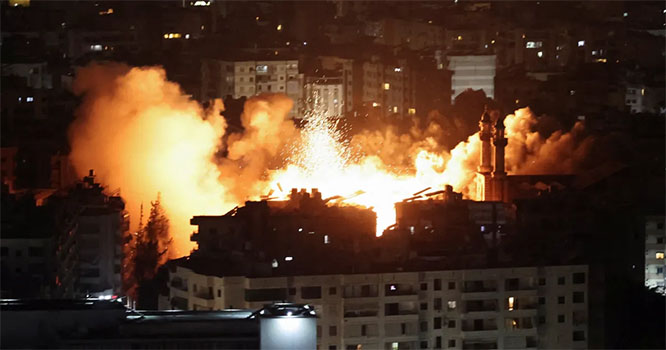
Israel has launched a new act of aggression on a residential neighborhood in Lebanon's capital, Beirut, killing and injuring about two dozen civilians.

The Israeli regime's military said in a statement that its forces carried out a so-called precise strike in a residential apartment in Dahiyeh in the southern suburbs of Beirut on Sunday.

The aggression targeted residential areas, killing at least five people and injuring more than 28 people, Lebanon's Health Ministry said. 

Hezbollah announced the martyrdom of senior Hezbollah commander Haytham Ali Tabatabai and four resistance fighters.

Lebanese President Michel Aoun condemned the airstrike, calling it a clear demonstration of Tel Aviv’s disregard for repeated international calls to halt violations on Lebanese soil.

“Israel refuses to implement international resolutions and all efforts aimed at ending the escalation and restoring stability,” Aoun said, urging the international community to take action to prevent further aggression.

The Palestinian Islamic Jihad movement also condemned the attack, holding the international community accountable. 

“The international community bears responsibility and continues to provide cover for these attacks as long as it does not restrain the occupiers,” said Ali Abu Shahin, a member of the group’s political bureau.

Israeli prime minister Benjamin Netanyahu’s office announced that the Israeli army carried out a strike “in the heart of Beirut."

Netanyahu reportedly approved the operation following recommendations from top Israeli security officials.

Two senior US officials commented on the Israeli strike.

The first official said that Israel did not notify Americans in advance about the attack. "We were informed immediately after the strike was carried out."

The second senior official said that the "US knew for several days that Israel was planning to escalate its strikes in Lebanon, but did not know in advance the timing, location, or target of the strike."

Speaking from the site of the Israeli strike, Lebanese MP Ali Ammar condemned the attack as part of a broader campaign of aggression that has targeted "all of Lebanon since the Washington-sponsored ceasefire."

He stated that "any attack on Lebanon is a violation of red lines; this aggression is part and parcel of the entity that targets Lebanon's dignity, sovereignty, and security of citizens."

Ammar went on to say the resistance is responding with "utmost wisdom, patience, and will confront the enemy at the appropriate time."

"Unfortunately, the enemy is emboldened to commit its aggression by voices within Lebanon that have turned themselves into tools that support its aggression," he added.

The Israeli attack on the southern suburbs of the Lebanese capital is the latest blatant violation of the ceasefire Israel signed with Hezbollah in November 2024, which was intended to end hostilities that had escalated into full-scale war.

An Israeli strike on the Ain al-Hilweh camp near Sidon in southern Lebanon late Tuesday killed at least 14 people. It wounded several others, including young students, according to the Lebanese health ministry.

The military claimed the attack targeted “a Hamas training compound” used to plan and carry out attacks against the regime -- a claim that has frequently been made without evidence.

Hamas rejected the allegations as “a blatant lie aimed at justifying the massacre,” stating it had “no military installations in the Palestinian camps in Lebanon” and that the targeted site was merely “an open sports field.”

According to Lebanese authorities, Israeli attacks have killed approximately 4,000 people and displaced more than 1.2 million residents across the country since October 2023.

Comments

Add new comment

  • Coastaldigest.com reserves the right to delete or block any comments.
  • Coastaldigset.com is not responsible for its readers’ comments.
  • Comments that are abusive, incendiary or irrelevant are strictly prohibited.
  • Please use a genuine email ID and provide your name to avoid reject.