



Sanghi Hindutva state would mark end of Indian idea: Shashi Tharoor

Agencies
October 31, 2020

New Delhi, Oct 31: The Hindutva movement is the "mirror image" of the Muslim communalism of 1947 and its triumph would mark the end of the Indian idea, says senior Congress leader Shashi Tharoor, asserting that Hindutva is a political doctrine, not a religious one.

A 'Hindu India' would not be Hindu at all, but a "Sanghi Hindutva state", which is a different country altogether, says Tharoor in his new book 'The Battle of Belonging' that was released on Saturday.

"People like me want to preserve the India we love, and not turn our beloved nation into the kind of religious state we were brought up to detest," he said.

Tharoor also asserted that Hindutva movement rhetoric echoes the bigotry that India was constructed to reject.

In the book published by Aleph Book Company, Tharoor makes a stinging critique of the Hindutva doctrine and the Citizenship (Amendment) Act, which he says is a challenge to, arguably, the most fundamental aspect of Indianness.

Devoting a chapter to the 'Hindu Pakistan' controversy in the book, the former Union minister writes: "I had inveighed against the ruling party’s attempts to create a Hindutva version of Pakistan, since that was not what our freedom movement fought for, nor was it the idea of India enshrined in our Constitution."

"This is not just about the minorities, as the BJP would have us believe. Many proud Hindus like myself cherish the inclusive nature of our faith and have no desire to live, as our Pakistani neighbours are forced to, in an intolerant mono-religious state," he writes.

Tharoor's reported comment last year that the BJP will pave the way for creation of a "Hindu Pakistan" had sparked a controversy with the party demanding his apology over the remarks.

Hinduism, as Swami Vivekananda asserted, teaches the acceptance of difference as a basic credo, Tharoor said in the book.

"Hindutva is not Hinduism; it is a political doctrine, not a religious one," he said.

"What is bizarre about the media drama over my remarks is that no one who was giving airtime to multiple BJP voices, frothing at the mouth about my words, actually asked them one simple question: 'Is the BJP giving up its dream of a Hindu rashtra?'" Tharoor said.

BJP apologists point out that the government has done nothing to amend the Constitution, and others have suggested that the Supreme Court's ruling that secularism is part of the 'basic structure' of the Constitution makes the idea of a 'Hindutva Pakistan' impossible, he said.

"But the fact is that both have only been held at bay by the simple fact that the BJP has not had the numbers required to achieve their goal -- two-thirds of both Houses of Parliament and half the states," he said.

Their overwhelming victory in the Lok Sabha elections in 2019 and winning a plurality of seats in the Rajya Sabha in June 2020 has ensured that they finally have all the elements needed to fulfil their "project", he said, adding that the nation has been "warned".

Tharoor argues in the book that the battle is between two opposing ideas of India or what might be described as ethno-religious nationalism versus civic nationalism.

In a sharp criticism of the CAA, Tharoor said it is the first law to question a basic building block of the nation -- that religion is not the determinant of our nationhood and, therefore, of our citizenship.

At a time when India's major national priority ought to have been its flailing economy, whose plummeting growth rate had already aroused widespread alarm even before the coronavirus struck, the Modi government plunged the country into an unwanted political crisis of its own making with the CAA, he said.

"With its penchant for shock-and-awe, the government pushed through Parliament legislation that fast-tracks citizenship for people fleeing persecution in Pakistan, Afghanistan, and Bangladesh -- provided they are not Muslim. By excluding members of just one community, the new law is antithetical to India's secular and pluralist traditions," writes Tharoor.

"The religious bigotry that partitioned the country with the founding of Pakistan has now been mirrored in pluralist India. As I told my fellow parliamentarians, that was a partition in the Indian soil; this is now a partition in the Indian soul," he said.

The Hindutva movement is the mirror image of the Muslim communalism of 1947; its rhetoric echoes the bigotry that India was constructed to reject, Tharoor said.

Its triumph would mark the end of the Indian idea, the Congress leader added.

In the book, Tharoor also delves into the issue of the slogan 'Bharat Mata Ki Jai' allegedly becoming an "acid test of Indian nationalism" and reiterated his stance that no Indian should be compelled to mouth a phrase that is nationalistic in the eyes of some, but not in his own.

Revisiting the 2016 controversy involving Muslim legislator Waris Pathan, who was suspended from the Maharashtra Assembly soon after for refusing to utter the slogan, Tharoor noted that some Muslims say, "'Tell us to say Jai Hind, Hindustan Zindabad, Jai Bharat, we'll do it -- but do not ask us to say Bharat Mata ki Jai'."

"The same Constitution that, in our civic nationalism, gives us the right to freedom of speech, also gives us the freedom of silence. We cannot put words in people's mouths," he asserted.

Tharoor also criticized the manner in which Article 370 was abrogated on August 5, 2019, saying Modi shocked the nation with an announcement on Kashmir that could well turn out to be the "political equivalent of demonetization"

Comments

Add new comment

  • Coastaldigest.com reserves the right to delete or block any comments.
  • Coastaldigset.com is not responsible for its readers’ comments.
  • Comments that are abusive, incendiary or irrelevant are strictly prohibited.
  • Please use a genuine email ID and provide your name to avoid reject.
News Network
November 22,2025

The Karnataka government has announced a 50% rebate on pending traffic and transport fines. The discount is available from November 21 to December 12.

The rebate applies to all traffic e-challans and violation cases booked by the RTO between 1991–92 and 2019–20. Officials clarified that the offer is not applicable to pending tax dues and is restricted only to traffic-violation fines.

Across Karnataka, more than 4 lakh RTO cases remain pending, including those involving transport vehicles. While thousands of vehicle owners have already cleared their dues, the department expects to generate substantial revenue through this limited-period rebate.

How to Pay and Avail the Discount

There are three ways to check and pay your pending fines:

1. Through Mobile Apps
Available on both Play Store and App Store:
•    Karnataka State Police (KSP) app
•    KarnatakaOne app
•    ASTraM app

Steps:
•    Enter your vehicle number in any of the above apps
•    Verify the photo/details of your vehicle
•    Pay the fine with the 50% discount applied

2. Visit a Traffic Police Station

You can pay your pending fine at any nearby traffic police station.

3. Visit the Traffic Management Centre (TMC)

•    Location: First Floor, Infantry Road, near Indian Express, Bengaluru

Transport Commissioner Yogeesh A M said, “We don't issue e-challans, so there's no online payment system.”

The department estimates ₹52 crore in pending RTO fines up to March 2020. “With the 50% rebate, we expect to collect around ₹25 crore if all dues are cleared,” he added.

Comments

Add new comment

  • Coastaldigest.com reserves the right to delete or block any comments.
  • Coastaldigset.com is not responsible for its readers’ comments.
  • Comments that are abusive, incendiary or irrelevant are strictly prohibited.
  • Please use a genuine email ID and provide your name to avoid reject.
News Network
December 2,2025

Puttur: The long-cherished dream of a government medical college in Puttur has moved a decisive step closer to reality, with the Karnataka State Finance Department granting its official approval for the construction of a new 300-bed hospital.

Puttur MLA Ashok Kumar Rai announced the crucial development to reporters on Monday, confirming that the official communication from the finance department was issued on November 27. This 300-bed facility is intended to be the cornerstone for the establishment of the government medical college, a project announced in the state budget.

Fast-Track Implementation

The MLA outlined an aggressive timeline for the project:

•    A Detailed Project Report (DPR) for the hospital is expected to be ready within 45 days.

•    The tender process for the construction will be completed within two months.

Following the completion of the tender process, Chief Minister Siddaramaiah is scheduled to lay the foundation stone for the project.

"Setting up a medical college in Puttur is a historical decision by the Congress government in Karnataka," Rai stated. The project has an estimated budget allocation of Rs 1,000 crore for the medical college.

Focus on Medical Education Department

The MLA highlighted a key strategic move: requesting the government to implement the hospital construction through the Medical Education Department instead of the Health and Family Welfare Department. This is intended to streamline the entire process of establishing the full medical college, ensuring the facilities—including labs, operation theatres, and other necessary infrastructure—adhere to the strict guidelines set by the Medical Council of India (MCI). The proposed site for the project is in Bannur.

Rai also took the opportunity to address political criticism, stating that the government has fulfilled its promise despite "apprehensions" and "mocking and criticising" from opposition parties who had failed to take similar initiatives when they were in power. "Chief Minister Siddaramaiah has kept his word," he added.

Comments

Add new comment

  • Coastaldigest.com reserves the right to delete or block any comments.
  • Coastaldigset.com is not responsible for its readers’ comments.
  • Comments that are abusive, incendiary or irrelevant are strictly prohibited.
  • Please use a genuine email ID and provide your name to avoid reject.
News Network
November 21,2025

israel.jpg

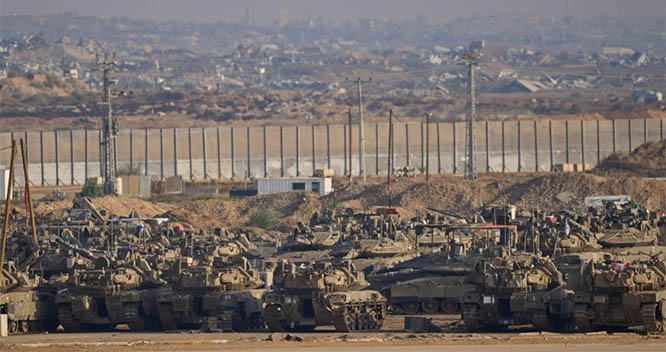
Local authorities say the Israeli military has expanded the so-called “yellow line” truce demarcation in Gaza City and repositioned its forces deeper into the territory in violation of a ceasefire agreement that came into force on October 10, besieging dozens of Palestinian families.

Gaza’s Government Media Office announced in a statement on Thursday that Israeli forces widened the boundary by shifting the markers, and advanced roughly 300 meters (984 feet) into the neighborhoods of Ash-Shaaf, An-Nazzaz and Baghdad Street.

The move pushed further into civilian areas, trapping families who were unable to flee as tanks rolled forward, it added.

“The fate of many of these families remains unknown amidst the shelling that targeted the area,” the office said, adding that the expansion of the yellow line shows a “blatant disregard” for the ceasefire deal.

On Friday, sources said the Israeli military carried out continued air and artillery strikes inside the so-called “yellow line” east of Khan Younis in the southern Gaza Strip.

According to the reports, Israeli warplanes and tanks targeted areas within the zone. One Palestinian was reported killed and several others wounded in the strikes, the sources said.

The fresh aggression came only a day after 25 Palestinians were killed in Israeli airstrikes on Gaza City and Khan Younis on Wednesday.

The media office reported that Israel has consistently violated the truce deal since its implementation last month, with near-daily attacks by air, artillery and direct shootings.

The office said over 400 violations have been documented. These breaches have resulted in the deaths of more than 300 Palestinians and left hundreds injured.

The Government Media Office in Gaza urged the guarantors of the ceasefire — the US, Egypt, Qatar and Turkey — to take swift action to halt the ongoing violations and facilitate the delivery of food, shelter materials, medical aid, and infrastructure equipment.

The so-called “yellow line,” set out in the agreement between Israel and Hamas resistance movement, refers to a non-physical partition where the Israeli military repositioned itself when the truce deal took effect.

It has allowed Israel, which routinely fires at Palestinians who approach the line, to retain control over more than half of the Gaza Strip.

International bodies, including the UN Independent International Commission of Inquiry, the International Association of Genocide Scholars, Amnesty International, Human Rights Watch, B’Tselem, and other rights groups, have concluded that the Israeli war on Gaza amounts to genocide.

In the attacks in Gaza since October 2023, Israel has killed at least 69,546 people and injured 170,833 others, leveling large swaths of the territory and displacing almost all of the population. 

Comments

Add new comment

  • Coastaldigest.com reserves the right to delete or block any comments.
  • Coastaldigset.com is not responsible for its readers’ comments.
  • Comments that are abusive, incendiary or irrelevant are strictly prohibited.
  • Please use a genuine email ID and provide your name to avoid reject.