Residents of Coastal Karnataka in Japan safe; control room established in Indian Embassy

March 12, 2011

Mangalore, March 12: Most of the coastal Karnataka based expatriates living in Tsunami hit Japan, have contacted their relatives over satellite phone or internet to inform that they are safe.

Although, some families of coastal Karnataka could not contact their relatives living in Japan over telephone soon after the disaster, as the communication network had dethatched for some time, later in the evening they received messages of contentment from the devastated country.

Following are the few names who contacted their relatives in Dakshina Kannada, Udupi and Uttara Kannada districts.

Yermal Shetty brothers:

Elladadi Balakrishan Shetty (47), and his brother, Elladadi Chandrahas Shetty (42), who run two restaurants in Tokyo, contacted their relatives in Thenka Elladadi in Yermal to inform that no serious damage was caused in their place.

Hejamadi Ajith Kumar:

Ajith Kumar (32), son of Chnadrappa Kotyan, a resident of Phalimaru Hosathota in Hegamadi village, has been to Japan two and half month ago. He contacted here wife Dr Shailaja at 6:30 pm on Friday and informed that he is safe.

Gururaj Tantri, Udupi:

Dr D Gururaj Tantri, son of retired professor of Sanskrit College Udupi and his wife, Rajashree, living in Oklahama Japan, are safe as their town, located in the southern side of Japan, remained unaffected by tsunami.

Ramanaresh Shetty, Kundapur:

Ramanaresh Shetty, a resident of Thekkatte village in Kundapur, currently working at a company in Takata Onida in Japan, contacted his wife Jyothi Shetty.

Rajaram, Vittal:

Vittal based Rajaram, son of Subrahmanya Bhat is working as an engineer in the suburbs of Tokyo. His face book status confirms that he is safe.

Udupi couples:

H S Pradipkumar and his wife Pratibha, had recently gone to Japan. They informed their family members in Udupi that they are safe.

Suresh Bhat, Uttara Kannada

Suresh Bhat, living in a Japanese town located around 650 kms away from the epicentre of the quake, informed his family members in Herur of Uttara Kannada district, he is safe and currently staying at room along with his friends.

Dr U K Krishna, Puttur:

Dr U K Krishna, who is on a visit to Japan contacted his brother Gururaj Upadhyaya in Puttur and said that he was around 2,000 kms away from Tokyo, when Tsunami hit the country.

Dhruva Narayan, Suratkal

Immediately after hearing the news of Tsunami, Dhruva Narayan, who is pursuing his PhD in Kagoshima University Japan, contacted his father Prof Babu Narayan, of NITK Suratkal, and asked them not to be frightened. Narayan also said that all of his Kannadiga friends in his town are safe.

All Indians are safe

There are no reports of casualties among the 25,000 strong Indian community in Japan which is concentrated in the Kanto and Kansai regions.


The Indian Embassy in Tokyo and the Consulate in Osaka are in touch with the community members and verifying the situation on ground.


A control room has been established in the Indian Embassy which can contacted on 00813 32622391 to 97, said a Foreign Office statement.

JPN2

JPN4

JPN1

JPN3

JPN5

JPN6

JPN7

JPN8

JPN9

JPN10

Comments

Add new comment

  • Coastaldigest.com reserves the right to delete or block any comments.
  • Coastaldigset.com is not responsible for its readers’ comments.
  • Comments that are abusive, incendiary or irrelevant are strictly prohibited.
  • Please use a genuine email ID and provide your name to avoid reject.
News Network
February 1,2026

Bengaluru: The Karnataka High Court has refused to quash an investigation against a WhatsApp group administrator accused of allowing the circulation of obscene and offensive images depicting Hindutva politicians and idols in 2021.

Justice M Nagaprasanna observed that, prima facie, the ingredients of the offence under Section 295A of the Indian Penal Code were made out. “The offence under Section 295A of the IPC is met to every word of its ingredient, albeit prima facie,” the judge said.

The petitioner, Sirajuddin, a resident of Belthangady taluk in Dakshina Kannada district, had challenged the FIR registered against him at the CEN (Cyber, Economics and Narcotics) police station, Mangaluru, for offences under Section 295A of the IPC and Section 67 of the Information Technology Act. Section 295A relates to punishment for deliberate and malicious acts intended to outrage the religious feelings of any class of citizens.

According to the complaint filed by K Jayaraj Salian, also a resident of Belthangady taluk, he received a WhatsApp group link from an unknown source and was added to the group after accessing it. The group reportedly had six administrators and around 250 participants, where obscene and offensive images depicting Hindu deities and certain political figures were allegedly circulated repeatedly.

Sirajuddin was arrested in connection with the case and later released on bail on February 16, 2021. He argued before the court that he was being selectively targeted, while other administrators—including the creator of the group—were neither arrested nor investigated. He also contended that the Magistrate could not have taken cognisance of the offence under Section 295A without prior sanction under Section 196(1) of the CrPC.

Rejecting the argument, Justice Nagaprasanna held that prior sanction is required only at the stage of taking cognisance, and not at the stage of registration of the crime or during investigation.

The judge noted that the State had produced the entire investigation material before the court. “A perusal of the material reveals depictions of Hindu deities in an extraordinarily obscene, demeaning and profane manner. The content is such that its reproduction in a judicial order would itself be inappropriate,” the court said, adding that the material, on its face, had the tendency to outrage religious feelings and disturb communal harmony.

Observing that the case was still at the investigation stage, the court said it could not interdict the probe at this juncture. However, it expressed concern that the investigating officer appeared to have not proceeded uniformly against all administrators. The court clarified that if the investigation revealed the active involvement of any member in permitting the circulation of such content, they must also be proceeded against.

“At this investigative stage, any further observation by this Court would be unnecessary,” the order concluded.

Comments

Add new comment

  • Coastaldigest.com reserves the right to delete or block any comments.
  • Coastaldigset.com is not responsible for its readers’ comments.
  • Comments that are abusive, incendiary or irrelevant are strictly prohibited.
  • Please use a genuine email ID and provide your name to avoid reject.
News Network
January 23,2026

Mangaluru: The Karnataka Government Polytechnic (KPT), Mangaluru, has achieved autonomous status from the All India Council for Technical Education (AICTE), becoming the first government polytechnic in the country to receive such recognition in its 78-year history. The status was granted by AICTE, New Delhi, and subsequently approved by the Karnataka Board of Technical Education in October last year.

Officials said the autonomy was conferred a few months ago. Until recently, AICTE extended autonomous status only to engineering colleges, excluding diploma institutions. However, with a renewed national focus on skill development, several government polytechnics across India have now been granted autonomy.

KPT, the second-largest polytechnic in Karnataka, was established in 1946 with four branches and has since expanded to offer eight diploma programmes, including computer science and polymer technology. The institution is spread across a 19-acre campus.

Ravindra M Keni, the first dean of the institution, told The Times of India that AICTE had proposed autonomous status for polytechnic institutions that are over 25 years old. “Many colleges applied. In the first round, 100 institutions were shortlisted, which was further narrowed down to 15 in the second round. We have already completed one semester after becoming an autonomous institution,” he said. He added that nearly 500 students are admitted annually across eight three-year diploma courses.

Explaining the factors that helped KPT secure autonomy, Keni said the institution has consistently recorded 100 per cent admissions and placements for its graduates. He also noted its strong performance in sports, with the college emerging champions for 12 consecutive years, along with active student participation in NCC and NSS activities.

Autonomous status allows KPT to design industry-oriented curricula, conduct examinations, prepare question papers, and manage academic documentation independently. The institution can also directly collaborate with industries and receive priority funding from AICTE or the Ministry of Education. While academic autonomy has been granted, financial control will continue to rest with the state government.

“There will be separate committees for examinations, question paper setting, boards of studies, and boards of examiners. The institution will now have the freedom to conduct admissions without government notifications and issue its own marks cards,” Keni said, adding that new academic initiatives would be planned after a year of functioning under the autonomous framework.

Comments

Add new comment

  • Coastaldigest.com reserves the right to delete or block any comments.
  • Coastaldigset.com is not responsible for its readers’ comments.
  • Comments that are abusive, incendiary or irrelevant are strictly prohibited.
  • Please use a genuine email ID and provide your name to avoid reject.
coastaldigest.com news network
January 19,2026

badriya.jpg

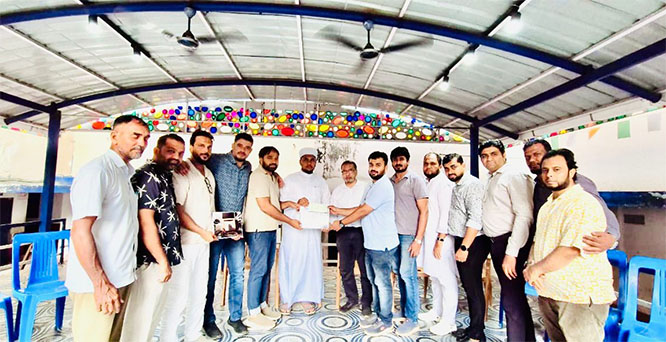
Mangaluru: The Phase I project of Badria Vision 2028 was formally launched at a ceremony held at the Badria Campus on January 17, marking an important step in the institution’s long-term development roadmap.

The programme was attended by P.B. Abdul Hameed, Secretary of the MEA, and P.C. Hasir, Correspondent of the MEA, who presided over the event and underscored the institution’s commitment to growth and academic excellence.

Office-bearers of the Badria Alumni Association were present in large numbers, including A.K. Sajid (President), Shamsuddin and S.M. Farooq (Vice-Presidents), Shaheed (General Secretary), and Khaleel (Treasurer), reflecting strong alumni engagement in the initiative.

The gathering was blessed by Sayyid Shamsuddeen Basith Thangal Kukkaje, Qateeb of Zeenat Yatheem Bakshi, who led a special dua seeking divine guidance and success for the project.

The ceremony also witnessed the participation of prominent alumnus and local corporate professional Abdul Latheef, along with alumni members Naushad, Kalandar, Safwan, members of the core committee, and several other former students.

A key moment of the event was the formal handover of a cheque to Ameen Woodland Architect, signalling the immediate commencement of construction work under Phase I of the project.

Organisers said the launch of Phase I reflects a shared vision, institutional unity, and collective resolve to realise the objectives of Badria Vision 2028.

Comments

Add new comment

  • Coastaldigest.com reserves the right to delete or block any comments.
  • Coastaldigset.com is not responsible for its readers’ comments.
  • Comments that are abusive, incendiary or irrelevant are strictly prohibited.
  • Please use a genuine email ID and provide your name to avoid reject.