



Russian arms exports to India fell by 42% between 2014-18 and 2009-13: Report

Agencies
March 11, 2019

Washington, Mar 11: Russia's arms export to India fell by a whopping 42 per cent between 2014-18 and 2009-2013, according to a new report.
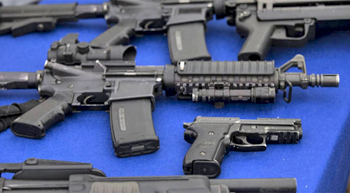
As a result, Russia accounted for 58 per cent of total Indian arms imports in 2014-2018, compared with 76 per cent in 2009-2013, according to the report "Trends in International Arms Transfers, 2018" released by the Stockholm International Peace Research Institute (SIPRI).

In line with Prime Minister Narendra Modi's effort to reduce country's dependence on foreign arms, India's import of arms decreased by 24 per cent between 2009-2013 and 2014-2018, according to the figures released by the report.

This decline in India's import is also partly due to delays in deliveries of arms produced under license from foreign suppliers, such as combat aircraft ordered from Russia in 2001 and submarines ordered from France in 2008.

Still, India was the world's second largest importer of major arms in 2014-18 and accounted for 9.5 per cent of the global total.

Israel, the USA and France all increased their arms exports to India in 2014-18.

Pakistan's arms imports decreased by 39 per cent between 2009-13 and 2014-18. The US has become increasingly reluctant to provide military aid or sell arms to Pakistan: US arms exports to Pakistan fell by 81 per cent between 2009-13 and 2014-18, it said.

Pakistan has instead turned to other suppliers. For example, in 2018 it ordered 4 frigates and 30 combat helicopters from Turkey, it added.

The decrease in India's arms import is significant given that the volume of international transfers of major arms in 2014-18 was 7.8 per cent higher than in 2009-13 and 23 per cent higher than in 2004-2008.

The five largest exporters in 2014-18 were the United States, Russia, France, Germany and China. The five largest importers were Saudi Arabia, India, Egypt, Australia and Algeria.

The US was the top arms exporter in 2014-18 and 2009-13. Its exports of major arms grew by 29 per cent between the two periods and its share of total global exports rose from 30 per cent to 36 per cent. As a result, the gap between the USA and Russia - the second largest exporter - continued to widen.

In 2009-13, US exports of major arms were 12 per cent higher than those of Russia, whereas in 2014-18 they were 75 per cent higher.

Russian exports of major arms decreased by 17 per cent between the same periods.

The fall was partly due to general reductions in Indian and Venezuelan arms imports - two countries that have been among the main recipients of Russian arms exports in previous years, the SIPRI said.

"Although India remained the chief recipient of Russian arms in 2014-18, Russian arms exports to India fell by 42 per cent between 2014-18 and 2009-13. Arms exports to Venezuela, which was the fifth largest recipient of Russian arms in 2009-13, decreased by 96 per cent between the two periods," it said.


Comments

Add new comment

  • Coastaldigest.com reserves the right to delete or block any comments.
  • Coastaldigset.com is not responsible for its readers’ comments.
  • Comments that are abusive, incendiary or irrelevant are strictly prohibited.
  • Please use a genuine email ID and provide your name to avoid reject.
News Network
December 16,2025

jordan.jpg

Prime Minister Narendra Modi on Monday held talks with Jordan’s King Abdullah II in Amman, during which the two leaders discussed ways to further strengthen bilateral relations, with the Prime Minister outlining an eight-point vision covering key areas of cooperation.

Describing the meeting as “productive”, PM Modi said he shared a roadmap focused on trade and economy, fertilisers and agriculture, information technology, healthcare, infrastructure, critical and strategic minerals, civil nuclear cooperation, and people-to-people ties.

In a post on social media platform X, the Prime Minister praised King Abdullah II’s personal commitment to advancing India–Jordan relations, particularly as both countries mark the 75th anniversary of the establishment of diplomatic ties this year.

“Held productive discussions with His Majesty King Abdullah II in Amman. His personal commitment towards vibrant India-Jordan relations is noteworthy. This year, we are celebrating the 75th anniversary of our bilateral diplomatic relations,” PM Modi said.

The meeting took place at the Al Husseiniya Palace, where the two leaders also exchanged views on regional and global issues of mutual interest. According to the Ministry of External Affairs (MEA), both sides agreed to further deepen cooperation in areas including trade and investment, defence and security, counter-terrorism and de-radicalisation, fertilisers and agriculture, infrastructure, renewable energy, tourism, and heritage.

The MEA said both leaders reaffirmed their united stand against terrorism.

PM Modi arrived in Amman earlier on Monday and was received by Jordanian Prime Minister Jafar Hassan, who accorded him a formal welcome. Following the talks, King Abdullah II hosted a banquet dinner in honour of the Prime Minister, reflecting the warmth of bilateral ties.

Jordan is the first leg of PM Modi’s three-nation tour. From Amman, the Prime Minister will travel to Ethiopia at the invitation of Prime Minister Abiy Ahmed Ali, marking his first official visit to the African nation. The tour will conclude with a visit to Oman.

Comments

Add new comment

  • Coastaldigest.com reserves the right to delete or block any comments.
  • Coastaldigset.com is not responsible for its readers’ comments.
  • Comments that are abusive, incendiary or irrelevant are strictly prohibited.
  • Please use a genuine email ID and provide your name to avoid reject.
News Network
December 15,2025

Udupi, Dec 15: What was meant to be a post-pilgrimage gathering turned tragic in Padukere village of Brahmavar taluk, Udupi district, late Sunday night, when a clash among youths escalated into a fatal assault, leaving one man dead.

The victim has been identified as 30-year-old Santosh Mogaveera, a resident of Padukere.

According to preliminary information, the incident took place during a late-night drinking party involving a group of local youths who had recently returned after completing their pilgrimage to the Sabarimala shrine. An argument reportedly broke out among the group and soon escalated into a violent confrontation.

During the ensuing brawl, Santosh Mogaveera was allegedly assaulted and collapsed at the spot after sustaining serious injuries. He was rushed by local residents to a private hospital in Brahmavar, where doctors declared him dead.

On receiving information, senior police officials, including Brahmavar Circle Inspector Gopikrishna, Kota Police Sub-Inspector Praveen Kumar T, Station ASI Manthesh Jabagoudar, and head constables Pradeep and Ashok, visited the spot and conducted an inspection.

Police have taken four youths into custody in connection with the incident. A case has been registered at the Kota police station, and further investigation is underway to ascertain the exact sequence of events leading to the death.

Comments

Add new comment

  • Coastaldigest.com reserves the right to delete or block any comments.
  • Coastaldigset.com is not responsible for its readers’ comments.
  • Comments that are abusive, incendiary or irrelevant are strictly prohibited.
  • Please use a genuine email ID and provide your name to avoid reject.
News Network
December 6,2025

pilot.jpg

New Delhi: IndiGo, India’s largest airline, faced major operational turbulence this week after failing to prepare for new pilot-fatigue regulations issued by the Directorate General of Civil Aviation (DGCA). The stricter rules—designed to improve flight safety—took effect in phases through 2024, with the latest implementation on November 1. IndiGo has acknowledged that inadequate roster planning led to widespread cancellations and delays.

Below are the key DGCA rules that affected IndiGo’s operations:

1. Longer Mandatory Weekly Rest

Weekly rest for pilots has been increased from 36 hours to 48 hours.

The government says the extended break is essential to curb cumulative fatigue. This rule remains in force despite the current crisis.

2. Cap on Night Landings

Pilots can now perform only two night landings per week—a steep reduction from the earlier limit of six.

Night hours, defined as midnight to early morning, are considered the least alert period for pilots.

Given the disruptions, this rule has been temporarily relaxed for IndiGo until February 10.

3. Reduced Maximum Night Flight Duty

Flight duty that stretches into the night is now capped at 10 hours.

This measure has also been kept on hold for IndiGo until February 10 to stabilize operations.

4. Weekly Rest Cannot Be Replaced With Personal Leave

Airlines can no longer count a pilot’s personal leave as part of the mandatory 48-hour rest.

Pilots say this closes a loophole that previously reduced actual rest time.

Currently, all airlines are exempt from this rule to normalise travel.

5. Mandatory Fatigue Monitoring

Airlines must submit quarterly fatigue reports along with corrective actions to DGCA.

This system aims to create a transparent fatigue-tracking framework across the industry.

The DGCA has stressed that these rules were crafted to strengthen flight safety and align India with global fatigue-management standards. The temporary relaxations are expected to remain until February 2025, giving IndiGo time to stabilise its schedules and restore normal air travel.

Comments

Add new comment

  • Coastaldigest.com reserves the right to delete or block any comments.
  • Coastaldigset.com is not responsible for its readers’ comments.
  • Comments that are abusive, incendiary or irrelevant are strictly prohibited.
  • Please use a genuine email ID and provide your name to avoid reject.
