



Saudi Arabia decides to cut oil output as producers discuss price dip

Agencies
November 12, 2018

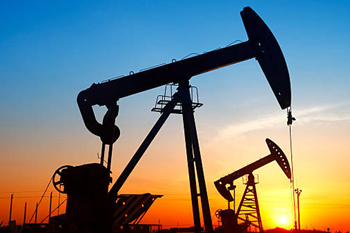
Nov 12: Saudi Arabia, the world's top crude exporter, said on Sunday it will cut oil output from next month, as major producers held a key meeting to discuss shoring up sliding prices. Saudi Energy Minister Khalid al-Falih announced the kingdom was cutting its supplies by 500,000 barrels per day from December.
But Falih said ahead of the meeting of OPEC and non-OPEC key producers that there was not yet consensus on a broader output cut.

Oil prices have shed a fifth of their value in just one month after surging to a four-year high in early October, driven by a combination of factors centred on higher supply and fears of sluggish demand.

The meeting of the Joint Ministerial Monitoring Committee in Abu Dhabi will not take decisions, ministers said, but will propose recommendations for a crucial ministerial meeting in Vienna early in December.

Among those attending were Russian Energy Minister Alexander Novak, Oman's Oil Minister Mohammed al-Rumhi and the energy minister of host UAE Suheil al-Mazroue.

Falih told reporters ahead of the meeting that Saudi Arabia's "crude exports for December will be 500,000 bpd lower than November".

The world's top oil exporter has been pumping 10.7 million bpd since October, he said.

The Saudi minister acknowledged that so far there was no fresh agreement on reducing production among OPEC and non-OPEC producers, who struck a deal in late 2016 to cut output by 1.8 million bpd to remedy an oversupply crisis.

"There is no consensus yet among oil producers about cutting production," Falih said at the gathering.

He insisted it was "premature to talk about a specific action", when asked about the possibility of an output cut.

"We have to study all the factors," Falih said.

Brent crude dropped below USD 70 a barrel on Friday for the first time since April while the New York's West Texas Intermediate (WTI) sank below USD 60 a barrel, a nine-month low.

In his speech at the start of the meeting Falih said the recent sharp drop in prices has "surprised us".

He said the market sentiment has shifted from one of fearing shortages to one worried about oversupply.

He also attributed the sharp drop in prices to "microeconomic uncertainties", and signs of a build-up in crude inventories.

The UAE's Mazrouei said that the goal of the OPEC and non-OPEC cooperation was to strike a balance in the market, adding that recommendations for possible action will be made to next month's ministerial conference.

The latest price slump comes as the United States has upped production of shale oil, while Saudi Arabia, Russia and others have raised supplies of crude amid signs of slowing demand.

There have also been signs of a softer-than-expected impact from US sanctions on Iranian oil exports.

"Prices have been falling amid a continued rise in crude supplies from big producers, such as Saudi Arabia, Russia and the US, more than compensating for lost Iranian barrels," Forex.com analyst Fawad Razaqzada told AFP.

"With the Iranian sanctions not being as severe as initially feared, officials from the OPEC and non-OPEC producers may discuss at the weekend the need to bring compliance back down... or risk another 2014-style slide in prices." Producers implemented large cuts starting at the beginning of 2017 and managed to push up oil prices from below USD 30 a barrel to over USD 85 in October, strongly improving their revenues.

But the producer nations eased the output cuts in June after signs of a tighter market and higher prices, allowing hundreds of thousands of extra barrels to hit the market.

Commerzbank, Germany's second-largest lender, said Friday oil producers must act to prevent a free fall of prices.

"If they fail to signal any intention to reverse the latest increase in production, oil prices threaten to slide further," the bank said in a note.

Comments

Add new comment

  • Coastaldigest.com reserves the right to delete or block any comments.
  • Coastaldigset.com is not responsible for its readers’ comments.
  • Comments that are abusive, incendiary or irrelevant are strictly prohibited.
  • Please use a genuine email ID and provide your name to avoid reject.
News Network
February 1,2026

US President Donald Trump on Saturday claimed that the government of India led by Prime Minister Narendra Modi has made a deal to buy Venezuelan oil, as opposed to purchasing it from Iran.

"We've already made that deal, the concept of the deal," he told reporters on Air Force One.

Trump had imposed 25% tariffs on countries buying Venezuelan oil, including India, in March 2025. He had also hit India with tariffs for buying Russian oil, saying it was "funding" President Vladimir Putin's war against Ukraine.

Trump has said that the US has taken control of the oil-rich Venezuela after capturing former President Nicolas Maduro in January.

A fleet of 18 ships loaded with crude oil bound for refineries in Texas, Louisiana, and Mississippi in January, the most since December 2024, according to a report by the news agency Bloomberg.

Combined crude deliveries to the US will reach about 2,75,000 barrels a day, more than doubling volumes seen in December last year. Shipments to China, which averaged 4,00,000 barrels a day last year, fell to zero in January.

PM Modi, Venezuelan President Agree To Expand Ties

Prime Minister Narendra Modi and Venezuela's acting President Delcy Rodriguez spoke on Friday and agreed to take the bilateral relations to "new heights" in the years ahead.

It was the first phone call between the two leaders since the capture of Maduro and his wife by the US on January 3.

"Spoke with Acting President of Venezuela, Ms. Delcy Rodriguez. We agreed to further deepen and expand our bilateral partnership in all areas, with a shared vision of taking India-Venezuela relations to new heights in the years ahead," PM Modi said in a post on X.

A statement from Prime Minister Modi's office said the two leaders agreed to further expand and deepen the India-Venezuela partnership in all areas, including trade and investment, energy, digital technology, health, agriculture, and people-to-people ties.

They exchanged views on various regional and global issues of mutual interest and underscored the importance of their close cooperation for the Global South, the statement said.

Rodriguez also said that they discussed partnerships in the fields of agriculture, science and technology, mining, and tourism, as well as the pharmaceutical and automotive industries.

Comments

Add new comment

  • Coastaldigest.com reserves the right to delete or block any comments.
  • Coastaldigset.com is not responsible for its readers’ comments.
  • Comments that are abusive, incendiary or irrelevant are strictly prohibited.
  • Please use a genuine email ID and provide your name to avoid reject.
News Network
January 23,2026

Karnataka Governor Thaawarchand Gehlot read only three lines from the 122-paragraph address prepared by the Congress-led state government while addressing the joint session of the Legislature on Thursday, effectively bypassing large sections critical of the BJP-led Union government.

The omitted portions of the customary Governor’s address outlined what the state government described as a “suppressive situation in economic and policy matters” under India’s federal framework. The speech also sharply criticised the Centre’s move to replace the Mahatma Gandhi National Rural Employment Guarantee Act (MGNREGA) with the Viksit Bharat–Guarantee for Rozgar and Ajeevika Mission (Gramin) Act, commonly referred to as the VB-GRAM (G) Act.

Governor Gehlot had earlier conveyed his objection to several paragraphs that were explicitly critical of the Union government. On Thursday, he confined himself to the opening lines — “I extend a warm welcome to all of you to the joint session of the State legislature. I am extremely pleased to address this august House” — before jumping directly to the concluding sentence of the final paragraph.

He ended the address by reading the last line of paragraph 122: “Overall, my government is firmly committed to doubling the pace of the State’s economic, social and physical development. Jai Hind — Jai Karnataka.”

According to the prepared speech, the Karnataka government demanded the scrapping of the VB-GRAM (G) Act, describing it as “contractor-centric” and detrimental to rural livelihoods, and called for the full restoration of MGNREGA. The state government argued that the new law undermines decentralisation, weakens labour protections, and centralises decision-making in violation of constitutional norms.

Key points from the unread sections of the speech:

•    Karnataka facing a “suppressive” economic and policy environment within the federal system

•    Repeal of MGNREGA described as a blow to rural livelihoods

•    VB-GRAM (G) Act accused of protecting corporate and contractor interests

•    New law alleged to weaken decentralised governance

•    Decision-making said to be imposed by the Centre without consulting states

•    Rights of Adivasis, women, backward classes and agrarian communities curtailed

•    Labourers allegedly placed under contractor control

•    States facing mounting fiscal stress due to central policies

•    VB-GRAM (G) Act accused of enabling large-scale corruption

Comments

Add new comment

  • Coastaldigest.com reserves the right to delete or block any comments.
  • Coastaldigset.com is not responsible for its readers’ comments.
  • Comments that are abusive, incendiary or irrelevant are strictly prohibited.
  • Please use a genuine email ID and provide your name to avoid reject.
News Network
January 23,2026

Mangaluru: The Karnataka Government Polytechnic (KPT), Mangaluru, has achieved autonomous status from the All India Council for Technical Education (AICTE), becoming the first government polytechnic in the country to receive such recognition in its 78-year history. The status was granted by AICTE, New Delhi, and subsequently approved by the Karnataka Board of Technical Education in October last year.

Officials said the autonomy was conferred a few months ago. Until recently, AICTE extended autonomous status only to engineering colleges, excluding diploma institutions. However, with a renewed national focus on skill development, several government polytechnics across India have now been granted autonomy.

KPT, the second-largest polytechnic in Karnataka, was established in 1946 with four branches and has since expanded to offer eight diploma programmes, including computer science and polymer technology. The institution is spread across a 19-acre campus.

Ravindra M Keni, the first dean of the institution, told The Times of India that AICTE had proposed autonomous status for polytechnic institutions that are over 25 years old. “Many colleges applied. In the first round, 100 institutions were shortlisted, which was further narrowed down to 15 in the second round. We have already completed one semester after becoming an autonomous institution,” he said. He added that nearly 500 students are admitted annually across eight three-year diploma courses.

Explaining the factors that helped KPT secure autonomy, Keni said the institution has consistently recorded 100 per cent admissions and placements for its graduates. He also noted its strong performance in sports, with the college emerging champions for 12 consecutive years, along with active student participation in NCC and NSS activities.

Autonomous status allows KPT to design industry-oriented curricula, conduct examinations, prepare question papers, and manage academic documentation independently. The institution can also directly collaborate with industries and receive priority funding from AICTE or the Ministry of Education. While academic autonomy has been granted, financial control will continue to rest with the state government.

“There will be separate committees for examinations, question paper setting, boards of studies, and boards of examiners. The institution will now have the freedom to conduct admissions without government notifications and issue its own marks cards,” Keni said, adding that new academic initiatives would be planned after a year of functioning under the autonomous framework.

Comments

Add new comment

  • Coastaldigest.com reserves the right to delete or block any comments.
  • Coastaldigset.com is not responsible for its readers’ comments.
  • Comments that are abusive, incendiary or irrelevant are strictly prohibited.
  • Please use a genuine email ID and provide your name to avoid reject.