



SC quashes allocation of 214 coal blocks allocated since 1993

September 24, 2014

New Delhi, Sep 24: In a major blow to the corporate sector, the Supreme Court today quashed allocation of 214 out of 218 coal blocks which were alloted to various companies since 1993 and in which it was claimed that around Rs 2 lakh crores were invested.

coal

A bench, headed by Chief Justice R M Lodha, saved only four blocks--one belonging to NTPC and SAIL each and two allocated to Ultra Mega Power Projects--from being cancelled.

The bench, also comprising justices Madan B Lokur and Kurian Joseph, granted six months breathing time to mining companies to wind up their operations in the coal blocks.

The bench also directed the companies, which were allocated coal blocks but had not operationalised them, to pay a compensation to the government for the loss of exchequer. It accepted the findings of the CAG which came to the conclusion that the loss of Rs 295 per tonne was caused due to the non-operation of the mines.

The apex court also noticed the stand taken by the NDA government that it is "fully prepared to face socio-economic impact" if the coal block allocations were cancelled.

During the earlier hearing in the case, the UPA govt had opposed cancellation of coal blocks allocation saying that around Rs 2 lakh crore had been invested by various companies after blocks were alloted to them.

The apex court had on August 25 held that all coal blocks allocation since 1993 by various regimes at the Centre have been made illegally and arbitrarily.

The apex court, which had used almost all terms to condemn the procedures adopted by 36 screening committee meetings since 1993, however, had stopped short of cancelling them saying, "what should be the consequences, is the issue which remains to be tackled." The apex court, which examined the allocation of 218 blocks in pre-auction era till 2010, had held that they were done in an illegal manner by an "ad-hoc and casual" approach "without applicatio n of mind" and "Common good and public interest have, thus, suffered heavily" due to lack of fair and transparent procedure resulting in "unfair distribution" of the "national wealth" -- coal -- "which is king and paramount Lord of industry."

"To sum up, the entire allocation of coal block as per recommendations made by the Screening Committee from July 14, 1993 in 36 meetings and the allocation through the government dispensation route suffers from the vice of arbitrariness and legal flaws.

"The Screening Committee has never been consistent, it has not been transparent, there is no proper application of mind, it has acted on no material in many cases, relevant factors have seldom been its guiding factors, there was no transparency and guidelines have seldom guided it," the bench had said in its 163-page verdict.

Comments

Add new comment

  • Coastaldigest.com reserves the right to delete or block any comments.
  • Coastaldigset.com is not responsible for its readers’ comments.
  • Comments that are abusive, incendiary or irrelevant are strictly prohibited.
  • Please use a genuine email ID and provide your name to avoid reject.
News Network
December 6,2025

indigoticket.jpg

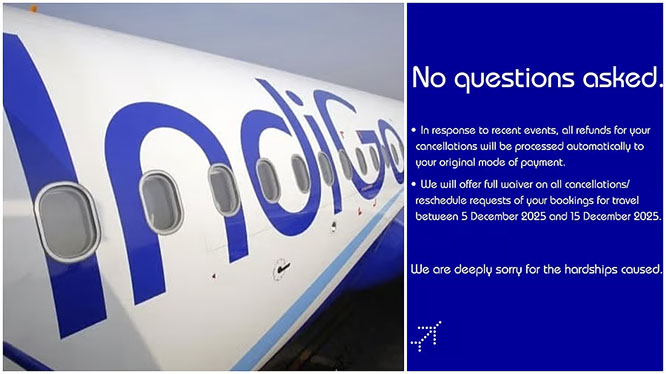
With IndiGo flight disruptions impacting thousands of passengers, the airline on Saturday said that it will offer full waiver on all cancellations/reschedule requests for travel bookings between December 5, 2025 and December 15, 2025.

Earlier in the day, the civil aviation ministry had directed the airline to complete the ticket refund process for the cancelled flights by Sunday evening, as well as ensure baggage separated from the travellers are delivered in the next two days.

In a post on X, titled 'No questions asked', IndiGo wrote, "In response to recent events, all refunds for your cancellations will be processed automatically to your original mode of payment."

"We are deeply sorry for the hardships caused," it further added.

Several passengers, however, complained of not getting full refund as promised by the airline.

Netizens have shared screenchots of getting charged for airline cancellation fee and convenience fee.

"Please tell me why u have did this airline cancellation charges when u say full amount will be refunded (sic)," a user wrote sharing a screenshot of the refund page.

"Well, but you have still debited the convenience charges," wrote another.

Passengers have also raised concerns about the "cancel" option being disabled on the IndiGo app. "First enable the 'Cancel' button on your App & offer full refund on tickets cancelled by customers between the said dates," wrote a user.

A day after the country's largest airline, IndiGo, cancelled more than 1,000 flights and caused disruptions for the fifth day on Saturday, the ministry said that any delay or non-compliance in refund processing will invite immediate regulatory action.

The refund process for all cancelled or disrupted flights must be completed by 8 pm on Sunday, the ministry said in a statement.

"Airlines have also been instructed not to levy any rescheduling charges for passengers whose travel plans were affected by cancellations," it said.

On Saturday, more than 400 flights were cancelled at various airports.

IndiGo has also been instructed to set up dedicated passenger support and refund facilitation cells.

Comments

Add new comment

  • Coastaldigest.com reserves the right to delete or block any comments.
  • Coastaldigset.com is not responsible for its readers’ comments.
  • Comments that are abusive, incendiary or irrelevant are strictly prohibited.
  • Please use a genuine email ID and provide your name to avoid reject.
News Network
December 6,2025

pilot.jpg

New Delhi: IndiGo, India’s largest airline, faced major operational turbulence this week after failing to prepare for new pilot-fatigue regulations issued by the Directorate General of Civil Aviation (DGCA). The stricter rules—designed to improve flight safety—took effect in phases through 2024, with the latest implementation on November 1. IndiGo has acknowledged that inadequate roster planning led to widespread cancellations and delays.

Below are the key DGCA rules that affected IndiGo’s operations:

1. Longer Mandatory Weekly Rest

Weekly rest for pilots has been increased from 36 hours to 48 hours.

The government says the extended break is essential to curb cumulative fatigue. This rule remains in force despite the current crisis.

2. Cap on Night Landings

Pilots can now perform only two night landings per week—a steep reduction from the earlier limit of six.

Night hours, defined as midnight to early morning, are considered the least alert period for pilots.

Given the disruptions, this rule has been temporarily relaxed for IndiGo until February 10.

3. Reduced Maximum Night Flight Duty

Flight duty that stretches into the night is now capped at 10 hours.

This measure has also been kept on hold for IndiGo until February 10 to stabilize operations.

4. Weekly Rest Cannot Be Replaced With Personal Leave

Airlines can no longer count a pilot’s personal leave as part of the mandatory 48-hour rest.

Pilots say this closes a loophole that previously reduced actual rest time.

Currently, all airlines are exempt from this rule to normalise travel.

5. Mandatory Fatigue Monitoring

Airlines must submit quarterly fatigue reports along with corrective actions to DGCA.

This system aims to create a transparent fatigue-tracking framework across the industry.

The DGCA has stressed that these rules were crafted to strengthen flight safety and align India with global fatigue-management standards. The temporary relaxations are expected to remain until February 2025, giving IndiGo time to stabilise its schedules and restore normal air travel.

Comments

Add new comment

  • Coastaldigest.com reserves the right to delete or block any comments.
  • Coastaldigset.com is not responsible for its readers’ comments.
  • Comments that are abusive, incendiary or irrelevant are strictly prohibited.
  • Please use a genuine email ID and provide your name to avoid reject.
