



New Delhi, Apr 11: In a significant order, Supreme Court today recalled its controversial judgement scrapping single common entrance test (NEET) for admission to MBBS, BDS and PG courses in all medical colleges, saying it was delivered by a majority verdict without any discussion among members of the bench headed by then Chief Justice of India Altamas Kabir on the day of his retirement.
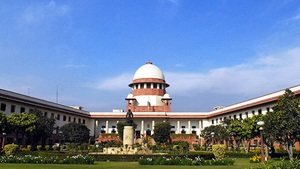
A five-judge Constitution Bench headed by Justice A R Dave were unanimous in saying that the July 18, 2013, 2:1 verdict of the three-judge bench, which had paved the way for private colleges to conduct their own examination, "needs reconsideration" as "the majority view has not taken into consideration some binding precedents".
"Suffice it is to mention that the majority view has not taken into consideration some binding precedents and more particularly, we find that there was no discussion among the members of the Bench before pronouncement of the judgment," the apex court said.
"We, therefore, allow these review petitions and recall the judgment dated July 18, 2013 and direct that the matters be heard afresh. The review petitions stand disposed of as allowed," it said.
Justice Dave in the 2013 verdict had given a dissenting verdict, while Justice Vikramjit Sen (since retired) had shared the views and findings of then CJI Kabir on the National Eligibility-cum-Entrance Test (NEET).
The verdict, delivered on the day when CJI Kabir demitted office, had created a buzz in the apex court corridors as an advocate had posted on a social networking site about the outcome in advance. Interestingly, Justice Dave then too in his dissenting judgement had said the three judges of the bench "had no discussion on the subject due to paucity of time" which is normally done.
Allowing the petitions seeking review of the controversial 2013 judgement, the bench also comprising justices A K Sikri, R K Agrawal, Adarsh Kumar Goel and R Banumathi ordered the petitions filed by Christian Medical College, Vellore and others, on which the verdict was delivered, "be heard afresh".
However, the bench said it was not giving detailed reasons for reconsideration of the three-year-old verdict so that the matter can be heard afresh without any prejudice.
"After giving our thoughtful and due consideration, we are of the view that the judgment delivered in Christian Medical College (supra) needs reconsideration. We do not propose to state reasons in detail at this stage so as to see that it may not prejudicially affect the hearing of the matters," the five-judge bench said.
While passing the order, the bench noted it was keeping in mind the observations appearing in the Constitution Bench judgment of the court in Sheonandan Paswan case. The review petitions were first placed before a three- judge bench which on October 23, 2013 had issued notices and later preferred to refer the matter to the five-judge bench.
The majority verdict of July 2013 had held that the common entrance test for admission in medical colleges "violates the rights of state and private institutions" and is likely to have a fallout as such tests are conducted for other professional courses like engineering and management.
While then CJI Kabir and Justice Sen had quashed the notifications for NEET, Justice Dave had dissented saying the policy was "legal" and it would stop corrupt practice of undeserving students getting admission by paying huge donation or capitation fee.
The majority verdict had said that common test seems "attractive" but it is "fraught with difficulties" and would "perpetuate" divide between urban and rural students in the name of giving credit to merit.
It had quashed the notifications issed by the Medical Council of India (MCI) and the Dental Council Of India (DCI) by which admissions to MBBS, BDS and Post-graduate courses to medical colleges were to be made solely on the basis of NEET and States and privately-run institutions were prevented from conducting any separate examination.
Justice Dave in his dissenting judgement had said the NEET was not only legal but practical and is the need of the society for ensuring more transparency and less hardship to the students eager to join the medical profession.
"If only one examination in the country is conducted and admissions are given on the basis of the result of the said examination, in my opinion, unscrupulous and money-minded businessmen operating in the field of education would be constrained to stop their corrupt practices and it would help a lot, not only to the deserving students but also to the nation in bringing down the level of corruption," Dave had said.
The majority verdict had said that enforcing a common entrance test would have "the effect of denuding the State and private institutions, both aided and unaided, some enjoying the protection of Article 30 (Right of minorities to establish and administer educational institutions), of their powers to admit students in the MBBS, BDS and the Postgraduate Courses conducted by them".
The CJI and Justice Sen had said that policy of common entrance test directly affects the right of private colleges, particularly minority institutions, to admit students of their choice and that MCI was not empowered to conduct the NEET.
Justice Dave had said that there was no violation of fundamental rights of state and private colleges including minority institution by NEET which would ensure that "no extraneous consideration would come into play in the process of selection".
Justice Dave had said that NEET is not only legal but "a boon to the students aspiring to join medical profession", adding that NEET would ensure that students are selected only on the basis of merit and there is no discrimination.
"The process of selection (through NEET) would not be influenced by irrelevant factors like caste and creed, community, race, lineage, gender, social or economic standing, place of residence – whether rural or urban, influence of wealth or power and admission would be given only to the students who really deserve to be well qualified physicians or dentists. Thus, there would not be any discrimination or influence in the process of selection," he had said.
The CJI, however, had opined that NEET would not be able to provide level-playing fields to students belonging to different strata and regions.
"It cannot also be disputed that children in metropolitan areas enjoy greater privileges than their counterparts in most of the rural areas as far as education is concerned, and the decision of the Central Government to support a single entrance examination would perpetuate such divide in the name of giving credit to merit.
"In a single window competition, the disparity in educational standards in different parts of the country cannot ensure a level playing field," they said.

Comments
Add new comment