Scarcity: Mangaluru urged not to waste water; supply only once in two days

[email protected] (CD Network)
April 19, 2016

Mangaluru, Apr 19: The residents of Mangaluru city will not get drinking water every day as the scarcity of water in the Netravathi, the main source of water for drinking and industrial purpose, has forced the Mangaluru City Corporation to supply water once in two days from April 20.
Rrai 2

The Thumbe dam at Bantwal and AMR dam at Sarapady provide drinking water to Mangaluru city. The water level at Thumbe remains at 9.6 ft on Monday against the maximum level of 13ft. Water level at Sarapady remains at 13.9 metres against the maximum level of 18.9 metres.

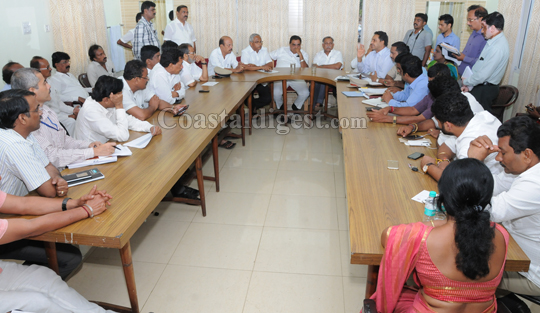
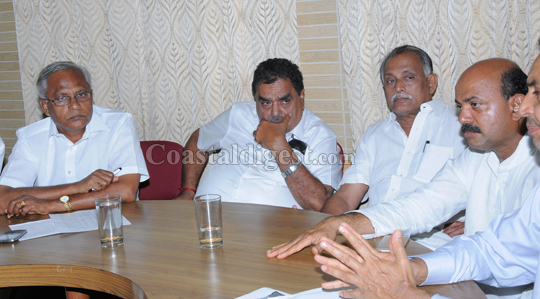
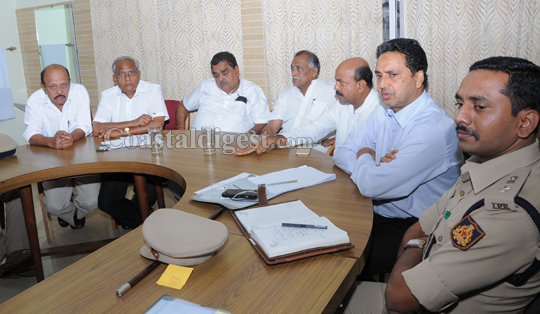
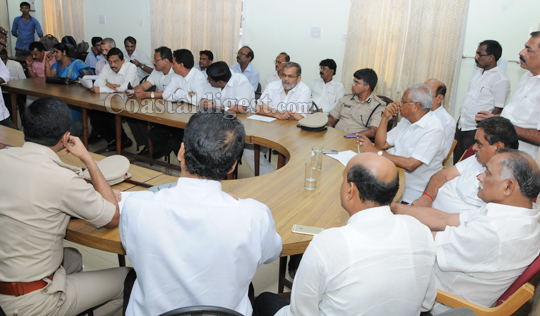
The decision was taken at a meeting of officials of various departments and industries convened by district minister B Ramanath Rai on Monday. After the review meet, Rai said water available in two dams will be sufficient till May 12 if there is alternate day supply.

"Water storage in the two barrages is sufficient only for 12 days. The average rainfall in April is 50mm, but the city has not received rain as yet. Further, there is no inflow to Nethravathi river," he pointed out.

"Water will be supplied to all industries, including Mangalore Refinery and Petrochemicals Limited, Mangalore Chemicals and Fertilisers, Special Economic Zone and New Mangaluru Port Trust only on alternate days. All open wells and other water sources in the city should be cleaned and borewells well-maintained," Rai said.

He said that the deficit in rainfall in Dakshina Kannada was 12 per cent in 2015. Its impact was being felt this year. He appealed to the people to use minimum water and not waste it.

Mayor Harinath said that the corporation would stop supplying water to construction sites from Tuesday. The builders who were getting water from the corporation would have to make their own arrangements.

J.R. Lobo, MLA, Mangaluru City South, suggested that the corporation to clean the open wells in the Bunder area and make people engaged in fishing to use the water.
Rrai 1

Rrai 4

Rrai 5

Comments

Yogita
 - 
Wednesday, 20 Apr 2016

This is all due to smart city effects...We just want our manglore back stop cutting trees to build 40 floor apartments. ....If u continue then these effects are just trailers

Add new comment

  • Coastaldigest.com reserves the right to delete or block any comments.
  • Coastaldigset.com is not responsible for its readers’ comments.
  • Comments that are abusive, incendiary or irrelevant are strictly prohibited.
  • Please use a genuine email ID and provide your name to avoid reject.
News Network
December 7,2025

SHRIMP.jpg

Mangaluru, Dec 7: A rare bamboo shrimp has been rediscovered on mainland India more than 70 years after it was last reported, confirming for the first time the presence of Atyopsis spinipes in the country. The find was made by researchers from the Centre for Climate Change Studies at Sathyabama Institute of Science and Technology, Chennai, during surveys in Karnataka and Odisha.

The team — shrimp expert Dr S Prakash, PhD scholar K Kunjulakshmi, and Mangaluru-based researcher Maclean Antony Santos — combined field surveys, ecological assessments and DNA analysis to identify the elusive species. Their findings, published in Zootaxa, resolve decades of taxonomic confusion stemming from a 1951 report that misidentified the species as Atyopsis moluccensis without strong evidence.

The shrimp has now been confirmed at two locations: the Mulki–Pavanje estuary near Mangaluru and the Kuakhai River in Bhubaneswar. Historical specimens from the Andaman Islands, previously labelled as A. moluccensis, were also found to be misidentified and actually belong to A. spinipes.

The rediscovery began after an aquarium hobbyist in Odisha spotted a shrimp in 2022, prompting systematic surveys across Udupi, Karwar and Mangaluru. Four female specimens were collected in Mulki and one in Odisha, all genetically matching.

Researchers warn the species may exist in very small, vulnerable populations as freshwater habitats face increasing pressure from pollution, sand mining and infrastructure development. All verified specimens have been deposited with the Zoological Survey of India for future reference.

Comments

Add new comment

  • Coastaldigest.com reserves the right to delete or block any comments.
  • Coastaldigset.com is not responsible for its readers’ comments.
  • Comments that are abusive, incendiary or irrelevant are strictly prohibited.
  • Please use a genuine email ID and provide your name to avoid reject.