



Secularism doesn't mean being obsessed towards one religion: Yogi

May 22, 2017

Lucknow, May 22: Uttar Pradesh Chief Minister Yogi Adityanath today accused the previous governments in the state of discriminating on the basis of caste and religion and said that secularism does not mean being obsessed towards one particular faith.
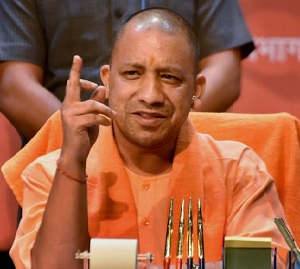
yogi

Adityanath also claimed that due to vote-bank politics, patriots like Ram Prasad Bismil, Ashfaqullah Khan and Abdul Hamid did not find their due place in textbooks.

Replying to a discussion during the Motion of Thanks on the Governor's Address in the UP Legislative Council, Adityanath said that his government did not discriminate on the basis of religion or caste.
But, the previous governments had shown discrimination, he alleged.

"If we are really secular, then this does not mean that we should be obsessed towards one particular community," Adityanath said.

Attacking the SP and BSP, he alleged the previous governments in UP had divided the society on the basis of caste and religion.

Adityanath went on to say that "it was because of the vote bank politics that Ram Prasad Bismil, Ashfaqullah Khan and Abdul Hamid never got any place in textbooks".

"Our government believes in 'Sabka Saath, Sabka Vikas' There is no caste or religion for us," Adityanath said.
He also expressed concern over the exodus of youth from the state.

Our government will arrest the exodus of the youngsters and they will get respectable jobs in the state, he said.

He said technical and vocational education along with skill development training will be imparted, so that 7-10 lakh youngsters can be given jobs.

Adityanath also advised the opposition to not view the Governor's address from a political prism as he did not belong to any political party.

Governor Ram Naik had earlier been bombarded with paper missiles by opposition members on the first day of the state Assembly session.

Terming law and order as a major challenge, Adityanath said that when criminalisation of politics and politicisation of criminals take place, a "peculiar" situation emerges.

"Our government will establish the rule of law and take strict action against criminal elements," he said.
The chief minister advocated revival of student union elections.

"The elections to students' unions should take place, but as per the recommendations of the Lyngdoh Commission. It will be good, if all the universities and colleges conduct the elections within a week's time," Adityanath said.

"A system should be put in place, where the students can from an open platform declare who deserves to be elected and the non-deserving person will automatically be out," he said.

We are also going to convene a meeting soon to decide an uniform syllabus for higher education, Adityanath said.

The chief minister reiterated that his government was committed to waive off farmers' loans.
Adityanath said that his government will start a joint venture to enhance regional air connectivity in different cities.

He announced that 30,000 constables and 2,000 sub inspectors will be recruited. "There is no place for corruption in UP. In the previous regimes there had been anomalies in police recruitment," he said.

He also took a dig at SP, saying during its rule, the uniform that school children wore resembled the dress of home guards.

"The previous SP government had designed a dress for school children, in which they looked like homeguards. Our government will give new uniform to the children in the new academic session," Adityanath said.

Comments

Add new comment

  • Coastaldigest.com reserves the right to delete or block any comments.
  • Coastaldigset.com is not responsible for its readers’ comments.
  • Comments that are abusive, incendiary or irrelevant are strictly prohibited.
  • Please use a genuine email ID and provide your name to avoid reject.
News Network
December 13,2025

New Delhi: School-going children are picking up drug and smoking habits and engaging in consumption of alcohol, with the average age of introduction to such harmful substances found to be around 13 years, suggesting a need for earlier interventions as early as primary school, a multi-city survey by AIIMS-Delhi said.

The findings also showed substance use increased in higher grades, with grade XI/XII students two times more likely to report use of substances when compared with grade VIII students. This emphasised the importance of continued prevention and intervention through middle and high school.

The study led by Dr Anju Dhawan of AIIMS's National Drug Dependence Treatment Centre, published in the National Medical Journal of India this month, looks at adolescent substance use across diverse regions.

The survey included 5,920 students from classes 8, 9, 11 and 12 in urban government, private and rural schools across 10 cities -- Bengaluru, Chandigarh, Delhi, Dibrugarh, Hyderabad, Imphal, Jammu, Lucknow, Mumbai, and Ranchi. The data were collected between May 2018 and June 2019.

The average age of initiation for any substance was 12.9 (2.8) years. It was lowest for inhalants (11.3 years) followed by heroin (12.3 years) and opioid pharmaceuticals (without prescription; 12.5 years).

Overall, 15.1 per cent of participants reported lifetime use, 10.3 per cent reported past year use, and 7.2 per cent reported use in the past month of any substance, the study found.

The most common substances used in the past year, after tobacco (4 per cent) and alcohol (3.8 per cent), were opioids (2.8 per cent), followed by cannabis (2 per cent) and inhalants (1.9 per cent). Use of non-prescribed pharmaceutical opioids was most common among opioid users (90.2 per cent).

On being asked, 'Do you think this substance is easily available for a person of your age' separately for each substance category, nearly half the students (46.3 per cent) endorsed that tobacco products and more than one-third of the students (36.5 per cent) agreed that a person of their age can easily procure alcohol products.

Similarly, for Bhang (21.9 per cent), ganja/charas (16.1 per cent), inhalants (15.2 per cent), sedatives (13.7 per cent), opium and heroin (10 per cent each), the students endorsed that these can be easily procured.

About 95 per cent of the children, irrespective of their grade, agreed with the statement that 'drug use is harmful'.

The rates of substance use (any) among boys were significantly higher than those of girls for substance use (ever), use in the past year and use in the past 30 days. Compared to grade VIII students, grade IX students were more likely, and grade XI/XII students were twice as likely to have used any substance (ever).

The likelihood of past-year use of any substance was also higher for grade IX students and for grade XI/XII students as compared to grade VIII students.

About 40 per cent of students mentioned that they had a family member who used tobacco or alcohol each. The use of cannabis (any product) and opioid (any product) by a family member was reported by 8.2 per cent and 3.9 per cent of students, respectively, while the use of other substances, such as inhalants/sedatives by family was 2-3 per cent, the study found.

A relatively smaller percentage of students reported use of tobacco or alcohol among peers as compared to among family members, while a higher percentage reported inhalants, sedatives, cannabis or opioid use among peers.

Children using substances (past year) compared to non-users reported significantly higher any substance use by their family members and peers.

There were 25.7 per cent students who replied 'yes' to the question 'conflicts/fights often occur in your family'. Most students also replied affirmatively to 'family members are aware of how their time is being spent' and 'damily members are aware of with whom they spend their time'.

Comments

Add new comment

  • Coastaldigest.com reserves the right to delete or block any comments.
  • Coastaldigset.com is not responsible for its readers’ comments.
  • Comments that are abusive, incendiary or irrelevant are strictly prohibited.
  • Please use a genuine email ID and provide your name to avoid reject.