



SP triumphs in UP, Congress wins in Rajasthan, BJP stuns Bengal

September 16, 2014

Jaipur/Lucknow/Ahmedabad, Sep 16: The Congress and the Samajwadi Party, which suffered a rout in the general elections, bounced back Tuesday in the assembly bypolls in Rajasthan and Uttar Pradesh. For the first time in 15 years, the BJP will now have its lawmaker in the West Bengal assembly.
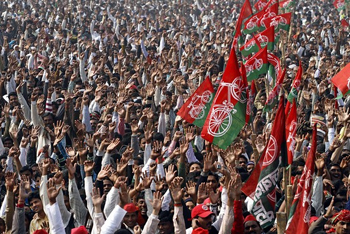
Samajwadi Party
In Gujarat, the BJP romped home in Vadodara Lok Sabha seat that was vacated by Prime Minister Narendra Modi after he also won from Varanasi parliamentary constituency. The Maninagar assembly seat, which Modi once represented, too saw a BJP victory. But, the Congress wrested three seats from the BJP, which retained six seats.

In Andhra Pradesh, the ruling Telugu Desam Party (TDP) retained Nandigama assembly seat, while the Telangana Rashtra Samithi (TRS) too retained Medak Lok Sabha seat in neighbouring Telangana.

In the northeast, the BJP was leading in an assembly seat in Assam, while the AIUDF won one seat and was leading in two assembly constituencies. An independent candidate won in Sikkim. Tripura saw the CPI-M candidate emerge victorious with a record margin.

Buoyed by the performance of the Samajwadi Party that won four seats and was leading in four constituencies, Uttar Pradesh Chief Minister Akhilesh Yadav said he was happy that the people of the state have reposed faith in his party and given a thumbs down to the "communal" politics of the Bharatiya Janata Party (BJP).

"We are happy and thankful that people have preferred development and prosperity over false hopes and communal politics that BJP practised," he said.

The SP has won from Sirathu, Hamirpur, Bijnore and Charkhari assembly constituencies and had a comfortable lead of over two lakh votes in Mainpuri Lok Sabha constituency from where Tej Pratap Singh, grand-nephew of SP chief Mulayam Singh Yadav, is the party candidate.

The BJP, which had won all the 11 seats in the 2012 state assembly elections, went down to just three as counting progressed. The party won the Saharanpur (City) state assembly seat while its candidates were leading convincingly in Lucknow (East) and Noida seats.

In Rajasthan, the Congress candidates won from Weir, Surajgarh and Nasirabad constituencies while the BJP's Sandeep Sharma was elected from the Kota South constituency.

An upbeat Sachin Pilot, Rajasthan state president of the Congress, described his party bagging three seats as "a win of our party workers". "Despite the use of official machinery by the BJP, we have won. The BJP did nothing since it came to power and on the contrary it stopped the social welfare schemes...," said Pilot.

Pilot said that the party is now looking forward to the municipal and panchayat polls in the state due in the next few months. Kailash Nath Bhatt, Rajasthan state spokesperson of the BJP, however, said: "This result does not in any reflect on performance of the (Vasundhara) Raje government. It was fought more on local issues. Yes, the party will sit and introspect the results."

In West Bengal, after 15 long years, the BJP will have a representative in the assembly. Party candidate Shamik Bhattacharya Tuesday won the Basirhat (South) seat in the bypolls, while the state's ruling party Trinamool retained the Chowringhee seat.

Bhattacharya defeated Trinamool candidate and former soccer captain Dipendu Biswas in a hard-fought battle by a slender margin of over thousand votes.

In 1999, Badal Bhattacharya had won the Ashoknagar assembly seat - that too in a by-election. It was the only time in past that the BJP had a legislator in the state. However, the BJP was in alliance with the Trinamool that time.

In Assam, the AIUDF won one seat while it was leading in another constituency. The BJP was leading in a third constituency. The AIUDF was leading in Lakhipur while the BJP candidate was in the lead in Silchar assembly seat.

In Jamunamukh seat, the AIUDF candidate emerged victorious.

The picturesque hill state of Sikkim saw independent candidate Rup Narayan Chamling winning the assembly by-poll from Rangang-Yangang assembly constituency.

The bypoll was necessitated after Chief Minister Pawan Chamling resigned from the seat and retained Namchi-Singhithang after the April assembly elections. R.N. Chamling is brother of Pawan Chamling.

CPI-M candidate Pravat Chowdhury Tuesday won the Manu assembly seat in southern Tripura, defeating his nearest Congress rival Mailafru Mog by a record margin of around 16,000 votes.

The returning officer to the Manu assembly by-poll, Rajib Datta told IANS that the CPI-M (Communist Party of India-Marxist) candidate Chowdhury, a former agriculture department official, secured 21,759 votes while his nearest Congress nominee Mailafru Mog got 5,788 votes.

Comments

Add new comment

  • Coastaldigest.com reserves the right to delete or block any comments.
  • Coastaldigset.com is not responsible for its readers’ comments.
  • Comments that are abusive, incendiary or irrelevant are strictly prohibited.
  • Please use a genuine email ID and provide your name to avoid reject.
News Network
December 16,2025

jordan.jpg

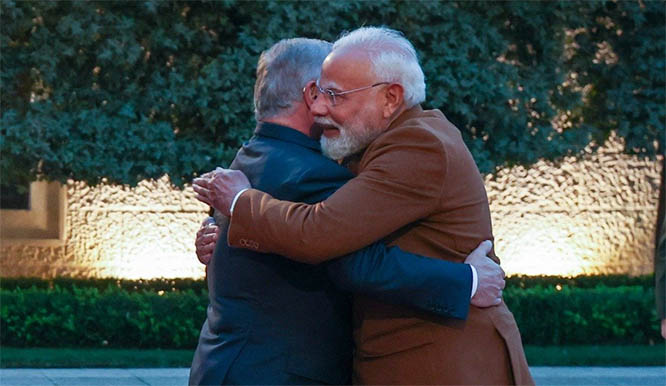
Prime Minister Narendra Modi on Monday held talks with Jordan’s King Abdullah II in Amman, during which the two leaders discussed ways to further strengthen bilateral relations, with the Prime Minister outlining an eight-point vision covering key areas of cooperation.

Describing the meeting as “productive”, PM Modi said he shared a roadmap focused on trade and economy, fertilisers and agriculture, information technology, healthcare, infrastructure, critical and strategic minerals, civil nuclear cooperation, and people-to-people ties.

In a post on social media platform X, the Prime Minister praised King Abdullah II’s personal commitment to advancing India–Jordan relations, particularly as both countries mark the 75th anniversary of the establishment of diplomatic ties this year.

“Held productive discussions with His Majesty King Abdullah II in Amman. His personal commitment towards vibrant India-Jordan relations is noteworthy. This year, we are celebrating the 75th anniversary of our bilateral diplomatic relations,” PM Modi said.

The meeting took place at the Al Husseiniya Palace, where the two leaders also exchanged views on regional and global issues of mutual interest. According to the Ministry of External Affairs (MEA), both sides agreed to further deepen cooperation in areas including trade and investment, defence and security, counter-terrorism and de-radicalisation, fertilisers and agriculture, infrastructure, renewable energy, tourism, and heritage.

The MEA said both leaders reaffirmed their united stand against terrorism.

PM Modi arrived in Amman earlier on Monday and was received by Jordanian Prime Minister Jafar Hassan, who accorded him a formal welcome. Following the talks, King Abdullah II hosted a banquet dinner in honour of the Prime Minister, reflecting the warmth of bilateral ties.

Jordan is the first leg of PM Modi’s three-nation tour. From Amman, the Prime Minister will travel to Ethiopia at the invitation of Prime Minister Abiy Ahmed Ali, marking his first official visit to the African nation. The tour will conclude with a visit to Oman.

Comments

Add new comment

  • Coastaldigest.com reserves the right to delete or block any comments.
  • Coastaldigset.com is not responsible for its readers’ comments.
  • Comments that are abusive, incendiary or irrelevant are strictly prohibited.
  • Please use a genuine email ID and provide your name to avoid reject.
News Network
December 6,2025

pilot.jpg

New Delhi: IndiGo, India’s largest airline, faced major operational turbulence this week after failing to prepare for new pilot-fatigue regulations issued by the Directorate General of Civil Aviation (DGCA). The stricter rules—designed to improve flight safety—took effect in phases through 2024, with the latest implementation on November 1. IndiGo has acknowledged that inadequate roster planning led to widespread cancellations and delays.

Below are the key DGCA rules that affected IndiGo’s operations:

1. Longer Mandatory Weekly Rest

Weekly rest for pilots has been increased from 36 hours to 48 hours.

The government says the extended break is essential to curb cumulative fatigue. This rule remains in force despite the current crisis.

2. Cap on Night Landings

Pilots can now perform only two night landings per week—a steep reduction from the earlier limit of six.

Night hours, defined as midnight to early morning, are considered the least alert period for pilots.

Given the disruptions, this rule has been temporarily relaxed for IndiGo until February 10.

3. Reduced Maximum Night Flight Duty

Flight duty that stretches into the night is now capped at 10 hours.

This measure has also been kept on hold for IndiGo until February 10 to stabilize operations.

4. Weekly Rest Cannot Be Replaced With Personal Leave

Airlines can no longer count a pilot’s personal leave as part of the mandatory 48-hour rest.

Pilots say this closes a loophole that previously reduced actual rest time.

Currently, all airlines are exempt from this rule to normalise travel.

5. Mandatory Fatigue Monitoring

Airlines must submit quarterly fatigue reports along with corrective actions to DGCA.

This system aims to create a transparent fatigue-tracking framework across the industry.

The DGCA has stressed that these rules were crafted to strengthen flight safety and align India with global fatigue-management standards. The temporary relaxations are expected to remain until February 2025, giving IndiGo time to stabilise its schedules and restore normal air travel.

Comments

Add new comment

  • Coastaldigest.com reserves the right to delete or block any comments.
  • Coastaldigset.com is not responsible for its readers’ comments.
  • Comments that are abusive, incendiary or irrelevant are strictly prohibited.
  • Please use a genuine email ID and provide your name to avoid reject.
