Spectre of hung Assembly looms over UP

March 8, 2017

Lucknow, Mar 8: The iconic dialogue -- picture abhi baaki hai, mere dost -- from Shah Rukh Khan's Bollywood movie 'Om Shanti Om' could well describe the current poll scenario in Uttar Pradesh where a hung Assembly is a possibility. Even before the election results are declared on March 11, party insiders do not discount chances of a fractured verdict after the seven phases of polling that will come to an end today in the absence of any wave.
Assembly

After all the key players talked about notching up 300 plus of the 403 seats, talks of a hung house suddenly gained momentum in the last phases of polling with Prime Minister Narendra Modi himself flagging the possibility of a hung assembly in the state. Modi said SP and BSP were waiting for such an opportunity for bargaining, prompting Chief Minister Akhilesh Yadav to comment that after dreaming of 300 plus seats, Modi was now talking about a fractured verdict.

The contest is between the BJP, the ruling Samajwadi Party along with partner Congress and Mayawati's Bahujan Samaj Party, which is looking to script a comeback in the state. To win 202 or 50 per cent seats this year, a party will need to get 35 per cent of the vote share. Five years ago, the Samajwadi Party had needed just 29 per cent of the vote share to win 226 seats. Mayawati's party had won only 80 seats with 26 per cent votes.

The two regional heavyweights saw a steep fall two years later, with the BJP and its ally Apna Dal sweeping the 2014 general election, winning 73 of UP's 80 seats with 42 per cent of the vote share.

The BJP can afford to lose 7 per cent of its vote share from 2014 to still win this year, while SP-Congress must gain 6 per cent to reach 35 per cent, and BSP will have to stretch about 15 per cent to win. The BJP is counting on its core support base - urban voters, the youth and upper caste voters, while Akhilesh hopes to consolidate his party's traditional Muslim-Yadav vote bank with his partnership with the Congress and is also targeting the Muslims who may vote for the BSP.

Mayawati's party is seeking to consolidate its hold in rural UP and has fielded about 100 Muslim candidates to win support from that community. Voters threw hung houses in the state for 14 years and that trend changed from 2007 when people decided to deliver a clear mandate. This time, with no clear wave in favour of any party and each of the key players claiming to get over 300 of the 403 seats at stake, party insiders say the outcome is unlikely to go in one direction. Increasingly seen as the 'bellwether' for the 2019 Lok Sabha elections, the results will not only decide as to who will rule UP but show which way the wind is blowing ahead of the Lok Sabha elections two years hence.

The Assembly elections are being viewed as ‘CM Sey PM Tak’ (From CM to PM) as Modi will be aspiring for a second run. With the presidential polls also due later this year, UP's strength will be at full play, raising the stakes of all major parties. BJP's one-fourth of Lok Sabha strength comes from UP. But, after three clear verdicts of the 2007, 2012 and 2014 general elections, the spectre of a hung house looms large over the state once again with party insiders saying the main reason being absence of any single issue binding the state. Demonetisation could play both ways for the BJP, analysts said.

Besides, split in the traditional vote banks on caste and communal lines and shifting loyalties have thrown spanners in the scheme of things of key parties. Muslims were highly confused whether to stick to SP or switch over to BSP in view of the factional feuds in the ruling party, which they have been supporting traditionally post Babri Masjid demolition. But, this time round they have been wooed by BSP to the hilt with Mayawati giving nearly 100 tickets to Muslims and asking the community not to fritter away their votes and in the process help BJP.

SP, on the other hand, cautioned the Muslims not to back BSP, saying Mayawati had fielded so many Muslim candidates to indirectly help the saffron party – pre-poll and if need be post-poll too. Confusion over the chief ministerial face of BJP and not giving tickets to any Muslim candidate could affect the prospects of the saffron party in addition to note-ban pain, feel political pundits. Union ministers Rajnath Singh, Uma Bharti and Mukhtar Abbas Naqvi have said on record that BJP could have given tickets to the community.

Rajnath also said BJP's position would have been stronger if SP had not forged alliance with Congress. His remarks came amid reports that Muslims might support the fledging coalition. The political scene in Uttar Pradesh has been dominated by the Samajwadi Party and Bahujan Samaj Party since 1990s, and if the BJP came to power in the state, it was courtesy the BSP or by breaking small parties to cobble up a majority in the state assembly.

Voters threw hung house in the state for 14 years and that trend changed from 2007 when people decided to deliver a clear mandate. Experts believe that the communication network played an important role in this as voters are connected across the length and breadth of the state.

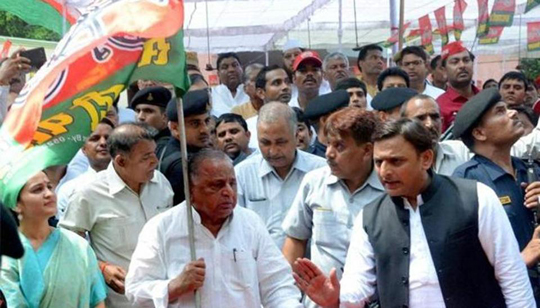
The ruling Samajwadi Party could have performed better had the family feud not played a spoiler. The party has been battered by bitter power struggle between Akhilesh and his uncle Shivpal, who is supported by his father and party patriarch Mulayam, and the feud between the warring factions refused to die down.

The chief minister took control of the party on January 1 after ousting Mulayam at an "emergency national convention" and also sacked his uncle as the party's state unit chief. He also did not want parliamentarian Amar Singh in the party. Then came the fight for its symbol 'bicycle' over which both the factions had laid claim before the Election Commission, giving enough indication that any reconciliation was unlikely.

The BSP led by firebrand Mayawati was considered a strong claimant for the chief minister's post till it was hit by an exodus of senior leaders from the party. The BSP's core vote of 21.5 per cent Dalits is not intact. The rainbow coalition of Dalits, Muslims and Brahmins that had brought her to power in 2007 has also split up.

Though the BSP's Brahmin face S C Misra extensively toured the state, her party's fate is in the hands of the Muslims. The BJP has been eyeing UP ever since its spectacular victory in 2014. Its national president Amit Shah launched a spate of public mobilisation programmes including the Parivartan Yatra.

However, their trump card is Narendra Modi who remains a popular figure in the state. He has also been working on stitching alliances with various castes as well as smaller parties. The state's senior leader Rajnath Singh has appealed to the masses to end their 14-year-long 'vanvaas' (exile).

The party's demonetisation gamble, seen as a national movement against corruption and black money, could boomerang given the hardships faced by people in the countryside post-note ban. The Congress, on its part, has been making desperate and sincere efforts to revive the party in the state it ruled for about 40 years. Since 1990 it has been living with a tag of an 'also ran party' in the elections. The party high command hired Prashant Kishor to do a miracle, a la Bihar in UP.

There are other smaller players who will be taking away votes and playing spoilers on seats heading for a close finish, thereby raising the possibility of a hung Assembly, political observers noted. UP has the dubious distinction of being placed under President's Rule 10 times.


Comments

Add new comment

  • Coastaldigest.com reserves the right to delete or block any comments.
  • Coastaldigset.com is not responsible for its readers’ comments.
  • Comments that are abusive, incendiary or irrelevant are strictly prohibited.
  • Please use a genuine email ID and provide your name to avoid reject.
News Network
December 16,2025

bengal.jpg

The deletion of over 58 lakh names from West Bengal’s draft electoral rolls following a Special Intensive Revision (SIR) has sparked widespread concern and is likely to deepen political tensions in the poll-bound state.

According to the Election Commission, the revision exercise has identified 24 lakh voters as deceased, 19 lakh as relocated, 12 lakh as missing, and 1.3 lakh as duplicate entries. The draft list, published after the completion of the first phase of SIR, aims to remove errors and duplication from the electoral rolls.

However, the scale of deletions has raised fears that a large number of eligible voters may have been wrongly excluded. The Election Commission has said that individuals whose names are missing can file objections and seek corrections. The final voter list is scheduled to be published in February next year, after which the Assembly election announcement is expected. Notably, the last Special Intensive Revision in Bengal was conducted in 2002.

The development has intensified the political row over the SIR process. Chief Minister Mamata Banerjee and her Trinamool Congress have strongly opposed the exercise, accusing the Centre and the Election Commission of attempting to disenfranchise lakhs of voters ahead of the elections.

Addressing a rally in Krishnanagar earlier this month, Banerjee urged people to protest if their names were removed from the voter list, alleging intimidation during elections and warning of serious consequences if voting rights were taken away.

The BJP, meanwhile, has defended the revision and accused the Trinamool Congress of politicising the issue to protect what it claims is an illegal voter base. Leader of the Opposition Suvendu Adhikari alleged that the ruling party fears losing power due to the removal of deceased, fake, and illegal voters.

The controversy comes amid earlier allegations by the Trinamool Congress that excessive work pressure during the SIR led to the deaths by suicide of some Booth Level Officers (BLOs), for which the party blamed the Election Commission. With the draft list now out, another round of political confrontation appears imminent.

As objections begin to be filed, the focus will be on whether the correction mechanism is accessible, transparent, and timely—critical factors in ensuring that no eligible voter is denied their democratic right ahead of a crucial election.

Comments

Add new comment

  • Coastaldigest.com reserves the right to delete or block any comments.
  • Coastaldigset.com is not responsible for its readers’ comments.
  • Comments that are abusive, incendiary or irrelevant are strictly prohibited.
  • Please use a genuine email ID and provide your name to avoid reject.
News Network
December 6,2025

indigoticket.jpg

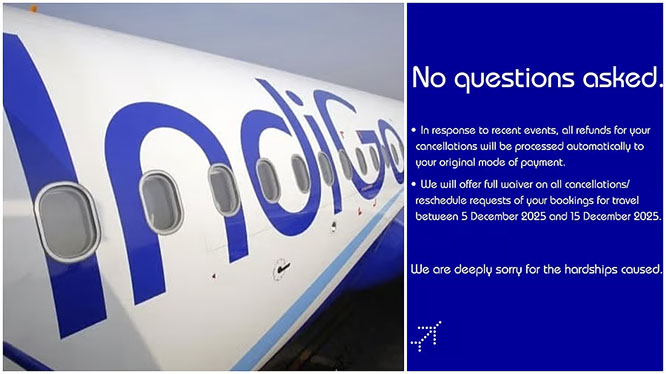
With IndiGo flight disruptions impacting thousands of passengers, the airline on Saturday said that it will offer full waiver on all cancellations/reschedule requests for travel bookings between December 5, 2025 and December 15, 2025.

Earlier in the day, the civil aviation ministry had directed the airline to complete the ticket refund process for the cancelled flights by Sunday evening, as well as ensure baggage separated from the travellers are delivered in the next two days.

In a post on X, titled 'No questions asked', IndiGo wrote, "In response to recent events, all refunds for your cancellations will be processed automatically to your original mode of payment."

"We are deeply sorry for the hardships caused," it further added.

Several passengers, however, complained of not getting full refund as promised by the airline.

Netizens have shared screenchots of getting charged for airline cancellation fee and convenience fee.

"Please tell me why u have did this airline cancellation charges when u say full amount will be refunded (sic)," a user wrote sharing a screenshot of the refund page.

"Well, but you have still debited the convenience charges," wrote another.

Passengers have also raised concerns about the "cancel" option being disabled on the IndiGo app. "First enable the 'Cancel' button on your App & offer full refund on tickets cancelled by customers between the said dates," wrote a user.

A day after the country's largest airline, IndiGo, cancelled more than 1,000 flights and caused disruptions for the fifth day on Saturday, the ministry said that any delay or non-compliance in refund processing will invite immediate regulatory action.

The refund process for all cancelled or disrupted flights must be completed by 8 pm on Sunday, the ministry said in a statement.

"Airlines have also been instructed not to levy any rescheduling charges for passengers whose travel plans were affected by cancellations," it said.

On Saturday, more than 400 flights were cancelled at various airports.

IndiGo has also been instructed to set up dedicated passenger support and refund facilitation cells.

Comments

Add new comment

  • Coastaldigest.com reserves the right to delete or block any comments.
  • Coastaldigset.com is not responsible for its readers’ comments.
  • Comments that are abusive, incendiary or irrelevant are strictly prohibited.
  • Please use a genuine email ID and provide your name to avoid reject.
News Network
December 16,2025

jordan.jpg

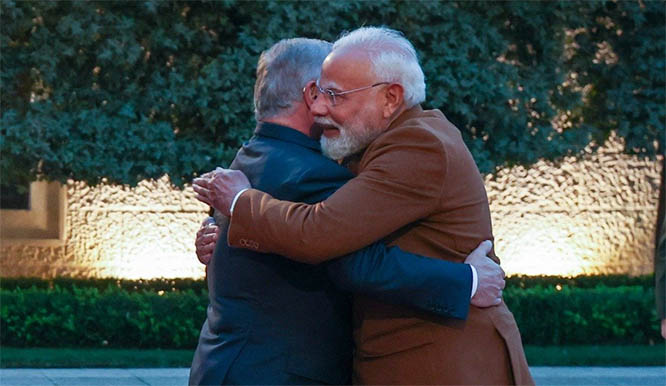
Prime Minister Narendra Modi on Monday held talks with Jordan’s King Abdullah II in Amman, during which the two leaders discussed ways to further strengthen bilateral relations, with the Prime Minister outlining an eight-point vision covering key areas of cooperation.

Describing the meeting as “productive”, PM Modi said he shared a roadmap focused on trade and economy, fertilisers and agriculture, information technology, healthcare, infrastructure, critical and strategic minerals, civil nuclear cooperation, and people-to-people ties.

In a post on social media platform X, the Prime Minister praised King Abdullah II’s personal commitment to advancing India–Jordan relations, particularly as both countries mark the 75th anniversary of the establishment of diplomatic ties this year.

“Held productive discussions with His Majesty King Abdullah II in Amman. His personal commitment towards vibrant India-Jordan relations is noteworthy. This year, we are celebrating the 75th anniversary of our bilateral diplomatic relations,” PM Modi said.

The meeting took place at the Al Husseiniya Palace, where the two leaders also exchanged views on regional and global issues of mutual interest. According to the Ministry of External Affairs (MEA), both sides agreed to further deepen cooperation in areas including trade and investment, defence and security, counter-terrorism and de-radicalisation, fertilisers and agriculture, infrastructure, renewable energy, tourism, and heritage.

The MEA said both leaders reaffirmed their united stand against terrorism.

PM Modi arrived in Amman earlier on Monday and was received by Jordanian Prime Minister Jafar Hassan, who accorded him a formal welcome. Following the talks, King Abdullah II hosted a banquet dinner in honour of the Prime Minister, reflecting the warmth of bilateral ties.

Jordan is the first leg of PM Modi’s three-nation tour. From Amman, the Prime Minister will travel to Ethiopia at the invitation of Prime Minister Abiy Ahmed Ali, marking his first official visit to the African nation. The tour will conclude with a visit to Oman.

Comments

Add new comment

  • Coastaldigest.com reserves the right to delete or block any comments.
  • Coastaldigset.com is not responsible for its readers’ comments.
  • Comments that are abusive, incendiary or irrelevant are strictly prohibited.
  • Please use a genuine email ID and provide your name to avoid reject.