Qatar World Cup final caps complex saga between Argentina and Messi

News Network
December 18, 2022

argentina.jpg

It was the second time that Lionel Messi was starring for the Argentina men’s national soccer team in the province where he grew up — a sort of coming-home party for him, a maestro who had left this corner of the world when he was 13.

But as Argentina played to a 0-0 draw against Colombia in the 2011 match, the stadium reverberated with boos.

“He’s a failure,” one fan said outside the match. “Since he arrived, we haven’t won a thing,” another said. “He should never be compared to Maradona,” said a third, referring to Diego Maradona, the Argentine legend who never faced such jeers by his fellow countrymen.

Few nations are as soccer-obsessed as Argentina, and few humans have ever been as talented with a soccer ball as Messi. Yet the relationship between the two — a man and his homeland — has been deeply complicated.

Messi was born in Argentina but became an adult and a star in Europe. He piled up awards and titles with Barcelona’s renowned club team but for many years struggled to win with Argentina’s national team. And despite his status as perhaps the world’s best player, in Argentina, he has lived and played in the shadow of Maradona, whose brash style endeared him to Argentines, unlike the reserved Messi.

Now, on Sunday, this nation of 47 million will turn its hopes to the boy from Rosario, Argentina, to deliver its first World Cup title in 36 years, in what he has said would be the last attempt of his storied career.

No matter the outcome, after years of criticism that even led to Messi’s brief departure from the national team, the dynamic has changed.

After a scintillating performance at this year’s tournament at age 35 and the emergence of a sharper edge in Messi’s personality on the pitch, Argentina has unequivocally embraced its native son.

“We went all over the world, and people were desperate for Lionel. Here, at our airport, they didn’t even greet him,” said Adrián Coria, Messi’s childhood coach before he moved to Barcelona, Spain, in 2001 to pursue a professional soccer career and later was one of Messi’s coaches on the national team. “But all that has changed remarkably.”

Messi’s face adorns murals up and down the country. At times, it appears that half of the nation is dressed in his No. 10 jersey. And any criticism of the man has given way to praise, adoration and pride.

“Messi has nothing against him,” said Sergio Duri, the owner of a restaurant in Rosario with Messi’s signature on the wall, five blocks from the hospital where Messi was born. “We Argentines see him as perfect.”

Winning, of course, has helped.

Last year, Messi led Argentina to win South America’s premier soccer tournament, the Copa América, its first international title in 28 years. And this year, he has helped put Argentina in the World Cup final Sunday versus France.

But many Argentines in Rosario and beyond this past week insisted that, win or lose, Messi’s status as a national hero has been cemented.

“No matter the results, there’s something that no one can take from you, and that is the fact you resonated with Argentines,” Sofia Martinez, an Argentine sports reporter, told Messi after Argentina’s semifinal victory Tuesday. “Every single one.”

Messi was visibly moved.

“I believe that we Argentines have learned that it’s not just the result, but the road traveled to get there,” he replied.

And his road to Sunday has, at times, been bumpy.

Messi was born in 1987, a year after Argentina’s last World Cup title, in Rosario, the nation’s third-largest city, an agricultural hub about a four-hour drive north of Buenos Aires. He was a child prodigy on the soccer field, yet undersized.

“Everything he does now, he did at the age of 12,” Coria said. “But 40 centimeters shorter and very skinny.”

In 2001, at 13, Messi left Argentina for Barcelona to pursue both training and growth hormone therapy. He has lived in Europe since.

At 17, Messi exploded onto the soccer scene, a dazzling talent that over the next two decades won dozens of European titles with Barcelona and broke various individual records, including seven Ballon d’Or awards for the best men’s soccer player of the year.

But the same success eluded him with Argentina’s national team. With Messi the team’s star player, Argentina’s championship drought got longer, leading to mounting criticism that he was not playing as hard for Argentina as he did for Barcelona.

Fabián Basualdo, a former Argentine national team player and manager of Messi when he was a child in Rosario, said that if he had found himself in Messi’s situation, he might have given up on Argentina.

“In the group of friends,” he said, “we used to say, ‘Don’t come back; stay in Europe.’”

Messi’s national team lost in the World Cup finals in 2014 and then in the Copa América finals in 2015 and 2016. After that, Messi announced that he was done playing for Argentina.

“I’ve done all I can,” he said. “There will be no going back.”

Even though he quickly changed his mind, his brief retirement drew more barbs.

One of the issues that Messi has faced in Argentina is that he is not the first Argentine to be declared the best soccer player in the world — and the first one has been seen as far more Argentine.

Maradona, who led Argentina to the 1986 World Cup title, was outspoken, raw and freewheeling — characteristics that Argentines saw in themselves. Messi, by contrast, is polite, polished and guarded, and some Argentines have struggled to identify with that.

So Messi’s trash talk in Argentina’s quarterfinal match against the Netherlands, when he was filmed telling an opposing player, “What are you looking at, dummy?” has become a moment of national celebration in Argentina.

Newspapers said he was acting more “Maradonian.” Various Argentines interviewed for this article cited it proudly. And a mural leading to Messi’s childhood neighborhood had already added the phrase a week after the game.

“Did you see when he said ‘dummy’ the other day?” said Raul Oliveri, 63, a custodian for the past 25 years at Messi’s childhood soccer club in Rosario, stopping his sweeping outside a field Messi once played on. “That shows you that he’s from here. He never left.”

That is how Messi feels. In an interview last year, he said he still feels a strong connection to his hometown despite spending all his adult life away.

“I don’t know how to explain it. I love being in Rosario, being with my people, meeting friends, family, eating barbecue with them,” he said. “Perhaps having left as a child and not having enjoyed the country and my friends as I would have liked.”

Messi married a woman from Rosario, Antonela Roccuzzo, and they have three children together. The family has multiple residences there, and both Messi and Roccuzzo still visit relatives there every year.

On Thursday, a man who said he was the brother-in-law of one of Messi’s siblings was entering the humble two-story home where Messi grew up.

“He feels he belongs here,” said Sergio Vallejos, 45, from behind mirrored sunglasses. “He’s like one of us. A neighborhood kid.”

He lifted his shirt to show a tattoo more than 1 foot long of Messi down his torso. Then he pulled up a music video from his rock band on his phone. The song was about Rosario’s pride in Messi, using the same line that adorns a massive mural at the entrance to the street: “From another galaxy and from my neighborhood.”

Moments earlier, about two dozen children from low-income neighborhoods in Rosario were brought through on a tour of their city, which mostly consists of Messi landmarks, part of various government programs that celebrate the city’s connection with the global soccer star. The children posed for a photo in front of the home where Messi lived when he was their age and pointed to the sky, like he does after most goals.

“If Messi loses, it doesn’t matter,” said one 9-year-old boy, Alan. “Because at least he got us to the final. And he’s the best.”

Ezequiel Fernández Moores, an Argentine sports journalist since 1978, said that the bond between Messi and his country is now one of love.

“It was a complicated relationship, but Messi’s link with Argentina is no longer complicated,” he said. “And it’s going to hold despite what happens on Sunday. That relationship is here to stay.” 

Comments

Add new comment

  • Coastaldigest.com reserves the right to delete or block any comments.
  • Coastaldigset.com is not responsible for its readers’ comments.
  • Comments that are abusive, incendiary or irrelevant are strictly prohibited.
  • Please use a genuine email ID and provide your name to avoid reject.
News Network
November 24,2025

lebanon.jpg

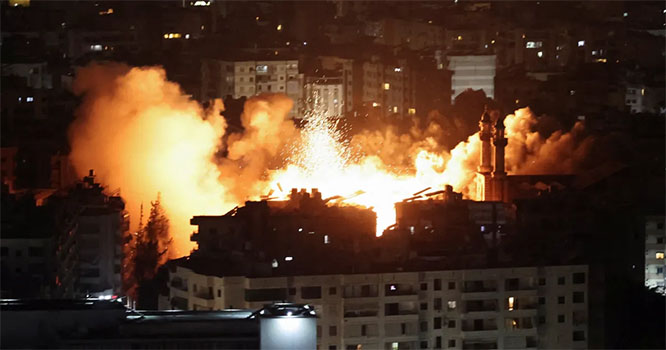
Israel has launched a new act of aggression on a residential neighborhood in Lebanon's capital, Beirut, killing and injuring about two dozen civilians.

The Israeli regime's military said in a statement that its forces carried out a so-called precise strike in a residential apartment in Dahiyeh in the southern suburbs of Beirut on Sunday.

The aggression targeted residential areas, killing at least five people and injuring more than 28 people, Lebanon's Health Ministry said. 

Hezbollah announced the martyrdom of senior Hezbollah commander Haytham Ali Tabatabai and four resistance fighters.

Lebanese President Michel Aoun condemned the airstrike, calling it a clear demonstration of Tel Aviv’s disregard for repeated international calls to halt violations on Lebanese soil.

“Israel refuses to implement international resolutions and all efforts aimed at ending the escalation and restoring stability,” Aoun said, urging the international community to take action to prevent further aggression.

The Palestinian Islamic Jihad movement also condemned the attack, holding the international community accountable. 

“The international community bears responsibility and continues to provide cover for these attacks as long as it does not restrain the occupiers,” said Ali Abu Shahin, a member of the group’s political bureau.

Israeli prime minister Benjamin Netanyahu’s office announced that the Israeli army carried out a strike “in the heart of Beirut."

Netanyahu reportedly approved the operation following recommendations from top Israeli security officials.

Two senior US officials commented on the Israeli strike.

The first official said that Israel did not notify Americans in advance about the attack. "We were informed immediately after the strike was carried out."

The second senior official said that the "US knew for several days that Israel was planning to escalate its strikes in Lebanon, but did not know in advance the timing, location, or target of the strike."

Speaking from the site of the Israeli strike, Lebanese MP Ali Ammar condemned the attack as part of a broader campaign of aggression that has targeted "all of Lebanon since the Washington-sponsored ceasefire."

He stated that "any attack on Lebanon is a violation of red lines; this aggression is part and parcel of the entity that targets Lebanon's dignity, sovereignty, and security of citizens."

Ammar went on to say the resistance is responding with "utmost wisdom, patience, and will confront the enemy at the appropriate time."

"Unfortunately, the enemy is emboldened to commit its aggression by voices within Lebanon that have turned themselves into tools that support its aggression," he added.

The Israeli attack on the southern suburbs of the Lebanese capital is the latest blatant violation of the ceasefire Israel signed with Hezbollah in November 2024, which was intended to end hostilities that had escalated into full-scale war.

An Israeli strike on the Ain al-Hilweh camp near Sidon in southern Lebanon late Tuesday killed at least 14 people. It wounded several others, including young students, according to the Lebanese health ministry.

The military claimed the attack targeted “a Hamas training compound” used to plan and carry out attacks against the regime -- a claim that has frequently been made without evidence.

Hamas rejected the allegations as “a blatant lie aimed at justifying the massacre,” stating it had “no military installations in the Palestinian camps in Lebanon” and that the targeted site was merely “an open sports field.”

According to Lebanese authorities, Israeli attacks have killed approximately 4,000 people and displaced more than 1.2 million residents across the country since October 2023.

Comments

Add new comment

  • Coastaldigest.com reserves the right to delete or block any comments.
  • Coastaldigset.com is not responsible for its readers’ comments.
  • Comments that are abusive, incendiary or irrelevant are strictly prohibited.
  • Please use a genuine email ID and provide your name to avoid reject.
News Network
November 21,2025

Bengaluru, Nov 21: The Karnataka government is facing pressure to overhaul its employment system after a high-level Cabinet sub-committee recommended the complete phase-out of job outsourcing in government offices, boards, and corporations by March 2028. The move is aimed at tackling a systemic issue that has led to the potential violation of constitutional reservation policies and the exploitation of workers.

The Call for Systemic Change

With over three lakh vacant posts currently being filled through private agencies on an outsource, insource, or daily wage basis, the sub-committee highlighted a significant lapse. "As a result, reservations are not being followed as per the Constitution and state laws. It’s an urgent need to take serious steps to change the system. It has been recommended to completely stop the system of outsourcing by March 2028," the panel stated in a document.

The practice of outsourcing involves private companies hiring workers to perform duties for a government agency. Critics argue this model results in lesser salaries, a lack of social security benefits (otherwise available to permanent government employees), and a failure to adhere to the provisions of Articles 14 and 15 of the Constitution, which guarantee equality before the law and prohibit discrimination.

The 'Bidar Model' as a Stop-Gap Solution

To regulate the current mode of employment and reduce worker exploitation until the 2028 deadline, the government plans to establish workers’ services multi-purpose cooperative societies across all districts, following the successful "Bidar Model."

The Bidar District Services of Labour Multi-purpose Cooperative Society Ltd., which operates under the District Commissioner, is cited as a successful example of providing a measure of social security to outsourced staff. Labour Department officials argue this society ensures workers receive their due wages and statutory facilities like ESI (Employees' State Insurance) and PF (Provident Fund), in exchange for a 1% service fee collected from the employees.

legislative push and Priority Insourcing

The recommendations, led by the sub-committee headed by Law and Parliamentary Affairs Minister H K Patil, are set to be discussed at the next Cabinet meeting. The committee has proposed the introduction of the Karnataka Outsourced Employees (Regulation, Placement and Welfare) Bill 2025.

In a move addressing immediate concerns, Labour Minister Santosh Lad, a member of the sub-committee, has reportedly assured that steps will be taken over the next 2-3 years to insource workers in "life-threatening services" on a priority basis. This includes essential personnel like pourakarmikas (sanitation workers), drivers, electrical staff in the Energy Department, and Health Department staff handling contagious diseases. The transition aims to grant these workers the long-term security and benefits they currently lack under the outsourcing system. 

Comments

Add new comment

  • Coastaldigest.com reserves the right to delete or block any comments.
  • Coastaldigset.com is not responsible for its readers’ comments.
  • Comments that are abusive, incendiary or irrelevant are strictly prohibited.
  • Please use a genuine email ID and provide your name to avoid reject.
News Network
November 21,2025

Tejas.jpg

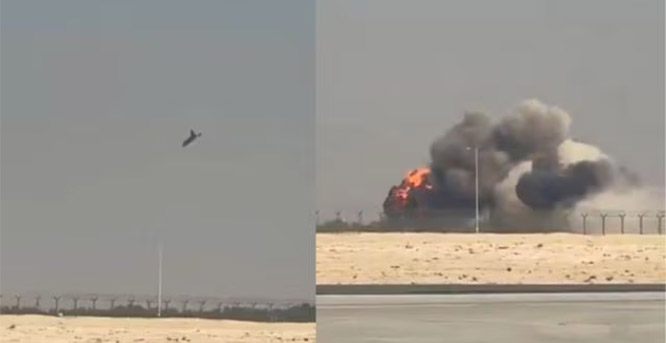
An Indian Air Force (IAF) Tejas fighter jet crashed on Friday, November 21, afternoon during its aerial demonstration at the Dubai Air Show, plunging to the ground at around 2:10 pm local time while performing a manoeuvre before thousands of spectators.

The IAF confirmed the incident, stating that a Tejas aircraft participating in the show had crashed and that further details were being gathered. An Air Force spokesperson said more information would be shared after initial assessments.

The crash sent thick black smoke billowing into the sky near the airport, causing panic among visitors, including families and children who had gathered to watch the display. Authorities have not yet confirmed whether the pilot managed to eject before the aircraft went down. Emergency response teams rushed to the scene, and officials have not released information on casualties or damage so far.

The Tejas is a 4.5-generation, multi-role fighter aircraft developed indigenously by Hindustan Aeronautics Limited (HAL). Designed for versatility, it is capable of offensive air support, close combat, ground attack missions and maritime operations. The aircraft family includes single-seat fighters and twin-seat trainers for both the Air Force and Navy.

HAL describes the latest version, the LCA Mk1A, as the most advanced in the series, featuring an AESA radar, an upgraded electronic warfare suite with radar-warning and self-protection jamming, smart multifunction displays, a digital map generator, a combined interrogator–transponder system and a modern radio altimeter. These enhancements significantly improve the aircraft’s combat capability and survivability.

Further updates from IAF and UAE authorities are awaited.

Comments

Add new comment

  • Coastaldigest.com reserves the right to delete or block any comments.
  • Coastaldigset.com is not responsible for its readers’ comments.
  • Comments that are abusive, incendiary or irrelevant are strictly prohibited.
  • Please use a genuine email ID and provide your name to avoid reject.