



SS Chouhan to begin 'peace' fast as farmers call for 'action'

June 10, 2017

Bhopal, Jun 10: Amid raging farmers' protest in Madhya Pradesh, Chief Minister Shivraj Singh Chouhan will start his indefinite fast today and continue "until peace is restored". The Chief Minister will be available at Bhopal's Dussehra Maidan from 11 am, where people can discuss their issues with him. Farmers' protests started last week in Mandsaur over demand for better prices for their produce and debt relief. The protesting farmers blocked roads, vandalised property and set vehicles on fire on Tuesday. The police opened fire to control the situation.
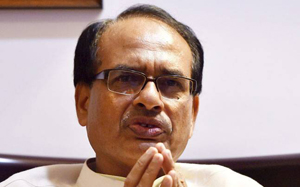
shivraj

The situation escalated when five farmers died on the spot, another farmer, who was allegedly detained by police died yesterday at a hospital taking the toll of those killed in protests to six. Those responsible would be punished, he said.

He is also believed to be considering waiving interest on farm loans, which could benefit over six lakh farmers at a cost of around 2,000 crore to the taxpayer. He made an emotional appeal to farmers, saying he has been a farmer and understands their problems.

However, the opposition has called it a "drama" and criticised his "hypocrisy".

Leader of Opposition in the Assembly Ajay Singh told news agency, "While the farmers in the state are on the roads with their demands, the Chief Minister has got down to this nautanki (drama). He will now spend crores of rupees in this Kejriwal-like drama."

"The truth is that Chouhan is trying to divert the public's attention from the core issue and is hence using all these cheap tricks," added the Congress leader.

Communist Party of India-Marxist State Secretary Badal Saroj also said, "This is nothing but hypocrisy."

Abhishek Patidar, a farmer, had joined the protests on Tuesday at Mandsaur's Piplya Mandi. As the protests turned violent he was shot twice. His family which is already under debt burden, now has to deal with the loss of a loved one.

Angry farmers want action against police officers who shot at the farmers and added that the "Rs. 1 crore compensation promised by the government won't bring back their loved ones".

Ahead of the assembly polls in Madhya Pradesh next year, the issue has been grabbed by opposition parties. On Thursday, Congress Vice-President Rahul Gandhi attempted to travel to Mandsaur to meet the families of those killed in police firing. He switched from a car to two bikes and walked too, but was arrested before he could reach anywhere near Mandsaur.

More than 1,600 farmers killed themselves in Madhya Pradesh in 2016, according to official figures. Between 2011 and 2015, according to the National Crime Records Bureau, a total of 6076 farmers had committed suicide in the state.

In April, the new Uttar Pradesh government of Yogi Adityanath decided to waive farm loans. Other states and farmers' organisations have been demanding a similar waiver.

Comments

Add new comment

  • Coastaldigest.com reserves the right to delete or block any comments.
  • Coastaldigset.com is not responsible for its readers’ comments.
  • Comments that are abusive, incendiary or irrelevant are strictly prohibited.
  • Please use a genuine email ID and provide your name to avoid reject.
News Network
December 13,2025

New Delhi: School-going children are picking up drug and smoking habits and engaging in consumption of alcohol, with the average age of introduction to such harmful substances found to be around 13 years, suggesting a need for earlier interventions as early as primary school, a multi-city survey by AIIMS-Delhi said.

The findings also showed substance use increased in higher grades, with grade XI/XII students two times more likely to report use of substances when compared with grade VIII students. This emphasised the importance of continued prevention and intervention through middle and high school.

The study led by Dr Anju Dhawan of AIIMS's National Drug Dependence Treatment Centre, published in the National Medical Journal of India this month, looks at adolescent substance use across diverse regions.

The survey included 5,920 students from classes 8, 9, 11 and 12 in urban government, private and rural schools across 10 cities -- Bengaluru, Chandigarh, Delhi, Dibrugarh, Hyderabad, Imphal, Jammu, Lucknow, Mumbai, and Ranchi. The data were collected between May 2018 and June 2019.

The average age of initiation for any substance was 12.9 (2.8) years. It was lowest for inhalants (11.3 years) followed by heroin (12.3 years) and opioid pharmaceuticals (without prescription; 12.5 years).

Overall, 15.1 per cent of participants reported lifetime use, 10.3 per cent reported past year use, and 7.2 per cent reported use in the past month of any substance, the study found.

The most common substances used in the past year, after tobacco (4 per cent) and alcohol (3.8 per cent), were opioids (2.8 per cent), followed by cannabis (2 per cent) and inhalants (1.9 per cent). Use of non-prescribed pharmaceutical opioids was most common among opioid users (90.2 per cent).

On being asked, 'Do you think this substance is easily available for a person of your age' separately for each substance category, nearly half the students (46.3 per cent) endorsed that tobacco products and more than one-third of the students (36.5 per cent) agreed that a person of their age can easily procure alcohol products.

Similarly, for Bhang (21.9 per cent), ganja/charas (16.1 per cent), inhalants (15.2 per cent), sedatives (13.7 per cent), opium and heroin (10 per cent each), the students endorsed that these can be easily procured.

About 95 per cent of the children, irrespective of their grade, agreed with the statement that 'drug use is harmful'.

The rates of substance use (any) among boys were significantly higher than those of girls for substance use (ever), use in the past year and use in the past 30 days. Compared to grade VIII students, grade IX students were more likely, and grade XI/XII students were twice as likely to have used any substance (ever).

The likelihood of past-year use of any substance was also higher for grade IX students and for grade XI/XII students as compared to grade VIII students.

About 40 per cent of students mentioned that they had a family member who used tobacco or alcohol each. The use of cannabis (any product) and opioid (any product) by a family member was reported by 8.2 per cent and 3.9 per cent of students, respectively, while the use of other substances, such as inhalants/sedatives by family was 2-3 per cent, the study found.

A relatively smaller percentage of students reported use of tobacco or alcohol among peers as compared to among family members, while a higher percentage reported inhalants, sedatives, cannabis or opioid use among peers.

Children using substances (past year) compared to non-users reported significantly higher any substance use by their family members and peers.

There were 25.7 per cent students who replied 'yes' to the question 'conflicts/fights often occur in your family'. Most students also replied affirmatively to 'family members are aware of how their time is being spent' and 'damily members are aware of with whom they spend their time'.

Comments

Add new comment

  • Coastaldigest.com reserves the right to delete or block any comments.
  • Coastaldigset.com is not responsible for its readers’ comments.
  • Comments that are abusive, incendiary or irrelevant are strictly prohibited.
  • Please use a genuine email ID and provide your name to avoid reject.