


Swami Aseemanand Acquitted! Whither Indian Justice System?

Ram Puniyani
March 29, 2019

Seeing the pattern of justice delivery system of India currently it seems getting justice, punishing the guilty is not easy. The judgments come as an outcome of the evidence produced by the executive, police in front of the magistrates. The attitude of the ruling dispensation matters a lot in matters of the crimes related to the ideology being propounded and defended by the ruling party. Sometimes the assertion and strength of the ideologies, which are dominant but not in power also influence the delivery of justice. Times and over again this cruel fact has been staring at our face. In Mumbai violence of 1992-93 nearly one thousand persons was done to death, not too many convictions took place related to the heinous crimes committed during this carnage. In the aftermath of this carnage the bomb blasts took place, orchestrated by the underworld in collaboration with ISI of Pakistan. In these blasts nearly two hundred people died. In these cases some have been hanged to death for the crime, many have got life imprisonment and many others got other punishments. This is what should happen in a democracy. The most glaring case has been the contrast between Rubina Memon who is in prison for life for being the formal owner of the car which was used In Mumbai blasts, while Sadhvi Pragya Singh Thakur, whose motor cycle was used for Malegaon blast got the bail.

All this comes to one’s mind yet again when the NIA Court has acquitted Swami Aseemanand in case of Samjhauta Express blast in which 68 people (43 of them from Pakistan) died. Incidentally Swami was granted bail in the Mecca Masjid blast case earlier and the factors influencing justice delivery became obvious as the main file, a key document containing the disclosure by Aseemanand, wentmissing from the Court’s custody.

Swami Aseemanand, the associate of RSS, who was working in Dangs with Vanvasi Kalyan Ashram, was key figure in organizing the Shabri Kumbh in Dangs. He also emerged as the key figure in many a blast cases, Malegaon, Mecca Masjid, Ajmer Dargah and Samjhata Express. All these took place in 2006-2008. The whole series came to a stop when Maharashtra ATS Chief Hemant Karkare, while investigating these cases came across the fact that the motor cycle used in Malegaon Blast cases belonged to Sadhvi Pragya Thakur, and ex ABVP worker. The trail of investigation led to the role of many a followers of Hindutva ideology, influenced by or close to RSS related organizations. When these facts started coming out Karakare was criticized and attacked by the Hindu nationalists. Shiv Sena mouth Piece Saamna wrote that we spit on the face of Karkare. While the then Chief Minister of Gujarat Mr. Narendra Modi called him Deshdrohi (Anti national). Though Karkare was investigating with full professional integrity, such criticisms from political circles did shake him and he shared his anxiety with his senior and upright police officer Julio Rebiero. Later as NIA started maligning Karkare, Reibero stood by him and gave him the strongest testimony of professional integrity.

The involvement of elements like Pragya Thakur, Assemanand and company was a big revelation and some from then UPA Government used the word ‘Hindu terrorism’ or ‘saffron terrorism’ for these cases. This was a faulty word anyway. It came up on the lines of the prevalent term Islamic terrorism which has been in vogue since quite some time. Hemant Karkare was killed in 26/11 2008 terror attack in Mumbai. Many of those calling him anti-National now declared him as martyr! Later Rajasthan ATS further carried the investigation and many from RSS related stable were found to be accomplices in the acts of terror. Subhash Gatade’s book Godse’s Children chronicles it well.

The investigation changed the track with the coming of NDA II in power in center in 2014. Rohini Salian the public prosecutor from Mumbai, who was dealing with these cases was told to go soft onthese cases. Now a decade later Hemant Karkare’s investigation has been totally bypassed. Counter allegations against Karkare are floating around. At the same time doubts about the legal system and its role in punishing the guilty is coming to surface yet again.

In case of Swami Aseemanand, after his arrest he had given a confession in front of a magistrate. This confession was not in police custody; this was after two days of judicial custody. In his confession, which is legally valid, he gave the details of his central role and planning the blasts which took place during 2007-2008. He also indicated that even top level RSS leadership was also in the know of the goings on. In a long interviews spanning over two years, given to Caravan Magazine journalist Leena Raghunath (Believer, Caravan) he stated the things similar to what he told the magistrate. Later he withdrew the statement given in front of magistrate saying that the confession was given under pressure.

After this bail it is clear yet again that the justice system is so much dependent on the executive, the way police presents the case to the Magistrate examining the case. In the aftermath of this bail, Vikash Naraan Rai, who was Chief of SIT, investigating into Samjhauta blast, questions the handling of case by NIA. He asks "It is for the NIA to answer that why the witnesses resiled (back-traced) in this case. As they have turned hostile in the court even after giving statements under 164 of CrPC, the investigating agency should press perjury charges on them. The general perception is that NIA had gone soft in this case. One can further comment once the complete judgment comes,"

With this bail the question comes up who is responsible for the death of those 68 people, as usual it seems nobody did the blast leading to Samjhauta express tragedy! What we are witnessing is a sustained effort to undermine the process of justice in pursuit of sectarian nationalism.

Comments

Add new comment

  • Coastaldigest.com reserves the right to delete or block any comments.
  • Coastaldigset.com is not responsible for its readers’ comments.
  • Comments that are abusive, incendiary or irrelevant are strictly prohibited.
  • Please use a genuine email ID and provide your name to avoid reject.
News Network
December 2,2025

A major upgrade in safety and monitoring is planned for Haj 2026, with every Indian pilgrim set to receive a Haj Suvidha smart wristband linked to the official Haj Suvidha mobile app. The initiative aims to support pilgrims—especially senior citizens—who may struggle with smartphones during the 45-day journey.

What the Smart Wristband Will Do

Officials said the device will come with:
•    Location tracking
•    Pedometer
•    SOS emergency button
•    Qibla compass
•    Prayer timings
•    Basic health monitoring

SP Tiwari, secretary of the UP State Haj Committee, said the goal is to make the pilgrimage safer and more comfortable.

“Most Hajis are elderly and not comfortable with mobile apps,” he said. “The smartwatch will help locate pilgrims who forget their way or cannot communicate their location.”

The wristbands will be monitored by the Consulate General of India in Saudi Arabia, similar to mobile tracking via the Haj Suvidha App.

Free Distribution and Training

•    Smart wristbands will be given free of cost.
•    Training for pilgrims will be conducted between January and February 2026.
•    Sample units will reach state Haj committees soon.
•    Final devices will be distributed as pilgrims begin their journey.

New Rules for Accommodation

Two major decisions have also been finalised for Haj 2026:
1.    Separate rooms for men and women – including married couples. They may stay on the same floor but must occupy different rooms, following stricter Saudi guidelines.
2.    Cooking banned – gas cylinders will not be allowed; all meals will be provided through official catering services arranged by the Haj Committee of India.

These decisions were finalised during a meeting of the Haj Committee of India and state representatives in Mumbai.

Haj Suvidha App Launched Earlier

The government launched the Haj Suvidha App in 2024, offering:

•    Training modules
•    Accommodation and flight details
•    Baggage information
•    SOS and translation tools
•    Grievance redressal

Haj 2026 Quota and Key States

•    India’s total Haj quota for 2026: 1,75,025 pilgrims
•    70% (1,25,000) allotted to the Haj Committee of India
•    30% (around 50,000) reserved for Haj Group Organisers

Uttar Pradesh has the largest allocation (around 30,000 seats), though approximately 18,000 pilgrims are expected to go this year. States with high pilgrim numbers include Kerala, Maharashtra and Gujarat.

Dates of Haj 2026

The pilgrimage is scheduled to take place from 24 May to 29 May, 2026 (tentative).
Haj is one of the five pillars of Islam and is mandatory for Muslims who meet the required conditions.

Comments

Add new comment

  • Coastaldigest.com reserves the right to delete or block any comments.
  • Coastaldigset.com is not responsible for its readers’ comments.
  • Comments that are abusive, incendiary or irrelevant are strictly prohibited.
  • Please use a genuine email ID and provide your name to avoid reject.
News Network
November 21,2025

Tejas.jpg

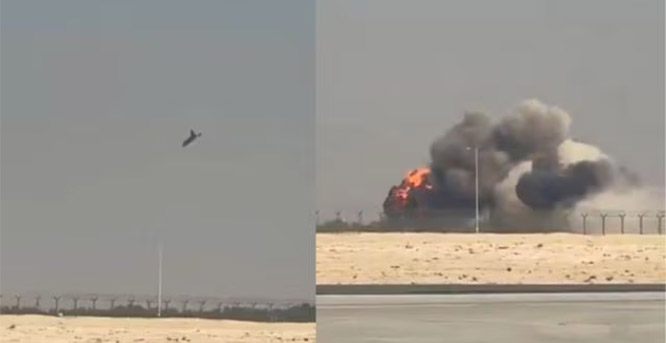
An Indian Air Force (IAF) Tejas fighter jet crashed on Friday, November 21, afternoon during its aerial demonstration at the Dubai Air Show, plunging to the ground at around 2:10 pm local time while performing a manoeuvre before thousands of spectators.

The IAF confirmed the incident, stating that a Tejas aircraft participating in the show had crashed and that further details were being gathered. An Air Force spokesperson said more information would be shared after initial assessments.

The crash sent thick black smoke billowing into the sky near the airport, causing panic among visitors, including families and children who had gathered to watch the display. Authorities have not yet confirmed whether the pilot managed to eject before the aircraft went down. Emergency response teams rushed to the scene, and officials have not released information on casualties or damage so far.

The Tejas is a 4.5-generation, multi-role fighter aircraft developed indigenously by Hindustan Aeronautics Limited (HAL). Designed for versatility, it is capable of offensive air support, close combat, ground attack missions and maritime operations. The aircraft family includes single-seat fighters and twin-seat trainers for both the Air Force and Navy.

HAL describes the latest version, the LCA Mk1A, as the most advanced in the series, featuring an AESA radar, an upgraded electronic warfare suite with radar-warning and self-protection jamming, smart multifunction displays, a digital map generator, a combined interrogator–transponder system and a modern radio altimeter. These enhancements significantly improve the aircraft’s combat capability and survivability.

Further updates from IAF and UAE authorities are awaited.

Comments

Add new comment

  • Coastaldigest.com reserves the right to delete or block any comments.
  • Coastaldigset.com is not responsible for its readers’ comments.
  • Comments that are abusive, incendiary or irrelevant are strictly prohibited.
  • Please use a genuine email ID and provide your name to avoid reject.
News Network
November 26,2025

students.jpg

Bengaluru, Nov 26: Karnataka is taking its first concrete steps towards lifting a three-decade-old ban on student elections in colleges and universities. Deputy Chief Minister D.K. Shivakumar announced Wednesday that the state government will form a small committee to study the reintroduction of campus polls, a practice halted in 1989 following incidents of violence.

Speaking at a 'Constitution Day' event organised by the Karnataka Congress, Mr. Shivakumar underscored the move's aim: nurturing new political leadership from the grassroots.

"Recently, (Leader of the Opposition in Lok Sabha) Rahul Gandhi wrote a letter to me and Chief Minister (Siddaramaiah) asking us to think about restarting student elections," Shivakumar stated. "I'm announcing today that we'll form a small committee and seek a report on this."

Student elections were banned in Karnataka in 1989, largely due to concerns over violence and the infiltration of political party affiliates into campus life. The ban effectively extinguished vibrant student bodies and the pipeline of young leaders they often produced.

Mr. Shivakumar, who also serves as the Karnataka Congress president, said that former student leaders will be consulted to "study the pros and cons" of the re-introduction.

Acknowledging the history of the ban, he added, "There were many criminal activities taking place back then. We’ll see how we can conduct (student) elections by regulating such criminal activities."

The Deputy CM reminisced about his own journey, which began on campus. He recalled his political activism at Sri Jagadguru Renukacharya College leading to his first Assembly ticket in 1985 at the age of 23. "That's how student leadership was at the time. Such leadership has gone today. College elections have stopped," he lamented, adding that for many, college elections were "like a big movement" where leaders were forged.

The move, driven by the Congress high command's push to cultivate young talent, will face scrutiny from academics and university authorities who have, in the past, expressed concern that the return of polls could disrupt the peaceful academic environment and turn campuses into political battlegrounds.

Comments

Add new comment

  • Coastaldigest.com reserves the right to delete or block any comments.
  • Coastaldigset.com is not responsible for its readers’ comments.
  • Comments that are abusive, incendiary or irrelevant are strictly prohibited.
  • Please use a genuine email ID and provide your name to avoid reject.