A tribute to Mirza Ghalib, the legendary poet

coastaldigest.com web desk 
December 27, 2017

Poet and philosopher Mirza Ghalib, who contributed greatly towards Urdu and Persian literature, was paid tributes by the Google with its doodle on his 220th birth anniversary on December 27, 2017. The Google Doodle fittingly shows Ghalib with his pen and paper, knitting his imagination, with a backdrop of buildings of Mughal architecture.

In its blog post, Google said, “His (Ghalib) verse is characterised by a lingering sadness borne of a tumultuous and often tragic life — from being orphaned at an early age, to losing all of his seven children in their infancy, to the political upheaval that surrounded the fall of Mughal rule in India. He struggled financially, never holding a regular paying job but instead depending on patronage from royalty and more affluent friends.”

“But despite these hardships, Ghalib navigated his circumstances with wit, intellect, and an all-encompassing love for life. His contributions to Urdu poetry and prose were not fully appreciated in his lifetime, but his legacy has come to be widely celebrated, most particularly for his mastery of the Urdu ghazal (amatory poem),” the post added.

Born on December 27, 1797 in Agra, when Mughal Empire was counting its last days, Mirza Ghalib began his literary works at the age of 11. Although his first language was Urdu, Turkish and Persian were spoken at home too. After getting married by the age of 13, he settled in Delhi. 

In one of his letters, Ghalib describes his marriage as the second imprisonment after the initial confinement that was life itself. The idea that life is one continuous painful struggle which can end only when life itself ends, is a recurring theme in his poetry.

His poem and Ghazals have been translated and recited in multiple languages across the globe. In 1850, he was honoured with the title of Dabir-ul-Mulk by Mughal emperor Bahadur Shah Zafar II. During the last years of the Mughal Empire, Mirza Ghalib was not only an important member of the Mughal court, but also the poet tutor to the emperor's eldest son, Prince Fakhr-ud Din Mirza. The emperor also appointed him as the royal historian of the Mughal court.

Following the decline of the Mughal Empire, Mirza Ghalib struggled to make a living. Much of his fame came to him posthumously and in his lifetime, despite his best attempts, he couldn't get the British to restore his full pension.

Mirza Ghalib died in Delhi on 15 February 1869 and the house where he lived, in Old Delhi, has been turned into "Ghalib Memorial". Known as "Ghalib ki Haveli", it permanently houses Ghalib's exhibitions.

Imprints on heart and mind

One of the recurring themes in Mirza Ghalib's poems is the idea that life is a continuous painful struggle which ends only with life itself. His poems perfectly capture the pathos of love and continue to be relevant even after all these years.  Here are some of the famous sher by the legendary poet that manage to pierce the heart:

aah ko chaahiye ik umr asar hone tak
kaun jeeta hai teri zulf ke sar hone tak

(Translation: A lifetime passes before a sigh shows its effect, who would wait so long to see you fixing the tangles in your hair)

un ke dekhe se jo aa jaati hai munh par raunaq
vo samajhte hain ki beemar ka haal achha hai

(Translation: My face lights up when I see her and she feels that the sick me is now okay)

hazaron khwahishen aisi ki har khwahish pe dam nikle,
bahut nikle mire armaan lekin phir bhi kam nikle

(Translation: I have a thousand desires, all desires worth dying for,
Though many of my desires were fulfilled, many remained unfulfilled)

hum ko maalum hai jannat ki haqiqat lekin
dil ke khush rakhne ko 'ghalib' ye khayal achha hai

(Translation: We know what's the truth, but to please yourself, this thought is good)

hum toh fanaah ho gaye uskii aankhen dekh kar, Ghalib,
na jaanein woh aaina kaise dekhte hongey

(Translation: I just lost my mind after seeing her eyes, Ghalib,
I wonder how she sees herself in the mirror)

ye na thi hamari qismat ki visal-e-yaar hota
agar aur jeete rahte yahi intezar hota

(Translation: That my love be consummated, fate did not ordain
Living longer had I waited, would have been in vain)

Kaid-e-hayat O band-e-gham asalm men donon ek hain
Mauth se pahle aadmi gham se najat paye kyon?

(Translation: The prison of life and the bondage of grief are one and the same/ Before the onset of death, why should man expect to be free of grief?)

Comments

Sameer
 - 
Tuesday, 16 Jan 2018

Good article. Translation of poem is poor.

Muhammed Ali Uchil
 - 
Wednesday, 27 Dec 2017

Super article, a fiiting tribute to this great poet

Add new comment

  • Coastaldigest.com reserves the right to delete or block any comments.
  • Coastaldigset.com is not responsible for its readers’ comments.
  • Comments that are abusive, incendiary or irrelevant are strictly prohibited.
  • Please use a genuine email ID and provide your name to avoid reject.
News Network
December 4,2025

Mangaluru: Chaos erupted at Mangaluru International Airport (MIA) after IndiGo flight 6E 5150, bound for Mumbai, was repeatedly delayed and ultimately cancelled, leaving around 100 passengers stranded overnight. The incident highlights the ongoing country-wide operational disruptions affecting the airline, largely due to the implementation of new Flight Duty Time Limitations (FDTL) norms for crew.

The flight was initially scheduled for 9:25 PM on Tuesday but was first postponed to 11:40 PM, then midnight, before being cancelled around 3:00 AM. Passengers expressed frustration over last-minute communication and the lack of clarity, with elderly and ailing travellers particularly affected. “Though the airline arranged food, there was no proper communication, leaving us confused,” said one family member.

An IndiGo executive at MIA cited the FDTL rules, designed to prevent pilot fatigue by limiting crew working hours, as the cause of the cancellation. While alternative arrangements, including hotel stays, were offered, about 100 passengers chose to remain at the airport, creating tension. A replacement flight was arranged but also faced delays due to the same constraints, finally departing for Mumbai around 1:45 PM on Wednesday. Passengers either flew, requested refunds, or postponed their travel.

The Mangaluru delay is part of a broader crisis for IndiGo. The airline has been forced to make “calibrated schedule adjustments”—a euphemism for widespread cancellations and delays—after stricter FDTL norms came into effect on November 1.

While an IndiGo spokesperson acknowledged unavoidable flight disruptions due to technology issues, operational requirements, and the updated crew rostering rules, the DGCA has intervened, summoning senior airline officials to explain the chaos and outline corrective measures.

The ripple effect has been felt across the country, with major hubs like Bengaluru and Mumbai reporting numerous cancellations. The Mangaluru incident underscores the systemic operational strain currently confronting India’s largest carrier, leaving passengers nationwide grappling with uncertainty and delays.

Comments

Add new comment

  • Coastaldigest.com reserves the right to delete or block any comments.
  • Coastaldigset.com is not responsible for its readers’ comments.
  • Comments that are abusive, incendiary or irrelevant are strictly prohibited.
  • Please use a genuine email ID and provide your name to avoid reject.
Agencies
November 22,2025

indiapak.jpg

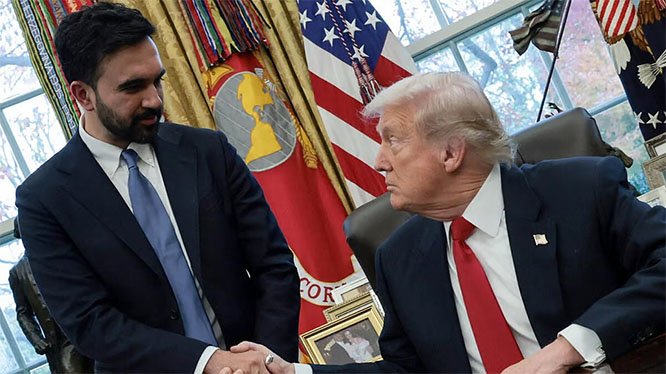
New York/Washington: US President Donald Trump has again claimed to have solved the conflict between India and Pakistan, repeating his assertion during a meeting with New York City Mayor-elect Zohran Mamdani in the Oval Office.

Mamdani flew to Washington DC for his first meeting with Trump in the White House on Friday. Trump said he “enjoyed” the meeting, which he described as “great.”

During remarks in the Oval Office, with Mamdani standing next to him, Trump repeated his claim that he solved the May conflict between India and Pakistan.

"I did eight peace deals of countries, including India and Pakistan,” he said.

On Wednesday, Trump had said he threatened to put 350 per cent tariffs on India and Pakistan if they did not end their conflict, repeating his claim that he solved the fighting between the nuclear-armed neighbours and that Prime Minister Narendra Modi had called him to say “we're not going to go to war.”

Since May 10, when Trump announced on social media that India and Pakistan had agreed to a “full and immediate” ceasefire after a “long night” of talks mediated by Washington, he has repeated his claim over 60 times that he “helped settle” the tensions between India and Pakistan.

India has consistently denied any third-party intervention. India launched Operation Sindoor on May 7, targeting terror infrastructure in Pakistan and Pakistan-occupied Kashmir in retaliation for the April 22 Pahalgam attack that killed 26 civilians. India and Pakistan reached an understanding on May 10 to end the conflict after four days of intense cross-border drone and missile strikes.

Mamdani emerged victorious in the closely-watched battle for New York City Mayor, becoming the first South Asian and Muslim to be elected to sit at the helm of the largest city in the US.

He had been the front-runner in the NYC Mayoral election for months and defeated Republican nominee Curtis Sliwa and political heavyweight former New York State Governor Andrew Cuomo, who ran as an independent candidate and was officially endorsed by Trump just hours before the elections.

Indian-descent Mamdani is the son of renowned filmmaker Mira Nair and Columbia University professor Mahmood Mamdani. He was born and raised in Kampala, Uganda and moved to New York City with his family when he was 7. Mamdani became a naturalised US citizen only recently, in 2018.

Comments

Add new comment

  • Coastaldigest.com reserves the right to delete or block any comments.
  • Coastaldigset.com is not responsible for its readers’ comments.
  • Comments that are abusive, incendiary or irrelevant are strictly prohibited.
  • Please use a genuine email ID and provide your name to avoid reject.
News Network
November 21,2025

israel.jpg

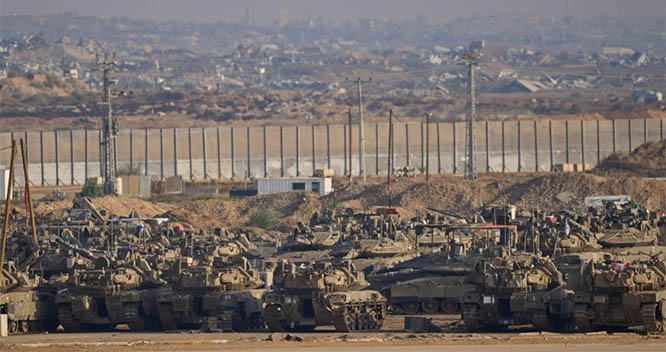
Local authorities say the Israeli military has expanded the so-called “yellow line” truce demarcation in Gaza City and repositioned its forces deeper into the territory in violation of a ceasefire agreement that came into force on October 10, besieging dozens of Palestinian families.

Gaza’s Government Media Office announced in a statement on Thursday that Israeli forces widened the boundary by shifting the markers, and advanced roughly 300 meters (984 feet) into the neighborhoods of Ash-Shaaf, An-Nazzaz and Baghdad Street.

The move pushed further into civilian areas, trapping families who were unable to flee as tanks rolled forward, it added.

“The fate of many of these families remains unknown amidst the shelling that targeted the area,” the office said, adding that the expansion of the yellow line shows a “blatant disregard” for the ceasefire deal.

On Friday, sources said the Israeli military carried out continued air and artillery strikes inside the so-called “yellow line” east of Khan Younis in the southern Gaza Strip.

According to the reports, Israeli warplanes and tanks targeted areas within the zone. One Palestinian was reported killed and several others wounded in the strikes, the sources said.

The fresh aggression came only a day after 25 Palestinians were killed in Israeli airstrikes on Gaza City and Khan Younis on Wednesday.

The media office reported that Israel has consistently violated the truce deal since its implementation last month, with near-daily attacks by air, artillery and direct shootings.

The office said over 400 violations have been documented. These breaches have resulted in the deaths of more than 300 Palestinians and left hundreds injured.

The Government Media Office in Gaza urged the guarantors of the ceasefire — the US, Egypt, Qatar and Turkey — to take swift action to halt the ongoing violations and facilitate the delivery of food, shelter materials, medical aid, and infrastructure equipment.

The so-called “yellow line,” set out in the agreement between Israel and Hamas resistance movement, refers to a non-physical partition where the Israeli military repositioned itself when the truce deal took effect.

It has allowed Israel, which routinely fires at Palestinians who approach the line, to retain control over more than half of the Gaza Strip.

International bodies, including the UN Independent International Commission of Inquiry, the International Association of Genocide Scholars, Amnesty International, Human Rights Watch, B’Tselem, and other rights groups, have concluded that the Israeli war on Gaza amounts to genocide.

In the attacks in Gaza since October 2023, Israel has killed at least 69,546 people and injured 170,833 others, leveling large swaths of the territory and displacing almost all of the population. 

Comments

Add new comment

  • Coastaldigest.com reserves the right to delete or block any comments.
  • Coastaldigset.com is not responsible for its readers’ comments.
  • Comments that are abusive, incendiary or irrelevant are strictly prohibited.
  • Please use a genuine email ID and provide your name to avoid reject.