



Two yrs of Modi govt: Nearly half feel 'no change', some others say situation worsened

April 30, 2016

New Delhi, Apr 30: With the Modi government close to completing its two years in office, a new survey today said nearly half of the respondents (49 per cent) feel "no change" in their living standards while another 15 per cent feel the situation has actually worsened.
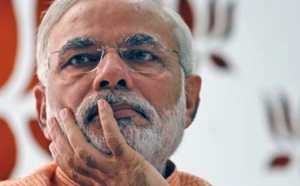
modi

The survey, conducted by the Centre for Media Studies (CMS), further claimed that "a significant percentage (43 per cent) feels that poor people are not benefitting from programmes and schemes under the Modi government."

At the same time, the 'performance appraisal' of the two years of the Modi government also found that Narendra Modi's performance as Prime Minister was being liked by a vast majority (62 per cent) and as many as 70 per cent wanted him to continue as Prime Minister beyond the first five years.

The survey, of around 4,000 respondents across rural and urban areas of 15 states, still observed that less than one third feel the Prime Minister has fulfilled promises while around 48 per cent felt the promises have been met partially.

"On whether living and life of people is any better today than two years ago, nearly half (49 per cent) feel 'no change' in scenario while 15 per cent feel that situation or conditions has worsened," the survey said.

Announcing the survey results at a press conference here, former Secretary General of Lok Sabha Subhash C Kashyap said the personal image of the Prime Minister remains very bright and his performance is being liked by a majority.

Modi's efforts to improve India's stand globally as well as improving administration at home got a thumbs up from a majority in the survey.

"While NDA government's initiatives are generally appreciated, concern for increasing prices and unemployment at grass root continues," CMS Director General P N Vasanti said.

Among major failures of the Union government, inflation was cited by 32 per cent of the respondents, followed by inability to provide employment (29 per cent) and inability to bring much talked about black money (26 per cent) -- one of the key promises made in the 2014 election manifesto.

The major achievements cited in the survey included Jan Dhan Yojna (36 per cent), Swachh Bharat Mission (32 per cent) and efforts to bring foreign direct investment (23 per cent).

In the assessment of individual union ministries, Railways scored the best, followed by Finance and External Affairs Ministries.

The low-performing ministries included Labour and Employment, Law, Rural Development, Consumer Affairs, Food and Public Distribution and Social Justice and Empowerment.

The ranking of the Union ministers was topped by Sushma Swaraj, followed by Rajnath Singh, Suresh Prabhu, Manohar Parrikar and Arun Jaitley in the top five.

The low-ranked ministers in the survey were Ram Vilas Paswan, Bandaru Dattatreya, Radha Mohan Singh, J P Nadda and Prakash Javadekar.

"Important ministers like Venkaiah Naidu (Urban Development) and Smriti Irani (HRD) stood as 'average' performers in their overall standing as the expecations were much higher," the report said.

The assessment of ministries and Union Ministers was done based on four parameters - media presence, extent of activity on social media uilisation of MPLAD fund and people's opinion, it added.

Comments

Add new comment

  • Coastaldigest.com reserves the right to delete or block any comments.
  • Coastaldigset.com is not responsible for its readers’ comments.
  • Comments that are abusive, incendiary or irrelevant are strictly prohibited.
  • Please use a genuine email ID and provide your name to avoid reject.
News Network
December 13,2025

New Delhi: School-going children are picking up drug and smoking habits and engaging in consumption of alcohol, with the average age of introduction to such harmful substances found to be around 13 years, suggesting a need for earlier interventions as early as primary school, a multi-city survey by AIIMS-Delhi said.

The findings also showed substance use increased in higher grades, with grade XI/XII students two times more likely to report use of substances when compared with grade VIII students. This emphasised the importance of continued prevention and intervention through middle and high school.

The study led by Dr Anju Dhawan of AIIMS's National Drug Dependence Treatment Centre, published in the National Medical Journal of India this month, looks at adolescent substance use across diverse regions.

The survey included 5,920 students from classes 8, 9, 11 and 12 in urban government, private and rural schools across 10 cities -- Bengaluru, Chandigarh, Delhi, Dibrugarh, Hyderabad, Imphal, Jammu, Lucknow, Mumbai, and Ranchi. The data were collected between May 2018 and June 2019.

The average age of initiation for any substance was 12.9 (2.8) years. It was lowest for inhalants (11.3 years) followed by heroin (12.3 years) and opioid pharmaceuticals (without prescription; 12.5 years).

Overall, 15.1 per cent of participants reported lifetime use, 10.3 per cent reported past year use, and 7.2 per cent reported use in the past month of any substance, the study found.

The most common substances used in the past year, after tobacco (4 per cent) and alcohol (3.8 per cent), were opioids (2.8 per cent), followed by cannabis (2 per cent) and inhalants (1.9 per cent). Use of non-prescribed pharmaceutical opioids was most common among opioid users (90.2 per cent).

On being asked, 'Do you think this substance is easily available for a person of your age' separately for each substance category, nearly half the students (46.3 per cent) endorsed that tobacco products and more than one-third of the students (36.5 per cent) agreed that a person of their age can easily procure alcohol products.

Similarly, for Bhang (21.9 per cent), ganja/charas (16.1 per cent), inhalants (15.2 per cent), sedatives (13.7 per cent), opium and heroin (10 per cent each), the students endorsed that these can be easily procured.

About 95 per cent of the children, irrespective of their grade, agreed with the statement that 'drug use is harmful'.

The rates of substance use (any) among boys were significantly higher than those of girls for substance use (ever), use in the past year and use in the past 30 days. Compared to grade VIII students, grade IX students were more likely, and grade XI/XII students were twice as likely to have used any substance (ever).

The likelihood of past-year use of any substance was also higher for grade IX students and for grade XI/XII students as compared to grade VIII students.

About 40 per cent of students mentioned that they had a family member who used tobacco or alcohol each. The use of cannabis (any product) and opioid (any product) by a family member was reported by 8.2 per cent and 3.9 per cent of students, respectively, while the use of other substances, such as inhalants/sedatives by family was 2-3 per cent, the study found.

A relatively smaller percentage of students reported use of tobacco or alcohol among peers as compared to among family members, while a higher percentage reported inhalants, sedatives, cannabis or opioid use among peers.

Children using substances (past year) compared to non-users reported significantly higher any substance use by their family members and peers.

There were 25.7 per cent students who replied 'yes' to the question 'conflicts/fights often occur in your family'. Most students also replied affirmatively to 'family members are aware of how their time is being spent' and 'damily members are aware of with whom they spend their time'.

Comments

Add new comment

  • Coastaldigest.com reserves the right to delete or block any comments.
  • Coastaldigset.com is not responsible for its readers’ comments.
  • Comments that are abusive, incendiary or irrelevant are strictly prohibited.
  • Please use a genuine email ID and provide your name to avoid reject.