US Doctor Dies in Burning Tesla as Futuristic Doors Didn't Open After Crash, Alleges Lawsuit

Agencies
October 24, 2019

Washington, Oct 24: Omar Awan was driving his dream car when he lost control. The sleek, blue Model S Tesla careened across a road in South Florida and slammed into a palm tree.

But it wasn't the crash that killed him, his family's lawyers said - it was the car's futuristic design features.

The last moments of Awan's life were gruesome and excruciating. After the crash, the Tesla's lithium ion battery caught fire. Smoke - and then flames - filled the car, suffocating Awan and burning him from his feet up. Outside, a crowd gathered, but couldn't help.

That's because the car's retractable door handles, which are supposed to "auto-present" when they detect a key fob nearby, malfunctioned and first responders weren't able to open the doors and save Awan, alleges a wrongful-death lawsuit.

"The fire engulfed the car and burned Dr. Awan beyond recognition - all because the Model S has inaccessible door handles, no other way to open the doors, and an unreasonably dangerous fire risk," the complaint reads.

"These Model S defects and others," the suit says, "rendered it a death trap."

Awan, a 48-year-old anesthesiologist and father of five, leased the Model S for two reasons, family attorney Stuart Grossman said: he was environmentally sensitive and safety conscious.

Tesla, maker of electric vehicles, has also claimed that the Model S once achieved "the best safety rating of any car tested." So Awan, who could have afforded a Mercedes or another luxury vehicle, went with the 2016 Tesla. And it killed him, Grossman said.

"These things, they just love to burn," he said. "The car is so overengineered. It's so techy, it makes you want to buy a Chevy pickup truck."

Tesla's public relations team did not respond to a request for comment on the lawsuit, filed in October, and the company's lawyers have yet to respond in court.

But shortly after the February crash, a Tesla spokeswoman told the Florida Sun-Sentinel that "We are deeply saddened by this accident" but that "Tesla vehicles are engineered to be the safest cars in the world and Tesla drivers have driven more than 10 billion miles to date."

Awan's death is one in a string of recent incidents that has been blamed on Tesla's innovative technology. A lawsuit stemming from a May 2018 crash that killed two teens also blamed a battery fire for at least one of the deaths (Grossman represents the car's third passenger, who survived the accident after being thrown from the vehicle).

In April, surveillance footage from a Shanghai parking garage showed smoke billowing from a Model S moments before the car burst into flames. The widely-shared video prompted Tesla to open an internal investigation.

Several other suits have attributed deaths to Tesla's "Autopilot" system, an automatic driver-assistance feature.

"There are a number of these cases," Grossman said. "What the hell is going on?"

In Awan's case and in other crashes, the carmaker has argued that high-speed crashes can result in fires whether the car is powered by gasoline or batteries. But Awan survived the collision, and he could have escaped the smoke and fire, too, Grossman said - if only the police officer who arrived on scene could have opened the car's doors.

The lawsuit asserts that the features rendered the car "defective" and "dangerous" - the door handles compounding the problem of an "inherently unstable" battery.

"Tesla failed to warn users about the scope and extent of the defective and unreasonably dangerous conditions of the Model S," the complaint says.

The Broward County autopsy report, obtained by The Washington Post, lists Awan's cause of death as "inhalation of products of combustion with a contributory cause of death of thermal injuries."

The medical examiner who responded to the crash wrote that Awan "was not identifiable on scene." His clothes and hair were burned and a yellow metal ring was found on his left ring finger.

After the crash, and after firefighters extinguished the blaze, Awan's Tesla was transported to a tow yard. Once there, it reignited and burned again.


Comments

Add new comment

  • Coastaldigest.com reserves the right to delete or block any comments.
  • Coastaldigset.com is not responsible for its readers’ comments.
  • Comments that are abusive, incendiary or irrelevant are strictly prohibited.
  • Please use a genuine email ID and provide your name to avoid reject.
News Network
January 19,2026

trump.jpg

Donald Trump has linked his repeated threats to seize Greenland to his failure to win the Nobel Peace Prize, in a letter to Norwegian Prime Minister Jonas Gahr Støre.

The authenticity of the letter, in which Trump says he no longer feels obligated to “think purely of peace,” was confirmed by Støre to the Norwegian newspaper VG.

“Considering your country decided not to give me the Nobel Peace Prize for having stopped eight wars plus, I no longer feel an obligation to think purely of peace,” Trump wrote, adding he can now “think about what is good and proper for the United States.”

Støre said Trump’s letter was in response to a short message he had sent earlier, on behalf of himself and Finland’s President Alexander Stubb.

Trump has escalated rhetoric toward Greenland, a self-governing Danish territory, insisting the US will take control “one way or the other.” Over the weekend, he tweeted: “Now it is time, and it will be done!!!”

On Saturday, Trump threatened a 10% tariff on imports from Denmark, Norway, Sweden, France, Germany, the UK, the Netherlands, and Finland from 1 February until the US is allowed to purchase the island. EU diplomats met for emergency talks on possible retaliatory tariffs and sanctions.

In his letter, Trump argued Denmark “cannot protect” Greenland from Russia or China, questioning Danish ownership: “There are no written documents; it’s only that a boat landed there hundreds of years ago.” He added that NATO should support the US, claiming the world is “not secure unless we have complete and total control of Greenland.”

Trump’s stance has unsettled the EU and NATO, as he refused to rule out military action to take control of the mineral-rich island.

The Nobel Peace Prize is awarded by the independent Norwegian Nobel Committee, not the government. Trump had campaigned for last year’s prize, which went to Venezuelan opposition leader María Corina Machado, who dedicated her award to him.

Støre reiterated that the Nobel Prize decision rests solely with the committee.

Comments

Add new comment

  • Coastaldigest.com reserves the right to delete or block any comments.
  • Coastaldigset.com is not responsible for its readers’ comments.
  • Comments that are abusive, incendiary or irrelevant are strictly prohibited.
  • Please use a genuine email ID and provide your name to avoid reject.
News Network
February 3,2026

Bengaluru: Following reports of fresh Nipah virus (NiV) cases in West Bengal and heightened vigilance across parts of Southeast Asia, the Karnataka Health Department has placed the state on high alert and activated emergency preparedness protocols.

Health officials said enhanced surveillance measures have been initiated after two healthcare workers in Barasat, West Bengal, tested positive for the virus earlier this month. While no cases have been reported in Karnataka so far, authorities said the state’s past exposure to Nipah outbreaks and high inter-state mobility warranted preventive action.

Officials have directed district health teams to intensify monitoring, particularly at hospitals and points of entry, and to ensure early detection and isolation of suspected cases.

High Mortality Virus with Multiple Transmission Routes

Nipah virus is a zoonotic disease that can spread from animals to humans and has a reported fatality rate ranging between 60 and 75 per cent. Fruit bats, also known as flying foxes, are the natural reservoirs of the virus and can transmit it by contaminating food sources with saliva or urine.

Known modes of transmission include:

•    Contaminated food: Consumption of fruits partially eaten by bats or raw date-palm sap
•    Animal contact: Exposure to infected pigs or other animals
•    Human-to-human transmission: Close contact with body fluids of infected persons, particularly in healthcare settings

Symptoms and Disease Progression

The incubation period typically ranges from 4 to 14 days, though delayed onset has also been reported. Early symptoms often resemble common viral infections, making prompt clinical suspicion critical.

•    Initial symptoms: Fever, headache, body aches, fatigue, sore throat
•    Progressive symptoms: Drowsiness, disorientation, altered mental state
•    Severe stage: Seizures, neck stiffness and acute encephalitis, which can rapidly progress to coma

Public Health Advisory

The Health Department has issued precautionary guidelines urging the public to adopt risk-avoidance practices to prevent any local spillover.

Do’s
•    Wash fruits thoroughly before consumption
•    Drink boiled and cooled water
•    Use protective equipment while handling livestock
•    Maintain strict hand hygiene

Don’ts
•    Avoid fruits found on the ground or showing bite marks
•    Do not consume beverages made from raw tree sap, including toddy
•    Avoid areas with dense bat populations
•    Do not handle sick or dead animals

Preparedness Measures

Officials confirmed that isolation wards are being readied in major government hospitals and that medical staff are being sensitised to identify early warning signs.

“There is no cause for panic, but there is a need for heightened vigilance,” a senior health official said, adding that there is currently no approved vaccine or specific antiviral treatment for Nipah, and care remains largely supportive.

Comments

Add new comment

  • Coastaldigest.com reserves the right to delete or block any comments.
  • Coastaldigset.com is not responsible for its readers’ comments.
  • Comments that are abusive, incendiary or irrelevant are strictly prohibited.
  • Please use a genuine email ID and provide your name to avoid reject.
News Network
January 20,2026

iran.jpg

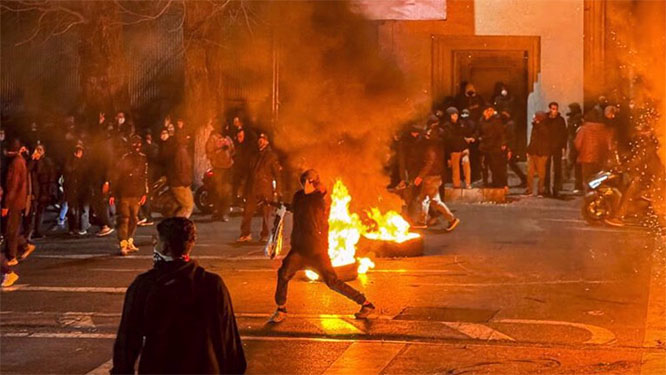
Iranian security and intelligence forces have captured more than 470 individuals in three provinces, identified as key figures behind the recent wave of violent unrest and terrorist activities linked to foreign-backed networks.

The Intelligence Ministry's provincial office in Khorasan Razavi announced on Monday the arrest of 192 armed terrorists, identified as the main agents behind recent riots in the region. 

According to an official statement, the detainees were involved in the killing of several security personnel and civilians, setting fire to mosques, public service facilities, and buses, as well as attacks on military and law enforcement centers.

The seized items from the group include several bulletproof vests, Kalashnikov rifles, hunting weapons, Winchester rifles, and various cold weapons such as daggers, swords, brass knuckles, tactical knives, crossbows, and chains.

Evidence indicates that some of the individuals were tied to hostile movements and terrorist organizations, with links overseas. Others were identified as members of violent criminal gangs, actively taking part in the unrest alongside their associates.

Simultaneously, in the western province of Lorestan, the IRGC announced the arrest of 134 individuals as the main leaders and influential field agents of a US-Israeli terrorist network.

The IRGC statement stated that these individuals formed terrorist cells during the recent unrest, committing "Daesh-like" acts.

They wounded security forces with firearms and cold weapons, and burned and destroyed public and private properties, including mosques, shops, banks, and private and public vehicles.

In the northwestern province of Zanjan, the police reported detaining 150 people identified as principal leaders and agents behind recent riots.

Authorities noted that these individuals were responsible for destroying public and private property and intentionally setting fire to vehicles in the province's squares.

Their crimes include shedding the blood of innocent people, destroying public and private property, attempting to enter military sites, disrupting public order, and spreading terror among citizens.

A variety of cold weapons were reportedly seized from the detainees.

What began late last month as peaceful protests over economic hardship across Iran turned violent after public statements by US and Israeli regime figures encouraged vandalism and disorder.

During the unrest, foreign-backed mercenaries rampaged through cities, killing security forces and civilians and damaging public property.

Comments

Add new comment

  • Coastaldigest.com reserves the right to delete or block any comments.
  • Coastaldigset.com is not responsible for its readers’ comments.
  • Comments that are abusive, incendiary or irrelevant are strictly prohibited.
  • Please use a genuine email ID and provide your name to avoid reject.