



A vicious cycle of vengeance in Kashmir

May 18, 2017

Jammu, May 18: The family of Subedar Paramjit Singh, one of the two Indian soldiers who were beheaded this month while patrolling the de facto border between India and Pakistan, wanted to see him one more time before consigning his body to the flames.
kashmir
But before they could open the coffin, Army officials stopped them, said Prabhjot Singh, the dead man’s brother-in-law.

“The Army people told us the head is missing,” Singh said. “But we were not convinced because they were not allowing us to see the body. What is the condition of the body? What is missing, and what is intact?” Finally the two sides compromised, limiting the viewing to a few moments by members of the immediate family and then moving on to the cremation. “What could we do?” Singh said.

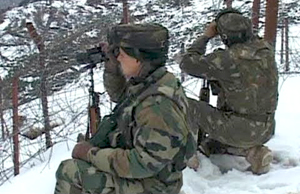
Acts of extreme brutality, including beheadings and mutilations, occur with some regularity along the Line of Control, the 450-mile disputed military frontier that divides Kashmir into Indian and Pakistani territory.

Assigned to remote outposts, the soldiers of both countries serve for years in a state of unrelenting tension, near enough to the enemy to exchange shouted obscenities. Heavily armed teams, often a mixture of militants and uniformed troops, cross the line to ambush an outnumbered post or patrol, with the goal of inflicting maximum casualties in a brief time. Beheadings are seen as a particularly humiliating act.

The gruesome killings often lead the other side to seek vengeance, adding to the volatility of an already tense standoff between the two nuclear-armed nations. Since the beheadings on May 1, that stretch of the Line of Control has been hit by heavy shelling, and thousands of civilians have been evacuated from surrounding villages.

Newspapers have reported around two dozen beheadings or mutilations of soldiers on the Pakistani and Indian sides since 1998, typically followed by denials of involvement by the opposing force.

Lt General H S Panag, a former chief of the army’s northern command, described it as a “primordial conflict” in which it was difficult to know which acts were carried out by uniformed forces and which by militants.

“The unit feels bad, and there is a clamour for revenge,” Panag said. “Laymen expect us to adhere to the rules, but these things do happen. There is nothing new about it. It is just human instinct.”

Military veterans say such acts occur more often than the public knows, kept under wraps lest they set off a spiral of escalation. But as time goes on, military experts say, concealing these attacks is becoming harder and harder to do, with potentially grave consequences.

“Within the army, we used to keep quiet,” Panag said. “Now the soldiers have mobiles; the porter who works at the post has a mobile. Everyone is in the glare of a camera. Families speak. I don’t think such a matter can be hidden today.” The families of those who were beheaded receive intense and focused attention from government officials, but relatives are still often frustrated with the government’s response, leading them to speak out.

Last year, a daily newspaper printed internal government documents about a 2011 Indian army raid called Operation Ginger, which was prompted by a Pakistani attack that had killed six Indian soldiers. Two of the dead were beheaded. The response came a month later: an ambush that left at least eight Pakistanis dead, three of them beheaded, according to documents cited by the newspaper. The newspaper characterised the soldiers’ heads as “trophies.”

Beheading carries extraordinary emotional power for troops and has for many centuries, said General Ved Prakash Malik, who was chief of the Indian army during the Kargil conflict, a months-long war India and Pakistan fought along the Line of Control in 1999.

“You know, from the old wars, beheading is being considered, for the victors, a kind of a big thing they had done, and for the loser, a big insult that they have suffered,” he said.

Both the Pakistani and Indian armies also were imprinted by the British military tradition, which puts a “massive emphasis on unit loyalty,” said Myra MacDonald, a journalist and author of Defeat Is an Orphan: How Pakistan Lost the Great South Asian War. According to the Indian army, more than 4,500 Indian soldiers have been killed or injured along the Line of Control since 2001.

“If you see a couple of your mates killed, you certainly would be in a blind rage to avenge them,” she said. “This is what happens when men fight wars. On one hand, you know where the limits are, and on the other hand, you get this ground-level rage when you see the man next to you killed.”

In the latest beheadings, on May 1, two Indian soldiers were part of a team patrolling between two posts when a Pakistani “border action team” — often a combination of militants and regular Pakistani forces — attacked and killed them, the Indian army said.

Categorical denial

Pakistan has denied any involvement. “Pakistan army is a professional army,” said Major General Asif Ghafoor, a spokesman of Pakistan army. “There is no history of Pakistan army desecrating a dead body, no matter it is from India.”

Ishwar Chand, 28, whose father, Prem Sagar, was one of the two men beheaded in that attack, said his father’s body was missing its head and hands. “There was no neck even,” he said. “How can we believe this is the body of our father? We are told by officials that the army will not lie in this situation.” He said he expected a vigorous retaliation. “The government should take revenge for my father,” he said. “There is not much population on the border. The army should be given orders to fire back, to shoot.”

The beheaded man’s relatives, outraged at what had happened, took a hard line with the government, threatening not to cremate the body unless they received a visit from Prime Minister Narendra Modi or from Yogi Adityanath, the chief minister of their state, Uttar Pradesh. Ten days later, Adityanath and his entourage made a 15-minute visit to the village, delivered more than Rs 6 lakh in compensation to the family and promised Chand a government job.

In advance of the meeting, officials arrived to install air-conditioning, carpets and sofas in the family’s home, and a generator was installed to supply uninterrupted power, Chand said. Within minutes of Adityanath’s departure, all the amenities were removed. Though other relatives grumbled, Chand said it was good enough.

“I would have been happier if he would have met us as we are,” he said. “Whatever it is, he spared time for us. That is a big thing.”

Comments

Add new comment

  • Coastaldigest.com reserves the right to delete or block any comments.
  • Coastaldigset.com is not responsible for its readers’ comments.
  • Comments that are abusive, incendiary or irrelevant are strictly prohibited.
  • Please use a genuine email ID and provide your name to avoid reject.
News Network
December 21,2025

hadith.jpg

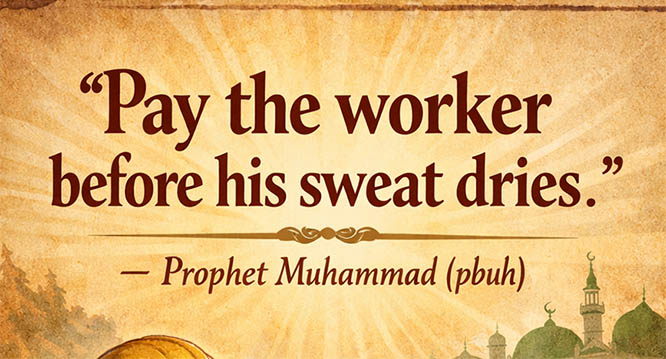
Invoking the teachings of Prophet Muhammad—“pay the worker before his sweat dries”—the Madras High Court has directed a municipal corporation to settle long-pending legal dues owed to a former counsel. The court observed that this principle reflects basic fairness and applies equally to labour and service-related disputes.

Justice G. R. Swaminathan made the observation while hearing a petition filed by advocate P. Thirumalai, who claimed that the Madurai City Municipal Corporation failed to pay him legal fees amounting to ₹13.05 lakh. Earlier, the High Court had asked the corporation to consider his representation. However, a later order rejected a major portion of his claim, prompting the present petition.

The court allowed Thirumalai to approach the District Legal Services Authority (DLSA) and submit a list of cases in which he had appeared. It also directed the corporation to settle the verified fee bills within two months, without interest. The court noted that the petitioner had waited nearly 18 years before challenging the non-payment and that the corporation could not be fully blamed, as the fee bills were not submitted properly.

‘A Matter of Embarrassment’

Justice Swaminathan described it as a “matter of embarrassment” that the State has nearly a dozen Additional Advocate Generals. He observed that appointing too many law officers often leads to unnecessary allocation of work and frequent adjournments, as government counsel claim that senior officers are engaged elsewhere.

He expressed hope that such practices would end at least in the Madurai Bench of the High Court and added that Additional Advocate Generals should “turn a new leaf” from 2026 onwards.

‘Scandalously High Amounts’

While stating that the court cannot examine the exact fees paid to senior counsel or law officers, Justice Swaminathan stressed that good governance requires public funds to be used prudently. He expressed concern over the “scandalously high amounts” paid by government and quasi-government bodies to a few favoured law officers.

In contrast, the court noted that Thirumalai’s total claim was “a pittance” considering the large number of cases he had handled.

Background

Thirumalai served as the standing counsel for the Madurai City Municipal Corporation for more than 14 years, from 1992 to 2006. During this period, he represented the corporation in about 818 cases before the Madurai District Courts.

As the former counsel was unable to hire a clerk to obtain certified copies of judgments in all 818 cases, the court directed the District Legal Services Authority to collect the certified copies within two months. The court further ordered the corporation to bear the cost incurred by the DLSA and deduct that amount from the final settlement payable to the petitioner.

Comments

Add new comment

  • Coastaldigest.com reserves the right to delete or block any comments.
  • Coastaldigset.com is not responsible for its readers’ comments.
  • Comments that are abusive, incendiary or irrelevant are strictly prohibited.
  • Please use a genuine email ID and provide your name to avoid reject.
News Network
December 13,2025

New Delhi: School-going children are picking up drug and smoking habits and engaging in consumption of alcohol, with the average age of introduction to such harmful substances found to be around 13 years, suggesting a need for earlier interventions as early as primary school, a multi-city survey by AIIMS-Delhi said.

The findings also showed substance use increased in higher grades, with grade XI/XII students two times more likely to report use of substances when compared with grade VIII students. This emphasised the importance of continued prevention and intervention through middle and high school.

The study led by Dr Anju Dhawan of AIIMS's National Drug Dependence Treatment Centre, published in the National Medical Journal of India this month, looks at adolescent substance use across diverse regions.

The survey included 5,920 students from classes 8, 9, 11 and 12 in urban government, private and rural schools across 10 cities -- Bengaluru, Chandigarh, Delhi, Dibrugarh, Hyderabad, Imphal, Jammu, Lucknow, Mumbai, and Ranchi. The data were collected between May 2018 and June 2019.

The average age of initiation for any substance was 12.9 (2.8) years. It was lowest for inhalants (11.3 years) followed by heroin (12.3 years) and opioid pharmaceuticals (without prescription; 12.5 years).

Overall, 15.1 per cent of participants reported lifetime use, 10.3 per cent reported past year use, and 7.2 per cent reported use in the past month of any substance, the study found.

The most common substances used in the past year, after tobacco (4 per cent) and alcohol (3.8 per cent), were opioids (2.8 per cent), followed by cannabis (2 per cent) and inhalants (1.9 per cent). Use of non-prescribed pharmaceutical opioids was most common among opioid users (90.2 per cent).

On being asked, 'Do you think this substance is easily available for a person of your age' separately for each substance category, nearly half the students (46.3 per cent) endorsed that tobacco products and more than one-third of the students (36.5 per cent) agreed that a person of their age can easily procure alcohol products.

Similarly, for Bhang (21.9 per cent), ganja/charas (16.1 per cent), inhalants (15.2 per cent), sedatives (13.7 per cent), opium and heroin (10 per cent each), the students endorsed that these can be easily procured.

About 95 per cent of the children, irrespective of their grade, agreed with the statement that 'drug use is harmful'.

The rates of substance use (any) among boys were significantly higher than those of girls for substance use (ever), use in the past year and use in the past 30 days. Compared to grade VIII students, grade IX students were more likely, and grade XI/XII students were twice as likely to have used any substance (ever).

The likelihood of past-year use of any substance was also higher for grade IX students and for grade XI/XII students as compared to grade VIII students.

About 40 per cent of students mentioned that they had a family member who used tobacco or alcohol each. The use of cannabis (any product) and opioid (any product) by a family member was reported by 8.2 per cent and 3.9 per cent of students, respectively, while the use of other substances, such as inhalants/sedatives by family was 2-3 per cent, the study found.

A relatively smaller percentage of students reported use of tobacco or alcohol among peers as compared to among family members, while a higher percentage reported inhalants, sedatives, cannabis or opioid use among peers.

Children using substances (past year) compared to non-users reported significantly higher any substance use by their family members and peers.

There were 25.7 per cent students who replied 'yes' to the question 'conflicts/fights often occur in your family'. Most students also replied affirmatively to 'family members are aware of how their time is being spent' and 'damily members are aware of with whom they spend their time'.

Comments

Add new comment

  • Coastaldigest.com reserves the right to delete or block any comments.
  • Coastaldigset.com is not responsible for its readers’ comments.
  • Comments that are abusive, incendiary or irrelevant are strictly prohibited.
  • Please use a genuine email ID and provide your name to avoid reject.
News Network
December 16,2025

bengal.jpg

The deletion of over 58 lakh names from West Bengal’s draft electoral rolls following a Special Intensive Revision (SIR) has sparked widespread concern and is likely to deepen political tensions in the poll-bound state.

According to the Election Commission, the revision exercise has identified 24 lakh voters as deceased, 19 lakh as relocated, 12 lakh as missing, and 1.3 lakh as duplicate entries. The draft list, published after the completion of the first phase of SIR, aims to remove errors and duplication from the electoral rolls.

However, the scale of deletions has raised fears that a large number of eligible voters may have been wrongly excluded. The Election Commission has said that individuals whose names are missing can file objections and seek corrections. The final voter list is scheduled to be published in February next year, after which the Assembly election announcement is expected. Notably, the last Special Intensive Revision in Bengal was conducted in 2002.

The development has intensified the political row over the SIR process. Chief Minister Mamata Banerjee and her Trinamool Congress have strongly opposed the exercise, accusing the Centre and the Election Commission of attempting to disenfranchise lakhs of voters ahead of the elections.

Addressing a rally in Krishnanagar earlier this month, Banerjee urged people to protest if their names were removed from the voter list, alleging intimidation during elections and warning of serious consequences if voting rights were taken away.

The BJP, meanwhile, has defended the revision and accused the Trinamool Congress of politicising the issue to protect what it claims is an illegal voter base. Leader of the Opposition Suvendu Adhikari alleged that the ruling party fears losing power due to the removal of deceased, fake, and illegal voters.

The controversy comes amid earlier allegations by the Trinamool Congress that excessive work pressure during the SIR led to the deaths by suicide of some Booth Level Officers (BLOs), for which the party blamed the Election Commission. With the draft list now out, another round of political confrontation appears imminent.

As objections begin to be filed, the focus will be on whether the correction mechanism is accessible, transparent, and timely—critical factors in ensuring that no eligible voter is denied their democratic right ahead of a crucial election.

Comments

Add new comment

  • Coastaldigest.com reserves the right to delete or block any comments.
  • Coastaldigset.com is not responsible for its readers’ comments.
  • Comments that are abusive, incendiary or irrelevant are strictly prohibited.
  • Please use a genuine email ID and provide your name to avoid reject.
