Violence cost India’s GDP over Rs 80 lakh crore on PPP basis; 40K per person

Agencies
June 10, 2018

New Delhi, Jun 10: Violence cost the Indian economy a whopping USD 1.19 trillion (over Rs 80 lakh crore) last year in constant purchasing power parity (PPP) terms, which amounts to roughly USD 595.4 per person, says a report.

The findings are part of the report prepared by the Institute for Economics and Peace (IEP) based on an analysis of 163 countries and territories.

Violence impacted USD 1,190.51 billion to the Indian economy in 2017, 9 percent of the country's gross domestic product (GDP) or USD 595.4 (over Rs 40,000) per person.

The economic impact of violence to the global economy was USD 14.76 trillion in 2017, in PPP terms. This is equivalent to 12.4 percent of GDP, or USD 1,988 per person.

The global economic impact of violence is defined as the expenditure and economic effect related to “containing, preventing and dealing with the consequences of violence”.

The estimates include the direct and indirect cost of violence as well as an economic multiplier. "The multiplier effect calculates the additional economic activity that would have accrued if the direct costs of violence had been avoided," the report noted.

As per the report, human beings encounter conflict regularly – whether at home, at work, among friends, or on a more systemic level between ethnic, religious or political groups. But the majority of these conflicts do not result in violence.

The fall in peacefulness over the decade was caused by a wide range of factors, including increased terrorist activity, the intensification of conflicts in the Middle East, rising regional tensions in Eastern Europe and northeast Asia, and increasing numbers of refugees and heightened political tensions in Europe and the US, it added.

About the Asia-Pacific region, it said it remained the third most peaceful region in the world despite a slight fall in its overall peacefulness. There were notable improvements in both internal and external conflicts fought and relations with neighbouring countries, but violent crime, terrorism impact, political instability and political terror all deteriorated across the region.

For South Asia, the report said strengthening scores on the Political Terror Scale, refugees and internally displaced person (IDPs) and terrorism impact were only partially offset by a deterioration in external conflicts fought after a border dispute with China flared in the Doklam Pass. The three-month standoff also involved India, which sent troops to the area, it added.

In this region, the two least peaceful nations – Afghanistan and Pakistan – continued their decline. Besides, Bangladesh and Myanmar also saw deterioration, including due to the Rohingya crisis.

"The total economic impact of violence (globally) was higher in 2017 than at any point in the last decade," the report said, adding that the global economic impact of violence increased by 2.1 percent from 2016 to 2017, mainly due to a rise in internal security expenditure.

Syria topped the list of most affected countries by economic cost of violence as a percentage of GDP at 68 percent, followed by Afghanistan (63 percent), Iraq (51 percent) in the second and third position respectively.

Others in the ten most affected countries by economic cost of violence include El Salvador, South Sudan, Central African Republic, Cyprus, Colombia, Lesotho and Somalia.

The report further noted that there has been a widening "prosperity gap" between less and more peaceful countries. Since 1960, the most peaceful countries have, on average, seen their per capita GDP grow by an annual rate of 2.8 percent.

On the other hand, less peaceful countries have experienced economic stagnation. Their annual per capita GDP has, on average, grown by just 1 percent over the last seven decades.

Switzerland is the least affected country in terms of economic cost of violence, followed by Indonesia and Burkina Faso.

Among emerging markets violence impacted USD 1,704.62 billion to the Chinese economy, Brazil (USD 511,364.9 million), Russia (USD 1,013.78 billion) and South Africa (USD 239,480.2 million).

Among developed nations, for the US, the cost of violence in terms of PPP was USD 2.67 trillion or 8 percent of the GDP. For the UK, it was 312.27 billion, 7 percent of GDP.


Comments

Add new comment

  • Coastaldigest.com reserves the right to delete or block any comments.
  • Coastaldigset.com is not responsible for its readers’ comments.
  • Comments that are abusive, incendiary or irrelevant are strictly prohibited.
  • Please use a genuine email ID and provide your name to avoid reject.
News Network
December 17,2025

melkar1.jpg

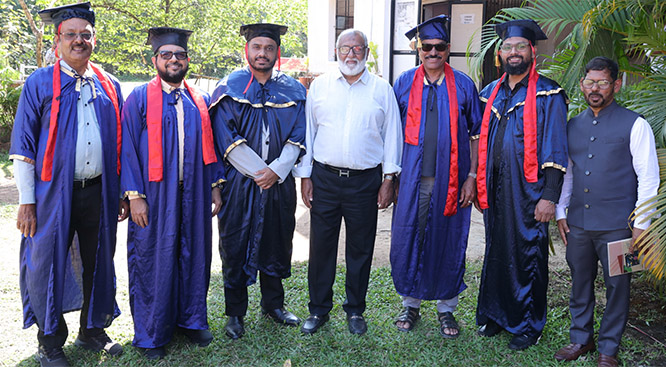
Melkar, Dec 17: The 17th Annual Day and Graduation Ceremony of Melkar Women’s PU and Degree College, themed “Fusion-2K25,” was celebrated with dignity and enthusiasm, marking a significant milestone in the institution’s academic journey. The programme reflected the college’s steadfast commitment to academic excellence, character building, and the holistic development of students.

The event was inaugurated by Mr. Asif Mohammed, whose presence greatly enriched the occasion. The celebration was further graced by the chief guests Mr. P. B. Ahmed Mudassir and Mr. Nissar Fakeer Mohammed, along with the distinguished guests of honour Mr. B. A. Nazeer and Mr. Ibrahim Gadiyar. In their inspiring addresses, the guests encouraged the graduating students and appreciated the dedicated efforts of the management, faculty, and students.

The annual report was presented by the Principal, Mr. Abdul Majeed S, highlighting the institution’s academic progress, notable achievements, and extracurricular accomplishments during the academic year.

The presidential address was delivered by the esteemed Chairman of Melkar Women’s PU and Degree College, Dr. Haji S. M. Rasheed, who emphasized the vital role of education in empowering women and shaping responsible citizens. He also stressed the importance of discipline, dedication, and perseverance in achieving success.

Cultural programmes and academic recognitions formed an integral part of the celebration, showcasing the talents and achievements of the students. The graduation ceremony was a proud moment for the outgoing students as they were formally conferred degrees and wished success in their future endeavours.

Ms. Mashmooma Fathima served as the Master of Ceremonies. The welcome address was delivered by Ms. Fathima Nida, and the programme concluded with a vote of thanks proposed by Ms. Ayisha Suhana.

The event successfully achieved its objectives and was highly appreciated by the guests and attendees.

melkar3.jpg

melkar2.jpg

Comments

Add new comment

  • Coastaldigest.com reserves the right to delete or block any comments.
  • Coastaldigset.com is not responsible for its readers’ comments.
  • Comments that are abusive, incendiary or irrelevant are strictly prohibited.
  • Please use a genuine email ID and provide your name to avoid reject.
News Network
December 19,2025

Mangaluru: The Mangaluru CEN police have arrested a 23-year-old man for allegedly posting provocative and misleading content on an Instagram page named “mr_a_titude”, targeting the Bajpe police.

Mangaluru Commissioner of Police Sudheer Kumar Reddy C H identified the arrested as Abhishek M, a resident of Katipalla in Mangaluru.

A case has been registered at the Bajpe Police Station under Sections 353(1)(c), 353(2), 56, and 57 read with Section 189 of the Bharatiya Nyaya Sanhita (BNS) in connection with the post.

According to police, the accused uploaded a photograph of a hotel on the Instagram page and alleged that accused persons in a murder case under the Bajpe police jurisdiction were being given “royal treatment” by the police, including being served beef meals daily from the hotel.

The post further accused the police of supporting criminals, misusing their authority, and betraying public trust. Police said the content was provocative in nature and aimed at inciting public outrage against the police.

Following the post, a case was registered at the Bajpe police station, and further investigation was transferred to the CEN police station.

Police records indicate that the accused has a criminal history, with multiple cases registered against him, including murder, attempt to murder, assault, and robbery at the Surathkal Police Station, and one case at the Kaup Police Station.

The Commissioner said the accused was traced and arrested using technical evidence.

Comments

Add new comment

  • Coastaldigest.com reserves the right to delete or block any comments.
  • Coastaldigset.com is not responsible for its readers’ comments.
  • Comments that are abusive, incendiary or irrelevant are strictly prohibited.
  • Please use a genuine email ID and provide your name to avoid reject.
News Network
December 6,2025

pilot.jpg

New Delhi: IndiGo, India’s largest airline, faced major operational turbulence this week after failing to prepare for new pilot-fatigue regulations issued by the Directorate General of Civil Aviation (DGCA). The stricter rules—designed to improve flight safety—took effect in phases through 2024, with the latest implementation on November 1. IndiGo has acknowledged that inadequate roster planning led to widespread cancellations and delays.

Below are the key DGCA rules that affected IndiGo’s operations:

1. Longer Mandatory Weekly Rest

Weekly rest for pilots has been increased from 36 hours to 48 hours.

The government says the extended break is essential to curb cumulative fatigue. This rule remains in force despite the current crisis.

2. Cap on Night Landings

Pilots can now perform only two night landings per week—a steep reduction from the earlier limit of six.

Night hours, defined as midnight to early morning, are considered the least alert period for pilots.

Given the disruptions, this rule has been temporarily relaxed for IndiGo until February 10.

3. Reduced Maximum Night Flight Duty

Flight duty that stretches into the night is now capped at 10 hours.

This measure has also been kept on hold for IndiGo until February 10 to stabilize operations.

4. Weekly Rest Cannot Be Replaced With Personal Leave

Airlines can no longer count a pilot’s personal leave as part of the mandatory 48-hour rest.

Pilots say this closes a loophole that previously reduced actual rest time.

Currently, all airlines are exempt from this rule to normalise travel.

5. Mandatory Fatigue Monitoring

Airlines must submit quarterly fatigue reports along with corrective actions to DGCA.

This system aims to create a transparent fatigue-tracking framework across the industry.

The DGCA has stressed that these rules were crafted to strengthen flight safety and align India with global fatigue-management standards. The temporary relaxations are expected to remain until February 2025, giving IndiGo time to stabilise its schedules and restore normal air travel.

Comments

Add new comment

  • Coastaldigest.com reserves the right to delete or block any comments.
  • Coastaldigset.com is not responsible for its readers’ comments.
  • Comments that are abusive, incendiary or irrelevant are strictly prohibited.
  • Please use a genuine email ID and provide your name to avoid reject.