Voters have right to know criminal antecedents of candidates: Supreme Court

Agencies
August 28, 2018

New Delhi, Aug 28: The Supreme Court today said the voters have a right to know the antecedents of candidates and the Election Commission could be asked to direct political parties to ensure that persons, facing criminal charges, do not contest on their tickets using their poll symbols.

After making these observations, a five-judge constitution bench headed by Chief Justice Dipak Misra reserved the judgement on a clutch of petitions after the parties including the poll panel and the Centre concluded their arguments.

The top court is dealing with the question whether a legislator facing criminal trial can be disqualified at the stage of framing of charges in a case. Presently, lawmakers are barred at the time of conviction. 

The bench's observation on the voters' right to know the candidates came in the backdrop of strong opposition from the Centre that the judiciary should not venture into the legislative arena by creating a pre-condition which would adversely affect the right of the candidates to participate in polls.

"The intention of the Lordships is laudable. But the question is whether the court can do it. The answer is 'no'," Attorney General K K Venugopal, representing the Centre, told the bench, which also comprised Justices R F Nariman, A M Khanwilkar, D Y Chandrachud and Indu Malhotra.

He was responding to a suggestion by the bench that persons, facing criminal charges, would be free to contest, but they cannot do so on party ticket using the party election symbol.

"The voters have the right to know the candidates. Actually, a party can allow a person to contest on its ticket. But a person cannot contest on its ticket if he discloses the criminal antecedent," the bench said, adding that this direction may be given by the Election Commission to the political parties.

"They (people facing criminal charges) can contest elections, but they will not contest on the party ticket because he has this kind of stigma," the bench said.

Referring to the concept of presumption of innocence until a person is proven guilty, Venugopal said depriving a person from contesting elections on a party ticket would amount to denial of the right to vote, which also included the right to contest.

He referred to various judgements and said the expression of criminal antecedent was "extremely vague". Moreover, "presumption of innocence is central to our criminal jurisprudence. A person is innocent until proven guilty." 

The courts will have to presume innocence in view of the fact that in 70 per cent cases, accused are being acquitted, he said, adding that the high rate of acquittals could be due to deficiencies in the judicial system.

Parliament has made a distinction between an accused and a convict and there has been a provision for disqualification in the Representation of Peoples Act upon conviction of a lawmaker, he said.

The bench took note of Venugopal's submissions and asked his son and senior advocate Krishnan Vengopal, who is representing a PIL petitioner, to address on the objections raised by the government.

"The arguments (of the Centre), if I understood correctly, is two folds. Going back from the conviction stage to charge framing stage (for disqualifying a lawmaker) is against the concept of presumption of innocence," Justice Nariman said.

The judge also posed whether the court would not be "creating another" kind of disqualification by denying a person facing criminal charges to contest on a party ticket and symbol.

"Can we add or attach more conditions," the bench asked, adding whether the court, expressing concern over rising population, can ask the poll panel to ensure that candidates, having more than two children, do not contest panchayat polls.

Senior advocate Meenakshi Arora, appearing for the poll panel, took a view which was apparently opposite to the Centre and said the recommendations for decriminalising politics were made by the Election Commission and the Law Commission way back in 1997 and 1998, but no action was taken on them.

She exhorted the court to issue the direction in the matter besides asking Parliament to make the suitable law.

"We cannot comment on Parliament," the bench said, while reserving the order. 

The bench was hearing the PILs filed by NGO 'Public Interest Foundation' and Upadhyay.

Senior advocate Krishnan Venugopal, appearing for BJP leader Ashwini Upadhyay, said the court may ask the poll panel to ask political parties not to allow tainted candidates to contest on their tickets and symbols. "Can the court allow a person, against whom charges have been framed, to become a judge. The answer is 'no'".

The principle that "Caesar's wife must be above suspicion" should be made applicable in case of politicians also, he said.

The bench responded by saying that due to this, it was contemplating that political parties be asked to disclose the antecedents of their members so that the electors "have the right to informed choice".

"We will see as to what we can do on disclosure," the bench said, adding that the parties may be asked to put the information about their members well in advance before the elections.

Comments

Add new comment

  • Coastaldigest.com reserves the right to delete or block any comments.
  • Coastaldigset.com is not responsible for its readers’ comments.
  • Comments that are abusive, incendiary or irrelevant are strictly prohibited.
  • Please use a genuine email ID and provide your name to avoid reject.
News Network
December 17,2025

melkar1.jpg

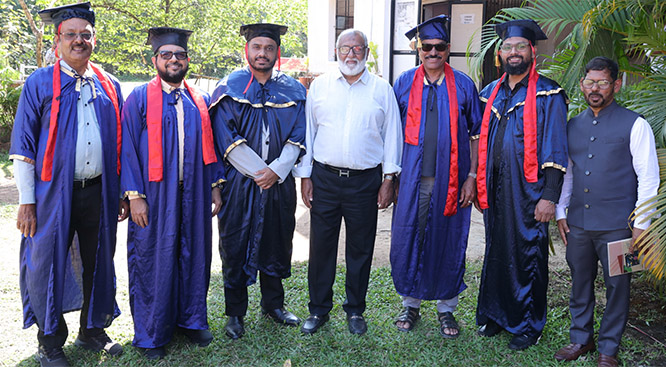
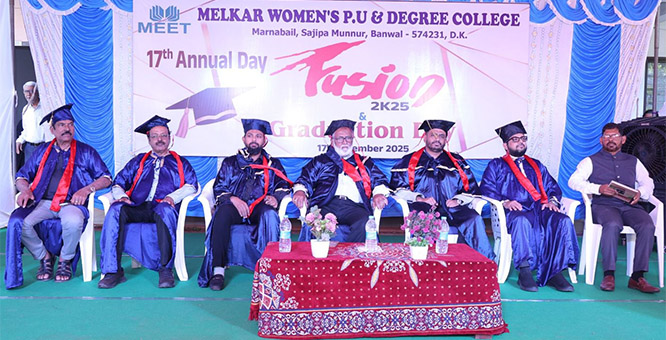
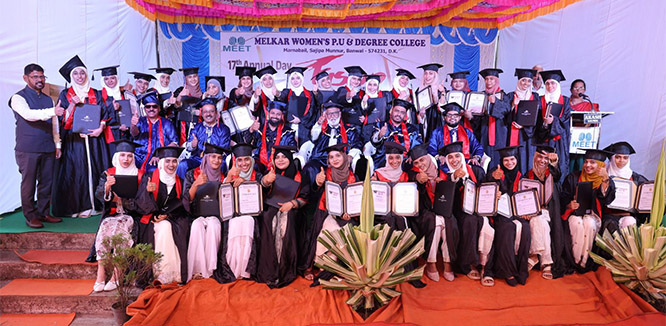
Melkar, Dec 17: The 17th Annual Day and Graduation Ceremony of Melkar Women’s PU and Degree College, themed “Fusion-2K25,” was celebrated with dignity and enthusiasm, marking a significant milestone in the institution’s academic journey. The programme reflected the college’s steadfast commitment to academic excellence, character building, and the holistic development of students.

The event was inaugurated by Mr. Asif Mohammed, whose presence greatly enriched the occasion. The celebration was further graced by the chief guests Mr. P. B. Ahmed Mudassir and Mr. Nissar Fakeer Mohammed, along with the distinguished guests of honour Mr. B. A. Nazeer and Mr. Ibrahim Gadiyar. In their inspiring addresses, the guests encouraged the graduating students and appreciated the dedicated efforts of the management, faculty, and students.

The annual report was presented by the Principal, Mr. Abdul Majeed S, highlighting the institution’s academic progress, notable achievements, and extracurricular accomplishments during the academic year.

The presidential address was delivered by the esteemed Chairman of Melkar Women’s PU and Degree College, Dr. Haji S. M. Rasheed, who emphasized the vital role of education in empowering women and shaping responsible citizens. He also stressed the importance of discipline, dedication, and perseverance in achieving success.

Cultural programmes and academic recognitions formed an integral part of the celebration, showcasing the talents and achievements of the students. The graduation ceremony was a proud moment for the outgoing students as they were formally conferred degrees and wished success in their future endeavours.

Ms. Mashmooma Fathima served as the Master of Ceremonies. The welcome address was delivered by Ms. Fathima Nida, and the programme concluded with a vote of thanks proposed by Ms. Ayisha Suhana.

The event successfully achieved its objectives and was highly appreciated by the guests and attendees.

melkar3.jpg

melkar2.jpg

Comments

Add new comment

  • Coastaldigest.com reserves the right to delete or block any comments.
  • Coastaldigset.com is not responsible for its readers’ comments.
  • Comments that are abusive, incendiary or irrelevant are strictly prohibited.
  • Please use a genuine email ID and provide your name to avoid reject.
News Network
December 13,2025

New Delhi: School-going children are picking up drug and smoking habits and engaging in consumption of alcohol, with the average age of introduction to such harmful substances found to be around 13 years, suggesting a need for earlier interventions as early as primary school, a multi-city survey by AIIMS-Delhi said.

The findings also showed substance use increased in higher grades, with grade XI/XII students two times more likely to report use of substances when compared with grade VIII students. This emphasised the importance of continued prevention and intervention through middle and high school.

The study led by Dr Anju Dhawan of AIIMS's National Drug Dependence Treatment Centre, published in the National Medical Journal of India this month, looks at adolescent substance use across diverse regions.

The survey included 5,920 students from classes 8, 9, 11 and 12 in urban government, private and rural schools across 10 cities -- Bengaluru, Chandigarh, Delhi, Dibrugarh, Hyderabad, Imphal, Jammu, Lucknow, Mumbai, and Ranchi. The data were collected between May 2018 and June 2019.

The average age of initiation for any substance was 12.9 (2.8) years. It was lowest for inhalants (11.3 years) followed by heroin (12.3 years) and opioid pharmaceuticals (without prescription; 12.5 years).

Overall, 15.1 per cent of participants reported lifetime use, 10.3 per cent reported past year use, and 7.2 per cent reported use in the past month of any substance, the study found.

The most common substances used in the past year, after tobacco (4 per cent) and alcohol (3.8 per cent), were opioids (2.8 per cent), followed by cannabis (2 per cent) and inhalants (1.9 per cent). Use of non-prescribed pharmaceutical opioids was most common among opioid users (90.2 per cent).

On being asked, 'Do you think this substance is easily available for a person of your age' separately for each substance category, nearly half the students (46.3 per cent) endorsed that tobacco products and more than one-third of the students (36.5 per cent) agreed that a person of their age can easily procure alcohol products.

Similarly, for Bhang (21.9 per cent), ganja/charas (16.1 per cent), inhalants (15.2 per cent), sedatives (13.7 per cent), opium and heroin (10 per cent each), the students endorsed that these can be easily procured.

About 95 per cent of the children, irrespective of their grade, agreed with the statement that 'drug use is harmful'.

The rates of substance use (any) among boys were significantly higher than those of girls for substance use (ever), use in the past year and use in the past 30 days. Compared to grade VIII students, grade IX students were more likely, and grade XI/XII students were twice as likely to have used any substance (ever).

The likelihood of past-year use of any substance was also higher for grade IX students and for grade XI/XII students as compared to grade VIII students.

About 40 per cent of students mentioned that they had a family member who used tobacco or alcohol each. The use of cannabis (any product) and opioid (any product) by a family member was reported by 8.2 per cent and 3.9 per cent of students, respectively, while the use of other substances, such as inhalants/sedatives by family was 2-3 per cent, the study found.

A relatively smaller percentage of students reported use of tobacco or alcohol among peers as compared to among family members, while a higher percentage reported inhalants, sedatives, cannabis or opioid use among peers.

Children using substances (past year) compared to non-users reported significantly higher any substance use by their family members and peers.

There were 25.7 per cent students who replied 'yes' to the question 'conflicts/fights often occur in your family'. Most students also replied affirmatively to 'family members are aware of how their time is being spent' and 'damily members are aware of with whom they spend their time'.

Comments

Add new comment

  • Coastaldigest.com reserves the right to delete or block any comments.
  • Coastaldigset.com is not responsible for its readers’ comments.
  • Comments that are abusive, incendiary or irrelevant are strictly prohibited.
  • Please use a genuine email ID and provide your name to avoid reject.
News Network
December 7,2025

Mangaluru, Dec 7: A 34-year-old fruit and vegetable trader in Mangaluru has reportedly lost ₹33.1 lakh after falling victim to an online investment scam run through a fake mobile app.

Police said the scam began in September, when the victim received a link on Facebook. Clicking it connected him to a WhatsApp number, where an unidentified person introduced a high-return investment scheme and instructed him to download an app.

To build trust, the fraudster asked him to invest ₹30,000 on September 24. The trader soon received ₹34,000 as “profit,” convincing him the scheme was genuine. Over the next two months, he transferred money in multiple instalments via Google Pay and IMPS to different scanner codes and bank accounts shared by the scammers. Between September 24 and December 3, he ended up sending a total of ₹33.1 lakh.

When he later requested a refund of his investment and promised returns, the scammers demanded additional payments, claiming he needed to pay a “service tax” first. Even after he paid a small amount, no money was returned, and the scammers continued pressuring him for more.

A case has been registered at the CEN Crime Police Station.

Comments

Add new comment

  • Coastaldigest.com reserves the right to delete or block any comments.
  • Coastaldigset.com is not responsible for its readers’ comments.
  • Comments that are abusive, incendiary or irrelevant are strictly prohibited.
  • Please use a genuine email ID and provide your name to avoid reject.