WhatsApp Pay may put Indian digital banking at risk: Experts

Agencies
November 8, 2019

After WhatsApp accounts of 121 Indians were compromised by the Israeli spyware Pegasus, experts have warned that the payment feature the Facebook-owned platform is planning to launch in India may put the digital banking system at risk.

"WhatsApp payment needs to be seen with microscopic eye, primarily because in payment you will be dealing with sensitive personal data and cyber security is going to be an essential building block component for WhatsApp to demonstrate its due diligence," Pavan Duggal, one of the nation's top cyber law experts, told IANS.

The Ministry of Electronics and Information Technology (Meity) has already expressed dissatisfaction over the manner WhatsApp communicated about the compromised accounts.

The piece of NSO Group software called Pegasus allegedly exploited WhatsApp's video calling system by installing the spyware via missed calls to snoop on 1,400 users globally. The devices were compromised with just a WhatsApp video call.

In May, WhatsApp, which has 400 million users in India, urged its 1.5 billion global users to upgrade the app after discovering the vulnerability.

"WhatsApp's recent operations have shown that it's difficult for the government to get information from it. WhatsApp is an intermediary under the Information Technology Act and is mandated to exercise due diligence under the law. But it has failed to do due diligence," Duggal said.

"You should not be in a hurry to grant new licences or permission to WhatsApp without being satisfied with its adherence to cyber-security norms, international best practices and Indian laws," he said.

The Facebook-owned company is learnt to have countered the government charge that it didn't inform it about a privacy breach on the messaging platform. WhatsApp didn't even comply with the data breach notification law in India, Duggal said.

"It (WhatsApp) didn't follow reasonable security practices as mandated in Section 43A of the IT Act, 2000. In fact, it abetted the crime of un-authorised access too. Granting WhatsApp pay licence should be given a second thought by the Reserve Bank of India," said Prashant Mali, cyber lawyer at Bombay High Court.

In light of the recent hack, the government, the RBI and the National Payments Corporation of India (NPCI) is reportedly evaluating the risk of allowing social media apps into the digital payment ecosystem.

"With the government, the RBI and the NPCI planning to evaluate the risks involved in making payments via social media apps and services, the security of the UPI payment infrastructure on WhatsApp Pay has been rendered under a cloud of vulnerability," said Salman Waris, Managing Partner at TechLegis Advocates & Solicitors, a law firm.

The RBI revealed in an affidavit in the Supreme Court earlier that WhatsApp had not complied with the data localisation norms. In an April 2018 circular, the RBI stated that the data of any payment banking system have to physically located in India.

"The history of WhatsApp has shown that it's not cooperative with the government in sharing of information. If financial information is compromised, it will not only have an impact on users, but it can also have an impact on the sovereignty and security of India," Duggal said.

The government must go slow till the time WhatsApp demonstrates compliance to Indian law and showed that the platform was secure, he said.

"Because almost every phone user in India is on WhatsApp, it's all the more important for the government and the RBI to ensure that WhatsApp not only complies with the parametres of cyber security and data localisation norms, but also the IT Act and the rules and regulations thereunder.

"If WhatsApp doesn't comply with the data localisation norms, rules and regulations of the IT Act, then there is no question of granting new permission," Duggal said.

In a statement, a WhatsApp spokesperson said that safety and security of users remains the platform's highest priority.

"In May, our security team caught and stopped a cyber attack designed to send malware to mobile devices. Unable to break end-to-end encryption, this kind of malware abuses vulnerabilities within the underlying operating systems that power our mobile phones," the WhatsApp spokesperson said.

"Technology companies are constantly working to stay ahead of these kind of challenges through updates and patches. The safety and security of our users remains our highest priority, which is why in May we blocked the attack and have taken action in the courts to hold NSO accountable," the statement added.

Facebook filed a lawsuit against Israel's NSO Group last month. According to Facebook, the NSO Group violated laws, including the US Computer Fraud and Abuse Act.

Comments

Add new comment

  • Coastaldigest.com reserves the right to delete or block any comments.
  • Coastaldigset.com is not responsible for its readers’ comments.
  • Comments that are abusive, incendiary or irrelevant are strictly prohibited.
  • Please use a genuine email ID and provide your name to avoid reject.
News Network
January 20,2026

DGP.jpg

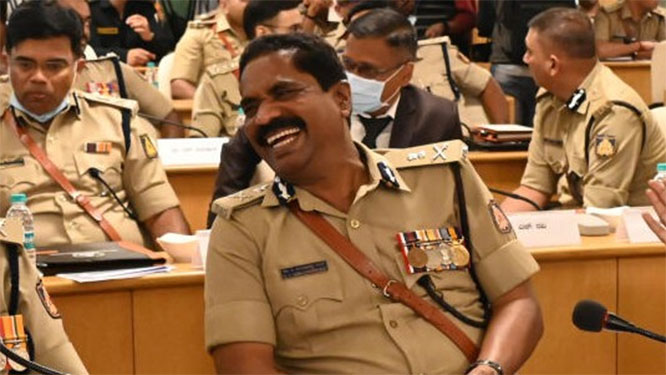
Karnataka DGP (Civil Rights Enforcement) K Ramachandra Rao was suspended with immediate effect, as per a state government order issued on Monday, 19 January. The order cited conduct unbecoming of a government servant and causing embarrassment to the state administration.

The Karnataka government suspended Rao after a purported video showed him in a compromising position with a woman inside his official chamber. The video went viral on social media. Rao rejected the videos outright, terming them "fabricated and false".

Who is K Ramachandra Rao?

Rao is a DGP-rank officer who was heading the Directorate of Civil Rights Enforcement until his suspension. He was promoted to DGP in September 2023 and assumed office in October 2023, the Sunday Guardian reported.

He also served as the Chairman and Managing Director of the Karnataka State Police Housing and Infrastructure Development Corporation Limited.

His stint as the Inspector General of Police (IGP) for the Southern Range was also marred by controversy. In 2014, during a cash seizure near Mysuru’s Yelwal, officials claimed the seized amount was ₹20 lakh, while the accused (Kerala-based merchants) claimed it was around ₹2.27 crore.

Rao, who was present during the seizure, denied all allegations. However, he was transferred soon after.

Allegations of collusion with a businessman surfaced, and a senior police officer was quoted by The Sunday Guardian as saying, “In Rao’s case, the CID has clearly mentioned that there was a great degree of lapse on the part of Rao and a deputy superintendent of police after it was brought to their notice that a few policemen, including a gunman attached to the IGP, were involved in the robbery.”

Rao had denied all wrongdoing in that incident. Despite past controversies, he rose to the state’s top police position, the Sunday Guardian reported.

Ranya Rao’s stepfather

Rao is the stepfather of Kannada actress Harshavardhini Ranya alias Ranya Rao, accused of orchestrating the illegal import of gold worth over ₹12.56 crore from Dubai to India along with two others — businessman Tarun Raju, and jewellery dealer Sahil Jain.

‘Obscene video’ controversy

A viral video showed Rao behaving inappropriately with a woman inside his office while in uniform.

The Karnataka government said in its Monday order that “vide videos and news reports widely broadcast on public news channels and media platforms, it is observed that Dr K Ramachandra Rao has acted in an obscene manner which is unbecoming of a Government Servant and also causing embarrassment to the Government.”

The order said the matter was examined by the state government, which found that the officer's conduct amounted to a violation of Rule 3 of the All India Services (Conduct) Rules, 1968.

The government said it is prima facie satisfied that "it is necessary to place Rao under suspension with immediate effect, pending inquiry".

During the suspension period, Rao will be entitled to subsistence allowance as per Rule 4 of the All India Services (Discipline and Appeal) Rules, 1969.

The order also places restrictions on his movement, stating that during the period of suspension, the officer must not leave headquarters under any circumstances without the written permission of the state government.

Comments

Add new comment

  • Coastaldigest.com reserves the right to delete or block any comments.
  • Coastaldigset.com is not responsible for its readers’ comments.
  • Comments that are abusive, incendiary or irrelevant are strictly prohibited.
  • Please use a genuine email ID and provide your name to avoid reject.
News Network
January 23,2026

modIKERALA.jpg

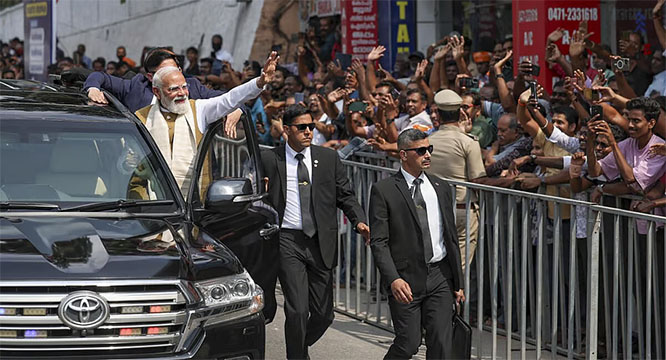
Prime Minister Narendra Modi, during his visit to Thiruvananthapuram on Friday, January 23, indicated that the Bharatiya Janata Party (BJP) is aiming to expand its political footprint in Kerala ahead of the Assembly elections scheduled in the coming months.

Speaking at a BJP-organised public meeting, Modi drew parallels between the party’s early electoral gains in Gujarat and its recent victory in the Thiruvananthapuram Municipal Corporation. The civic body win, which ended decades of Left control, was cited by the Prime Minister as a possible starting point for the party’s broader ambitions in the state.

Recalling BJP’s political trajectory in Gujarat, Modi said the party was largely insignificant before 1987 and received little media attention. He pointed out that the BJP’s first major breakthrough came with its victory in the Ahmedabad Municipal Corporation that year.

“Just as our journey in Gujarat began with one city, Kerala’s journey has also started with a single city,” Modi said, suggesting that the party’s municipal-level success could translate into wider electoral acceptance.

The Prime Minister alleged that successive governments led by the Left Democratic Front (LDF) and the United Democratic Front (UDF) had failed to adequately develop Thiruvananthapuram. He accused both fronts of corruption and neglect, claiming that basic infrastructure and facilities were denied to the capital city for decades.

According to Modi, the BJP’s control of the civic body represents a shift driven by public dissatisfaction with the existing political alternatives. He asserted that the BJP administration in Thiruvananthapuram had begun working towards development, though no specific details or timelines were outlined.

Addressing the gathering at Putharikandam Maidan, Modi said the BJP intended to project Thiruvananthapuram as a “model city,” reiterating his party’s commitment to governance-led change.

The Prime Minister’s visit to Kerala also included the inauguration of several development projects and the flagging off of new train services, as the BJP intensifies its political outreach in the poll-bound state.

Comments

Add new comment

  • Coastaldigest.com reserves the right to delete or block any comments.
  • Coastaldigset.com is not responsible for its readers’ comments.
  • Comments that are abusive, incendiary or irrelevant are strictly prohibited.
  • Please use a genuine email ID and provide your name to avoid reject.