



Ahmedabad, May 27: The World Health Organisation (WHO) has confirmed three cases of Zika virus, including a pregnant woman, reported from Gujarat's Ahmedabad, the first in the country.
All the cases are from the Bapunagar area of the city.
"The Ministry of Health and Family Welfare - Government of India (MoHFW) reported three laboratory-confirmed cases of Zika virus disease in Bapunagar area, Ahmedabad District, Gujarat, State, India," the global health body said in a statement.
However, the WHO did not recommend any travel or trade restriction to India based on the current information available.
According to the statement, the routine surveillance detected a laboratory-confirmed case of Zika virus disease through RT-PCR test at B J Medical College in Ahmedabad.
This was further confirmed at the national reference laboratory at the National Institute of Virology (NIV) in Pune on January 4 this year.
WHO said two additional cases were then identified through the Acute Febrile Illness (AFI) and the Antenatal clinic (ANC) surveillance.
Between February 10-16 in 2016, a total 93 blood samples were collected at BJ Medical College (BJMC) out of which one sample from a 64-year-old male had tested positive for Zika virus.
"This was first Zika positive case reported through AFI surveillance from Gujarat," the statement said.
Also, a 34-year-old woman delivered a baby at BJMC on November 9 and during her stay in the hospital she developed a low-grade fever after delivery.
The woman had no history of fever during pregnancy and had no history of travel for three months.
A sample from the patient was referred to the Viral Research and Diagnostic Laboratory (VRDL) for dengue testing and was found to be positive for the virus.
"She was discharged after one week (on 16 November, 2016). The sample was re-confirmed as Zika virus positive at NIV," the statement said.
Besides, a 22-year-old pregnant woman in her 37th week of pregnancy was tested positive for Zika virus disease at the same hospital.
The Indian government had confirmed these cases and had sent the details of the patients to the WHO in March after which the global health body's confirmation in these cases came today, a ministry official said.
As per the WHO statement, immediately after the cases were reported, the Health ministry had shared the national guidelines and action plan on Zika virus disease have been shared with the states to prevent an outbreak of the disease and containment of spread in case of any outbreak.
It also constituted an inter-ministerial task force.
Meanwhile, a technical group tasked to monitor emerging and re-emerging diseases regularly reviewed the global situation on Zika virus disease.
All the international airports and ports have displayed information for travellers on Zika virus disease while the airport health officers along with airport organisations, the National Centre for Disease Control and the National Vector Borne Disease Control Programme are monitoring appropriate vector control measures in airport premises.
In addition to NIV and NCDC in Delhi, 25 laboratories have also been strengthened by Indian Council of Medical Research for laboratory diagnosis, while three entomological laboratories are conducting Zika virus testing on mosquito samples.
"The Indian Council of Medical Research (ICMR) has tested 34,233 human samples and 12,647 mosquito samples for the presence of Zika virus. Among those, close to 500 mosquitoes samples were collected from Bapunagar area, Ahmedabad district, in Gujarat, and were found negative for Zika.
"The Rashtriya Bal Swasthya Karyakram (RBSK) is monitoring microcephaly from 55 sentinel sites. As of now, no increase in number of cases or clustering of microcephaly has been reported from these centers," the WHO said.
While coming out with the report, the WHO said it assumes significance as it describes the first cases of Zika virus infections and provides evidence on its circulation in India.
"These findings suggest low level transmission of Zika virus and new cases may occur in the future," it said, while stressing on strengthening surveillance to better characterise the intensity of the viral circulation and geographical spread and monitor Zika virus related complications.
"Zika virus is known to be circulating in South East Asia Region and these findings do not change the global risk assessment. WHO encourages member states to report similar findings to better understand the global epidemiology of Zika virus," the statement said.
The risk of further spread of Zika virus to areas where the competent vectors, the aedes mosquitoes, are present is significant given the wide geographical distribution of these mosquitoes in various regions of the world.
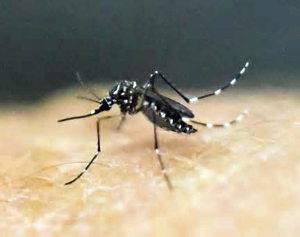
Zika virus disease is caused by a virus transmitted primarily by Aedes mosquitoes. People with Zika virus can have symptoms including mild fever, skin rash, conjunctivitis, muscle and joint pain, malaise or headache. These symptoms normally last for 2-7 days.
WHO continues to monitor the epidemiological situation and conduct risk assessment based on the latest available information, it said.

Comments
Add new comment