Women groups raise 10 concerns in Triple Talaq Bill

Agencies
December 28, 2018

New Delhi,  Dec 28: A group of 40 women rights activists has opposed the Muslim Women (Protection of Rights on Marriage) Bill, 2018, in its present form, raising concerns over 10 points in the Bill which was passed by the Lok Sabha Thursday.
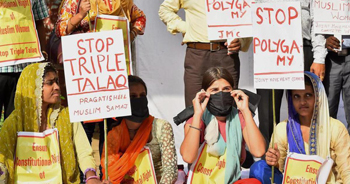
In a statement, they urged the government to withdraw the Bill from consideration in the Rajya Sabha, and review the fundamental flaws pending broad-based community consultations.

Following are the 10 concerns raised by the activists:

1. This Bill disregards the fact that its very objective - to protect the rights of married Muslim women and prohibit divorce by pronouncing 'talaq' by their husband - has already been achieved by the judgement of the Supreme Court.

2. The Supreme Court in Shayara Bano's case held that the practice of 'talaq-e-bidat' is manifestly arbitrary, and therefore, unconstitutional. An act that has no legal consequences being made a criminal offence, cognizable and non-bailable is manifestly arbitrary and therefore, violative of Article 14.

3. There is no rationale to criminalise the practice of talaq-e-biddat and imprison Muslim men. The effect of the Supreme Court's judgment is that the marriage is legally valid and the persons continue to be lawfully wedded. Now, the Muslim men will be incarcerated, thus violating the rights of conjugality of these two persons. Criminalising the husband would also lead to unwanted separation between the couple, against the wishes of the wife.

4. Since Muslim marriage is a civil contract between two adult persons, the procedures to be followed on its breakdown should also be of civil nature. Penal action to discourage the practice of instant triple talaq is a myopic view as it leaves many other issues of economic and social security of women unaddressed.

5. The government should strengthen the negotiating capacities of women by providing them economic and socio-legal support rather than criminalising the pronouncement of triple talaq.

6. The pronouncement of triple talaq having no legal consequences on the marriage means that such a proclamation by a Muslim man is essentially a desertion of the wife. In any of the Personal Laws, the desertion of wife by a man is not a criminal offence. Therefore, while the Bill aims to criminalise the pronouncement of talaq, in effect, it is only criminalising the act of desertion of a Muslim wife by her husband. Criminalising desertion by Muslim men, which constitutes only a civil offence for men of all other religions, is discriminatory under the Constitution.

7. If there is violence within the marriage in addition to the pronouncement of triple talaq, the woman could use the existing provisions of the Protection of Women from Domestic Violence Act, 2005 and Section 498A of the Indian Penal Code. These two laws, taken together, represent a wide spectrum of legal options available for women survivors of domestic violence, encompassing both criminal and civil provisions.

8. No economic and socio-legal support is provided by the government in the Bill to women, children and other dependents, when the erring men are put behind bars. The Domestic Violence Act, 2005 under Section 21 already provides for the aggrieved woman to be provided custody of the child and Section 20 provides for maintenance to be paid to her. Section 125 of the Code of Criminal Procedure, 1973 also provides for maintenance for the aggrieved woman. In fact, the Bill takes a step back in only providing for subsistence allowance for the woman. Subsistence allowance is not defined and is open to interpretation.

9. The Bill allows for the aggrieved woman as well as anyone related to her by blood or marriage to be the complainant. There is no provision for a relative to seek the consent of an aggrieved woman before filing a complaint. The problem becomes particularly acute in the case of inter-religious marriages of Muslim men with a woman of another religion.

10. The terms of imprisonment up to three years is arbitrary and excessive. Serious crimes like Causing death by rash or negligent act (IPC Sec 304A), Rioting (IPC Sec 147), Injuring or defiling place of worship with intent to insult the religion of any class (IPC Sec 295) - all punishable by two years in jail or fine or both. All these criminal acts have lesser punishment than pronouncing triple talaq, which is arbitrary and excessive, and violative of Article 14 of the Constitution.

The statement was signed by 40 activists and women's groups, including Ayesha Kidwai of Jawaharlal Nehru University, Kavita Krishnan of All India Progressive Women's Association (AIPWA), Shabanam Hashmi, Anhad and groups like Bebaak Collective, National Alliance of People's Movements (NAPM), Humsafar Support Centre, Kashmir women's collective, Mahila Sarvangeen Utkarsh Mandal (MASUM), People's Union for Civil Liberties (PUCL), Women's Research & Action Group among others.

The Lok Sabha Thursday passed the Bill which criminalises the practice of instant triple talaq, with the government rejecting the contention that it was aimed at targeting a particular community.

The Muslim Women (Protection of Rights on Marriage) Bill, 2018 was passed by the Lower House with 245 voting in favour and 11 opposing the legislation.

Comments

Add new comment

  • Coastaldigest.com reserves the right to delete or block any comments.
  • Coastaldigset.com is not responsible for its readers’ comments.
  • Comments that are abusive, incendiary or irrelevant are strictly prohibited.
  • Please use a genuine email ID and provide your name to avoid reject.
News Network
December 6,2025

indigoticket.jpg

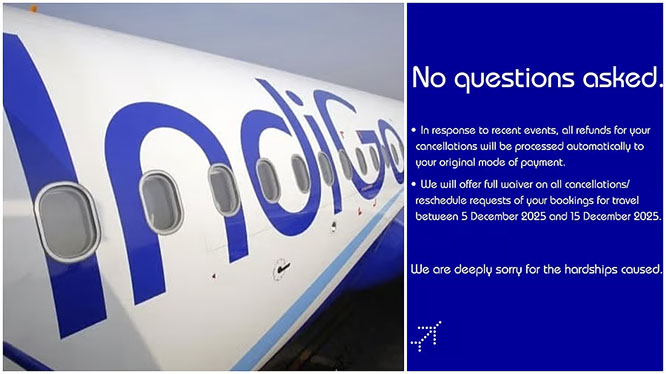
With IndiGo flight disruptions impacting thousands of passengers, the airline on Saturday said that it will offer full waiver on all cancellations/reschedule requests for travel bookings between December 5, 2025 and December 15, 2025.

Earlier in the day, the civil aviation ministry had directed the airline to complete the ticket refund process for the cancelled flights by Sunday evening, as well as ensure baggage separated from the travellers are delivered in the next two days.

In a post on X, titled 'No questions asked', IndiGo wrote, "In response to recent events, all refunds for your cancellations will be processed automatically to your original mode of payment."

"We are deeply sorry for the hardships caused," it further added.

Several passengers, however, complained of not getting full refund as promised by the airline.

Netizens have shared screenchots of getting charged for airline cancellation fee and convenience fee.

"Please tell me why u have did this airline cancellation charges when u say full amount will be refunded (sic)," a user wrote sharing a screenshot of the refund page.

"Well, but you have still debited the convenience charges," wrote another.

Passengers have also raised concerns about the "cancel" option being disabled on the IndiGo app. "First enable the 'Cancel' button on your App & offer full refund on tickets cancelled by customers between the said dates," wrote a user.

A day after the country's largest airline, IndiGo, cancelled more than 1,000 flights and caused disruptions for the fifth day on Saturday, the ministry said that any delay or non-compliance in refund processing will invite immediate regulatory action.

The refund process for all cancelled or disrupted flights must be completed by 8 pm on Sunday, the ministry said in a statement.

"Airlines have also been instructed not to levy any rescheduling charges for passengers whose travel plans were affected by cancellations," it said.

On Saturday, more than 400 flights were cancelled at various airports.

IndiGo has also been instructed to set up dedicated passenger support and refund facilitation cells.

Comments

Add new comment

  • Coastaldigest.com reserves the right to delete or block any comments.
  • Coastaldigset.com is not responsible for its readers’ comments.
  • Comments that are abusive, incendiary or irrelevant are strictly prohibited.
  • Please use a genuine email ID and provide your name to avoid reject.
News Network
December 16,2025

jordan.jpg

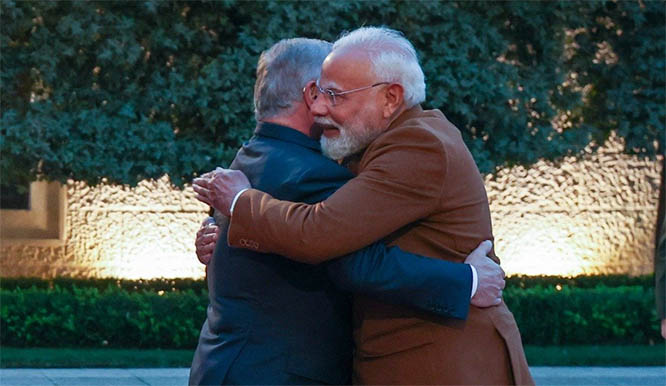
Prime Minister Narendra Modi on Monday held talks with Jordan’s King Abdullah II in Amman, during which the two leaders discussed ways to further strengthen bilateral relations, with the Prime Minister outlining an eight-point vision covering key areas of cooperation.

Describing the meeting as “productive”, PM Modi said he shared a roadmap focused on trade and economy, fertilisers and agriculture, information technology, healthcare, infrastructure, critical and strategic minerals, civil nuclear cooperation, and people-to-people ties.

In a post on social media platform X, the Prime Minister praised King Abdullah II’s personal commitment to advancing India–Jordan relations, particularly as both countries mark the 75th anniversary of the establishment of diplomatic ties this year.

“Held productive discussions with His Majesty King Abdullah II in Amman. His personal commitment towards vibrant India-Jordan relations is noteworthy. This year, we are celebrating the 75th anniversary of our bilateral diplomatic relations,” PM Modi said.

The meeting took place at the Al Husseiniya Palace, where the two leaders also exchanged views on regional and global issues of mutual interest. According to the Ministry of External Affairs (MEA), both sides agreed to further deepen cooperation in areas including trade and investment, defence and security, counter-terrorism and de-radicalisation, fertilisers and agriculture, infrastructure, renewable energy, tourism, and heritage.

The MEA said both leaders reaffirmed their united stand against terrorism.

PM Modi arrived in Amman earlier on Monday and was received by Jordanian Prime Minister Jafar Hassan, who accorded him a formal welcome. Following the talks, King Abdullah II hosted a banquet dinner in honour of the Prime Minister, reflecting the warmth of bilateral ties.

Jordan is the first leg of PM Modi’s three-nation tour. From Amman, the Prime Minister will travel to Ethiopia at the invitation of Prime Minister Abiy Ahmed Ali, marking his first official visit to the African nation. The tour will conclude with a visit to Oman.

Comments

Add new comment

  • Coastaldigest.com reserves the right to delete or block any comments.
  • Coastaldigset.com is not responsible for its readers’ comments.
  • Comments that are abusive, incendiary or irrelevant are strictly prohibited.
  • Please use a genuine email ID and provide your name to avoid reject.
News Network
December 16,2025

jordan.jpg

Prime Minister Narendra Modi on Monday held talks with Jordan’s King Abdullah II in Amman, during which the two leaders discussed ways to further strengthen bilateral relations, with the Prime Minister outlining an eight-point vision covering key areas of cooperation.

Describing the meeting as “productive”, PM Modi said he shared a roadmap focused on trade and economy, fertilisers and agriculture, information technology, healthcare, infrastructure, critical and strategic minerals, civil nuclear cooperation, and people-to-people ties.

In a post on social media platform X, the Prime Minister praised King Abdullah II’s personal commitment to advancing India–Jordan relations, particularly as both countries mark the 75th anniversary of the establishment of diplomatic ties this year.

“Held productive discussions with His Majesty King Abdullah II in Amman. His personal commitment towards vibrant India-Jordan relations is noteworthy. This year, we are celebrating the 75th anniversary of our bilateral diplomatic relations,” PM Modi said.

The meeting took place at the Al Husseiniya Palace, where the two leaders also exchanged views on regional and global issues of mutual interest. According to the Ministry of External Affairs (MEA), both sides agreed to further deepen cooperation in areas including trade and investment, defence and security, counter-terrorism and de-radicalisation, fertilisers and agriculture, infrastructure, renewable energy, tourism, and heritage.

The MEA said both leaders reaffirmed their united stand against terrorism.

PM Modi arrived in Amman earlier on Monday and was received by Jordanian Prime Minister Jafar Hassan, who accorded him a formal welcome. Following the talks, King Abdullah II hosted a banquet dinner in honour of the Prime Minister, reflecting the warmth of bilateral ties.

Jordan is the first leg of PM Modi’s three-nation tour. From Amman, the Prime Minister will travel to Ethiopia at the invitation of Prime Minister Abiy Ahmed Ali, marking his first official visit to the African nation. The tour will conclude with a visit to Oman.

Comments

Add new comment

  • Coastaldigest.com reserves the right to delete or block any comments.
  • Coastaldigset.com is not responsible for its readers’ comments.
  • Comments that are abusive, incendiary or irrelevant are strictly prohibited.
  • Please use a genuine email ID and provide your name to avoid reject.