



New Delhi, Mar 5: Despite several success stories, Indian women continue to be bogged down by the dual problems of violence and denial of access to resources, remaining largely deprived of the coveted status of "equality", activists say.
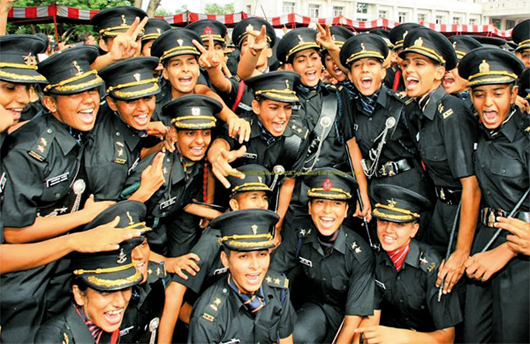
Some of these activists feel that women in the country remain "second-grade" citizens who have made little progress despite constitutional guarantees of equality.
Apart from brutal crimes like the horrific December 16 gang-rape of a young woman in 2012, women face some kind of violence every day of their lives in India.
According to the National Crime Records Bureau, a staggering 309,546 crimes against women were reported in 2013, which included 33,707 rapes and 5,188 cases of kidnapping and abduction.
"Whether it is the declining child-sex ratio or increased incidents of rape and domestic violence, Indian women are facing the brunt of violence unleashed by a patriarchal society which has refused to attune itself to changing times," Shonali Khan, CEO of NGO Breakthrough, which works on women issues said.
"Indian women today are both looking forward and backward. We might have had women presidents, prime ministers and top corporate honchos, but as far as the masses are concerned, their lot remains the same," she said.
Khan singled out violence against women as the biggest factor holding them back."Rape, domestic violence, female foeticide...are all forms of violence unleashed against women," she said.
Renu Mishra, a woman's rights activist and lawyer based in Lucknow said: "There has been a change in women's status, but the change has not been in accordance with the rights enshrined for us in the constitution."
She contended that "women in India have remained second-grade citizens", adding: "Though women are more visible, there is no equality."
All activists singled out gender-based sex selection as a manifestation of all that is fundamentally wrong with Indian society when it comes to women.
Said Mishra: "Without a change in the mindset of a patriarchal society, where dowry is very much in vogue, we as a country have veered towards liberalisation. This is providing people with increased access to technology."
As per census 2011, the child-sex ratio has shown a decline from 927 females per 1,000 males in 2001 to 918 females per 1,000 males in 2011.
Rakhi Badhwar, an activist who works with Jaipur's Centre for Advocacy and Research, told IANS: "The first issue which we have to discuss is the declining sex-ratio. If they (the girls) can't survive, then the other issues come much later."
Asha Ramesh, a women's rights activist based in Bangalore, said though there is enough legislation, it is the mindset of people which is to blame.
"The incentives being given by the government for the girl child are very cosmetic in nature and do not address fundamental issues," Ramesh said.
Flagging rape as another manifestation of violence against women, she said violence like this has been increasing.
"This I will categorize as backlash violence. As women are getting more assertive, they are being meted out this kind of violence to stop them."
The activist said though the government has brought in enough legislation to address the issue, it is the mindset that has to change.
"More and more women joining the work force has made them a source of cheap labour," Ramesh said, adding that the end result of economic empowerment has been that women have got jobs in places like the garment industry, where there are not even enough toilets.
According to the International Labour Organization (ILO), around 58 percent of female children in India go without any medical aid as against 31 percent of male children.
Incidence of disease morbidity based on deficiencies and infection are generally more for the female child.
The mortality percentage of females is always higher than that of males in both rural and urban areas.
Even the nutritional status of the children in Punjab, the richest Indian state, clearly indicates that only 20 percent of female children, against 40 percent of male children, could acquire normal nutritional status.
Similarly 35 percent of female children have been found with moderate malnutrition as against 20 percent of the male children.
According to Shonali Khan, the only way to give women some power was to make resources available to them.
"Women should be given right to property and land. This will empower them and include them in the decision making process," she said.

Comments
Add new comment