



Work unitedly to realise Abdul Kalam’s dream of developed India: Modi

Agencies
July 27, 2017

Rameswaram, Jul 27: Prime Minister Narendra Modi on Thursday urged the people to work together to fulfil former president A P J Abdul Kalam’s dream of seeing a developed India by 2022 when it celebrates its 75th Independence Day. “There are 125 crore people and if each one takes one step, then the country would be 125 crore steps ahead,” he told a public meeting near this island, the home town of the late ‘Missile Man’, after inaugurating his national memorial.

narendra

Various schemes launched by central government whether it was “Stand up India or Start up India, ‘Amrut’ cities or smart cities or Clean India projects would go a long way in realising Kalam’s dream of “developed India”, he said. In a reference to epic ‘Ramayana’, Modi said even a small squirrel had helped Lord Ram in constructing the ‘Ramasethu’ (bridge) for him to cross over to Sri Lanka.

“If people are committed like that squirrel, the country can scale great heights,” Modi said addressing a gathering at Mandapam, about 15 kms from Rameswaram. He urged the youth and pilgrims visiting this holy town to include a visit to Kalam’s memorial, designed and built by the Defence Research and Development Organisation (DRDO) with which the former president was associated with for a long time.

Modi heaped praise on labourers involved in the construction of the memorial, saying they had not charged for the extra two hours they had put in every day. After sweating it out from 8 AM to 5 PM, they would later take a break for one hour and put in two additional man hours. They had refused payment for these extra two hours, saying it was their way of contributing towards the memory of Kalam, Modi said, adding this deserved a standing ovation.

The audience was immediately on its feet applauding the the labourers, architects and workers who had toiled in raising the structure. Paying rich tributes to Kalam, whose second death anniversary was observed, Modi said the former president continues to inspire crores of countrymen. “People from every corner of the country come here (mostly on pilgrimage). I urge them, the tour operators and youth — whenever you come here, add to your programme a visit to this memorial,” Modi said.

The Prime Minister pointed out that Kalam loved the youths and the students very much, and it was for their benefit that Stand Up and Start Up schemes had been launched. The Mudra bank loan scheme had been launched to provide loans for the youths without any guarantee and it had benefited over eight crore people, including one crore from Tamil Nadu, he said.
A new India and a new Tamil Nadu could be developed with the cooperation of the central and state governments, he said. Ten cities in the state had been chosen for the smart city project and 33 towns for development under the AMRUT (Atal Mission for Rejuvenation and Urban Transformation) scheme, he said.
The central government had allocated Rs.900 crore for the Smart City and Rs.4,700 crore for the AMRUT scheme, he said the latter would ensure availability of better power, water, sanitation and other essential infrastructure. The Prime Minister hoped that the ‘Sagar Mala’ scheme, linking the coastal areas spreading through the country’s 7,500 km coastal line, would bring more investments and benefit people in a big way.

Announcing the launch of deep sea fishing to Rameswaram fishermen under hte Blue Revolution scheme, for which Rs 1,500 crore had been allocated, he said it would help fishermen to get better revenue and at the same time overcome problems relating to the fishing in the Palk Strait. The Prime Minister also flagged off a weekly train to Ayodhya in Uttar Pradesh from Rameswaram.

In order to help the people worship at Ramar Sethu, the mythical bridge believed to have been built by Lord Rama, the Rameswaram-Dhanushkodi road which was destroyed in the devastating cyclone decades ago had been rebuilt. Modi also unveiled synopsis of Green Rameswaram scheme, a pet project of late Kalam, presented by the local Vivekananda Kendra.

He recalled that it was in Rameswaram that Swami Vivekananda placed his first step when he returned from America in 1897. Earlier, after inaugurating the memorial, Modi paid floral tributes to Kalam at his ‘samadhi’. Evincing keen interest in the features of the memorial, which has on display replicas of rockets and missiles on which the late scientist had worked, the Prime Minister viewed it for about 15 minutes.

It has been built at a cost of Rs 15 crore on land alloted by the Tamil Nadu government at Kalam’s village Peikarambu. On the occasion, the Prime Minister also unveiled a wooden statue of Kalam playing the ‘veena’. The former president was adept at playing the musical instrument. The memorial also has about 900 paintings and 200 rare photographs of the late scientist, who held the office of the president from 2002 to 2007.

Modi was accompanied by Tamil Nadu Governor Ch Vidyasagar Rao, Chief Minister K Palaniswami, Union ministers Pon Radhakrishnan, Nirmala Sitharaman and NDA’s vice presidential nominee M Venakaiah Naidu. The prime minister earlier unfurled the national flag at the entrance of the memorial. Later, he interacted with family members of Kalam.

Modi was seen affectionately holding the hands of Kalam’s elder brother A P J Mohamed Muthumeeran Maraikaya.

Comments

Raj
 - 
Friday, 28 Jul 2017

Congrats Sir. May you achieve many more feats in your career. Good luck

Add new comment

  • Coastaldigest.com reserves the right to delete or block any comments.
  • Coastaldigset.com is not responsible for its readers’ comments.
  • Comments that are abusive, incendiary or irrelevant are strictly prohibited.
  • Please use a genuine email ID and provide your name to avoid reject.
News Network
December 13,2025

New Delhi: School-going children are picking up drug and smoking habits and engaging in consumption of alcohol, with the average age of introduction to such harmful substances found to be around 13 years, suggesting a need for earlier interventions as early as primary school, a multi-city survey by AIIMS-Delhi said.

The findings also showed substance use increased in higher grades, with grade XI/XII students two times more likely to report use of substances when compared with grade VIII students. This emphasised the importance of continued prevention and intervention through middle and high school.

The study led by Dr Anju Dhawan of AIIMS's National Drug Dependence Treatment Centre, published in the National Medical Journal of India this month, looks at adolescent substance use across diverse regions.

The survey included 5,920 students from classes 8, 9, 11 and 12 in urban government, private and rural schools across 10 cities -- Bengaluru, Chandigarh, Delhi, Dibrugarh, Hyderabad, Imphal, Jammu, Lucknow, Mumbai, and Ranchi. The data were collected between May 2018 and June 2019.

The average age of initiation for any substance was 12.9 (2.8) years. It was lowest for inhalants (11.3 years) followed by heroin (12.3 years) and opioid pharmaceuticals (without prescription; 12.5 years).

Overall, 15.1 per cent of participants reported lifetime use, 10.3 per cent reported past year use, and 7.2 per cent reported use in the past month of any substance, the study found.

The most common substances used in the past year, after tobacco (4 per cent) and alcohol (3.8 per cent), were opioids (2.8 per cent), followed by cannabis (2 per cent) and inhalants (1.9 per cent). Use of non-prescribed pharmaceutical opioids was most common among opioid users (90.2 per cent).

On being asked, 'Do you think this substance is easily available for a person of your age' separately for each substance category, nearly half the students (46.3 per cent) endorsed that tobacco products and more than one-third of the students (36.5 per cent) agreed that a person of their age can easily procure alcohol products.

Similarly, for Bhang (21.9 per cent), ganja/charas (16.1 per cent), inhalants (15.2 per cent), sedatives (13.7 per cent), opium and heroin (10 per cent each), the students endorsed that these can be easily procured.

About 95 per cent of the children, irrespective of their grade, agreed with the statement that 'drug use is harmful'.

The rates of substance use (any) among boys were significantly higher than those of girls for substance use (ever), use in the past year and use in the past 30 days. Compared to grade VIII students, grade IX students were more likely, and grade XI/XII students were twice as likely to have used any substance (ever).

The likelihood of past-year use of any substance was also higher for grade IX students and for grade XI/XII students as compared to grade VIII students.

About 40 per cent of students mentioned that they had a family member who used tobacco or alcohol each. The use of cannabis (any product) and opioid (any product) by a family member was reported by 8.2 per cent and 3.9 per cent of students, respectively, while the use of other substances, such as inhalants/sedatives by family was 2-3 per cent, the study found.

A relatively smaller percentage of students reported use of tobacco or alcohol among peers as compared to among family members, while a higher percentage reported inhalants, sedatives, cannabis or opioid use among peers.

Children using substances (past year) compared to non-users reported significantly higher any substance use by their family members and peers.

There were 25.7 per cent students who replied 'yes' to the question 'conflicts/fights often occur in your family'. Most students also replied affirmatively to 'family members are aware of how their time is being spent' and 'damily members are aware of with whom they spend their time'.

Comments

Add new comment

  • Coastaldigest.com reserves the right to delete or block any comments.
  • Coastaldigset.com is not responsible for its readers’ comments.
  • Comments that are abusive, incendiary or irrelevant are strictly prohibited.
  • Please use a genuine email ID and provide your name to avoid reject.
News Network
December 21,2025

hadith.jpg

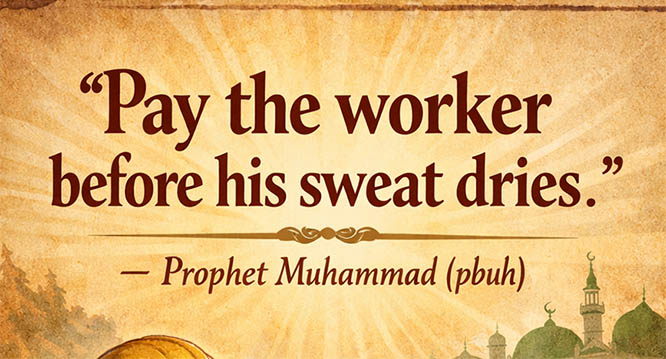
Invoking the teachings of Prophet Muhammad—“pay the worker before his sweat dries”—the Madras High Court has directed a municipal corporation to settle long-pending legal dues owed to a former counsel. The court observed that this principle reflects basic fairness and applies equally to labour and service-related disputes.

Justice G. R. Swaminathan made the observation while hearing a petition filed by advocate P. Thirumalai, who claimed that the Madurai City Municipal Corporation failed to pay him legal fees amounting to ₹13.05 lakh. Earlier, the High Court had asked the corporation to consider his representation. However, a later order rejected a major portion of his claim, prompting the present petition.

The court allowed Thirumalai to approach the District Legal Services Authority (DLSA) and submit a list of cases in which he had appeared. It also directed the corporation to settle the verified fee bills within two months, without interest. The court noted that the petitioner had waited nearly 18 years before challenging the non-payment and that the corporation could not be fully blamed, as the fee bills were not submitted properly.

‘A Matter of Embarrassment’

Justice Swaminathan described it as a “matter of embarrassment” that the State has nearly a dozen Additional Advocate Generals. He observed that appointing too many law officers often leads to unnecessary allocation of work and frequent adjournments, as government counsel claim that senior officers are engaged elsewhere.

He expressed hope that such practices would end at least in the Madurai Bench of the High Court and added that Additional Advocate Generals should “turn a new leaf” from 2026 onwards.

‘Scandalously High Amounts’

While stating that the court cannot examine the exact fees paid to senior counsel or law officers, Justice Swaminathan stressed that good governance requires public funds to be used prudently. He expressed concern over the “scandalously high amounts” paid by government and quasi-government bodies to a few favoured law officers.

In contrast, the court noted that Thirumalai’s total claim was “a pittance” considering the large number of cases he had handled.

Background

Thirumalai served as the standing counsel for the Madurai City Municipal Corporation for more than 14 years, from 1992 to 2006. During this period, he represented the corporation in about 818 cases before the Madurai District Courts.

As the former counsel was unable to hire a clerk to obtain certified copies of judgments in all 818 cases, the court directed the District Legal Services Authority to collect the certified copies within two months. The court further ordered the corporation to bear the cost incurred by the DLSA and deduct that amount from the final settlement payable to the petitioner.

Comments

Add new comment

  • Coastaldigest.com reserves the right to delete or block any comments.
  • Coastaldigset.com is not responsible for its readers’ comments.
  • Comments that are abusive, incendiary or irrelevant are strictly prohibited.
  • Please use a genuine email ID and provide your name to avoid reject.
News Network
December 16,2025

jordan.jpg

Prime Minister Narendra Modi on Monday held talks with Jordan’s King Abdullah II in Amman, during which the two leaders discussed ways to further strengthen bilateral relations, with the Prime Minister outlining an eight-point vision covering key areas of cooperation.

Describing the meeting as “productive”, PM Modi said he shared a roadmap focused on trade and economy, fertilisers and agriculture, information technology, healthcare, infrastructure, critical and strategic minerals, civil nuclear cooperation, and people-to-people ties.

In a post on social media platform X, the Prime Minister praised King Abdullah II’s personal commitment to advancing India–Jordan relations, particularly as both countries mark the 75th anniversary of the establishment of diplomatic ties this year.

“Held productive discussions with His Majesty King Abdullah II in Amman. His personal commitment towards vibrant India-Jordan relations is noteworthy. This year, we are celebrating the 75th anniversary of our bilateral diplomatic relations,” PM Modi said.

The meeting took place at the Al Husseiniya Palace, where the two leaders also exchanged views on regional and global issues of mutual interest. According to the Ministry of External Affairs (MEA), both sides agreed to further deepen cooperation in areas including trade and investment, defence and security, counter-terrorism and de-radicalisation, fertilisers and agriculture, infrastructure, renewable energy, tourism, and heritage.

The MEA said both leaders reaffirmed their united stand against terrorism.

PM Modi arrived in Amman earlier on Monday and was received by Jordanian Prime Minister Jafar Hassan, who accorded him a formal welcome. Following the talks, King Abdullah II hosted a banquet dinner in honour of the Prime Minister, reflecting the warmth of bilateral ties.

Jordan is the first leg of PM Modi’s three-nation tour. From Amman, the Prime Minister will travel to Ethiopia at the invitation of Prime Minister Abiy Ahmed Ali, marking his first official visit to the African nation. The tour will conclude with a visit to Oman.

Comments

Add new comment

  • Coastaldigest.com reserves the right to delete or block any comments.
  • Coastaldigset.com is not responsible for its readers’ comments.
  • Comments that are abusive, incendiary or irrelevant are strictly prohibited.
  • Please use a genuine email ID and provide your name to avoid reject.
