15 Asia-Pacific nations including China sign world's biggest trade agreement without India

News Network
November 15, 2020

Singapore, Nov 15: Fifteen Asia-Pacific nations, including China, on Sunday signed the world's biggest trade agreement, the Regional Comprehensive Economic Partnership (RCEP), sans India with hopes that it will help recover from the shocks of the COVID-19 pandemic.

The RCEP was signed after eight years of negotiations at the conclusion of annual summit of Southeast Asian leaders and their regional partners, held virtually this year due to the COVID-19 pandemic.

The agreement, which covers almost a third of the world economy, will progressively lower tariffs across many areas in the coming years, reported Channel News Asia.

After the signing, all countries would have to ratify the RCEP within two years before it becomes effective.

India, one of the leading consumer-driven market in the region, pulled out of talks last year, concerned that the elimination of tariffs would open its markets to a flood of imports that could harm local producers.

But other nations have said in the past that the door remains open for India's participation in the RCEP, influenced by China.

The RCEP was first proposed in 2012 and loops in 10 ASEAN economies- Indonesia, Malaysia, the Philippines, Singapore, Thailand, Brunei, Vietnam, Laos, Myanmar and Cambodia- along with China, Japan, South Korea, New Zealand and Australia.

Host country Vietnam's Prime Minister Nguyen Xuan Phuc said the COVID-19 pandemic has harmed global and regional trade and investment flows, including the countries participating in the RCEP talks.

The global and regional economies are facing huge obstacles and challenges caused by not only COVID-19 but also decreased global trade, he was quoted as saying by the Vietnam News Agency (VNA).

“The conclusion of the negotiations of the RCEP, the largest free trade agreement in the world, will send a strong message of ASEAN's leading role in supporting the multilateral trade system, helping to create a new trading structure in the region,” VNA quoted Phuc as saying.

Singapore Prime Minister Lee Hsien Loong said he joins fellow RCEP countries "in hoping that India too, will be able to come on board at some point so that the participation in the RCEP will fully reflect the emerging patterns of integration and regional cooperation in Asia."

They make up nearly a third of the world's population and account for 29 per cent of global gross domestic product, he said.

Lee, who led Singapore's delegation, hailed the signing of the RCEP as a "major milestone" and congratulated the 15 participating countries.

"We have reached a major milestone of signing this agreement today. It has taken us eight years, 46 negotiating meetings and 19 ministerial meetings to get here. I am very grateful for the tireless efforts of ministers and negotiators from all participating countries who have worked so hard during the process.

"The RCEP is a major step forward for the world, at a time when multilateralism is losing ground and global growth is slowing," said the Singapore premier.

Now, "the hard work of implementing the agreement and encouraging our businesses to take full advantage of it begins," he added.

"We have all made difficult trade-offs to advance the negotiations. And we will have to work hard to persuade our citizens that the RCEP will benefit them," the Channel quoted Lee as saying.

"But I have no doubt that the RCEP is a plus for all of us, and will help stem the tide against globalisation and economic integration.

"Singapore looks forward to working with participating countries on the timely implementation of this momentous agreement," Lee assured.

Malaysia's trade minister Mohamed Azmin Ali, ahead of the summit, had said, "after eight years of negotiating with blood, sweat and tears, we have finally come to the moment where we will seal the RCEP Agreement this Sunday."

The four-day ASEAN summit included meetings between Southeast Asian leaders and their counterparts from China, Japan and South Korea in the ASEAN Plus Three Summit, as well as the East Asia Summit and RCEP Summit.

The 15 RCEP countries agreed on the terms of the deal last year, setting up the path for it to be signed during the summit.

The ASEAN is considered as one of the most influential groupings in the region, and India and several other countries including the US, China, Japan and Australia are its dialogue partners.

The virtual ASEAN summit, which kicked-off on Thursday, is taking place amid China's aggressive behaviour in the disputed South China Sea. A number of ASEAN countries have territorial disputes with China in the South China Sea.

Beijing claims almost all of the 1.3 million square-mile South China Sea as its sovereign territory. China has been building military bases on artificial islands in the region which, in parts, is claimed by Brunei, Malaysia, the Philippines, Taiwan and Vietnam.

Beijing has impeded commercial activity like fishing and mineral exploration by neighbouring nations in recent years, saying the ownership of the resource-rich maritime territory belongs to China for hundreds of years. 

Comments

Add new comment

  • Coastaldigest.com reserves the right to delete or block any comments.
  • Coastaldigset.com is not responsible for its readers’ comments.
  • Comments that are abusive, incendiary or irrelevant are strictly prohibited.
  • Please use a genuine email ID and provide your name to avoid reject.
News Network
November 21,2025

Tejas.jpg

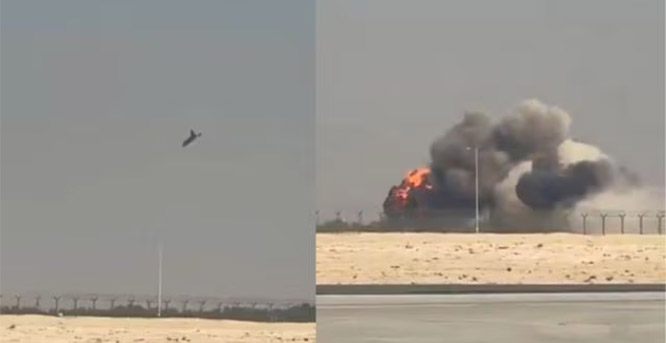
An Indian Air Force (IAF) Tejas fighter jet crashed on Friday, November 21, afternoon during its aerial demonstration at the Dubai Air Show, plunging to the ground at around 2:10 pm local time while performing a manoeuvre before thousands of spectators.

The IAF confirmed the incident, stating that a Tejas aircraft participating in the show had crashed and that further details were being gathered. An Air Force spokesperson said more information would be shared after initial assessments.

The crash sent thick black smoke billowing into the sky near the airport, causing panic among visitors, including families and children who had gathered to watch the display. Authorities have not yet confirmed whether the pilot managed to eject before the aircraft went down. Emergency response teams rushed to the scene, and officials have not released information on casualties or damage so far.

The Tejas is a 4.5-generation, multi-role fighter aircraft developed indigenously by Hindustan Aeronautics Limited (HAL). Designed for versatility, it is capable of offensive air support, close combat, ground attack missions and maritime operations. The aircraft family includes single-seat fighters and twin-seat trainers for both the Air Force and Navy.

HAL describes the latest version, the LCA Mk1A, as the most advanced in the series, featuring an AESA radar, an upgraded electronic warfare suite with radar-warning and self-protection jamming, smart multifunction displays, a digital map generator, a combined interrogator–transponder system and a modern radio altimeter. These enhancements significantly improve the aircraft’s combat capability and survivability.

Further updates from IAF and UAE authorities are awaited.

Comments

Add new comment

  • Coastaldigest.com reserves the right to delete or block any comments.
  • Coastaldigset.com is not responsible for its readers’ comments.
  • Comments that are abusive, incendiary or irrelevant are strictly prohibited.
  • Please use a genuine email ID and provide your name to avoid reject.
News Network
November 29,2025

DKSsiddu.jpg

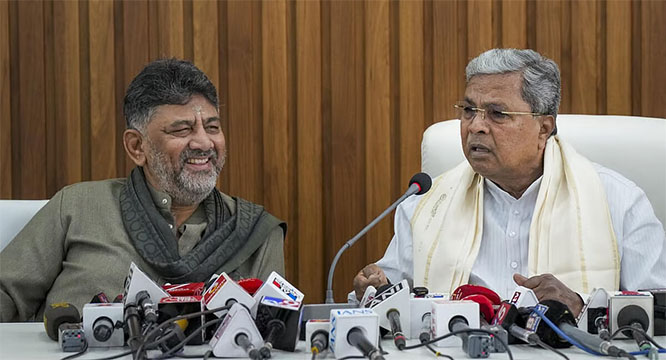
New Delhi: Karnataka chief minister Siddaramaiah and deputy CM DK Shivakumar on Saturday put up a dramatic display of unity at a closely watched joint press briefing, firmly dismissing weeks of speculation about a power-sharing tussle within the Congress. With the high command nudging both leaders to sit together and settle the dust, the meeting became a political spectacle, ending with the duo declaring that there was “no confusion, no differences.”

Calling the reports of a rift “manufactured confusion,” Siddaramaiah said the talks had gone smoothly, even joking about their breakfast. “Breakfast was very good. All three of us enjoyed it,” he said. “We want to end this confusion once and for all. For local elections and for 2028, our mission is clear — Congress must return to power. There is no difference between me and DKS, not now, not before.”

He blamed the media for fuelling rumours and reiterated absolute adherence to the party leadership. “From tomorrow, let there be no confusion. What the high command says, we will follow.”

Siddaramaiah also assured that the Assembly session starting December 8 would run smoothly and vowed that Congress would take on the BJP and JD(S) “together.”

Shivakumar echoed the chief minister word for word, stressing loyalty and discipline. “People have given us a massive mandate. It is our duty to deliver,” he said. “This government was formed under Siddaramaiah’s leadership. We both have complete trust in the high command. If they tell me to wait, I will wait.”

He added that the two leaders had discussed strategy for the 2028 Assembly elections. “Whatever the CM says, I agree. We are loyal soldiers of the party. The party may be facing challenges nationally, but we will keep it strong in Karnataka.”

Shivakumar also said Siddaramaiah would soon visit his home for lunch or dinner — another symbolic gesture meant to underline their unity.

Both leaders later posted on social media describing the breakfast meeting as “productive” and focused on “Karnataka’s priorities.”

The BJP, however, rejected the show of camaraderie as “pure bunkum,” accusing Congress of trying to paper over an internal power struggle. But Siddaramaiah and Shivakumar insisted their united front would continue — and that there was “no confusion” within the state leadership.

Comments

Add new comment

  • Coastaldigest.com reserves the right to delete or block any comments.
  • Coastaldigset.com is not responsible for its readers’ comments.
  • Comments that are abusive, incendiary or irrelevant are strictly prohibited.
  • Please use a genuine email ID and provide your name to avoid reject.
News Network
December 3,2025

indigo.jpg

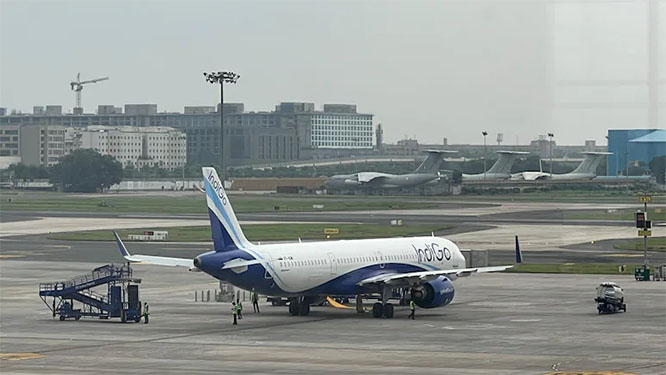
IndiGo, India’s largest airline, is battling one of its worst operational disruptions in recent years, with hundreds of delays and cancellations throwing domestic travel into chaos.

Government data on Tuesday showed its on-time performance plunging to 35%, an unusual dip for a carrier long associated with punctuality.

By Wednesday afternoon, airports in Delhi, Mumbai, Bengaluru and Hyderabad had collectively reported close to 200 cancellations, stranding travellers across the country.

Crew Shortage After New Duty Norms

A major trigger behind the meltdown is a severe crew shortage, especially among pilots, following the rollout of revised Flight Duty Time Limitation (FDTL) norms last month.

The rules mandate longer rest hours and more humane rosters — a shift IndiGo has struggled to incorporate across its vast network.

Sources said several flights were grounded due to lack of cabin crew, while some delays stretched upwards of eight hours.

With IndiGo controlling over 60% of India’s domestic aviation market, the ripple effect has impacted airports nationwide.

IndiGo Issues Apology, Lists “Compounding Factors”

In a statement, IndiGo acknowledged the large-scale disruption:

“We sincerely apologise to customers. A series of unforeseen operational challenges — technology glitches, winter schedule changes, adverse weather, system congestion and updated FDTL norms — created a compounding impact that could not have been anticipated.”

To stabilise operations, the airline has begun calibrated schedule adjustments for the next 48 hours, aiming to restore punctuality. Affected passengers are being offered refunds or alternate travel arrangements, IndiGo said.

What the FDTL Rules Require

The FDTL norms, designed to reduce pilot fatigue, cap duty and flying hours as follows:
•    Maximum 8 hours of flying per day
•    35 hours per week
•    125 hours per month
•    1,000 hours per year

Crew must also receive rest equalling twice the flight duration, with a minimum 10-hour rest period in any 24-hour window.

The DGCA introduced these limits to enhance flight safety.

Hyderabad: 33 Flights Cancelled, Long Queues Reported

Hyderabad’s Rajiv Gandhi International Airport saw heavy early-morning crowds as 33 IndiGo flights (arrivals and departures) were cancelled.

The airport clarified on X that operations were normal, advising passengers to contact IndiGo directly for latest flight status.

Cancellations included flights to and from Visakhapatnam, Goa, Ahmedabad, Delhi, Bengaluru, Chennai, Madurai, Hubli, Bhopal and Bhubaneswar.

Bengaluru: 42 Flights Disrupted

Bengaluru’s Kempegowda International Airport recorded 42 cancellations — 22 arrivals and 20 departures — affecting routes to Delhi, Mumbai, Chennai, Hyderabad, Goa, Kolkata and Lucknow.

Passengers Vent on Social Media

Irate travellers took to X to share their experiences. One passenger stranded in Hyderabad wrote: “I have been here since 3 a.m. and missed an important meeting.”

Another said: “My flight was pushed from 1:55 PM to 2:55 PM and now 4:35 PM. I was informed only three minutes before entering the airport.”

Delhi Airport Hit by Tech Glitch

At Delhi Airport, the disruption deepened due to a slowdown in the Amadeus system — used for reservations, check-ins and departure control.

The technical issue led to longer queues and sluggish processing, adding to delays already worsened by staff shortages.

Comments

Add new comment

  • Coastaldigest.com reserves the right to delete or block any comments.
  • Coastaldigset.com is not responsible for its readers’ comments.
  • Comments that are abusive, incendiary or irrelevant are strictly prohibited.
  • Please use a genuine email ID and provide your name to avoid reject.