59 conflicts, 78 nations involved: World is now least peaceful since World War-2

News Network
June 19, 2025

conflict.jpg

The world is now witnessing the highest number of active state-based conflicts since the end of the Second World War, with 59 ongoing wars and 78 countries involved, according to the 2024 edition of the Global Peace Index released by the Institute for Economics & Peace.

The report paints a grim picture of international stability, warning that global peacefulness continues to erode amid a backdrop of deepening geopolitical rivalries, rising militarisation, and a growing number of cross-border disputes.

“Many of the leading indicators that typically precede large-scale conflict are now at their worst levels since 1945,” the study stated.

Sharp Rise in Conflicts

There are currently 59 active state-based armed conflicts, three more than last year, making this the most violent period since WWII. The conflicts are not only increasing in number but also in complexity, with 78 nations now engaged in violence beyond their borders, a trend that the index attributes to growing global fragmentation and the assertiveness of middle powers.

Major flashpoints highlighted in the report include:

Russia-Ukraine

Israel-Palestine and Israel-Iran

China-US tensions over Taiwan

India-Pakistan

Armenia-Azerbaijan

North Korea-US

Iran-US

Yemen-Saudi Arabia

EU-Russia and UK-Russia

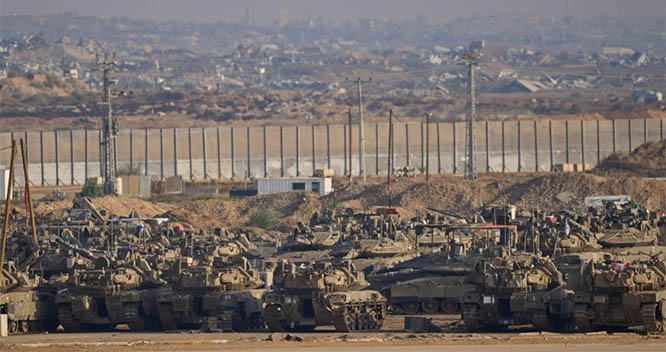
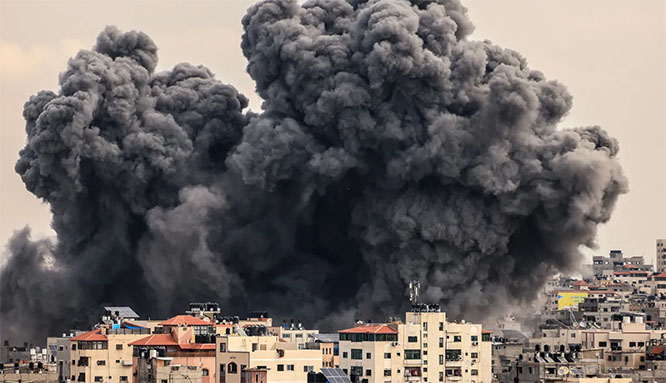
The report particularly noted the recent escalation between Israel and Iran, where Israel launched airstrikes on June 13 targeting Iranian military and nuclear infrastructure, killing senior Iranian officers—an incident that marked a dangerous expansion of the Middle East conflict.

Internationalisation of War

Conflicts are no longer localised. The report stresses that 78 countries are directly involved in conflicts beyond their borders, marking a significant shift toward internationalised warfare. The causes range from proxy wars and foreign interventions to the increasing involvement of middle-tier powers asserting dominance in their regions.

Decline in Conflict Resolution

The world is also seeing a steep decline in effective conflict resolution. The success rate of wars ending in a decisive military victory has plummeted from 49% in the 1970s to just 9% in the 2010s, while peace agreements as a method of resolution have dropped from 23% to just 4%.

Meanwhile, the long-term trend of falling militarisation has reversed. In the last two years alone, 106 countries have become more militarised, reflecting a broader shift toward rearmament and power projection.

Global Rankings

The Global Peace Index ranks 163 countries and territories, covering 99.7% of the world’s population.

Most Peaceful Countries (Top 5):

Iceland (since 2008)

Ireland

Austria

New Zealand

Switzerland

Least Peaceful Countries (Bottom 5):

Russia (for the first time)

Ukraine

Sudan

Democratic Republic of Congo

Yemen

Regional Overview

Western and Central Europe remains the most peaceful region globally.

Middle East and North Africa (MENA) retains its position as the least peaceful.

South Asia is now the second least peaceful region, with growing political repression in Bangladesh and enduring tensions between India and Pakistan contributing to its decline.

Interestingly, South America was the only region to record an overall improvement in peacefulness last year, with 7 of 11 countries showing gains.

Final Outlook

Overall, 87 countries saw a decline in peacefulness, while only 74 improved, leading to a net global deterioration of 0.36%. The report concludes that without major diplomatic interventions, the world is on a trajectory of escalating conflict and instability unseen since the mid-20th century.

Comments

Add new comment

  • Coastaldigest.com reserves the right to delete or block any comments.
  • Coastaldigset.com is not responsible for its readers’ comments.
  • Comments that are abusive, incendiary or irrelevant are strictly prohibited.
  • Please use a genuine email ID and provide your name to avoid reject.
News Network
November 22,2025

gaza.jpg

The Israeli regime’s forces have killed two Palestinian children in the Gaza Strip every day since the ceasefire began in early October, UNICEF has warned.

The UN children’s agency said on Friday that Israeli forces continue to attack Palestinians in Gaza even though the agreement was meant to stop the killing.

“Since 11 October, while the ceasefire has been in effect, at least 67 children have been killed in conflict-related incidents in the Gaza Strip. Dozens more have been injured. That is an average of almost two children killed every day since the ceasefire took effect,” UNICEF spokesperson Ricardo Pires said in Geneva, reminding that each number in the statistics represents a child whose life had ended violently.

“These are not statistics,” he said. “Each child had a story, a family, and a future that was stolen from them.”

Data from Palestinian factions, human rights groups, and government bodies recorded since the US-brokered ceasefire deal went into effect on October 10 show that Israeli forces have carried out numerous attacks, each constituting a separate ceasefire violation.

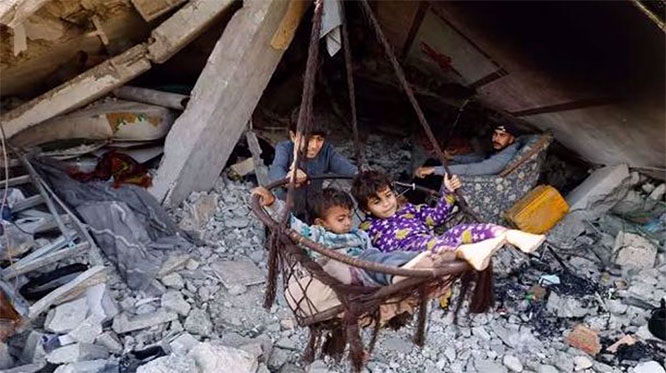
UNICEF teams say they repeatedly continue to witness heart-wrenching scenes of fearful Palestinian children sleeping outdoors with amputated limbs, while others live as orphans in flooded, makeshift shelters.

“I saw this myself in August. There is no safe place for them. The world cannot normalize their suffering,” Pires said, lamenting that the UN could “do a lot more if the aid that is really needed was entering faster.”

The UNICEF spokesperson warned that with the advent of winter, the risks for hundreds of thousands of displaced children will increase.

He warned, “The stakes are incredibly high” for children as winter acts as a threat multiplier, where children have no heating, no insulation, and few blankets. He said respiratory infections rise.

“Too many children have already paid the highest price,” Pires said. “Too many are still paying it, even under a ceasefire. The world promised them it would stop and that we would protect them.”

“Now we must act like it,” the UNICEF spokesperson added.

Since the Israeli regime launched its genocidal war against Palestinians in Gaza in October 2023, it has killed nearly 70,000 people in the territory, most of them women and children, and injured over 170,000 more, while reducing most of the structures in the enclave to rubble.

Comments

Add new comment

  • Coastaldigest.com reserves the right to delete or block any comments.
  • Coastaldigset.com is not responsible for its readers’ comments.
  • Comments that are abusive, incendiary or irrelevant are strictly prohibited.
  • Please use a genuine email ID and provide your name to avoid reject.
News Network
November 21,2025

israel.jpg

Local authorities say the Israeli military has expanded the so-called “yellow line” truce demarcation in Gaza City and repositioned its forces deeper into the territory in violation of a ceasefire agreement that came into force on October 10, besieging dozens of Palestinian families.

Gaza’s Government Media Office announced in a statement on Thursday that Israeli forces widened the boundary by shifting the markers, and advanced roughly 300 meters (984 feet) into the neighborhoods of Ash-Shaaf, An-Nazzaz and Baghdad Street.

The move pushed further into civilian areas, trapping families who were unable to flee as tanks rolled forward, it added.

“The fate of many of these families remains unknown amidst the shelling that targeted the area,” the office said, adding that the expansion of the yellow line shows a “blatant disregard” for the ceasefire deal.

On Friday, sources said the Israeli military carried out continued air and artillery strikes inside the so-called “yellow line” east of Khan Younis in the southern Gaza Strip.

According to the reports, Israeli warplanes and tanks targeted areas within the zone. One Palestinian was reported killed and several others wounded in the strikes, the sources said.

The fresh aggression came only a day after 25 Palestinians were killed in Israeli airstrikes on Gaza City and Khan Younis on Wednesday.

The media office reported that Israel has consistently violated the truce deal since its implementation last month, with near-daily attacks by air, artillery and direct shootings.

The office said over 400 violations have been documented. These breaches have resulted in the deaths of more than 300 Palestinians and left hundreds injured.

The Government Media Office in Gaza urged the guarantors of the ceasefire — the US, Egypt, Qatar and Turkey — to take swift action to halt the ongoing violations and facilitate the delivery of food, shelter materials, medical aid, and infrastructure equipment.

The so-called “yellow line,” set out in the agreement between Israel and Hamas resistance movement, refers to a non-physical partition where the Israeli military repositioned itself when the truce deal took effect.

It has allowed Israel, which routinely fires at Palestinians who approach the line, to retain control over more than half of the Gaza Strip.

International bodies, including the UN Independent International Commission of Inquiry, the International Association of Genocide Scholars, Amnesty International, Human Rights Watch, B’Tselem, and other rights groups, have concluded that the Israeli war on Gaza amounts to genocide.

In the attacks in Gaza since October 2023, Israel has killed at least 69,546 people and injured 170,833 others, leveling large swaths of the territory and displacing almost all of the population. 

Comments

Add new comment

  • Coastaldigest.com reserves the right to delete or block any comments.
  • Coastaldigset.com is not responsible for its readers’ comments.
  • Comments that are abusive, incendiary or irrelevant are strictly prohibited.
  • Please use a genuine email ID and provide your name to avoid reject.
News Network
November 26,2025

students.jpg

Bengaluru, Nov 26: Karnataka is taking its first concrete steps towards lifting a three-decade-old ban on student elections in colleges and universities. Deputy Chief Minister D.K. Shivakumar announced Wednesday that the state government will form a small committee to study the reintroduction of campus polls, a practice halted in 1989 following incidents of violence.

Speaking at a 'Constitution Day' event organised by the Karnataka Congress, Mr. Shivakumar underscored the move's aim: nurturing new political leadership from the grassroots.

"Recently, (Leader of the Opposition in Lok Sabha) Rahul Gandhi wrote a letter to me and Chief Minister (Siddaramaiah) asking us to think about restarting student elections," Shivakumar stated. "I'm announcing today that we'll form a small committee and seek a report on this."

Student elections were banned in Karnataka in 1989, largely due to concerns over violence and the infiltration of political party affiliates into campus life. The ban effectively extinguished vibrant student bodies and the pipeline of young leaders they often produced.

Mr. Shivakumar, who also serves as the Karnataka Congress president, said that former student leaders will be consulted to "study the pros and cons" of the re-introduction.

Acknowledging the history of the ban, he added, "There were many criminal activities taking place back then. We’ll see how we can conduct (student) elections by regulating such criminal activities."

The Deputy CM reminisced about his own journey, which began on campus. He recalled his political activism at Sri Jagadguru Renukacharya College leading to his first Assembly ticket in 1985 at the age of 23. "That's how student leadership was at the time. Such leadership has gone today. College elections have stopped," he lamented, adding that for many, college elections were "like a big movement" where leaders were forged.

The move, driven by the Congress high command's push to cultivate young talent, will face scrutiny from academics and university authorities who have, in the past, expressed concern that the return of polls could disrupt the peaceful academic environment and turn campuses into political battlegrounds.

Comments

Add new comment

  • Coastaldigest.com reserves the right to delete or block any comments.
  • Coastaldigset.com is not responsible for its readers’ comments.
  • Comments that are abusive, incendiary or irrelevant are strictly prohibited.
  • Please use a genuine email ID and provide your name to avoid reject.