



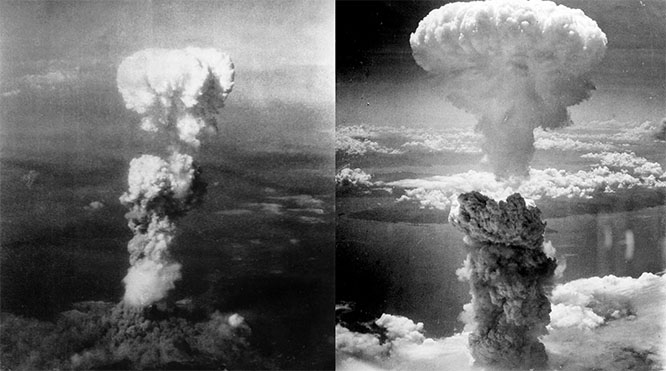
Hiroshima: As the world commemorates the 80th anniversary of the first use of nuclear weapons — the U.S. atomic bombing of Hiroshima near the end of World War II — experts and survivors warn that the planet is now closer to nuclear conflict than at any point in decades.
At the Hiroshima Peace Memorial Park on Wednesday morning, dignitaries joined the rapidly dwindling group of survivors to mark the moment a U.S. B 29 bomber dropped the atomic bomb nicknamed Little Boy on August 6, 1945. Three days later, Nagasaki suffered a similar fate.
The bombings killed over 110,000 people instantly, with hundreds of thousands more dying later from injuries and radiation-related illnesses. They remain the only instances of nuclear weapons used in war — yet their threat endures.
“Divisions within the international community over nuclear disarmament are deepening, and the current security environment is growing increasingly severe,” Japanese Prime Minister Shigeru Ishiba said during the ceremony.
The Nobel Prize–winning survivors’ group Nihon Hidankyo warned in a statement:
“We don’t have much time left, as we face greater nuclear threats than ever. Our challenge is to move nuclear-armed states — even slightly — toward change.”
Modern Nuclear Tensions
In recent months, nuclear brinkmanship has resurfaced worldwide:
• Russia–US tensions over Moscow’s war in Ukraine have escalated nuclear rhetoric.
• The U.S. struck Iranian nuclear sites with conventional weapons to hinder Tehran’s program.
• India and Pakistan clashed briefly over Kashmir earlier this year, raising fears of escalation.
Hans Kristensen of the Stockholm International Peace Research Institute (SIPRI) warned in June:
“We see growing nuclear arsenals, sharper rhetoric, and the abandonment of arms control agreements.”
This trend influenced the Bulletin of the Atomic Scientists to move its symbolic Doomsday Clock to 89 seconds to midnight — the closest to global catastrophe since its creation in 1947.
Expanding Arsenals
Today’s nuclear stockpiles dwarf Hiroshima’s 15-kiloton bomb. Modern U.S. warheads can reach 1.2 megatons — 80 times stronger — capable of killing millions in a single strike.
According to SIPRI:
• Over 12,000 nuclear weapons are held by nine nations: the U.S., Russia, China, France, the U.K., India, Pakistan, North Korea, and Israel.
• Nearly all are modernizing or expanding their arsenals.
• China leads growth, adding about 100 warheads annually.
“Any attempt to deny the position of the DPRK as a nuclear weapons state will be thoroughly rejected,” said Kim Yo Jong, sister of North Korean leader Kim Jong Un.

Comments
Add new comment