Here's why the global Covid-19 death toll may be closer to 1.8 million

News Network
September 29, 2020

The world officially recorded 1 million deaths from Covid-19 in one of the most sobering milestones of the pandemic, but the real tally might be almost double that.

Actual fatalities from the worst outbreak in a century may be closer to 1.8 million -- a toll that could grow to as high as 3 million by the end of the year, according to Alan Lopez, a laureate professor and director of the University of Melbourne’s global burden of disease group. The coronavirus’s rapid spread and ability to transmit in people who show no signs of the disease have enabled it to outrun measures to accurately quantify cases through widespread diagnostic testing.

“One million deaths has meaning by itself, but the question is whether it’s true,” Lopez said in an interview before the tally was reached. “It’s fair to say that the 1 million deaths, as shocking as it sounds, is probably an underestimate -- a significant underestimate.”

Even in countries with sophisticated health systems, mortality is difficult to accurately gauge. Tens of thousands of probable Covid-19 deaths in the us weren’t captured by official statistics between March and May, a study in July found, frustrating efforts to track and mitigate the pandemic’s progression.

The dearth of accurate data undermines the ability of governments to implement timely strategies and policies to protect public health and promote economic recovery. If the mortality from Covid-19 reaches 3 million as Lopez predicted, it would rank the disease among the world’s worst killers. An undercount in deaths could also give some people a false sense of security, and may allow governments to downplay the virus and overlook the pandemic’s burden.

No System

India has confirmed more than 6 million Covid-19 cases, but accounts for only about 95,000 of the 1 million reported deaths worldwide, according to data collected by Johns Hopkins University. The country, which has the highest number of infections after the us, lacks a reliable national vital statistics registration system to track deaths in real time. Meanwhile, in Indiana in the US researchers found that although nursing home residents weren’t routinely tested for the virus, they represented 55% of the state’s Covid-19 deaths.

“Yes, cases are reported daily everywhere, but as soon as you get to the next tier down, like how many were admitted to hospitals, there have just been huge gaps in the data,” said Christopher J. Murray, director of the Institute for Health Metrics and Evaluation at the University of Washington in Seattle. Medical data, including duration of illness and symptoms, help to ascribe a probable cause of death, he said.

Patients with heart disease, diabetes, cancer and other chronic conditions are at greater risk of dying from Covid-19. Some governments, including Russia, are attributing the cause of deaths in some of these patients to the pre-existing condition, raising questions about the veracity of official mortality data.

WHO Guidelines

In July, Russia recorded 5,922 fatalities due to Covid-19. At least 4,157 other deaths were linked to the coronavirus, but not included in the tally because of how the nation defines such deaths. Overall, it recorded 29,925 more deaths in July than in the same month of 2019.

The WHO laid out guidance for classifying coronavirus deaths in June, advising countries to count fatalities if patients had symptoms of the disease regardless of whether they were a confirmed case, and unless there was a clear alternative cause. A Covid-19 fatality should be counted as such even if pre-existing conditions exacerbated the disease, said the organization. The US Centers for Disease Control and Prevention released similar guidelines.

Still, it may take health workers certifying deaths time to adopt the methodology, the University of Melbourne’s Lopez said. His research has received funding by Bloomberg Philanthropies, set up by Michael Bloomberg, founder and majority owner of Bloomberg News’ parent Bloomberg LP.

“Doctors often are learning as they go along, so they’re not certifying all the deaths that are due to Covid as Covid deaths,” Lopez said.

Japan Drop

Although the pandemic has altered mortality patterns worldwide, not all of the changes are a direct result of the pandemic, he said. Physical distancing measures may have reduced road fatalities and deaths caused by influenza. In Japan, which has been scrutinized for its lack of widespread testing and relatively lax containment efforts, deaths fell by 3.5% in May from a year earlier even as Covid-19 cases peaked.

“The pandemic actually works in contradictory ways to affect mortality,” Lopez said.

Likewise, the economic cost of the pandemic -- which may top $35.3 trillion through 2025 -- will be driven more by changes in people’s spending patterns than number of deaths and government-mandated “lockdown” measures, according to Warwick McKibbin, a professor of economics at the Australian National University and a non-resident senior fellow at the Brookings Institution in Washington.

“We estimate this outbreak is going to cost tens of trillions to the world economy,” McKibbin said in an interview. “The change in economic outcomes is caused by individuals changing their behavior, not because the government mandated a shutdown.”

Worldwide, the growth in the number of daily deaths has eased since spiking in March and April, helped by improved medical care and ways to treat the disease. But as resurgences flare in Europe and North America ahead of winter and the flu season, Covid-19 fatalities may rise sharply again. It took nine days for cases in the UK to double to 3,050 in mid September, compared with the previous doubling time of five weeks, the BMJ journal said last week.

Covid-19 patients between ages 75 to 84 are 220 times more likely to die from the disease than 18-to-29-year-olds, according to the CDC. Seniors over 85 years have a 630 times higher risk of dying. The older age of fatal Covid-19 cases has made some people think “they’re old people, they’re going to die anyway,” said Michael Osterholm, an epidemiologist and director of the Center for Infectious Disease Research and Policy at the University of Minnesota.

“I have a really hard time with that,” Osterholm said in an interview. “That’s an unfortunate and very sad way to come to understand this pandemic. Many of those people who died are very important loved ones to so many of us that it’s hard to just dismiss it as it’s just a number.”

Comments

Add new comment

  • Coastaldigest.com reserves the right to delete or block any comments.
  • Coastaldigset.com is not responsible for its readers’ comments.
  • Comments that are abusive, incendiary or irrelevant are strictly prohibited.
  • Please use a genuine email ID and provide your name to avoid reject.
News Network
January 20,2026

Mangaluru: In a major step towards strengthening rural innovation, the Office of the Principal Scientific Adviser (PSA) to the Government of India is supporting the establishment of RuTAGe Smart Village Centres (RSVCs) across the country through collaborations with academic institutions, civil society organisations and philanthropic partners.

As part of this national initiative, Nitte (Deemed to be University) will set up the first RSVCs in the region at Nitte GP in Udupi district and at the Nitte Health Centre, Sevanjali Trust, Farangipete, in Dakshina Kannada district. The centres will be inaugurated on January 21. In South India, the programme is being implemented by the Section Infin-8 Foundation (SI-8).

Speaking to reporters on Monday, SI-8 founder-director Vishwas US said experts from Nitte University and SI-8 would work closely with farmers, students, youth and local entrepreneurs to adapt and deploy technologies tailored to local needs.

Project head Prof Iddya Karunasagar, representing Nitte DU, said the RSVCs at Nitte and Farangipete would serve as demonstration hubs for a wide range of agriculture, energy, skill-development and assistive technologies. These include solar dryers for fruits, vegetables and crops; soil-testing solutions; power weeders and women-friendly farm tools; wind-powered devices for rural artisans; grain storage systems; grass-cutting and tree-climbing equipment; and liquid fertiliser production using cowshed waste.

SI-8 CEO Aravind C Kumar said the centres would also provide access to digital and knowledge-based platforms such as ISRO applications, government scheme portals, market linkage tools and gamified learning resources, along with assistive technologies for persons with visual impairments.

Highlighting the broader impact of the initiative, Principal Scientific Adviser Prof Ajay Kumar Sood said it demonstrated how applied research could bridge the rural–urban divide and help create self-reliant, technology-enabled villages.

The initiative has been made possible through philanthropic support from Dr NC Murthy of ACM Business Solutions, LLC, USA. Dr Sapna Poti, Director (Strategic Alliances) at the Office of the Principal Scientific Adviser, said the long-term objective is to build self-sufficient, technology-driven communities capable of generating sustainable livelihoods on their own.

Comments

Add new comment

  • Coastaldigest.com reserves the right to delete or block any comments.
  • Coastaldigset.com is not responsible for its readers’ comments.
  • Comments that are abusive, incendiary or irrelevant are strictly prohibited.
  • Please use a genuine email ID and provide your name to avoid reject.
News Network
January 20,2026

DGP.jpg

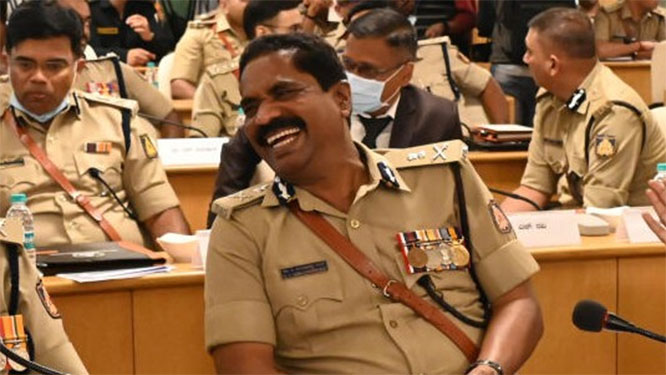
Karnataka DGP (Civil Rights Enforcement) K Ramachandra Rao was suspended with immediate effect, as per a state government order issued on Monday, 19 January. The order cited conduct unbecoming of a government servant and causing embarrassment to the state administration.

The Karnataka government suspended Rao after a purported video showed him in a compromising position with a woman inside his official chamber. The video went viral on social media. Rao rejected the videos outright, terming them "fabricated and false".

Who is K Ramachandra Rao?

Rao is a DGP-rank officer who was heading the Directorate of Civil Rights Enforcement until his suspension. He was promoted to DGP in September 2023 and assumed office in October 2023, the Sunday Guardian reported.

He also served as the Chairman and Managing Director of the Karnataka State Police Housing and Infrastructure Development Corporation Limited.

His stint as the Inspector General of Police (IGP) for the Southern Range was also marred by controversy. In 2014, during a cash seizure near Mysuru’s Yelwal, officials claimed the seized amount was ₹20 lakh, while the accused (Kerala-based merchants) claimed it was around ₹2.27 crore.

Rao, who was present during the seizure, denied all allegations. However, he was transferred soon after.

Allegations of collusion with a businessman surfaced, and a senior police officer was quoted by The Sunday Guardian as saying, “In Rao’s case, the CID has clearly mentioned that there was a great degree of lapse on the part of Rao and a deputy superintendent of police after it was brought to their notice that a few policemen, including a gunman attached to the IGP, were involved in the robbery.”

Rao had denied all wrongdoing in that incident. Despite past controversies, he rose to the state’s top police position, the Sunday Guardian reported.

Ranya Rao’s stepfather

Rao is the stepfather of Kannada actress Harshavardhini Ranya alias Ranya Rao, accused of orchestrating the illegal import of gold worth over ₹12.56 crore from Dubai to India along with two others — businessman Tarun Raju, and jewellery dealer Sahil Jain.

‘Obscene video’ controversy

A viral video showed Rao behaving inappropriately with a woman inside his office while in uniform.

The Karnataka government said in its Monday order that “vide videos and news reports widely broadcast on public news channels and media platforms, it is observed that Dr K Ramachandra Rao has acted in an obscene manner which is unbecoming of a Government Servant and also causing embarrassment to the Government.”

The order said the matter was examined by the state government, which found that the officer's conduct amounted to a violation of Rule 3 of the All India Services (Conduct) Rules, 1968.

The government said it is prima facie satisfied that "it is necessary to place Rao under suspension with immediate effect, pending inquiry".

During the suspension period, Rao will be entitled to subsistence allowance as per Rule 4 of the All India Services (Discipline and Appeal) Rules, 1969.

The order also places restrictions on his movement, stating that during the period of suspension, the officer must not leave headquarters under any circumstances without the written permission of the state government.

Comments

Add new comment

  • Coastaldigest.com reserves the right to delete or block any comments.
  • Coastaldigset.com is not responsible for its readers’ comments.
  • Comments that are abusive, incendiary or irrelevant are strictly prohibited.
  • Please use a genuine email ID and provide your name to avoid reject.
News Network
January 31,2026

Roy.jpg

Bengaluru: The shooting incident involving CJ Roy, founder of the Confident Group, has once again put the spotlight on a businessman whose life has swung between flamboyant global success and persistent controversy at home.

Though Roy’s business interests extended across continents, his roots lay firmly in Karnataka. An alumnus of Christ School in Bengaluru, he later moved to Tumakuru to pursue an engineering degree. Those familiar with his early years describe him as intensely ambitious, beginning his career as a salesman at a small electronics firm dealing in computers.

Roy’s entry into large-scale real estate came through the Crystal Group, where he worked closely with Latha Namboothiri and rose from manager to director. However, the launch of the Confident Group in 2005 was clouded by industry speculation. Insiders speak of a fallout involving alleged “benami” properties and claims of deception that ultimately led to his independent venture—an episode Roy spent years trying to distance himself from, according to associates.

A tale of two cities

Roy’s professional trajectory diverged sharply across geographies.

In Dubai, he built a reputation as a bold and efficient developer, completing massive luxury residential projects in record time—some reportedly within 11 months. His rapid project delivery and lavish lifestyle in the Emirates earned him admiration and visibility in the real estate sector.

In Bengaluru, however, his image remained far more fractured. Sources say Roy stayed away from the city for several years amid disputes over unpaid dues to vendors and suppliers. Several projects were allegedly stalled, with accusations of unfulfilled commitments to cement and steel suppliers continuing to follow him.

Roy’s return to Bengaluru’s business and social circles began around 2018, marked by a conscious attempt at rebranding. His appointment as Honorary Consul of the Slovak Republic added diplomatic legitimacy, which he complemented with visible CSR initiatives, including ambulance donations and high-profile charity events.

Heavy police presence in Langford Town

Following the incident, police personnel from the Central division were deployed outside the Confident Group building in Langford Town, which also houses the Slovak Honorary Consulate in Bengaluru.

The otherwise busy premises near Hosur Road wore a deserted look on Friday, reflecting the shock and uncertainty that followed the tragedy.

Comments

Add new comment

  • Coastaldigest.com reserves the right to delete or block any comments.
  • Coastaldigset.com is not responsible for its readers’ comments.
  • Comments that are abusive, incendiary or irrelevant are strictly prohibited.
  • Please use a genuine email ID and provide your name to avoid reject.