Iran’s supreme leader gravely ill; cancels all public appearances

News Network
September 17, 2022

khamenei.jpg

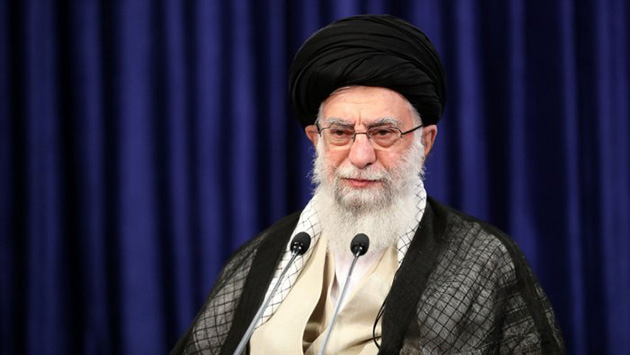
Tehran, Sept 17: Iran’s supreme leader, Ayatollah Ali Khamenei, canceled all meetings and public appearances last week after falling gravely ill and is currently on bed rest under observation by a team of doctors, according to four people familiar with his health situation.

Ayatollah Khamenei, 83, had surgery sometime last week for bowel obstruction after suffering extreme stomach pains and high fever, one of the people said. The four people, two of whom are based in Iran, including one who has close ties with the country’s Revolutionary Guard, requested anonymity for discussing a sensitive issue such as Ayatollah Khamenei’s health.

Ayatollah Khamenei underwent the surgery at a clinic set up at his home and office complex and is being monitored around the clock by a team of doctors, the person familiar with the operation said. Ayatollah Khamenei’s condition was considered critical last week but has improved, and he is currently resting, the person said. His doctors remain concerned that he is too weak to even sit up in bed.

As supreme leader, Ayatollah Khamenei wields huge authority in Iran and would be the final arbiter on issues such as the nuclear deal that is currently being negotiated with the United States. A former president of Iran and protege of Ayatollah Ruhollah Khomeini, founder of the revolution that led to the creation of the Islamic Republic of Iran in 1979, Ayatollah Khamenei assumed the position of the country’s top religious, political and military authority in 1989.

Tasnim news agency, affiliated with Iran’s Revolutionary Guard, posted a brief item Friday saying Ayatollah Khamenei will attend a religious ceremony with university students Saturday. But it wasn’t clear if it would take place, given his health.

Ayatollah Khamenei traveled to the religious city of Mashhad about two weeks ago to perform a ritual known as dust cleaning at the Imam Reza shrine in Mashhad. He went into a secluded area of the shrine, cleaned it and placed his head on a tombstone in a sign of prayer and submission. A photo of him at the shrine was published by Iranian media.

He told the people traveling with him that it might be his last time at the shrine, given his age, according to one of the four people, who was familiar with the details of his trip. He got sick soon after arriving back in Tehran, and his situation deteriorated over the past week, the person said.

His office canceled all meetings last week and also an important annual meeting with the Assembly of Experts — the body that will decide his replacement once he dies — on September 6 because he was too ill to sit up, according to the four people familiar with his health condition.

A member of the Assembly of Experts, Hashem Hashemzadeh Harissi, told an Iranian newspaper that “in this round, unlike previous rounds, the members of the Assembly of Experts did not meet with the supreme leader” because it would “be a heavy burden on him.”

Although Ayatollah Khamenei’s situation prompted some speculation in Iran and among opposition groups outside the country in recent days that he had died, the country’s president, Ebrahim Raisi, traveled to Uzbekistan for a regional security meeting, and analysts said he would probably have canceled his trip if the ayatollah’s life had been in danger. Raisi is also scheduled to travel to New York for the United Nations General Assembly, where he will be speaking Wednesday.

Iran usually does not comment publicly on Ayatollah Khamenei’s health. But in 2014, he underwent prostate surgery, and his recovery was widely covered in the official media.

Iran’s UN mission in New York said it could not immediately comment without getting approval from Tehran.


Comments

Add new comment

  • Coastaldigest.com reserves the right to delete or block any comments.
  • Coastaldigset.com is not responsible for its readers’ comments.
  • Comments that are abusive, incendiary or irrelevant are strictly prohibited.
  • Please use a genuine email ID and provide your name to avoid reject.
News Network
November 21,2025

malpe.jpg

Udupi: The Malpe Police have arrested two men from Uttar Pradesh for allegedly sharing classified information related to Indian Navy vessels with individuals in Pakistan, posing a serious threat to national security.

According to a complaint filed by the CEO of Udupi Cochin Shipyard, Malpe—an institution under the Union Ministry of Ports, Shipping and Waterways—the prime accused, Rohit (29), was working as an insulator through subcontractor M/S Shushma Marine Pvt Ltd. He had earlier served at Cochin Shipyard Limited in Kochi, Kerala, where naval ships are under construction.

Udupi SP Hariram Shankar said the accused had unlawfully shared, via WhatsApp, confidential identification numbers of Navy-related ships and other classified details while working in Kerala, allegedly for illegal gains.

After joining the Malpe shipyard unit, Rohit reportedly continued collecting sensitive information through a friend in Kochi and circulated it to unauthorised individuals, violating national security protocols and potentially endangering India’s sovereignty, unity, and integrity.

Based on the complaint, Malpe Police registered a case under Section 152 of the Bharatiya Nyaya Sanhita (BNS) and Sections 3 and 5 of the Official Secrets Act, 1923.

A police team led by Karkala Subdivision Assistant Superintendent of Police Harsha Priyamvada—along with PSI Anil Kumar D, ASI Harish, and PC Ravi Jadhav—conducted the investigation and arrested the two accused, identified as Rohit (29) and Santri (37), both residents of Sultanpur district, Uttar Pradesh.

The duo was produced before the court, which remanded them in judicial custody till December 3. Further investigation is in progress.

Comments

Add new comment

  • Coastaldigest.com reserves the right to delete or block any comments.
  • Coastaldigset.com is not responsible for its readers’ comments.
  • Comments that are abusive, incendiary or irrelevant are strictly prohibited.
  • Please use a genuine email ID and provide your name to avoid reject.
News Network
November 26,2025

students.jpg

Bengaluru, Nov 26: Karnataka is taking its first concrete steps towards lifting a three-decade-old ban on student elections in colleges and universities. Deputy Chief Minister D.K. Shivakumar announced Wednesday that the state government will form a small committee to study the reintroduction of campus polls, a practice halted in 1989 following incidents of violence.

Speaking at a 'Constitution Day' event organised by the Karnataka Congress, Mr. Shivakumar underscored the move's aim: nurturing new political leadership from the grassroots.

"Recently, (Leader of the Opposition in Lok Sabha) Rahul Gandhi wrote a letter to me and Chief Minister (Siddaramaiah) asking us to think about restarting student elections," Shivakumar stated. "I'm announcing today that we'll form a small committee and seek a report on this."

Student elections were banned in Karnataka in 1989, largely due to concerns over violence and the infiltration of political party affiliates into campus life. The ban effectively extinguished vibrant student bodies and the pipeline of young leaders they often produced.

Mr. Shivakumar, who also serves as the Karnataka Congress president, said that former student leaders will be consulted to "study the pros and cons" of the re-introduction.

Acknowledging the history of the ban, he added, "There were many criminal activities taking place back then. We’ll see how we can conduct (student) elections by regulating such criminal activities."

The Deputy CM reminisced about his own journey, which began on campus. He recalled his political activism at Sri Jagadguru Renukacharya College leading to his first Assembly ticket in 1985 at the age of 23. "That's how student leadership was at the time. Such leadership has gone today. College elections have stopped," he lamented, adding that for many, college elections were "like a big movement" where leaders were forged.

The move, driven by the Congress high command's push to cultivate young talent, will face scrutiny from academics and university authorities who have, in the past, expressed concern that the return of polls could disrupt the peaceful academic environment and turn campuses into political battlegrounds.

Comments

Add new comment

  • Coastaldigest.com reserves the right to delete or block any comments.
  • Coastaldigset.com is not responsible for its readers’ comments.
  • Comments that are abusive, incendiary or irrelevant are strictly prohibited.
  • Please use a genuine email ID and provide your name to avoid reject.
News Network
November 21,2025

israel.jpg

Local authorities say the Israeli military has expanded the so-called “yellow line” truce demarcation in Gaza City and repositioned its forces deeper into the territory in violation of a ceasefire agreement that came into force on October 10, besieging dozens of Palestinian families.

Gaza’s Government Media Office announced in a statement on Thursday that Israeli forces widened the boundary by shifting the markers, and advanced roughly 300 meters (984 feet) into the neighborhoods of Ash-Shaaf, An-Nazzaz and Baghdad Street.

The move pushed further into civilian areas, trapping families who were unable to flee as tanks rolled forward, it added.

“The fate of many of these families remains unknown amidst the shelling that targeted the area,” the office said, adding that the expansion of the yellow line shows a “blatant disregard” for the ceasefire deal.

On Friday, sources said the Israeli military carried out continued air and artillery strikes inside the so-called “yellow line” east of Khan Younis in the southern Gaza Strip.

According to the reports, Israeli warplanes and tanks targeted areas within the zone. One Palestinian was reported killed and several others wounded in the strikes, the sources said.

The fresh aggression came only a day after 25 Palestinians were killed in Israeli airstrikes on Gaza City and Khan Younis on Wednesday.

The media office reported that Israel has consistently violated the truce deal since its implementation last month, with near-daily attacks by air, artillery and direct shootings.

The office said over 400 violations have been documented. These breaches have resulted in the deaths of more than 300 Palestinians and left hundreds injured.

The Government Media Office in Gaza urged the guarantors of the ceasefire — the US, Egypt, Qatar and Turkey — to take swift action to halt the ongoing violations and facilitate the delivery of food, shelter materials, medical aid, and infrastructure equipment.

The so-called “yellow line,” set out in the agreement between Israel and Hamas resistance movement, refers to a non-physical partition where the Israeli military repositioned itself when the truce deal took effect.

It has allowed Israel, which routinely fires at Palestinians who approach the line, to retain control over more than half of the Gaza Strip.

International bodies, including the UN Independent International Commission of Inquiry, the International Association of Genocide Scholars, Amnesty International, Human Rights Watch, B’Tselem, and other rights groups, have concluded that the Israeli war on Gaza amounts to genocide.

In the attacks in Gaza since October 2023, Israel has killed at least 69,546 people and injured 170,833 others, leveling large swaths of the territory and displacing almost all of the population. 

Comments

Add new comment

  • Coastaldigest.com reserves the right to delete or block any comments.
  • Coastaldigset.com is not responsible for its readers’ comments.
  • Comments that are abusive, incendiary or irrelevant are strictly prohibited.
  • Please use a genuine email ID and provide your name to avoid reject.