Israel Bombed World's Largest Gas Field in Iran: World Can’t Ignore It!

Agencies
June 15, 2025

gasfield.jpg

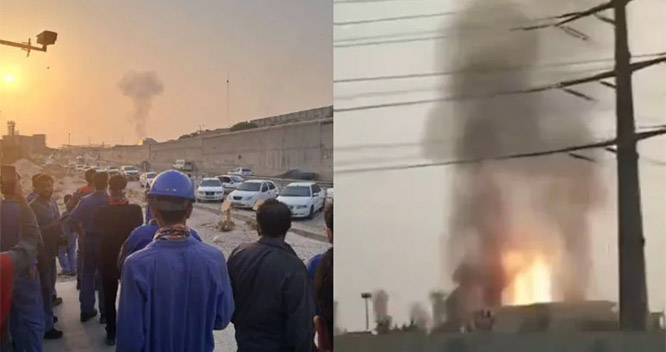
In a significant and highly provocative escalation, Israel launched a direct airstrike on Iran’s South Pars gas field, the largest natural gas reserve in the world. The strike hit Phase 14 of the offshore site, sparking a fire and forcing Iran to suspend production of 12 million cubic metres of gas per day.

This is believed to be the first direct Israeli strike on Iran’s civilian energy infrastructure, marking a sharp departure from previous attacks that primarily targeted military and nuclear facilities. The global implications of such a move are potentially severe, as the strike puts shared and strategic energy assets in the Persian Gulf in direct danger.

What Is South Pars and Why Is It So Important?

South Pars, located off the coast of Bushehr Province, is shared between Iran and Qatar (which calls its section the North Field). Together, this reservoir is the world’s largest source of natural gas.

Iran relies on South Pars for over 65 percent of its domestic gas consumption, which powers electricity generation, heating, and the petrochemical sector. While sanctions have limited Iran’s exports, countries like Iraq still receive Iranian gas.

Meanwhile, Qatar's portion of the same field helps supply Europe and Asia with 77 million tonnes of liquefied natural gas (LNG) each year. It is developed with the backing of energy giants such as Shell and ExxonMobil.

A direct strike on such an asset threatens not just Iran but the entire region's stability, raising alarm about the possibility of attacks on other energy hubs.

Has Israel Crossed a Red Line?

Energy experts and geopolitical analysts suggest this strike represents a strategic shift.

“This is probably the most significant attack on energy infrastructure since Abqaiq,” said Jorge Leon of Rystad Energy, referring to the 2019 drone strike on Saudi Arabia’s oil facilities that sent shockwaves through global markets.

The targeting of civilian energy infrastructure adds a new, dangerous dimension to the conflict, signaling that economic warfare is now part of the confrontation. With South Pars located near the Strait of Hormuz—a chokepoint for 21 percent of global LNG exports and 14 million barrels of oil daily—any escalation could have worldwide consequences.

Global Energy at Risk

Though South Pars primarily serves Iran’s domestic market, the potential for broader fallout is significant. Escalation could lead to retaliatory attacks on other vital infrastructure, including Qatar’s LNG terminals and Kharg Island, Iran’s main oil export hub.

Oil prices surged up to 14 percent, settling near $73 per barrel, amid fears of a broader energy crisis. With OPEC’s third-largest producer under attack, the possibility of disruptions in the Strait of Hormuz could cause dramatic spikes in fuel costs and inflation across Europe, Asia, and beyond.

Iran’s Response and Energy Crisis

Iranian President Masoud Pezeshkian denounced the strike, calling it a “cowardly attack on the lifeline of the Iranian people,” and vowed a strong response. Even before the strike, Iran was battling a worsening energy crisis, with blackouts and gas shortages costing the economy an estimated $250 million per day.

“Damaging this infrastructure is not only inhumane but economically catastrophic,” said Abdollah Babakhani, an Iranian energy expert based in Germany. “Repairing it will take months, possibly years.”

A Precedent With Global Fallout

The strike may signal a new phase of the Iran-Israel conflict, where energy infrastructure becomes a legitimate target. This shift could open the floodgates for regional instability and global energy insecurity, especially if other countries or non-state actors retaliate in kind.

The international community must recognize what’s at stake. If the world’s largest gas field can be bombed with impunity, no energy hub is truly safe—a scenario that could lead to spiraling conflict, inflation, and disruption on a global scale.


Comments

Add new comment

  • Coastaldigest.com reserves the right to delete or block any comments.
  • Coastaldigset.com is not responsible for its readers’ comments.
  • Comments that are abusive, incendiary or irrelevant are strictly prohibited.
  • Please use a genuine email ID and provide your name to avoid reject.
News Network
November 27,2025

Bengaluru, Nov 27: Karnataka Chief Minister Siddaramaiah’s camp is reportedly on alert as the Congress leadership tussle in the state intensifies, particularly amid speculation over the potential promotion of Deputy Chief Minister D.K. Shivakumar. Siddaramaiah is said to be in a “wait-and-watch” mode after admitting to “confusion” earlier this week and urging the party to “put a full stop” to it.

Sources say his supporters are ready to act if senior leaders — including party chief Mallikarjun Kharge, Sonia Gandhi, and Rahul Gandhi — give any indication of backing Shivakumar. If the party insists on a leadership change, Siddaramaiah’s camp has a list of alternatives, underscoring the deep rift between the two leaders. One possible candidate is Home Minister G. Parameshwara, a Siddaramaiah loyalist and influential Dalit leader.

The strategy was reportedly finalized at a meeting led by PWD Minister Satish Jarkiholi, another Siddaramaiah supporter, who stressed that Delhi leaders need to resolve the issue. Kharge and the Gandhis are expected to meet soon, after which Siddaramaiah and Shivakumar may be summoned to Delhi.

Shivakumar has largely stayed non-confrontational, publicly endorsing Siddaramaiah and downplaying speculation about his own ambitions. However, he has made pointed comments emphasizing the importance of honoring promises, directed at Siddaramaiah.

The feud traces back to the 2023 state election, when Siddaramaiah was chosen as Chief Minister while Shivakumar, who led the party’s campaign, was made Deputy CM and state party chief — a departure from the Congress’ usual “one post per person” rule.

There were also hints of a prior understanding that Siddaramaiah would step down midway through the term. As the halfway mark passed last week, Shivakumar-aligned lawmakers have ramped up pressure on the party for a leadership change, with Shivakumar himself hinting at stepping down as state party chief to pursue the top job.

Comments

Add new comment

  • Coastaldigest.com reserves the right to delete or block any comments.
  • Coastaldigset.com is not responsible for its readers’ comments.
  • Comments that are abusive, incendiary or irrelevant are strictly prohibited.
  • Please use a genuine email ID and provide your name to avoid reject.
News Network
December 6,2025

pilot.jpg

New Delhi: IndiGo, India’s largest airline, faced major operational turbulence this week after failing to prepare for new pilot-fatigue regulations issued by the Directorate General of Civil Aviation (DGCA). The stricter rules—designed to improve flight safety—took effect in phases through 2024, with the latest implementation on November 1. IndiGo has acknowledged that inadequate roster planning led to widespread cancellations and delays.

Below are the key DGCA rules that affected IndiGo’s operations:

1. Longer Mandatory Weekly Rest

Weekly rest for pilots has been increased from 36 hours to 48 hours.

The government says the extended break is essential to curb cumulative fatigue. This rule remains in force despite the current crisis.

2. Cap on Night Landings

Pilots can now perform only two night landings per week—a steep reduction from the earlier limit of six.

Night hours, defined as midnight to early morning, are considered the least alert period for pilots.

Given the disruptions, this rule has been temporarily relaxed for IndiGo until February 10.

3. Reduced Maximum Night Flight Duty

Flight duty that stretches into the night is now capped at 10 hours.

This measure has also been kept on hold for IndiGo until February 10 to stabilize operations.

4. Weekly Rest Cannot Be Replaced With Personal Leave

Airlines can no longer count a pilot’s personal leave as part of the mandatory 48-hour rest.

Pilots say this closes a loophole that previously reduced actual rest time.

Currently, all airlines are exempt from this rule to normalise travel.

5. Mandatory Fatigue Monitoring

Airlines must submit quarterly fatigue reports along with corrective actions to DGCA.

This system aims to create a transparent fatigue-tracking framework across the industry.

The DGCA has stressed that these rules were crafted to strengthen flight safety and align India with global fatigue-management standards. The temporary relaxations are expected to remain until February 2025, giving IndiGo time to stabilise its schedules and restore normal air travel.

Comments

Add new comment

  • Coastaldigest.com reserves the right to delete or block any comments.
  • Coastaldigset.com is not responsible for its readers’ comments.
  • Comments that are abusive, incendiary or irrelevant are strictly prohibited.
  • Please use a genuine email ID and provide your name to avoid reject.
News Network
November 27,2025

imrankhan.jpg

Authorities at Pakistan’s high-security Adiala Jail in Rawalpindi on Wednesday dismissed speculation about the condition of imprisoned former Pakistan Prime Minister Imran Khan, rejecting rumours that he had been moved out of the facility or was in danger. Officials said Khan was in “good health” and described the viral death claims as “baseless.”

“There is no truth to reports about his transfer from Adiala Jail,” the Rawalpindi prison administration said in a statement, according to Geo News. “He is fully healthy and receiving complete medical attention.”

Amid swirling rumours on social media, Imran Khan’s party, Pakistan Tehreek-e-Insaf (PTI), urged the federal government to issue an official clarification and demanded that authorities allow his family to meet him immediately, Dawn reported.

The frenzy began after Khan’s three sisters called for an impartial probe into what they described as a “brutal” police assault on them and other PTI supporters outside Adiala Jail last week. Soon after, several social media handles circulated unverified claims alleging that Khan had been “killed” inside the prison.

The rumours intensified when a handle named “Afghanistan Times” claimed that “credible sources” had confirmed Khan’s “murder” and that his body had been moved out of the jail — allegations that have not been verified by any credible agency.

Imran Khan, PTI’s patron-in-chief, has been lodged in the Rawalpindi prison since August 2023 in multiple cases. For over a month, an undeclared restriction has prevented family members and senior PTI leaders from meeting him. Khyber-Pakhtunkhwa Chief Minister Sohail Afridi has reportedly been denied access despite making seven attempts.

In a letter to Punjab Police Chief Usman Anwar, Khan’s sisters — Noreen Niazi, Aleema Khan, and Dr. Uzma Khan — said they were “peacefully protesting” outside the jail when police allegedly launched an unprovoked assault after streetlights were switched off.

“At 71, I was seized by my hair, thrown to the ground and dragged across the road,” Noreen Niazi said, alleging that other women present were also slapped and manhandled.

Adiala Jail officials reiterated that speculation over Imran Khan’s health was unfounded and insisted that his well-being was being ensured, Geo News reported.

Comments

Add new comment

  • Coastaldigest.com reserves the right to delete or block any comments.
  • Coastaldigset.com is not responsible for its readers’ comments.
  • Comments that are abusive, incendiary or irrelevant are strictly prohibited.
  • Please use a genuine email ID and provide your name to avoid reject.