



‘Produce more kids and avail govt support’: China approves 3-child policy

News Network
August 20, 2021

china.jpg

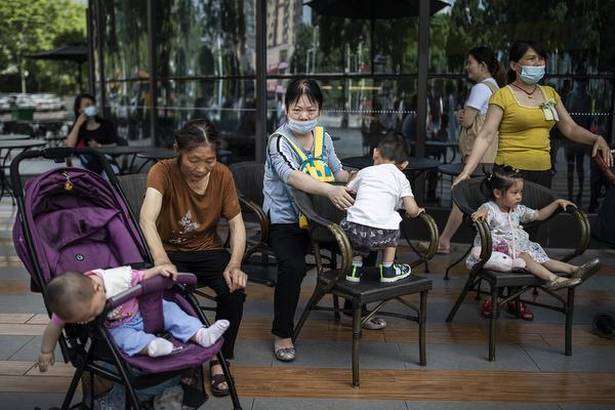
Beijing, Aug 20: China's national legislature on Friday formally endorsed the three-child policy mooted by the ruling Communist Party, in a major policy shift aimed to prevent a steep decline in birth rates in the world's most populous country.

The revised Population and Family Planning Law, which allows Chinese couples to have three children, was passed by the Standing Committee of the National People's Congress (NPC).

In an apparent attempt to address the reluctance of the Chinese couples to have more children due to mounting costs, the amended law has also passed more social and economic support measures to address the concerns.

The new law stipulates that the country will take supportive measures, including those in finances, taxes, insurance, education, housing and employment, to reduce families' burdens as well as the cost of raising and educating children, state-run China Daily reported.

The NPC has revised the law to implement the central leadership's decision to cope with new circumstances in social and economic development and promote balanced long-term population growth, the report said.

In May this year, the ruling Communist Party of China (CPC) approved a relaxation of its strict two-child policy to allow all couples to have up to three children.

China permitted all couples to have two children in 2016, scrapping the draconian decades-old one-child policy which policymakers blame for the demographic crisis in the country.

Chinese officials claim the one-child policy implemented for over three decades has prevented over 400 million births.

The decision to permit the third child came after this month's once-in-a-decade census showed that China's population grew at the slowest pace to 1.412 billion amid official projections that the decline may begin as early as next year.

The new census figures revealed that the demographic crisis China faced was expected to deepen as the population of people above 60 years grew to 264 million, up by 18.7 per cent last year.

As the calls for the government to do away with the family planning restrictions grew louder due to the concerns that the declining population in the country could result in serious labour shortages and negatively impact the world's second-largest economy, the CPC decided to permit a third child while declining to completely scrap the family planning policy.

"Data shows the ageing of the Chinese population has further deepened, and we will continue to face the pressure to achieve a long-term balanced population development," Ning Jizhe, head of the National Bureau of Statistics (NBS), said while releasing the census figures on May 11.

The two-child policy failed to enthuse couples to have a second child as fewer opted for the second child, citing heavy expenditure in raising the children.

The poor response made Liang Jianzhang, professor at Peking University's School of Economics, to suggest the government offer parents one million yuan (USD 156,000) for each newborn child to shore up the country's declining birth rate.

Dan Wang, the chief economist at Hang Seng Bank (China), said the three-child policy would have a positive impact on China's birth rate, but not as much as the authorities hoped for.

"The high costs of housing and education, as well as a lack of job protection for women, are strong economic constraints on having children," she said, adding that the cost of having a third child would be too high for most middle-class families.

The declining trend prompted Chinese demographers to predict that India's population may overtake China's earlier than the UN projection of 2027 to take the top spot as the most populous country in the world.

Projected to surpass China as the world's most populous country around 2027, India is expected to add nearly 273 million people between now and 2050 and will remain the most populated country through the end of the current century, a UN report said in 2019.

The UN report stated that in 2019, India had an estimated population of 1.37 billion and China 1.43 billion and by 2027 India's population is projected to surpass China's.

Lu Jiehua, professor of sociology at Peking University, said that China's population may peak by 2027 before it starts to decline. Some demographers believe the peak may come as soon as 2022.

China is also facing the risk of falling into the trap of low fertility, as it recorded 12 million births in 2020, marking a drop for the fourth consecutive year.

China's total fertility rate of women of childbearing age was 1.3, a relatively low level.

A report this year by China's central bank - the People's Bank of China (PBOC) - said demographics of China is set to change as its population growth enters negative growth after 2025, which will result in a shortage of consumer demand.

"When the total population enters negative growth [after 2025], there will be a shortage of demand. We need to pay attention to the impact of demographics on future consumption," said Cai Fang, a member of the monetary policy committee of the PBOC.

The PBOC study said China should immediately liberalise its birth policies or face a scenario in which it has a lower share of workers and a higher burden of elderly care than the US by 2050.

It said the country should not interfere with people's ability to have children or it will be too late to reverse the economic impact of a declining population.

China is also eyeing a progressive, flexible and differentiated path to raising the retirement age.

Comments

Add new comment

  • Coastaldigest.com reserves the right to delete or block any comments.
  • Coastaldigset.com is not responsible for its readers’ comments.
  • Comments that are abusive, incendiary or irrelevant are strictly prohibited.
  • Please use a genuine email ID and provide your name to avoid reject.
News Network
November 27,2025

siddDKS.jpg

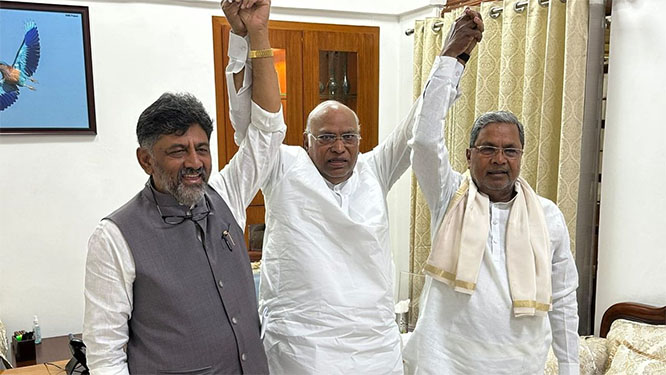
Congress president Mallikarjun Kharge on Thursday announced that he will convene a high-level meeting in New Delhi with senior leaders — including Rahul Gandhi, Karnataka Chief Minister Siddaramaiah and Deputy Chief Minister D.K. Shivakumar — to resolve the escalating leadership turmoil in Karnataka and “put an end to the confusion.”

Kharge said the discussions would focus on the way forward for the ruling party, as rumours of a possible leadership change continue to swirl. The speculation has intensified after the Congress government crossed the halfway mark of its five-year term on November 20, reviving talk of an alleged 2023 “power-sharing agreement” between Siddaramaiah and Shivakumar.

“After reaching Delhi, I will call three or four important leaders and hold discussions. Once we talk, we will decide how to move ahead and end this confusion,” Kharge told reporters in Bengaluru, according to PTI.

When asked specifically about calling Siddaramaiah and Shivakumar to Delhi, he responded: “Certainly, we should call them. We will discuss with them and settle the issue.”

He confirmed that Rahul Gandhi, the Chief Minister, the Deputy Chief Minister and other senior members would be part of the deliberations. “After discussing with everyone, a decision will be made,” he said.

Meanwhile, Siddaramaiah held a separate strategy meeting at his Bengaluru residence with ministers and leaders seen as his close confidants, including G. Parameshwara, Satish Jarkiholi, H.C. Mahadevappa, K. Venkatesh and K.N. Rajanna.
Signalling calm, the Chief Minister told reporters, “Will go to Delhi if the high command calls.”

Shivakumar echoed a similar stance, saying he too would head to the national capital if summoned by the party leadership.

Comments

Add new comment

  • Coastaldigest.com reserves the right to delete or block any comments.
  • Coastaldigset.com is not responsible for its readers’ comments.
  • Comments that are abusive, incendiary or irrelevant are strictly prohibited.
  • Please use a genuine email ID and provide your name to avoid reject.
News Network
November 26,2025

students.jpg

Bengaluru, Nov 26: Karnataka is taking its first concrete steps towards lifting a three-decade-old ban on student elections in colleges and universities. Deputy Chief Minister D.K. Shivakumar announced Wednesday that the state government will form a small committee to study the reintroduction of campus polls, a practice halted in 1989 following incidents of violence.

Speaking at a 'Constitution Day' event organised by the Karnataka Congress, Mr. Shivakumar underscored the move's aim: nurturing new political leadership from the grassroots.

"Recently, (Leader of the Opposition in Lok Sabha) Rahul Gandhi wrote a letter to me and Chief Minister (Siddaramaiah) asking us to think about restarting student elections," Shivakumar stated. "I'm announcing today that we'll form a small committee and seek a report on this."

Student elections were banned in Karnataka in 1989, largely due to concerns over violence and the infiltration of political party affiliates into campus life. The ban effectively extinguished vibrant student bodies and the pipeline of young leaders they often produced.

Mr. Shivakumar, who also serves as the Karnataka Congress president, said that former student leaders will be consulted to "study the pros and cons" of the re-introduction.

Acknowledging the history of the ban, he added, "There were many criminal activities taking place back then. We’ll see how we can conduct (student) elections by regulating such criminal activities."

The Deputy CM reminisced about his own journey, which began on campus. He recalled his political activism at Sri Jagadguru Renukacharya College leading to his first Assembly ticket in 1985 at the age of 23. "That's how student leadership was at the time. Such leadership has gone today. College elections have stopped," he lamented, adding that for many, college elections were "like a big movement" where leaders were forged.

The move, driven by the Congress high command's push to cultivate young talent, will face scrutiny from academics and university authorities who have, in the past, expressed concern that the return of polls could disrupt the peaceful academic environment and turn campuses into political battlegrounds.

Comments

Add new comment

  • Coastaldigest.com reserves the right to delete or block any comments.
  • Coastaldigset.com is not responsible for its readers’ comments.
  • Comments that are abusive, incendiary or irrelevant are strictly prohibited.
  • Please use a genuine email ID and provide your name to avoid reject.
News Network
December 2,2025

Puttur: The long-cherished dream of a government medical college in Puttur has moved a decisive step closer to reality, with the Karnataka State Finance Department granting its official approval for the construction of a new 300-bed hospital.

Puttur MLA Ashok Kumar Rai announced the crucial development to reporters on Monday, confirming that the official communication from the finance department was issued on November 27. This 300-bed facility is intended to be the cornerstone for the establishment of the government medical college, a project announced in the state budget.

Fast-Track Implementation

The MLA outlined an aggressive timeline for the project:

•    A Detailed Project Report (DPR) for the hospital is expected to be ready within 45 days.

•    The tender process for the construction will be completed within two months.

Following the completion of the tender process, Chief Minister Siddaramaiah is scheduled to lay the foundation stone for the project.

"Setting up a medical college in Puttur is a historical decision by the Congress government in Karnataka," Rai stated. The project has an estimated budget allocation of Rs 1,000 crore for the medical college.

Focus on Medical Education Department

The MLA highlighted a key strategic move: requesting the government to implement the hospital construction through the Medical Education Department instead of the Health and Family Welfare Department. This is intended to streamline the entire process of establishing the full medical college, ensuring the facilities—including labs, operation theatres, and other necessary infrastructure—adhere to the strict guidelines set by the Medical Council of India (MCI). The proposed site for the project is in Bannur.

Rai also took the opportunity to address political criticism, stating that the government has fulfilled its promise despite "apprehensions" and "mocking and criticising" from opposition parties who had failed to take similar initiatives when they were in power. "Chief Minister Siddaramaiah has kept his word," he added.

Comments

Add new comment

  • Coastaldigest.com reserves the right to delete or block any comments.
  • Coastaldigset.com is not responsible for its readers’ comments.
  • Comments that are abusive, incendiary or irrelevant are strictly prohibited.
  • Please use a genuine email ID and provide your name to avoid reject.