UK govt imposes export ban on Tipu Sultan’s rare sporting gun, calls it a ‘significant antiquity in its own right’

News Network
May 29, 2023

firearm.jpg

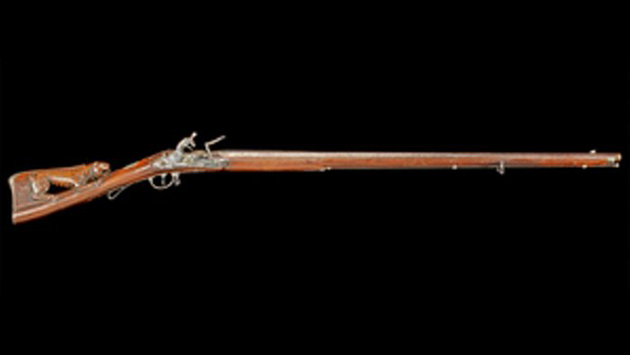
London, May 29: A rare 18th century decorated gun made in India for Mysore ruler Tipu Sultan, and valued at around GBP 2 million, has been barred from export to allow time for a UK-based institution to acquire it for the public study of a "fraught period" in the India-UK history.

UK Arts and Heritage Minister Lord Stephen Parkinson took the decision last week to impose the export ban on the “Flintlock Sporting Gun” following advice from the Reviewing Committee on the Export of Works of Art and Objects of Cultural Interest (RCEWA).

The 14-bore gun, dated between 1793 and 1794, was designed for shooting game and is signed by its maker Asad Khan Muhammed.

This British colonial-era firearm is said to have been “presented to General the Earl Cornwallis”, who previously fought Tipu Sultan between 1790 and 1792.

“This visually striking firearm is a significant antiquity in its own right, as well as an illustration of the important, interconnected history between Britain and India,” said Lord Parkinson.

“I hope that it can be shared with the widest possible public and used to deepen our understanding of a fraught period which shaped both our nations,” he said.

Famously known as the Tiger of Mysore, Tipu Sultan was a defiant opponent of the British East India Company and its allies during the Anglo-Mysore Wars.

He was killed on May 4, 1799, while defending his stronghold of Seringapatam and several exquisite items from that siege have come up on the auction circuit over the years – most recently his Bedchamber Sword which sold for a record-breaking GBP 14 million at Bonhams auction house in London.

Following the killing of Tipu Sultan, his distinctive personal weapons were taken from the palace and given to leading British military figures of the time.

The RCEWA found the gun to be of aesthetic importance as well as significant to the study of Tipu Sultan and his court, Lord Cornwallis and British history, and the conclusion of the third Anglo-Mysorean war.

“This is the finest and most elaborately decorated of the personal firearms made for Tipu Sultan, ruler of Mysore, a large state in South India. Dated 1793-4, this fourteen-bore gun was designed for shooting game and is signed by Asad Khan Muhammad.

It is extremely beautiful as well as technically advanced,” said Committee Member Christopher Rowell.

“The mechanism allows two shots to be fired from the single barrel without reloading, revealing the probable influence of itinerant French gunmakers. Tipu’s court was sophisticated and its workshops produced a variety of fine metalwork including weaponry and ordnance, which was stylish as well as deadly,” he said.

Rowell elaborates how he was fascinated by Western technical innovations, including rocketry, but his leanings towards France antagonised Britain, which waged four wars against Mysore.

In 1799, he was killed as the British army overran the capital of Seringapatam.

“This superbly executed sporting gun was presented to General Earl Cornwallis, victor of the previous war against Tipu in 1790-2, which had forced the Sultan to cede half his territory. Tipu was known as the ‘Tiger of Mysore’ and his personal emblems are ubiquitous, from the tiger with brass-inlaid eyes carved into the hardwood stock to the stylised tiger stripes inlaid in silver along the blued steel barrel. One of the silver mounts depicts a tiger attacking European soldiers, an image redolent of ‘Tipu’s Tiger’ in the V&A [Victoria & Albert Museum],” noted Rowell.

“Given its aesthetic significance, its impeccable provenance, its scope for further research and its relevance to both British and Indian history, I hope that this superb fowling piece made for the unfortunate ruler of Mysore, Tipu Sultan, will be acquired by a British Institution where it can be appreciated by all,” he added.

The chiselled gun inlaid with gold and silver has a length of 138 cm and is made of hardwood stock, is carved, has silver mounts and a steel barrel.

The decision on the export licence application for the gun will be deferred for a period ending on September 25 following which any offers will be considered by the unnamed owners of the gun.

The RCEWA is an independent body serviced by the Arts Council England, which advises the UK’s Secretary of State for Culture, Media and Sport on whether a cultural object, intended for export, is of national importance under specified criteria.

Comments

Add new comment

  • Coastaldigest.com reserves the right to delete or block any comments.
  • Coastaldigset.com is not responsible for its readers’ comments.
  • Comments that are abusive, incendiary or irrelevant are strictly prohibited.
  • Please use a genuine email ID and provide your name to avoid reject.
coastaldigest.com news network
January 19,2026

rizwanzameer.jpg

Bengaluru: As the dust settles on the recent legislative session, the corridors of Vidhana Soudha are buzzing with more than just policy talk. A high-stakes game of political musical chairs has begun, exposing a deepening rift within the Congress party’s Muslim leadership as a major Cabinet reshuffle looms.

With the party hierarchy signaling a "50% refresh" to gear up for the 2028 Assembly elections, the race to fill three projected Muslim ministerial berths has transformed from a strategic discussion into an all-out turf war.

The "Star Son" Spark

The internal friction turned public this week following provocative remarks by Zaid Khan, actor and son of Wakf Minister Zameer Ahmed Khan. Zaid’s claim—that his father "helped" secure a ticket for Shivajinagar MLA Rizwan Arshad in 2023—has acted as a lightning rod for resentment.

Rizwan’s camp was quick to fire back, dismissing the comment as a desperate attempt by Zameer to manufacture seniority. "Rizwan’s political pedigree was forged in the NSUI and Youth Congress long before Zameer even stepped into the party," a supporter noted, highlighting Rizwan’s tenure as an AICC secretary and his two-term presidency of the State Youth Congress.

A Tale of Two Loyalists

While both Zameer Ahmed Khan and Rizwan Arshad are staunch allies of Chief Minister Siddaramaiah and represent Bengaluru strongholds, their political DNA could not be more different:

•    Zameer Ahmed Khan: A four-time MLA who crossed over from JD(S) in 2018. Known for his "overzealous" and often polarizing outreach during communal flashpoints—from the DJ Halli riots to the recent Wakf land notice controversy—his style has frequently left the Congress high command in a state of "discomfort."

•    Rizwan Arshad: A homegrown organizational man. Seen as a "quiet performer," Arshad represents the sophisticated, moderate face of the party, preferred by those who find Zameer’s brand of politics too volatile.

The Outsiders Looking In

The bickering isn't limited to a duo. The "Beary" community, represented by leaders like N A Haris and Saleem Ahmed, is demanding its pound of flesh. Saleem Ahmed, the Chief Whip in the Legislative Council, has dropped the veil of diplomacy, openly declaring his ministerial aspirations.

"I was the only working president not included in the Cabinet last time," Saleem noted pointedly, signaling that the "loyalty quota" is no longer enough to keep the peace.

As Chief Minister Siddaramaiah prepares to finalize the list, he faces a delicate balancing act: rewarding the aggressive grassroots mobilization of Zameer’s camp without alienating the organizational stalwarts and minority sub-sects who feel increasingly sidelined by the "Chamarajpet-Shivajinagar" binary.

Comments

Add new comment

  • Coastaldigest.com reserves the right to delete or block any comments.
  • Coastaldigset.com is not responsible for its readers’ comments.
  • Comments that are abusive, incendiary or irrelevant are strictly prohibited.
  • Please use a genuine email ID and provide your name to avoid reject.
News Network
January 20,2026

Mangaluru: In a major step towards strengthening rural innovation, the Office of the Principal Scientific Adviser (PSA) to the Government of India is supporting the establishment of RuTAGe Smart Village Centres (RSVCs) across the country through collaborations with academic institutions, civil society organisations and philanthropic partners.

As part of this national initiative, Nitte (Deemed to be University) will set up the first RSVCs in the region at Nitte GP in Udupi district and at the Nitte Health Centre, Sevanjali Trust, Farangipete, in Dakshina Kannada district. The centres will be inaugurated on January 21. In South India, the programme is being implemented by the Section Infin-8 Foundation (SI-8).

Speaking to reporters on Monday, SI-8 founder-director Vishwas US said experts from Nitte University and SI-8 would work closely with farmers, students, youth and local entrepreneurs to adapt and deploy technologies tailored to local needs.

Project head Prof Iddya Karunasagar, representing Nitte DU, said the RSVCs at Nitte and Farangipete would serve as demonstration hubs for a wide range of agriculture, energy, skill-development and assistive technologies. These include solar dryers for fruits, vegetables and crops; soil-testing solutions; power weeders and women-friendly farm tools; wind-powered devices for rural artisans; grain storage systems; grass-cutting and tree-climbing equipment; and liquid fertiliser production using cowshed waste.

SI-8 CEO Aravind C Kumar said the centres would also provide access to digital and knowledge-based platforms such as ISRO applications, government scheme portals, market linkage tools and gamified learning resources, along with assistive technologies for persons with visual impairments.

Highlighting the broader impact of the initiative, Principal Scientific Adviser Prof Ajay Kumar Sood said it demonstrated how applied research could bridge the rural–urban divide and help create self-reliant, technology-enabled villages.

The initiative has been made possible through philanthropic support from Dr NC Murthy of ACM Business Solutions, LLC, USA. Dr Sapna Poti, Director (Strategic Alliances) at the Office of the Principal Scientific Adviser, said the long-term objective is to build self-sufficient, technology-driven communities capable of generating sustainable livelihoods on their own.

Comments

Add new comment

  • Coastaldigest.com reserves the right to delete or block any comments.
  • Coastaldigset.com is not responsible for its readers’ comments.
  • Comments that are abusive, incendiary or irrelevant are strictly prohibited.
  • Please use a genuine email ID and provide your name to avoid reject.
News Network
January 20,2026

iran.jpg

Iranian security and intelligence forces have captured more than 470 individuals in three provinces, identified as key figures behind the recent wave of violent unrest and terrorist activities linked to foreign-backed networks.

The Intelligence Ministry's provincial office in Khorasan Razavi announced on Monday the arrest of 192 armed terrorists, identified as the main agents behind recent riots in the region. 

According to an official statement, the detainees were involved in the killing of several security personnel and civilians, setting fire to mosques, public service facilities, and buses, as well as attacks on military and law enforcement centers.

The seized items from the group include several bulletproof vests, Kalashnikov rifles, hunting weapons, Winchester rifles, and various cold weapons such as daggers, swords, brass knuckles, tactical knives, crossbows, and chains.

Evidence indicates that some of the individuals were tied to hostile movements and terrorist organizations, with links overseas. Others were identified as members of violent criminal gangs, actively taking part in the unrest alongside their associates.

Simultaneously, in the western province of Lorestan, the IRGC announced the arrest of 134 individuals as the main leaders and influential field agents of a US-Israeli terrorist network.

The IRGC statement stated that these individuals formed terrorist cells during the recent unrest, committing "Daesh-like" acts.

They wounded security forces with firearms and cold weapons, and burned and destroyed public and private properties, including mosques, shops, banks, and private and public vehicles.

In the northwestern province of Zanjan, the police reported detaining 150 people identified as principal leaders and agents behind recent riots.

Authorities noted that these individuals were responsible for destroying public and private property and intentionally setting fire to vehicles in the province's squares.

Their crimes include shedding the blood of innocent people, destroying public and private property, attempting to enter military sites, disrupting public order, and spreading terror among citizens.

A variety of cold weapons were reportedly seized from the detainees.

What began late last month as peaceful protests over economic hardship across Iran turned violent after public statements by US and Israeli regime figures encouraged vandalism and disorder.

During the unrest, foreign-backed mercenaries rampaged through cities, killing security forces and civilians and damaging public property.

Comments

Add new comment

  • Coastaldigest.com reserves the right to delete or block any comments.
  • Coastaldigset.com is not responsible for its readers’ comments.
  • Comments that are abusive, incendiary or irrelevant are strictly prohibited.
  • Please use a genuine email ID and provide your name to avoid reject.