Vietnamese billionaire Truong My Lan sentenced to DEATH for $44bn fraud

News Network
April 11, 2024

vietnamfraud.jpg

Real estate tycoon Truong My Lan was sentenced Thursday to death by a court in Ho Chi Minh city in southern Vietnam in the country's largest financial fraud case ever, state media Thanh Nien said.

It's a rare verdict - she is one of very few women in Vietnam to be sentenced to death for a white collar crime, i.e. looting one of the country's largest banks over a period of 11 years.

The decision is a reflection of the dizzying scale of the fraud. Truong My Lan was convicted of taking out $44bn (£35bn) in loans from the Saigon Commercial Bank. The verdict requires her to return $27bn, a sum prosecutors said may never be recovered. Some believe the death penalty is the court's way of trying to encourage her to return some of the missing billions.

The habitually secretive communist authorities were uncharacteristically forthright about this case, going into minute detail for the media. They said 2,700 people were summoned to testify, while 10 state prosecutors and around 200 lawyers were involved.

The evidence was in 104 boxes weighing a total of six tonnes. Eighty-five defendants were tried with Truong My Lan, who denied the charges.

"There has never been a show trial like this, I think, in the communist era," says David Brown, a retired US state department official with long experience in Vietnam. "There has certainly been nothing on this scale."

The trial was the most dramatic chapter so far in the "Blazing Furnaces" anti-corruption campaign led by the Communist Party Secretary-General, Nguyen Phu Trong.

A conservative ideologue steeped in Marxist theory, Nguyen Phu Trong believes that popular anger over untamed corruption poses an existential threat to the Communist Party's monopoly on power. He began the campaign in earnest in 2016 after out-manoeuvring the then pro-business prime minister to retain the top job in the party.

 The campaign has seen two presidents and two deputy prime ministers forced to resign, and hundreds of officials disciplined or jailed. Now one of the country's richest women has joined their ranks.

Truong My Lan comes from a Sino-Vietnamese family in Ho Chi Minh City, formerly Saigon. It has long been the commercial engine of the Vietnamese economy, dating well back to its days as the anti-communist capital of South Vietnam, with a large, ethnic Chinese community.

She started as a market stall vendor, selling cosmetics with her mother, but began buying land and property after the Communist Party ushered in a period of economic reform, known as Doi Moi, in 1986. By the 1990s, she owned a large portfolio of hotels and restaurants.

Although Vietnam is best known outside the country for its fast-growing manufacturing sector, as an alternative supply chain to China, most wealthy Vietnamese made their money developing and speculating in property.

All land is officially state-owned. Getting access to it often relies on personal relationships with state officials. Corruption escalated as the economy grew, and became endemic.

By 2011, Truong My Lan was a well-known business figure in Ho Chi Minh City, and she was allowed to arrange the merger of three smaller, cash-strapped banks into a larger entity: Saigon Commercial Bank.

Vietnamese law prohibits any individual from holding more than 5% of the shares in any bank. But prosecutors say that through hundreds of shell companies and people acting as her proxies, Truong My Lan actually owned more than 90% of Saigon Commercial.

They accused her of using that power to appoint her own people as managers, and then ordering them to approve hundreds of loans to the network of shell companies she controlled.

The amounts taken out are staggering. Her loans made up 93% of all the bank's lending.

According to prosecutors, over a period of three years from February 2019, she ordered her driver to withdraw 108 trillion Vietnamese dong, more than $4bn (£2.3bn) in cash from the bank, and store it in her basement.

That much cash, even if all of it was in Vietnam's largest denomination banknotes, would weigh two tonnes.

She was also accused of bribing generously to ensure her loans were never scrutinised. One of those who was tried used to be a chief inspector at the central bank, who was accused of accepting a $5m bribe.

The mass of officially sanctioned publicity about the case channelled public anger over corruption against Truong My Lan, whose fatigued, unmade-up appearance in court was in stark contrast to the glamorous publicity photos people had seen of her in the past.

But questions are also being asked about why she was able to keep on with the alleged fraud for so long.

"I am puzzled," says Le Hong Hiep who runs the Vietnam Studies Programme at the ISEAS - Yusof Ishak Institute in Singapore.

"Because it wasn't a secret. It was well known in the market that Truong My Lan and her Van Thinh Phat group were using SCB as their own piggy bank to fund the mass acquisition of real estate in the most prime locations.

"It was obvious that she had to get the money from somewhere. But then it is such a common practice. SCB is not the only bank that is used like this. So perhaps the government lost sight because there are so many similar cases in the market."

David Brown believes she was protected by powerful figures who have dominated business and politics in Ho Chi Minh City for decades. And he sees a bigger factor in play in the way this trial is being run: a bid to reassert the authority of the Communist Party over the free-wheeling business culture of the south.

"What Nguyen Phu Trong and his allies in the party are trying to do is to regain control of Saigon, or at least stop it from slipping away.

"Up until 2016 the party in Hanoi pretty much let this Sino-Vietnamese mafia run the place. They would make all the right noises that local communist leaders are supposed to make, but at the same time they were milking the city for a substantial cut of the money that was being made down there."

At 79 years old, party chief Nguyen Phu Trong is in shaky health, and will almost certainly have to retire at the next Communist Party Congress in 2026, when new leaders will be chosen.

He has been one of the longest-serving and most consequential secretary-generals, restoring the authority of the party's conservative wing to a level not seen since the reforms of the 1980s. He clearly does not want to risk permitting enough openness to undermine the party's hold on political power.

But he is trapped in a contradiction. Under his leadership the party has set an ambitious goal of reaching rich country status by 2045, with a technology and knowledge-based economy. This is what is driving the ever-closer partnership with the United States.

Yet faster growth in Vietnam almost inevitably means more corruption. Fight corruption too much, and you risk extinguishing a lot of economic activity. Already there are complaints that bureaucracy has slowed down, as officials shy away from decisions which might implicate them in a corruption case.

"That's the paradox," says Le Hong Hiep. "Their growth model has been reliant on corrupt practices for so long. Corruption has been the grease that that kept the machinery working. If they stop the grease, things may not work any more."

Comments

Add new comment

  • Coastaldigest.com reserves the right to delete or block any comments.
  • Coastaldigset.com is not responsible for its readers’ comments.
  • Comments that are abusive, incendiary or irrelevant are strictly prohibited.
  • Please use a genuine email ID and provide your name to avoid reject.
News Network
January 28,2026

ajit.jpg

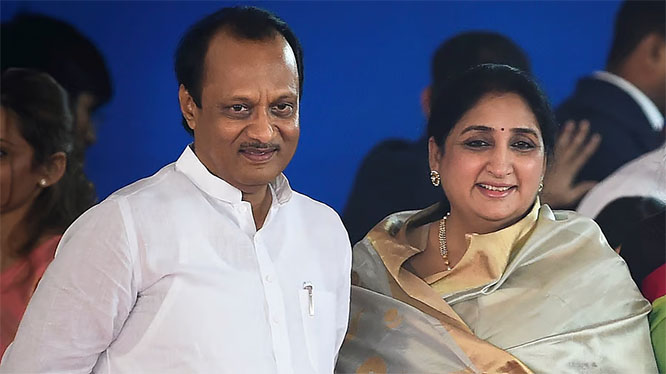
Mumbai: The sudden death of Maharashtra Deputy Chief Minister Ajit Pawar in a plane crash in his hometown of Baramati has plunged the state into political uncertainty, raising a pressing question for both the Nationalist Congress Party (NCP) and its rival faction, the Nationalist Congress Party (Sharadchandra Pawar): what next?

For the two factions that emerged after the dramatic split of June–July 2023, the moment marks their gravest challenge yet. Many believe the answer now rests with party founder Sharad Pawar.

Sharad Pawar, who founded the NCP in 1999 after parting ways with the Congress over Sonia Gandhi’s foreign origin, has already indicated his intention to step away from electoral politics once his Rajya Sabha term ends in April 2026.

Speaking at a public event in Baramati ahead of his 85th birthday on December 12, 2025, Pawar said he would not contest any further elections. “I have contested 14 elections. The younger generation needs to be given an opportunity,” he said, adding that he would decide later whether to seek another Rajya Sabha term.

Often described as the Bhishma Pitamah of Indian politics, Pawar also spoke of his gradual withdrawal from active leadership. “For the first 30 years, I handled everything. For the next 25–30 years, Ajit Dada handled responsibilities. Now, arrangements must be made for new leadership,” he said.

Ajit Pawar’s death has dramatically altered that transition, especially as he was working towards reunifying the two NCP factions.

“After the developments of June–July 2023 and the 2024 Lok Sabha and Vidhan Sabha elections, there were deep changes within the family and the party. In the last six months, serious efforts were made to reunite. Even workers from both sides wanted unity. This is a massive blow,” a Pawar family insider told DH over phone from Baramati.

Electoral outcomes over the past year reflected the split. In the 2024 Lok Sabha elections, NCP (SP) recorded the best strike rate in Maharashtra, winning eight of the 10 seats it contested. The NCP, by contrast, won just one seat out of four.

However, the trend reversed in the subsequent Vidhan Sabha elections, where the NCP emerged stronger, securing 41 of the 288 seats, while NCP (SP) managed only 10.

Within NCP (SP), Sharad Pawar’s daughter Supriya Sule serves as Working President, followed by leaders such as Rohit Pawar, state president Shashikant Shinde and former state chief Jayant Patil.

In the NCP, Praful Patel is the Working President and Raigad MP Sunil Tatkare heads the state unit. Ajit Pawar’s wife, Sunetra Pawar, is a Rajya Sabha MP, while their sons Parth and Jay are not actively involved in day-to-day politics. Parth Pawar briefly entered electoral politics in 2019 but lost the Lok Sabha election from Maval. Jay Pawar’s political debut was under consideration.

With Ajit Pawar gone, speculation has intensified that a member of the family may be asked to assume a larger role. For now, Sunetra Pawar is expected to play a key coordinating role in party affairs, alongside Patel and Tatkare.

The NCP continues to have several heavyweight leaders, including Chhagan Bhujbal, Hasan Mushrif, Dattatreya Bharne, Manikrao Kokate and Dhananjay Munde.

Ajit Pawar had already begun steps towards reconciliation between the two factions. While they contested the Pune and Pimpri-Chinchwad municipal elections separately, they later decided to fight the zilla parishad elections together under the ‘clock’ symbol—seen as the first formal step towards reunification.

Nagpur meet and party roadmap

Both NCP factions claim adherence to the ideology of ‘Shiv–Shahu–Phule–Ambedkar’. At the Rashtravadi Chintan Shivir held in Nagpur on September 19, 2025, the NCP reaffirmed its commitment to sarva dharma sambhav and discussed strengthening ties with the BJP “for the welfare and development of Maharashtra”.

In recent days, reports had suggested Ajit Pawar might return to the Maha Vikas Aghadi following the party’s poor performance in Pune municipal elections, but these claims were denied.

Big question for Maha Yuti

Ajit Pawar’s death also presents an immediate challenge for the Devendra Fadnavis-led Maha Yuti government. Pawar held crucial portfolios, including Finance, Planning and Excise. With the Budget Session approaching, appointing a new Finance Minister has become urgent.

Beyond numbers and portfolios, Maha Yuti has lost a swift decision-maker known for his administrative grip and political finesse—leaving a vacuum that will not be easy to fill.

Comments

Add new comment

  • Coastaldigest.com reserves the right to delete or block any comments.
  • Coastaldigset.com is not responsible for its readers’ comments.
  • Comments that are abusive, incendiary or irrelevant are strictly prohibited.
  • Please use a genuine email ID and provide your name to avoid reject.
News Network
January 20,2026

iran.jpg

Iranian security and intelligence forces have captured more than 470 individuals in three provinces, identified as key figures behind the recent wave of violent unrest and terrorist activities linked to foreign-backed networks.

The Intelligence Ministry's provincial office in Khorasan Razavi announced on Monday the arrest of 192 armed terrorists, identified as the main agents behind recent riots in the region. 

According to an official statement, the detainees were involved in the killing of several security personnel and civilians, setting fire to mosques, public service facilities, and buses, as well as attacks on military and law enforcement centers.

The seized items from the group include several bulletproof vests, Kalashnikov rifles, hunting weapons, Winchester rifles, and various cold weapons such as daggers, swords, brass knuckles, tactical knives, crossbows, and chains.

Evidence indicates that some of the individuals were tied to hostile movements and terrorist organizations, with links overseas. Others were identified as members of violent criminal gangs, actively taking part in the unrest alongside their associates.

Simultaneously, in the western province of Lorestan, the IRGC announced the arrest of 134 individuals as the main leaders and influential field agents of a US-Israeli terrorist network.

The IRGC statement stated that these individuals formed terrorist cells during the recent unrest, committing "Daesh-like" acts.

They wounded security forces with firearms and cold weapons, and burned and destroyed public and private properties, including mosques, shops, banks, and private and public vehicles.

In the northwestern province of Zanjan, the police reported detaining 150 people identified as principal leaders and agents behind recent riots.

Authorities noted that these individuals were responsible for destroying public and private property and intentionally setting fire to vehicles in the province's squares.

Their crimes include shedding the blood of innocent people, destroying public and private property, attempting to enter military sites, disrupting public order, and spreading terror among citizens.

A variety of cold weapons were reportedly seized from the detainees.

What began late last month as peaceful protests over economic hardship across Iran turned violent after public statements by US and Israeli regime figures encouraged vandalism and disorder.

During the unrest, foreign-backed mercenaries rampaged through cities, killing security forces and civilians and damaging public property.

Comments

Add new comment

  • Coastaldigest.com reserves the right to delete or block any comments.
  • Coastaldigset.com is not responsible for its readers’ comments.
  • Comments that are abusive, incendiary or irrelevant are strictly prohibited.
  • Please use a genuine email ID and provide your name to avoid reject.
News Network
January 31,2026

Roy.jpg

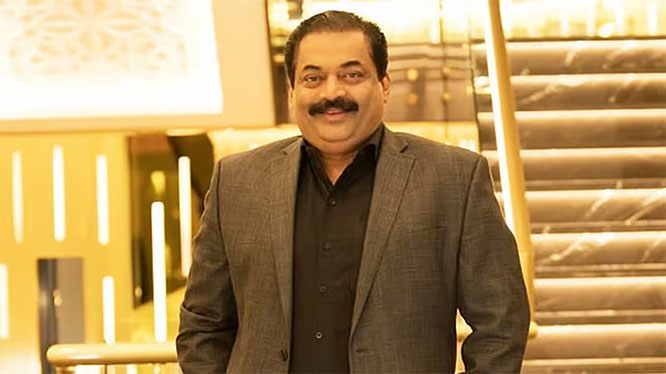
Bengaluru: The shooting incident involving CJ Roy, founder of the Confident Group, has once again put the spotlight on a businessman whose life has swung between flamboyant global success and persistent controversy at home.

Though Roy’s business interests extended across continents, his roots lay firmly in Karnataka. An alumnus of Christ School in Bengaluru, he later moved to Tumakuru to pursue an engineering degree. Those familiar with his early years describe him as intensely ambitious, beginning his career as a salesman at a small electronics firm dealing in computers.

Roy’s entry into large-scale real estate came through the Crystal Group, where he worked closely with Latha Namboothiri and rose from manager to director. However, the launch of the Confident Group in 2005 was clouded by industry speculation. Insiders speak of a fallout involving alleged “benami” properties and claims of deception that ultimately led to his independent venture—an episode Roy spent years trying to distance himself from, according to associates.

A tale of two cities

Roy’s professional trajectory diverged sharply across geographies.

In Dubai, he built a reputation as a bold and efficient developer, completing massive luxury residential projects in record time—some reportedly within 11 months. His rapid project delivery and lavish lifestyle in the Emirates earned him admiration and visibility in the real estate sector.

In Bengaluru, however, his image remained far more fractured. Sources say Roy stayed away from the city for several years amid disputes over unpaid dues to vendors and suppliers. Several projects were allegedly stalled, with accusations of unfulfilled commitments to cement and steel suppliers continuing to follow him.

Roy’s return to Bengaluru’s business and social circles began around 2018, marked by a conscious attempt at rebranding. His appointment as Honorary Consul of the Slovak Republic added diplomatic legitimacy, which he complemented with visible CSR initiatives, including ambulance donations and high-profile charity events.

Heavy police presence in Langford Town

Following the incident, police personnel from the Central division were deployed outside the Confident Group building in Langford Town, which also houses the Slovak Honorary Consulate in Bengaluru.

The otherwise busy premises near Hosur Road wore a deserted look on Friday, reflecting the shock and uncertainty that followed the tragedy.

Comments

Add new comment

  • Coastaldigest.com reserves the right to delete or block any comments.
  • Coastaldigset.com is not responsible for its readers’ comments.
  • Comments that are abusive, incendiary or irrelevant are strictly prohibited.
  • Please use a genuine email ID and provide your name to avoid reject.