



Would you like to be called Son of Cow: Election Commissioner asked in 1972

News Network
March 12, 2019

New Delhi, Mar 12: 'Gomaata' became a hot political topic again after Narendra Modi assumed power in 2014 but it was the same 48 years ago too when 'Cow and Calf' symbol was allotted to Indira Gandhi-led Congress faction, just a couple of months before the 1971 General Elections.
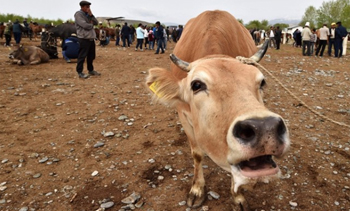
Cries of hurting religious sentiments were raised soon after the symbol was allotted and it had prompted then Chief Election Commissioner S P Sen Varma later to record in an official account on the elections that it was “difficult to accept the view that cow represents Hindu religion”.

The argument given by those opposing the allocation of the symbol to Indira faction, including her opponents former Karnataka Chief Minister S Nijalingappa and K Kamaraj, was that "Gomaata is an object of religious worship" and it “should not be brought” into politics.


“The cow may be and should be the object of our extreme care and for that reason if one may like to say, even our reverence...Even those who call cow 'Gomata' will, I think, feel insulted if they are addressed as 'sons of the cow' “Gai Ke bachhe” instead of as sons of the immortal Amritasya Putrah," Sen-Varma wrote in his analysis.

He was of the view that it was difficult to regard the symbol 'calf and cow' as a religious symbol to the exclusion of any other symbol from the standpoint of principle and philosophy.

Sen-Varma then went on to say, "if 'calf and cow' is to be regarded as a religious symbol, the 'Banyan Tree' reserved for the SSP (Samyukta Socialist Party) at that time or the 'Rising Sun' reserved for the DMK, or the 'Star' reserved for the Swatantra Party and the 'Lamp' (Deepak) reserved for the Bharatiya Jana Sangh should all be regarded as religious symbols," he said.

"Even the 'Elephant' or the 'Lion' should be regarded as such. As has been pointed out, in that case no symbol, i.e., no pictorial representation of anything, can at all be used in elections," he said in the 'Report on the 5th General Elections in India 1971-72'.

It all started after Jagjivan Ram, the Indira faction's leader, objected to Nijalingappa's choice of 'Charkha' as their Congress (O)'s symbol, saying it should not be granted as it was “part and parcel of our (Indira faction) party flag”.

The Election Commission then allotted Nijalingappa's second choice 'Charkha being piled by a woman' while it decided to give Indira faction its second preference 'Calf and Cow' and not its first preference 'Child', as it felt that “justice demanded that”.

However, the allocation to Indira faction was objected by Nijalingappa on 27 January 1971, two days after the Election Commission order besides Bharatiya Kranti Dal, Jan Sangh and Swatantra Party. C Rajagopalachari and Kamaraj too objected to it.

Homidaji of Madhya Pradesh Communist Party also objected, saying cow symbol was semi-religious.

Dr A Natarajan of Madras, however, sent a telegram strongly criticising the views of Rajagopalachari and Kamaraj, claiming that the objection raised by them was equally applicable to the symbols 'Rising Sun', 'Lamp', and 'Star'.

When the Election Commission sought his comment, Jagjivan Ram wrote back saying it was "absolutely wrong" to suggest that the symbol has religious associations.

"As a matter of fact, the concept signifies the progress, health of the nation and prosperity in a country where 80% population depends on the rural economy for their prosperity. The parties in reference have objected to the symbol malafide only in order to create confusion," he said.

"Many amongst the recognised symbols find mention in one or other religious books but they have not been treated as religious symbols. The case of 'Calf and Cow' stands on a different footing altogether. The said symbol is nowhere treated as a religious symbol by any religious books or Shastras," he added.


Comments

Add new comment

  • Coastaldigest.com reserves the right to delete or block any comments.
  • Coastaldigset.com is not responsible for its readers’ comments.
  • Comments that are abusive, incendiary or irrelevant are strictly prohibited.
  • Please use a genuine email ID and provide your name to avoid reject.
News Network
December 16,2025

bengal.jpg

The deletion of over 58 lakh names from West Bengal’s draft electoral rolls following a Special Intensive Revision (SIR) has sparked widespread concern and is likely to deepen political tensions in the poll-bound state.

According to the Election Commission, the revision exercise has identified 24 lakh voters as deceased, 19 lakh as relocated, 12 lakh as missing, and 1.3 lakh as duplicate entries. The draft list, published after the completion of the first phase of SIR, aims to remove errors and duplication from the electoral rolls.

However, the scale of deletions has raised fears that a large number of eligible voters may have been wrongly excluded. The Election Commission has said that individuals whose names are missing can file objections and seek corrections. The final voter list is scheduled to be published in February next year, after which the Assembly election announcement is expected. Notably, the last Special Intensive Revision in Bengal was conducted in 2002.

The development has intensified the political row over the SIR process. Chief Minister Mamata Banerjee and her Trinamool Congress have strongly opposed the exercise, accusing the Centre and the Election Commission of attempting to disenfranchise lakhs of voters ahead of the elections.

Addressing a rally in Krishnanagar earlier this month, Banerjee urged people to protest if their names were removed from the voter list, alleging intimidation during elections and warning of serious consequences if voting rights were taken away.

The BJP, meanwhile, has defended the revision and accused the Trinamool Congress of politicising the issue to protect what it claims is an illegal voter base. Leader of the Opposition Suvendu Adhikari alleged that the ruling party fears losing power due to the removal of deceased, fake, and illegal voters.

The controversy comes amid earlier allegations by the Trinamool Congress that excessive work pressure during the SIR led to the deaths by suicide of some Booth Level Officers (BLOs), for which the party blamed the Election Commission. With the draft list now out, another round of political confrontation appears imminent.

As objections begin to be filed, the focus will be on whether the correction mechanism is accessible, transparent, and timely—critical factors in ensuring that no eligible voter is denied their democratic right ahead of a crucial election.

Comments

Add new comment

  • Coastaldigest.com reserves the right to delete or block any comments.
  • Coastaldigset.com is not responsible for its readers’ comments.
  • Comments that are abusive, incendiary or irrelevant are strictly prohibited.
  • Please use a genuine email ID and provide your name to avoid reject.
coastaldigest.com news network
December 20,2025

Mangaluru, Dec 20: City Police Commissioner Sudheer Kumar Reddy has issued a high-alert warning to vehicle owners regarding a surge in cyber fraud targeting those looking to pay traffic violation fines. Fraudsters are reportedly exploiting recent government discount schemes on traffic penalties to deceive citizens.

The Scam: How Fraudsters Strike

Criminals are using SMS, WhatsApp, and social media to circulate suspicious links and APK files (Android application packages). They claim these apps allow users to pay e-challans at a discount.

•    Device Hacking: Downloading these unauthorized apps gives hackers full access to the victim's smartphone.

•    Financial Theft: Once the phone is compromised, fraudsters intercept OTPs and personal data to drain bank accounts.

•    Phishing Sites: Fake websites mimicking official portals are also being used to harvest banking credentials.

Already, two residents within Mangaluru city limits have reported significant financial losses after falling victim to these fraudulent apps.

Comments

Add new comment

  • Coastaldigest.com reserves the right to delete or block any comments.
  • Coastaldigset.com is not responsible for its readers’ comments.
  • Comments that are abusive, incendiary or irrelevant are strictly prohibited.
  • Please use a genuine email ID and provide your name to avoid reject.
News Network
December 16,2025

bengal.jpg

The deletion of over 58 lakh names from West Bengal’s draft electoral rolls following a Special Intensive Revision (SIR) has sparked widespread concern and is likely to deepen political tensions in the poll-bound state.

According to the Election Commission, the revision exercise has identified 24 lakh voters as deceased, 19 lakh as relocated, 12 lakh as missing, and 1.3 lakh as duplicate entries. The draft list, published after the completion of the first phase of SIR, aims to remove errors and duplication from the electoral rolls.

However, the scale of deletions has raised fears that a large number of eligible voters may have been wrongly excluded. The Election Commission has said that individuals whose names are missing can file objections and seek corrections. The final voter list is scheduled to be published in February next year, after which the Assembly election announcement is expected. Notably, the last Special Intensive Revision in Bengal was conducted in 2002.

The development has intensified the political row over the SIR process. Chief Minister Mamata Banerjee and her Trinamool Congress have strongly opposed the exercise, accusing the Centre and the Election Commission of attempting to disenfranchise lakhs of voters ahead of the elections.

Addressing a rally in Krishnanagar earlier this month, Banerjee urged people to protest if their names were removed from the voter list, alleging intimidation during elections and warning of serious consequences if voting rights were taken away.

The BJP, meanwhile, has defended the revision and accused the Trinamool Congress of politicising the issue to protect what it claims is an illegal voter base. Leader of the Opposition Suvendu Adhikari alleged that the ruling party fears losing power due to the removal of deceased, fake, and illegal voters.

The controversy comes amid earlier allegations by the Trinamool Congress that excessive work pressure during the SIR led to the deaths by suicide of some Booth Level Officers (BLOs), for which the party blamed the Election Commission. With the draft list now out, another round of political confrontation appears imminent.

As objections begin to be filed, the focus will be on whether the correction mechanism is accessible, transparent, and timely—critical factors in ensuring that no eligible voter is denied their democratic right ahead of a crucial election.

Comments

Add new comment

  • Coastaldigest.com reserves the right to delete or block any comments.
  • Coastaldigset.com is not responsible for its readers’ comments.
  • Comments that are abusive, incendiary or irrelevant are strictly prohibited.
  • Please use a genuine email ID and provide your name to avoid reject.